Artwork
En fårehyrde med sin hjord ved et skur
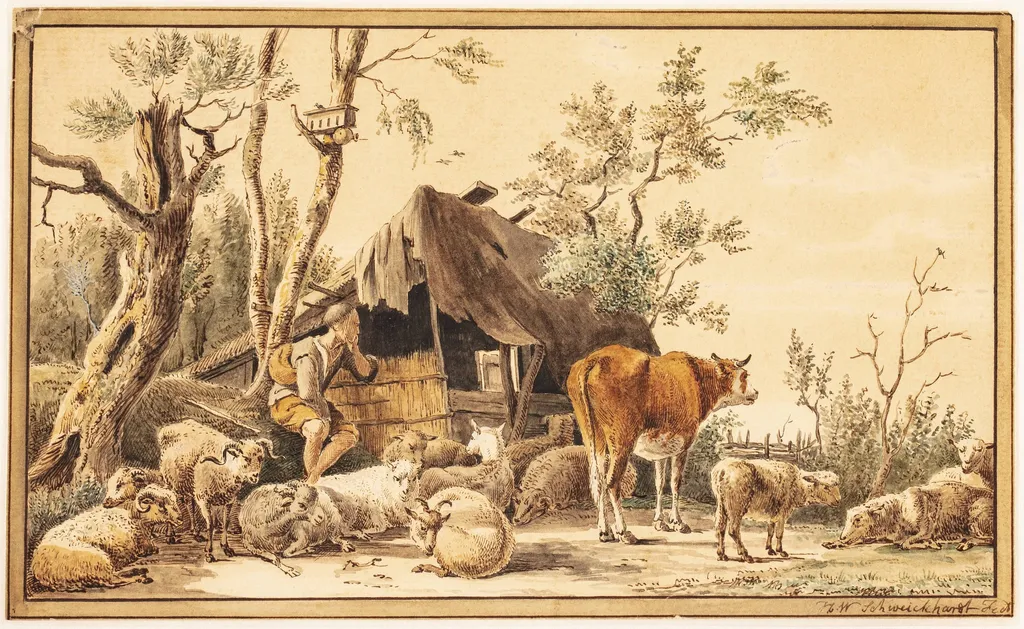
En fårehyrde med sin hjord ved et skur is an unspecified painting by Unknown. It dates from 1750 and is held in the collection of the Statens Museum for Kunst. This mid-18th-century painting depicts a pastoral scene, attributed to an artist identified as 31118_person.
About this work
Overview
The composition balances human presence with rural tranquility, capturing a fleeting moment of stillness in an agrarian landscape.
This mid-18th-century painting depicts a pastoral scene, attributed to an artist identified as 31118_person. Rendered in oil, it presents a shepherd at rest beneath a thatched shelter, surrounded by livestock. The composition balances human presence with rural tranquility, capturing a fleeting moment of stillness in an agrarian landscape. Currently housed in the Museum of Ethnography, the work reflects the period’s interest in everyday rural life.
Subject & Meaning
The scene centers on a shepherd seated among his flock, a cow nearby, evoking themes of labor, rest, and harmony with nature. The relaxed posture of the figure and the docile animals suggest a pause in the daily routine, emphasizing the rhythm of pastoral existence. Such imagery often served as an idealized representation of rural life, contrasting with the growing urbanization of the time.
Technique & Style
The artist employs a muted palette of earth tones, soft greens, and browns, reinforcing the natural setting. Subtle gradations of light and shadow create depth, while loose brushwork conveys texture—whether in the thatched roof, animal coats, or foliage. The composition avoids dramatic contrasts, favoring a quiet, observational approach characteristic of mid-18th-century rural genre scenes.
History & Provenance
Dated to approximately 1750, the painting has been part of the Museum of Ethnography’s collection. Little is documented about its early ownership, though its preservation suggests it was valued as a representation of rural customs. The work’s attribution remains provisional, reflecting gaps in the historical record of lesser-known artists from the period.
Context
Pastoral scenes like this emerged as a counterpoint to industrialization, offering viewers a romanticized vision of pre-modern life. Such works often celebrated the simplicity of agrarian labor, even as urban centers expanded. The inclusion of livestock and a shepherd aligns with broader European traditions of rural genre painting, where themes of sustenance and tradition held cultural resonance.
Artist & collection

 Domestic Scene
 Giacomo and Cardinal Marco, investing Andrea, Abbot of San Zeno, with his Benefice
 The Nymph of Fontainebleau
 Portrait of a Woman
 Madonna and Child with Saints in the Enclosed Garden
 Venus and Minerva
 Family Group of Four on Sofa
 Wall painting from Room H of the Villa of P. Fannius Synistor at Boscoreale
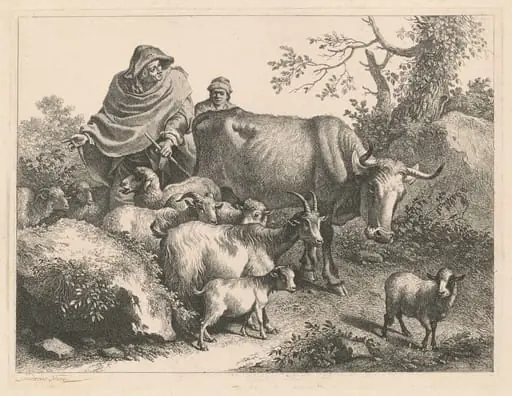 Shepherd Wearing a Cape Driving a Flock
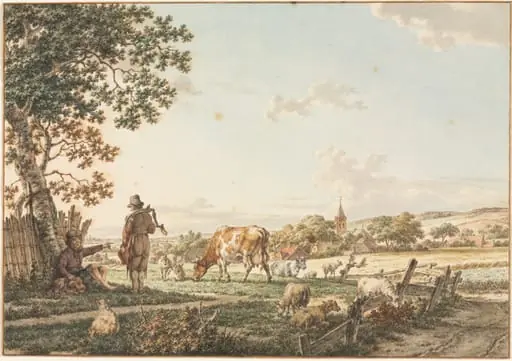 Pastoral Landscape with Village
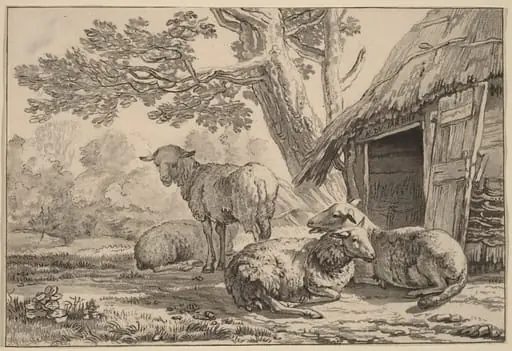 Sheepcote
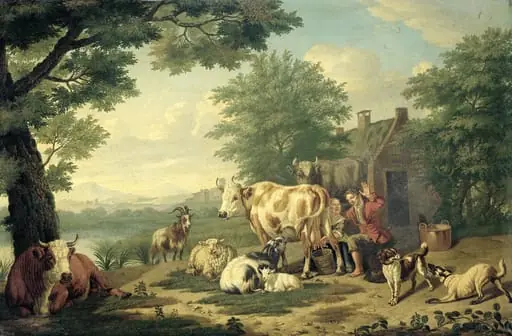 Milking Time
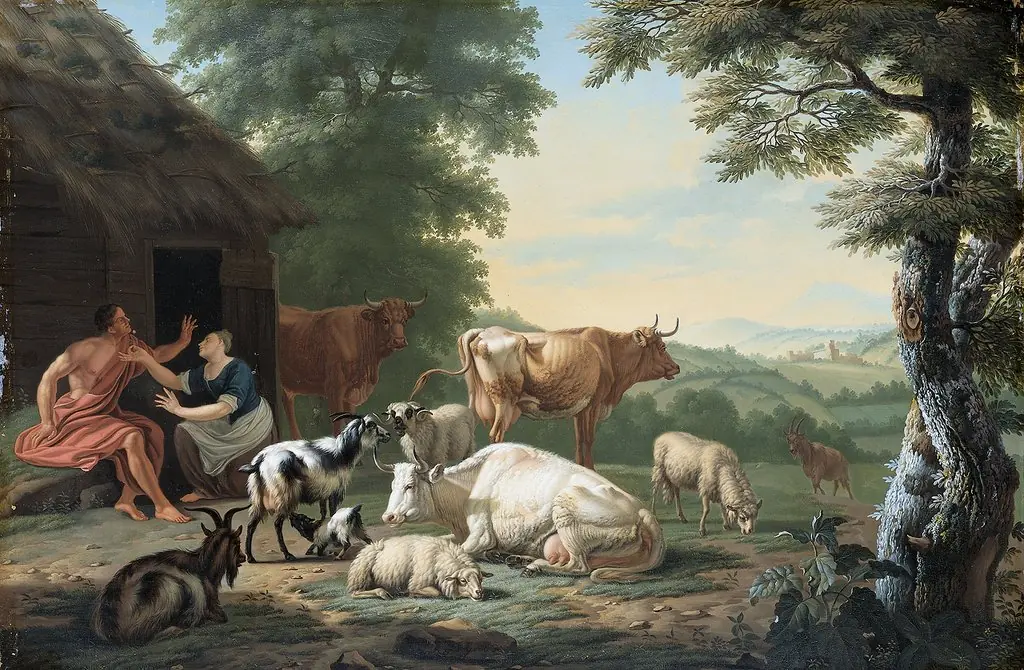 Arcadian Landscape with Shepherds and Animals
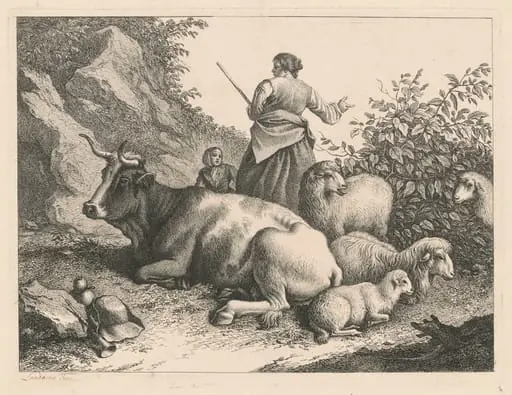 Standing Shepherdess with a Child
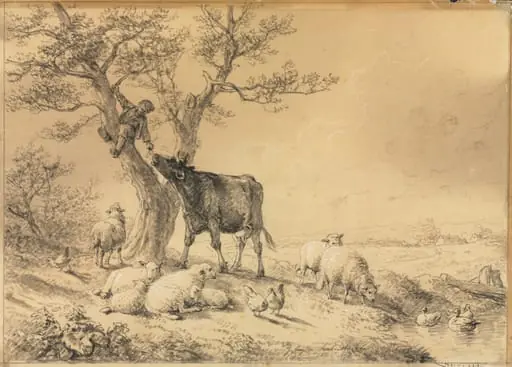 Landscape with Animals and Boy in Tree
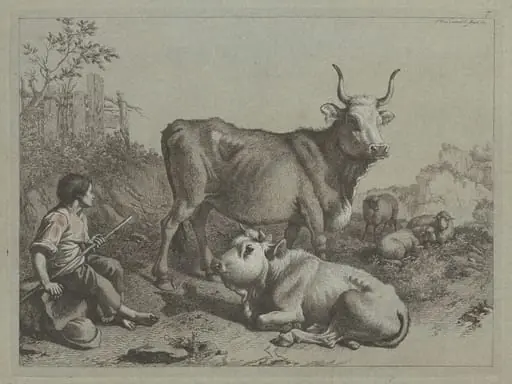 Seated Shepherd with a Bull and Bullock
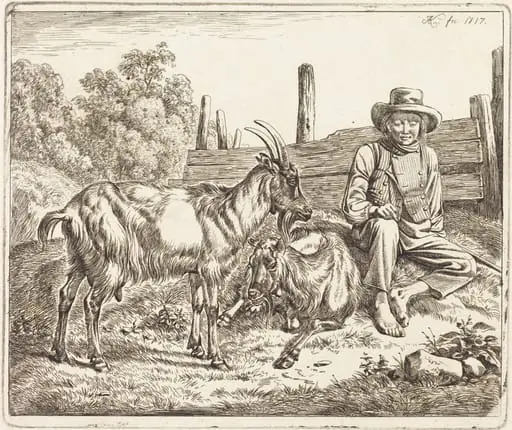 Shepherd Boy with Two Goats
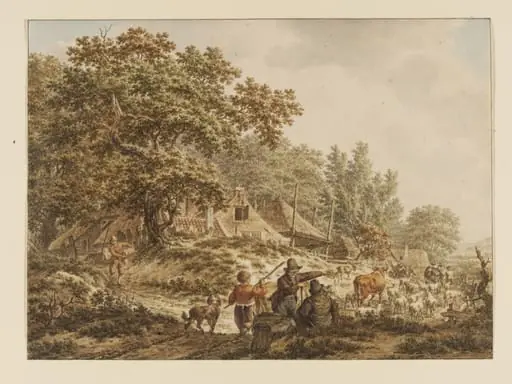 Herdsmen and Their Flocks Before a Dutch Farmstead Among Trees
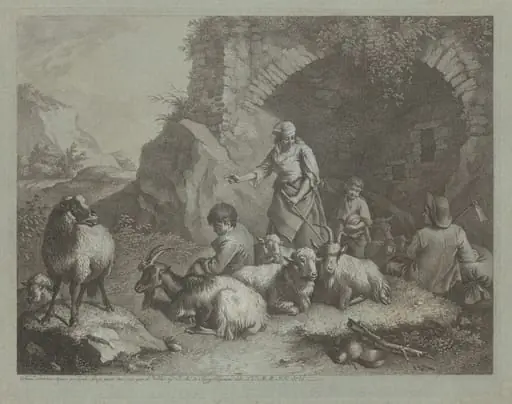 Woman, Shepherd Boys, and Sheep near an Arch
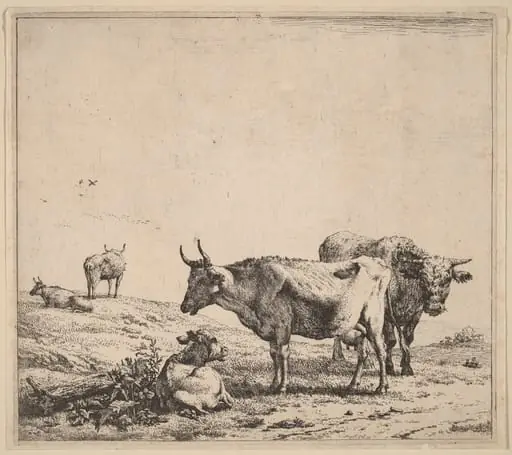 Cow, Bull and Calf