Artwork
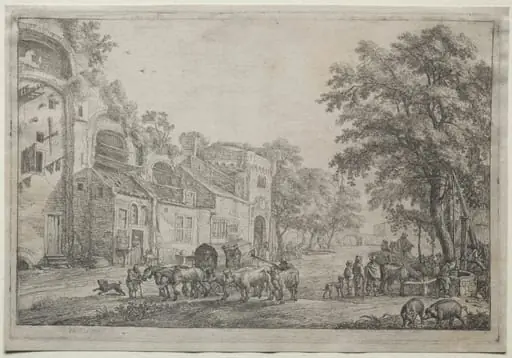
Herdsmen and Their Flocks Before a Dutch Farmstead Among Trees
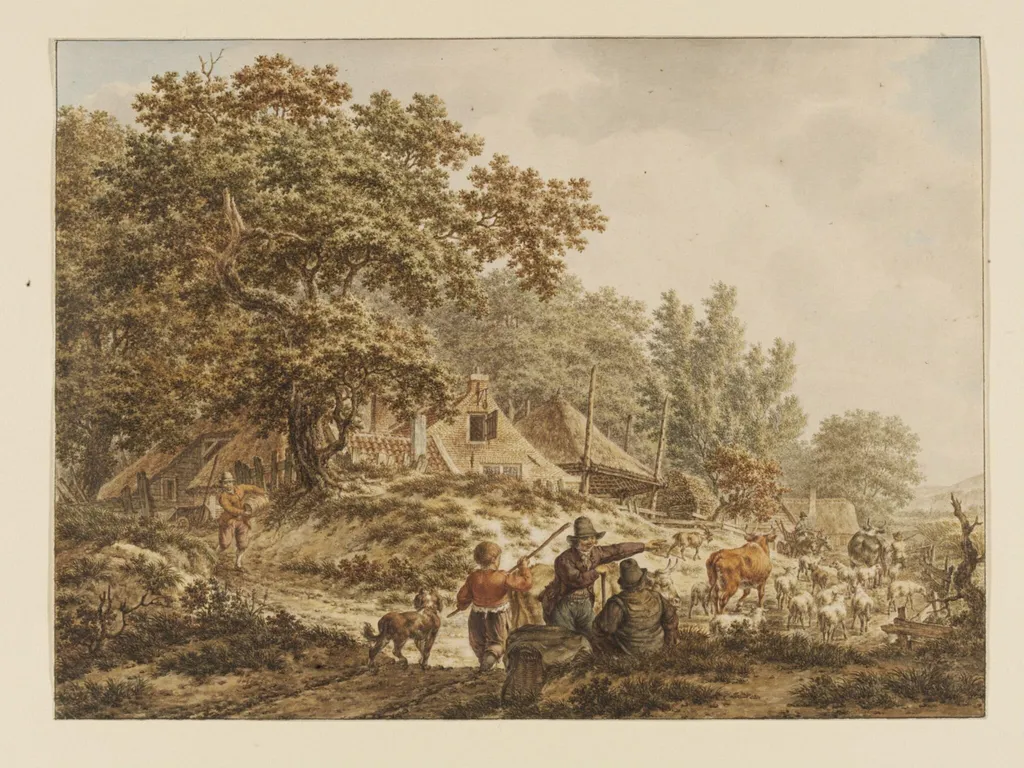
Herdsmen and Their Flocks Before a Dutch Farmstead Among Trees is a watercolor work on paper by the Rococo painting artist Jacob Cats. It dates from 1783 and is held in the collection of the Victoria and Albert Museum. This watercolour depicts a quiet rural scene in the Dutch countryside, centered on a brick farmhouse with a tiled roof and gable crane.
About this work
Overview
This watercolour depicts a quiet rural scene in the Dutch countryside, centered on a brick farmhouse with a tiled roof and gable crane. Surrounding structures include a hay barn and a thatched stable, while figures and animals move along a winding path. The composition balances architectural solidity with the organic flow of livestock and pedestrians, all rendered in subdued earth tones.
Subject & Meaning
A man carries a barrel toward the farm, while another herder guides flocks of cattle, sheep, and goats along the road.
The scene captures everyday rural labor and interaction: a seated hawker converses with an elderly herdsman who points toward the horizon, suggesting direction or warning. A man carries a barrel toward the farm, while another herder guides flocks of cattle, sheep, and goats along the road. A horse-drawn cart approaches, reinforcing the rhythm of agricultural life. The presence of dogs and scattered goats adds detail without narrative climax.
Technique & Style
The artist employs watercolour with restrained washes to model form and atmosphere. Subtle shifts in tone, guided by chiaroscuro, define the volume of buildings and the depth of the landscape. Muted browns and greens dominate, enhancing the quiet realism of the moment. Delicate linework outlines figures and animals, grounding them in the soft, atmospheric space without sharp definition.
History & Provenance
The work entered the museum’s collection in 1882 through the bequest of John Jones, a collector known for his interest in Dutch and Flemish watercolours. Its provenance prior to Jones is undocumented, but its subject matter and technique align with 17th-century Dutch genre traditions, suggesting it may have been produced during or shortly after that period.
Context
The painting reflects the enduring Dutch tradition of depicting rural life with observational precision. Unlike grand historical scenes, it focuses on the unremarkable rhythms of farmsteads and herding, values common in 17th-century Dutch art. The inclusion of itinerant figures and transport suggests a network of local commerce, typical of the period’s economic landscape.
Legacy
Though not widely exhibited, the watercolour contributes to the understanding of Dutch genre painting beyond oil on canvas. Its modest scale and medium highlight the versatility of watercolour in capturing transient light and quiet moments. It remains a quiet testament to the everyday life of rural communities in early modern Netherlands.
Own this work as a print
Artist & collection
Artist
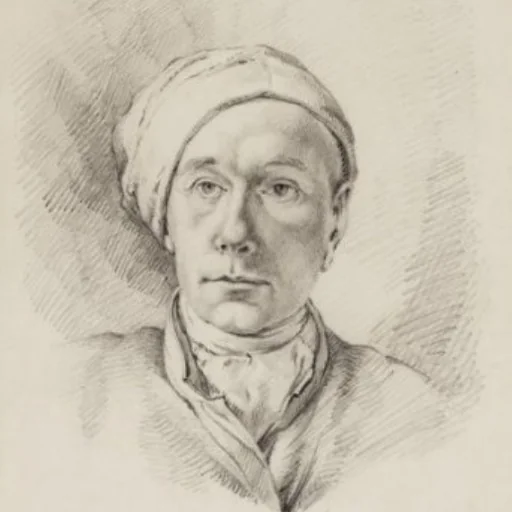
Jacob Cats (1741–1799) was a Dutch draughtsman who also etched and painted. He was born at Altona in 1741 as the son of a Mennonite bookseller who had to flee Amsterdam because of a controversial publication. The family…

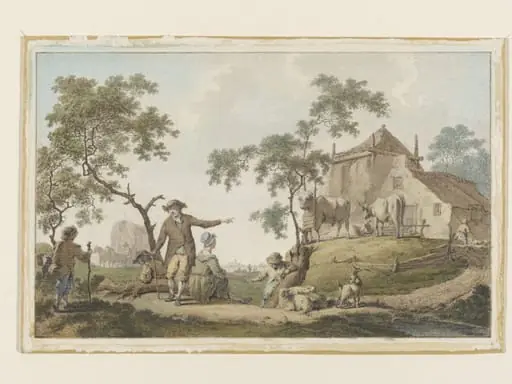 Farm Landscape with figure and cattle
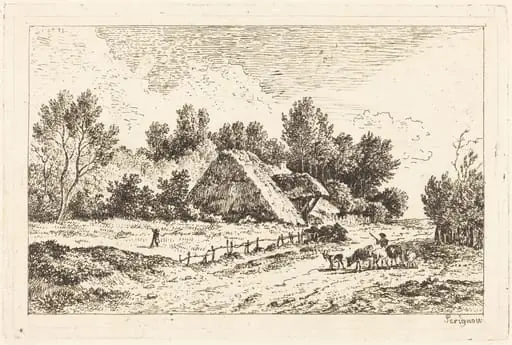 A Low Cottage with a Herdsman Leading His Flock
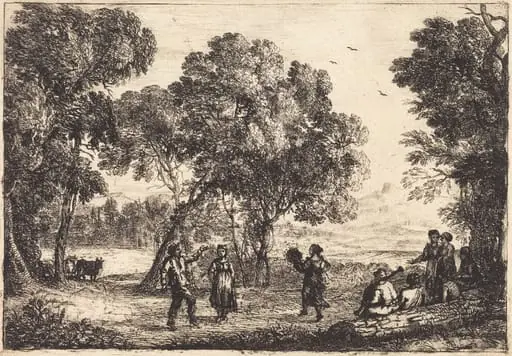 The Country Dance (Small Plate) (La danse sous les arbres)
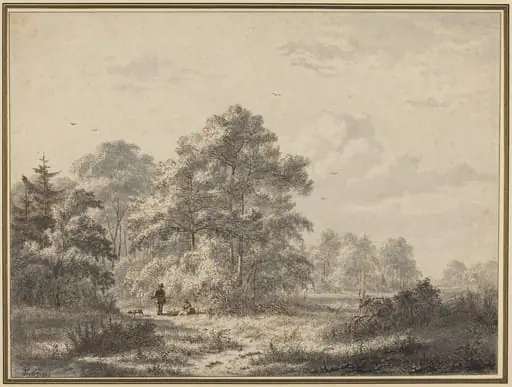 Hunters at the Edge of the Woods
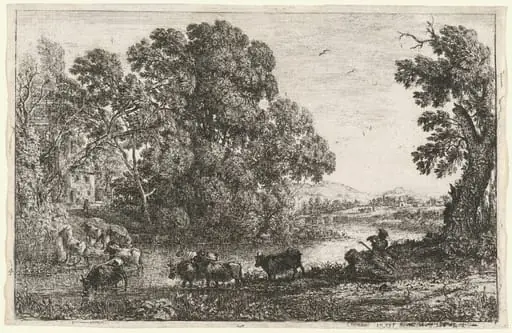 The Cowherd (Le bouvier)
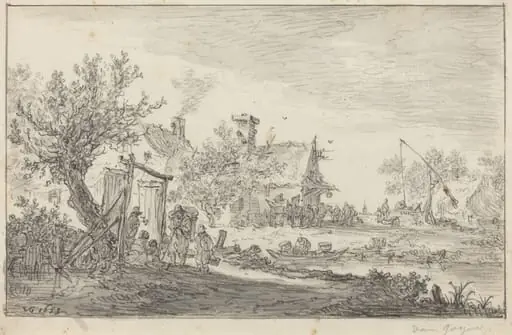 Wayside Inn
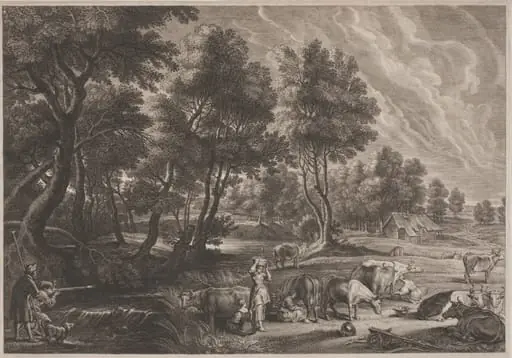 Farm Landscape with Hunters and Milkmaids
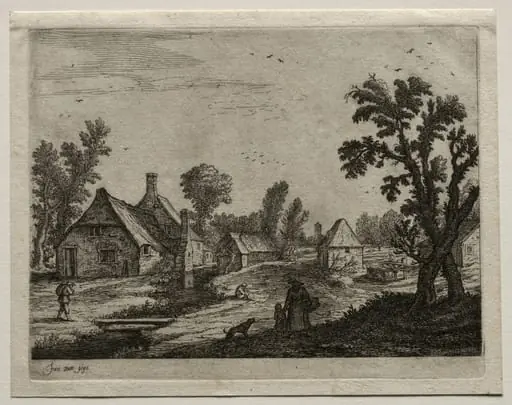 The Plank over the Stream
 The Approach to a Village