Artwork
The Watermill, Bougival
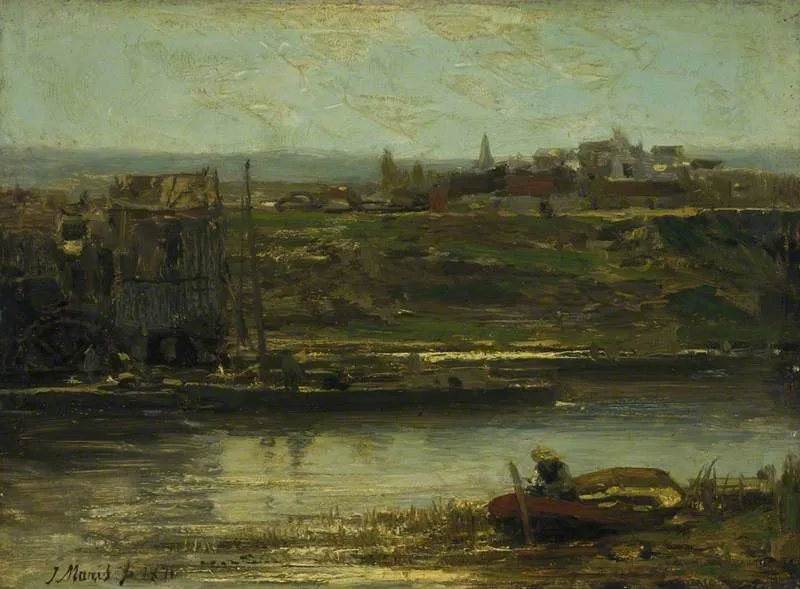
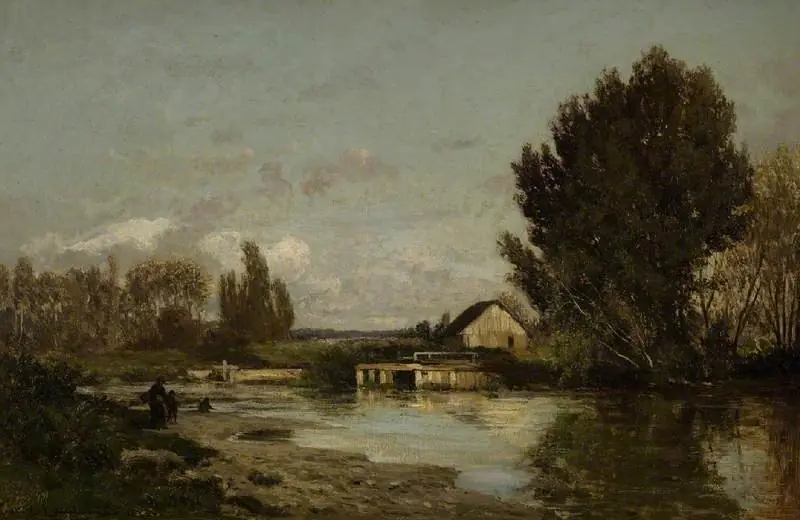
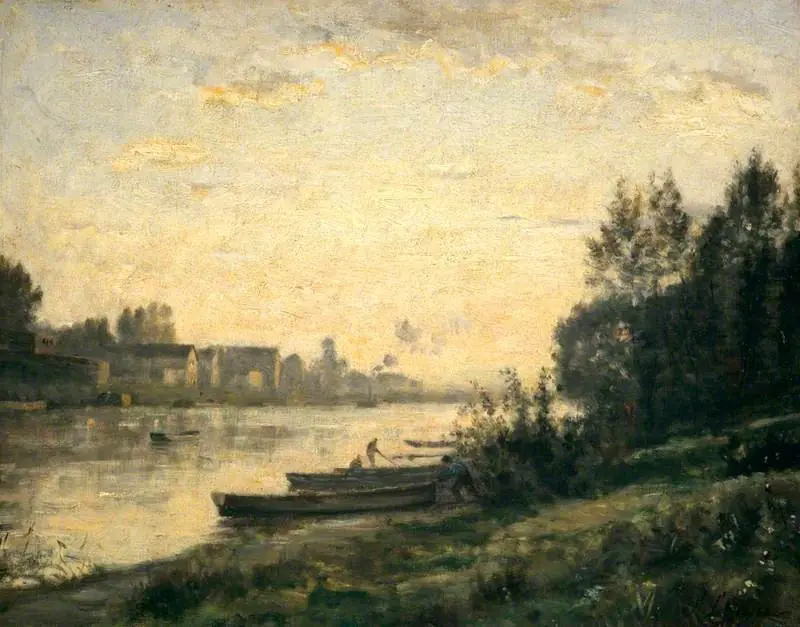
The Watermill, Bougival is an oil painting by the Impressionist artist Jacob Maris. It dates from 1871 and is held in the collection of the National Galleries Scotland.
About this work
Overview
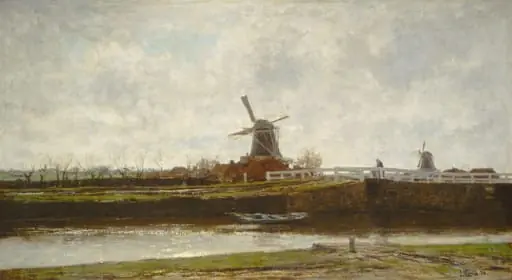
Painted in 1871 by Jacob Maris, *The Watermill, Bougival* is an oil-on-canvas landscape depicting a quiet riverside scene near Paris.
Painted in 1871 by Jacob Maris, *The Watermill, Bougival* is an oil-on-canvas landscape depicting a quiet riverside scene near Paris. Maris, a key figure in the Hague School, captured this moment during a period of transition in European landscape painting. Though rooted in Dutch traditions, the work reflects the observational approach emerging in French Impressionism, blending naturalism with a sensitivity to light and atmosphere.
Subject & Meaning
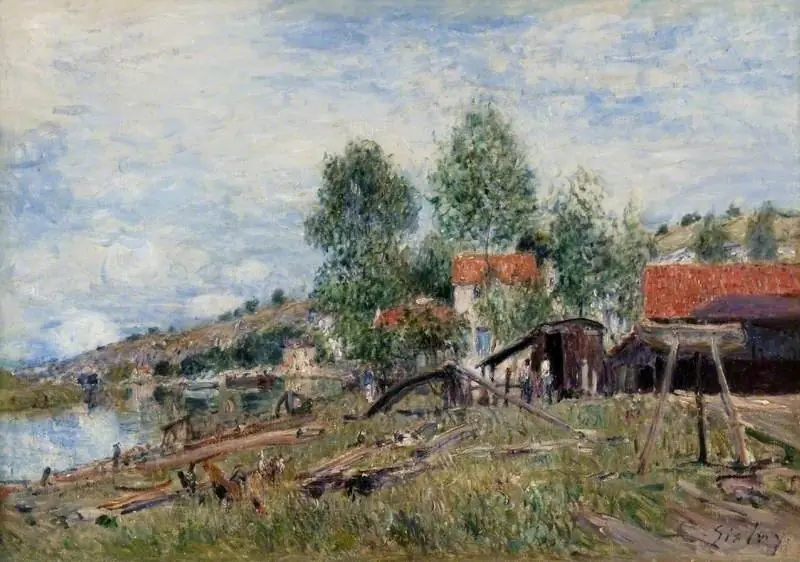
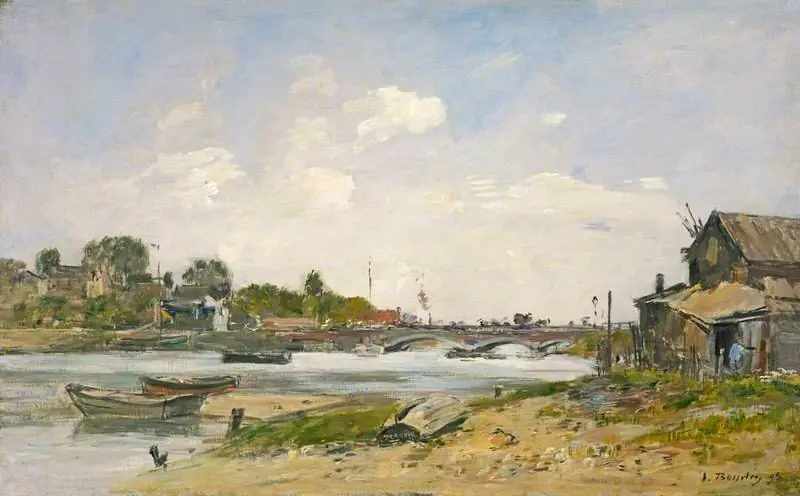
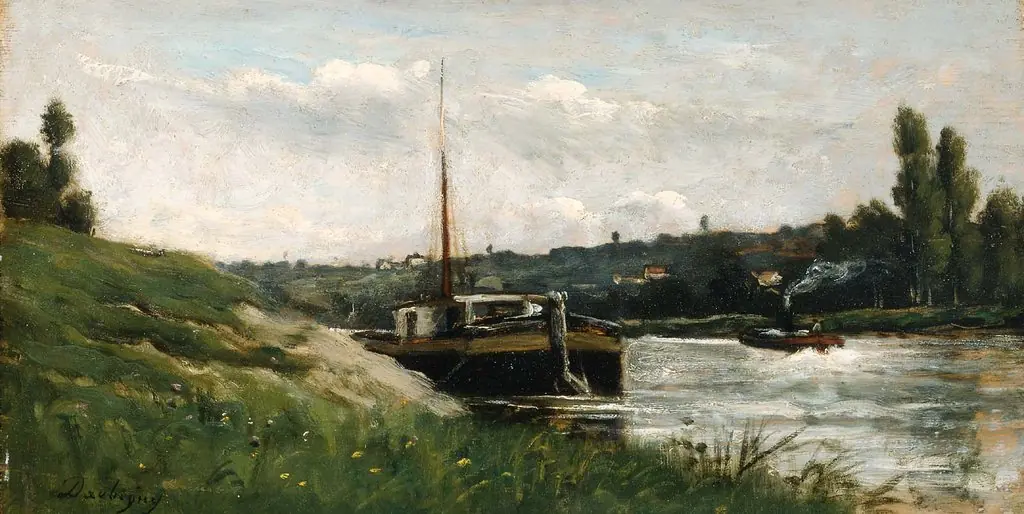
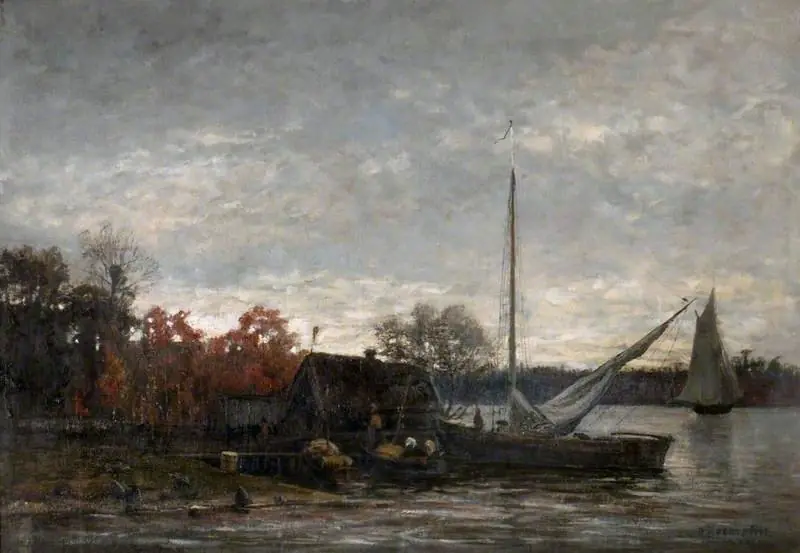
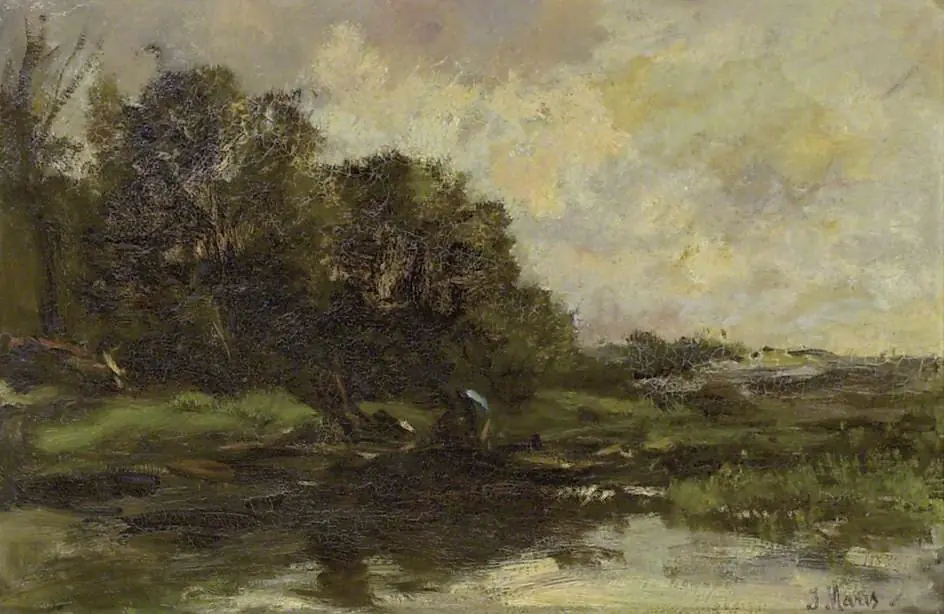
The painting centers on a wooden watermill situated along the riverbank, with a small rowboat gently resting in the water before it. The mill, a symbol of rural industry, stands in quiet harmony with its surroundings. No human figures are present, emphasizing solitude and the rhythms of nature. The composition invites contemplation of everyday rural life, stripped of narrative drama, focusing instead on stillness and place.
Technique & Style
Maris applied oil paint with loose, visible brushwork, capturing the texture of water, sky, and timber without excessive detail. Earthy browns and muted greens dominate, accented by soft blues in the sky and river. The brushstrokes suggest an interest in light’s transient effects, aligning with Impressionist concerns. Subtle impasto is used in areas like the mill’s wooden surfaces, adding tactile presence without overt emphasis.
History & Provenance
Created during Maris’s time in Bougival, a village near Paris frequented by artists, the painting reflects his engagement with French landscape traditions. It entered the collection of the Scottish National Gallery in the 20th century, likely through acquisition or bequest. Its presence in Edinburgh underscores the international reach of Hague School artists and the growing appreciation for their work beyond the Netherlands.
Context
In the early 1870s, Dutch painters like Maris were increasingly influenced by French plein air practices. While the Hague School emphasized tonal harmony and subdued palettes, artists in Bougival were experimenting with direct observation under changing light. *The Watermill, Bougival* sits at this crossroads—retaining Dutch restraint while absorbing the immediacy of French landscape painting during the formative years of Impressionism.
Legacy
Though less celebrated than his French contemporaries, Maris’s work contributed to the broader shift toward naturalistic landscape representation in late 19th-century Europe. *The Watermill, Bougival* exemplifies how Dutch artists adapted to new visual languages without abandoning their compositional discipline. Its quiet presence in the Scottish National Gallery continues to offer insight into transnational artistic exchange during a period of rapid stylistic change.
Artist & collection
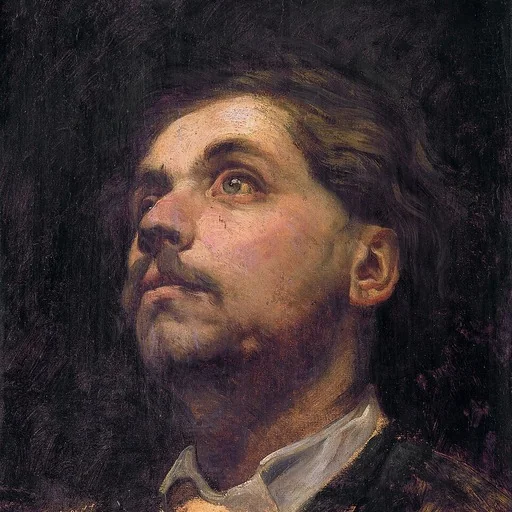
Artist
Jacob Henricus Maris (August 25, 1837 – August 7, 1899) was a Dutch painter, who with his brothers Willem and Matthijs belonged to what has come to be known as the Hague School of painters.