Artwork
The Seine at La Garenne Saint-Denis
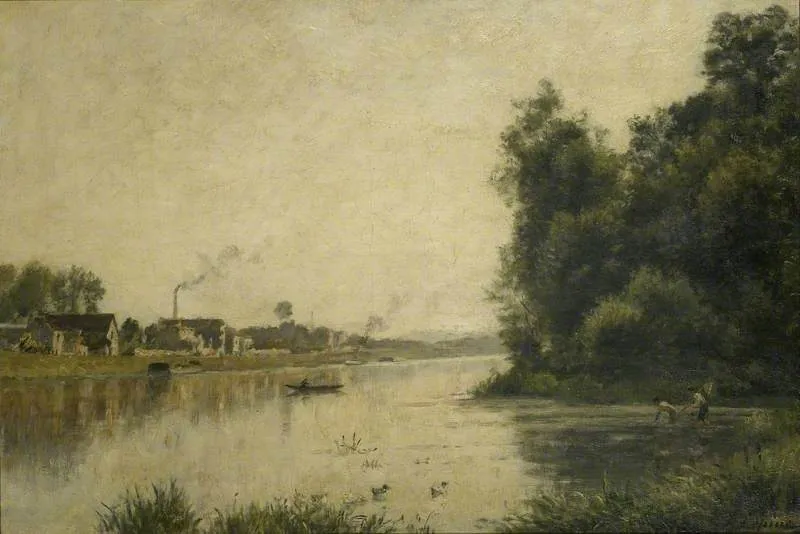
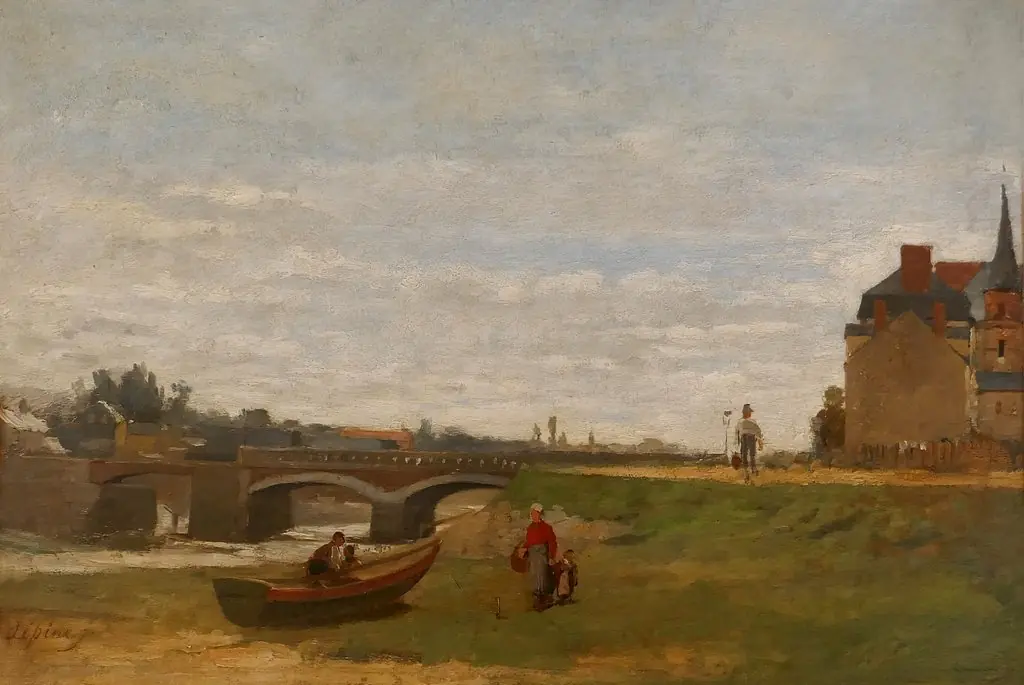
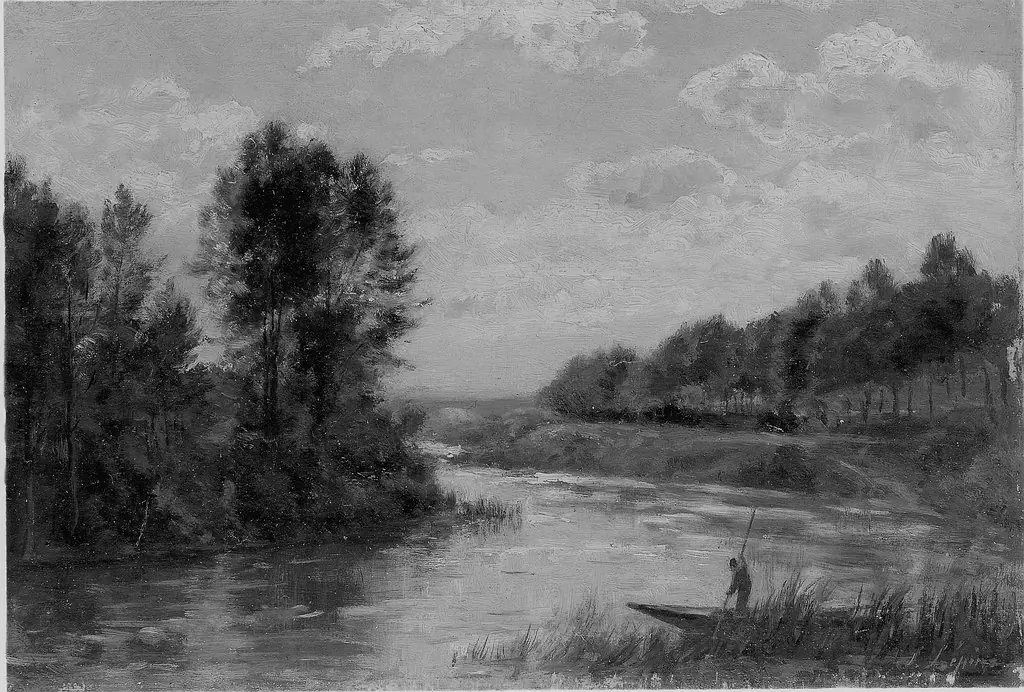
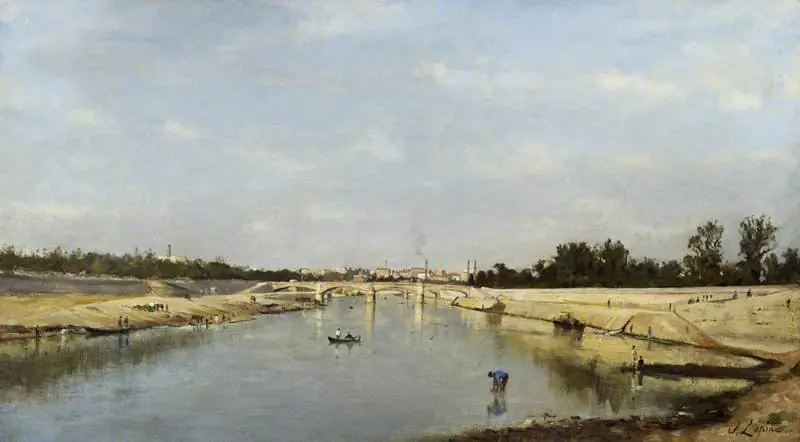
The Seine at La Garenne Saint-Denis is an oil painting by the Impressionist artist Stanislas Lépine. It dates from 1875 and is held in the collection of the Ashmolean Museum.
About this work
Overview
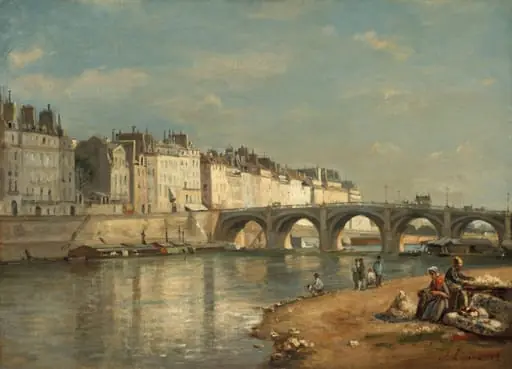
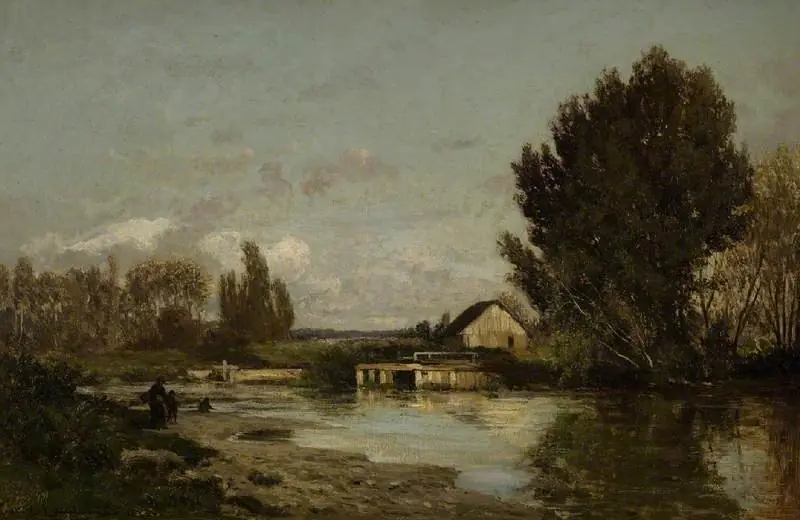
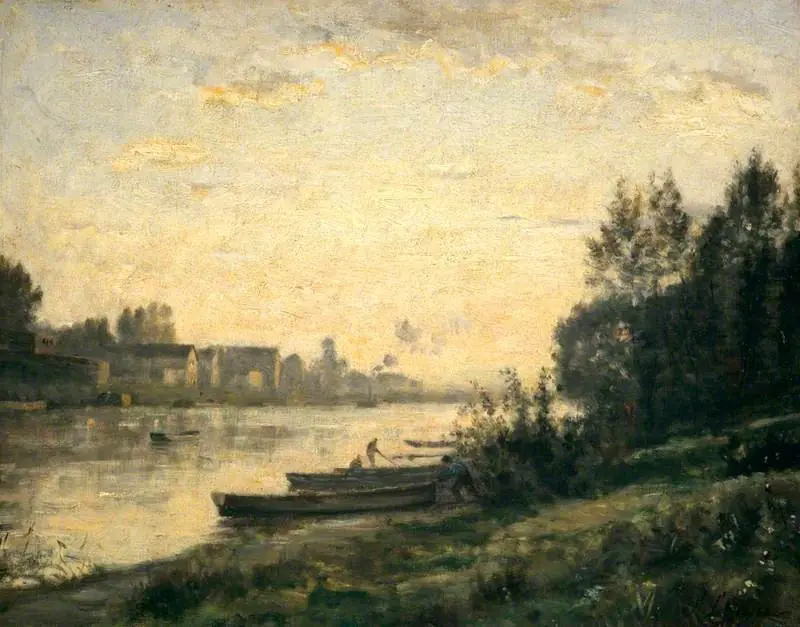
Painted in 1875 by Stanislas Lépine, this oil on canvas depicts a quiet stretch of the Seine near La Garenne Saint-Denis. The work captures a tranquil riverside setting with subtle shifts in light and atmosphere. It is part of the Ashmolean Museum’s collection, where it remains as a representative example of late 19th-century French landscape painting rooted in direct observation of nature.
Subject & Meaning
The scene portrays a modest riverside locale, neither grand nor urban, but quietly inhabited. Figures along the bank suggest everyday activity—fishing, walking, or resting—without drawing attention. The composition avoids drama, instead emphasizing stillness and the quiet rhythm of rural life along the Seine, reflecting a preference for unembellished, ordinary moments over theatrical narratives.
Technique & Style
Lépine employed soft, blended brushwork to convey the hazy quality of light on water and foliage. Colors are restrained—soft greens, grays, and pale blues—enhancing the muted, atmospheric tone. The river acts as a reflective surface, mirroring the sky and diffusing ambient light. This approach aligns with plein air practices, prioritizing naturalism over idealized detail.
History & Provenance
Created during Lépine’s mature period, the painting was likely made during one of his frequent excursions along the Seine’s suburban reaches.
Created during Lépine’s mature period, the painting was likely made during one of his frequent excursions along the Seine’s suburban reaches. It entered the Ashmolean Museum’s collection in the 20th century, possibly through a bequest or acquisition from a British collector with interest in French Impressionist-affiliated artists. Its provenance remains largely unpublicized beyond institutional records.
Context
Lépine worked alongside artists who would later be associated with Impressionism, though he maintained a more restrained aesthetic. His focus on suburban riverscapes contrasted with the bustling Parisian scenes favored by contemporaries. This painting reflects a broader trend among French painters of the 1870s to find artistic value in overlooked, semi-rural landscapes near the city.
Legacy
Though not widely exhibited outside academic circles, the painting contributes to the understanding of how landscape painting evolved beyond Romantic grandeur into intimate, observational studies. Lépine’s quiet depictions of the Seine’s edges helped pave the way for later artists who valued place over spectacle, influencing regionalist and tonalist traditions in European art.
Artist & collection
Artist
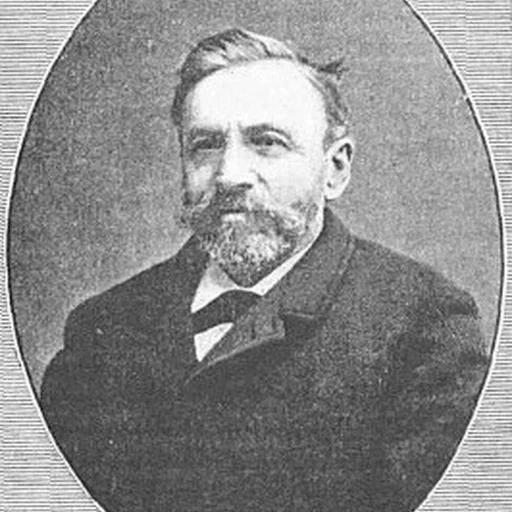
Stanislas Victor Edouard Lépine (October 3, 1835 – September 28, 1892) was a French painter who specialized in landscapes, especially views of the Seine.