Artwork
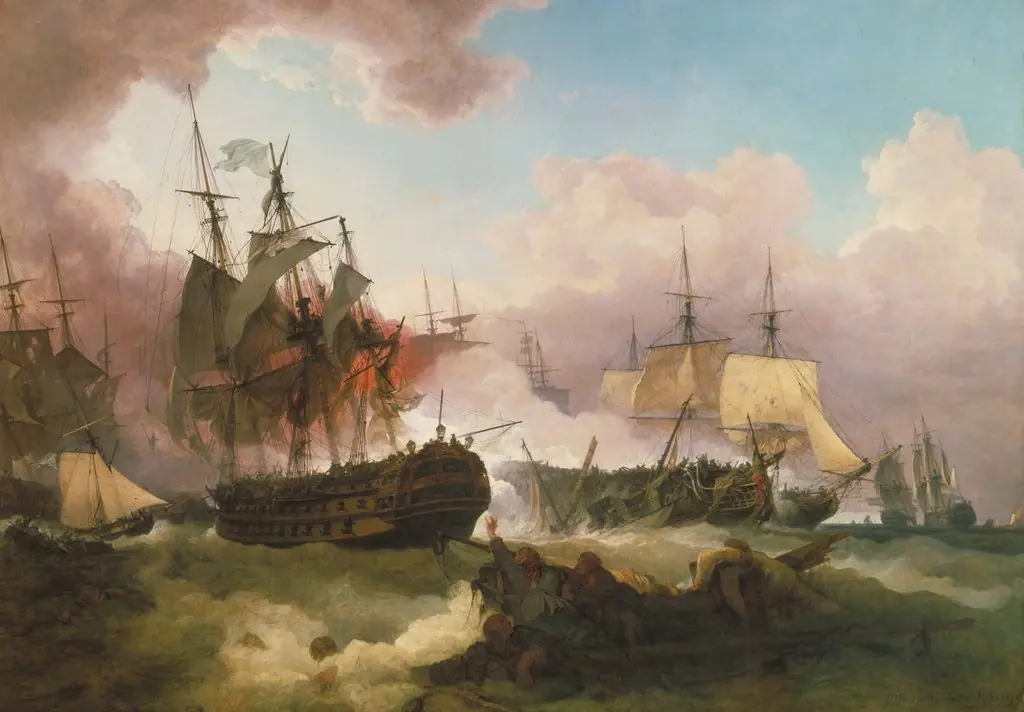
Destruction of the Turkish Fleet in the Bay of Chesme
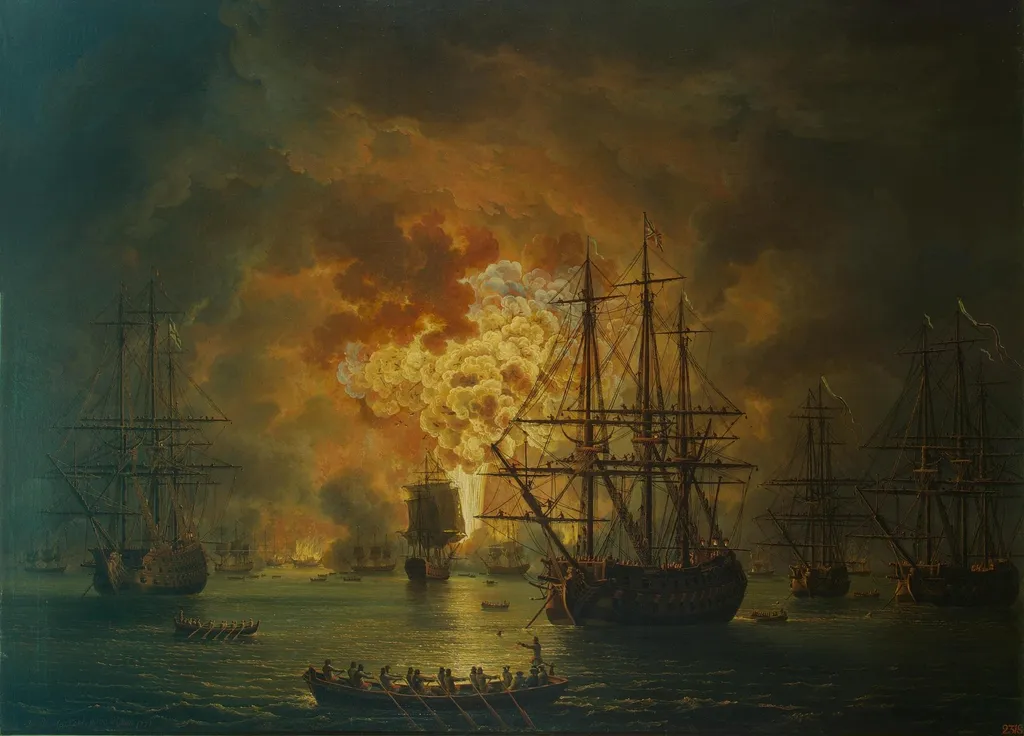
Destruction of the Turkish Fleet in the Bay of Chesme is an oil painting by the Neoclassicist artist Jacob Philipp Hackert. It dates from 1771 and is held in the collection of the Hermitage Museum.
About this work
The painting is titled Destruction of the Turkish Fleet in the Bay of Chesme.
It was created by Jacob Philipp Hackert in 1771.
The artist used oil paint to create this work, which is now held at the State Hermitage Museum.
To learn more about the style and techniques used in this painting, look up the artist: Jacob Philipp Hackert.
Overview
It portrays a decisive naval engagement during the Russo-Turkish War, specifically the destruction of the Ottoman fleet in Chesme Bay.
Jacob Philipp Hackert, a German-born artist active in Italy, completed this oil painting in 1771. It portrays a decisive naval engagement during the Russo-Turkish War, specifically the destruction of the Ottoman fleet in Chesme Bay. The work is part of the State Hermitage Museum’s collection and reflects Hackert’s engagement with contemporary historical events through landscape and maritime composition.
Subject & Meaning
The painting captures the moment of the Russian fleet’s successful attack on the anchored Turkish navy in July 1770. Flames engulf ships, smoke obscures the horizon, and scattered wreckage conveys chaos. Rather than glorifying individual heroes, Hackert emphasizes the scale and violence of the event, aligning with Enlightenment-era interest in documented history and the consequences of military conflict.
Technique & Style
Hackert employed precise brushwork and atmospheric perspective to render the naval battle with clarity. His background in landscape painting informed the careful depiction of light, water, and sky, lending realism to the scene. The composition balances dynamic action with structured horizontals, characteristic of neoclassical order, even as the subject matter conveys destruction.
History & Provenance
Commissioned shortly after the battle, the painting entered the Russian imperial collection by 1771. It was acquired by Catherine the Great, who sought to commemorate Russia’s naval victories. The work remained in the Hermitage throughout the 19th and 20th centuries, preserved as part of the state’s historical visual archive rather than as a standalone artistic statement.
Context
The Russo-Turkish War (1768–1774) marked a turning point in Russian expansion into the Black Sea. Hackert, based in Italy, was one of several European artists commissioned to document imperial military successes. His depiction reflects the broader trend of using art to legitimize political power, aligning with the tastes of Catherine’s court and European audiences interested in recent warfare.
Legacy
Though Hackert is better known for serene landscapes, this painting stands as a rare example of his engagement with violent historical subjects. It influenced later Russian naval painters and contributed to the visual record of 18th-century warfare. Its preservation in the Hermitage underscores its role as a documentary artifact as much as an artistic work.
Own this work as a print
Artist & collection

Artist
Jacob Philipp Hackert (15 September 1737 – 28 April 1807) was a landscape painter from Brandenburg, who did most of his work in Italy.

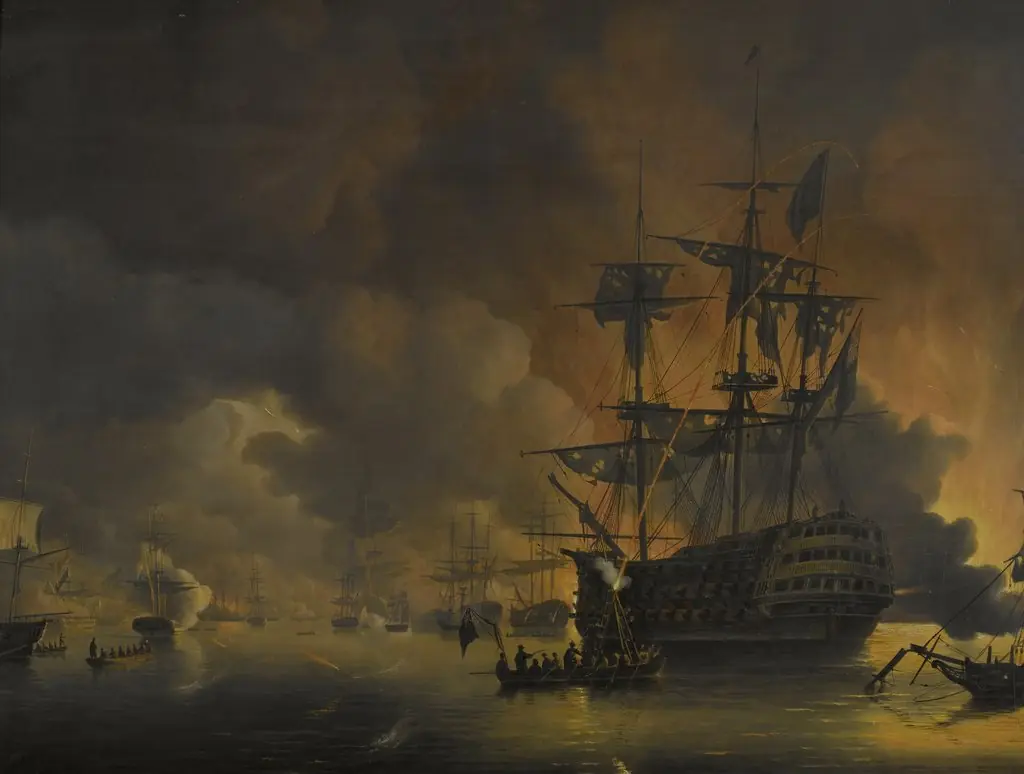 The fire on the Wharves of Algiers, shortly after the commencement of the Bombardment by the Anglo-Dutch Fleet, 27 August 1816
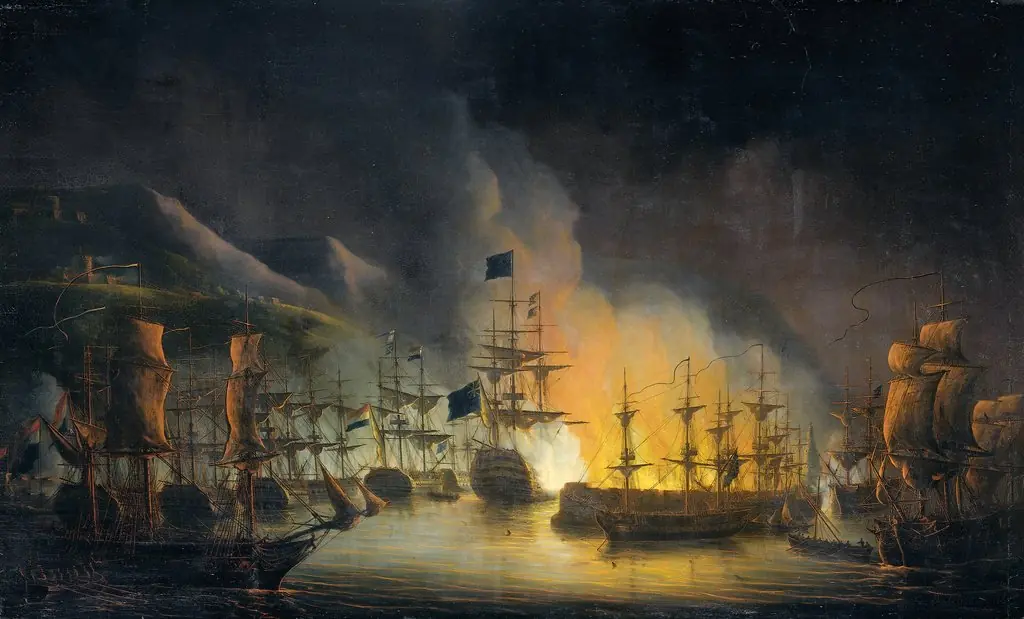 Bombardment of Algiers, in Support of the Ultimatum to Release White Slaves, 26-27 August 1816
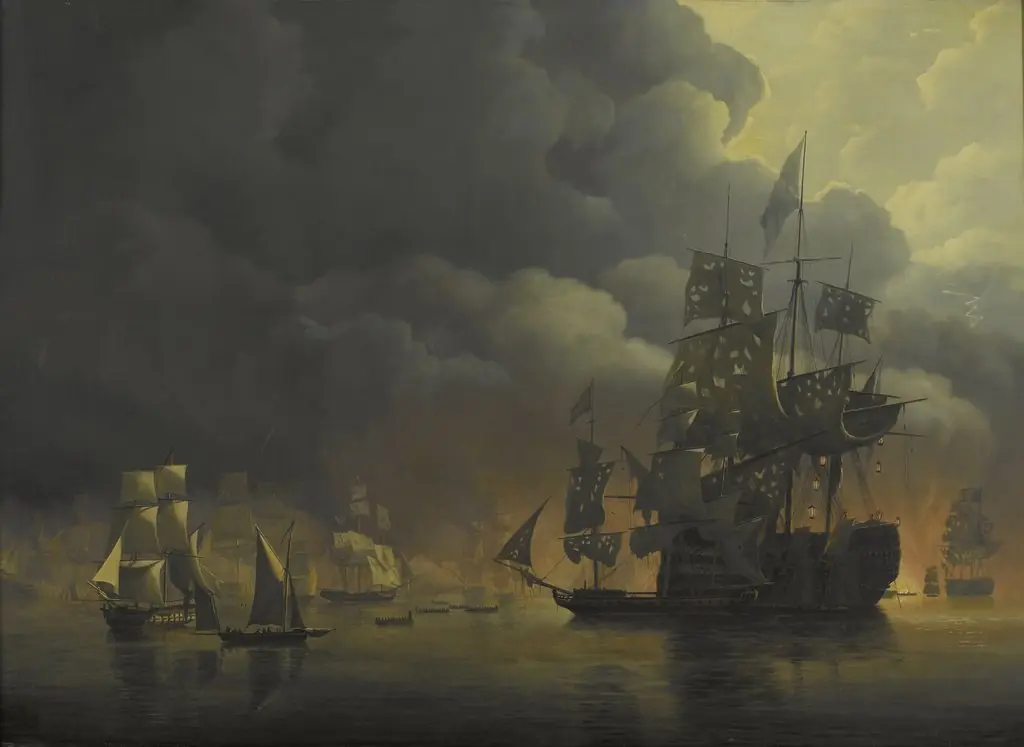 The Anglo-Dutch Fleet under Lord Exmouth and Vice Admiral Jonkheer Theodorus Frederik van Capellen putting out the Algerian Strongholds, 27 August 1816
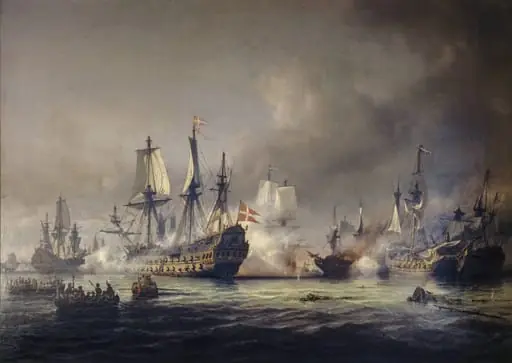 En episode af søslaget i Køge Bugt 1677
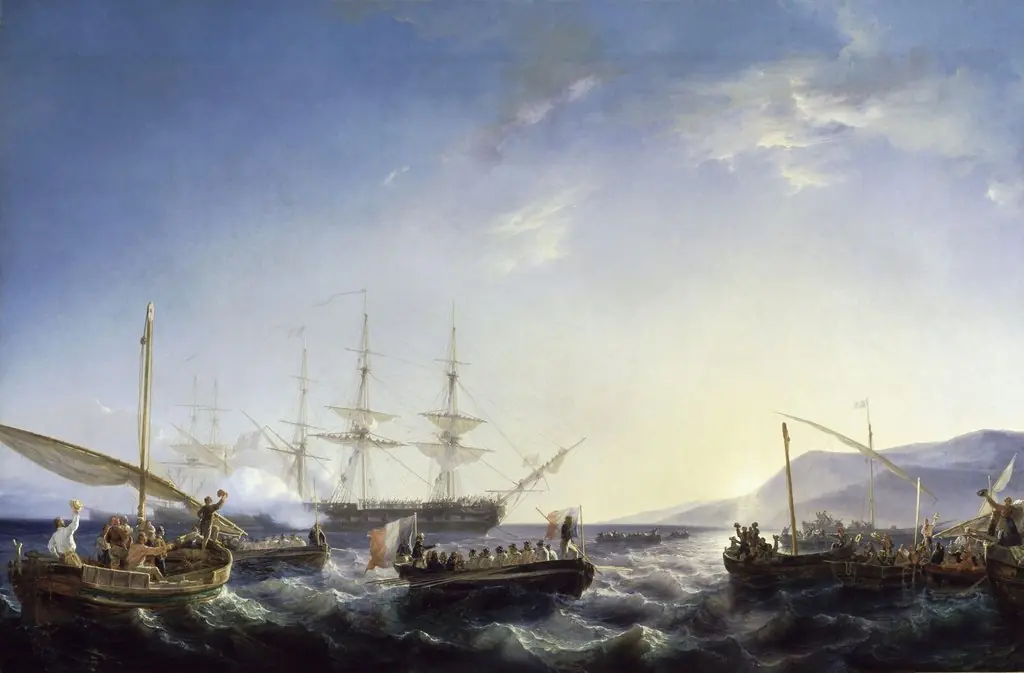 Bonaparte arriving in France back from Egypt on 9 October 1799
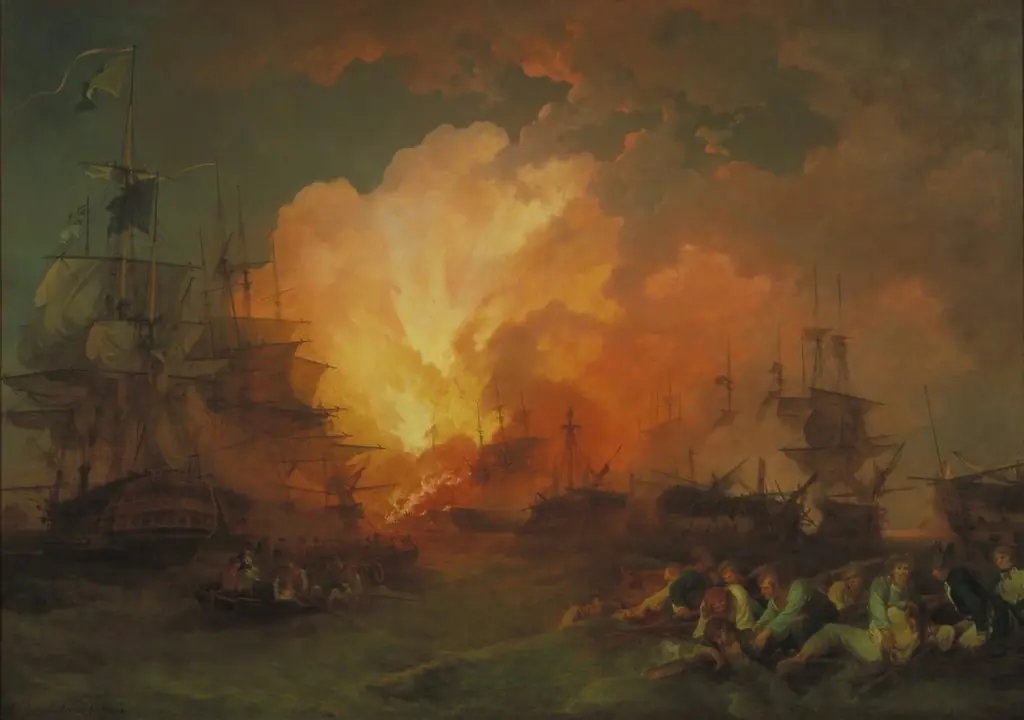 The Battle of the Nile
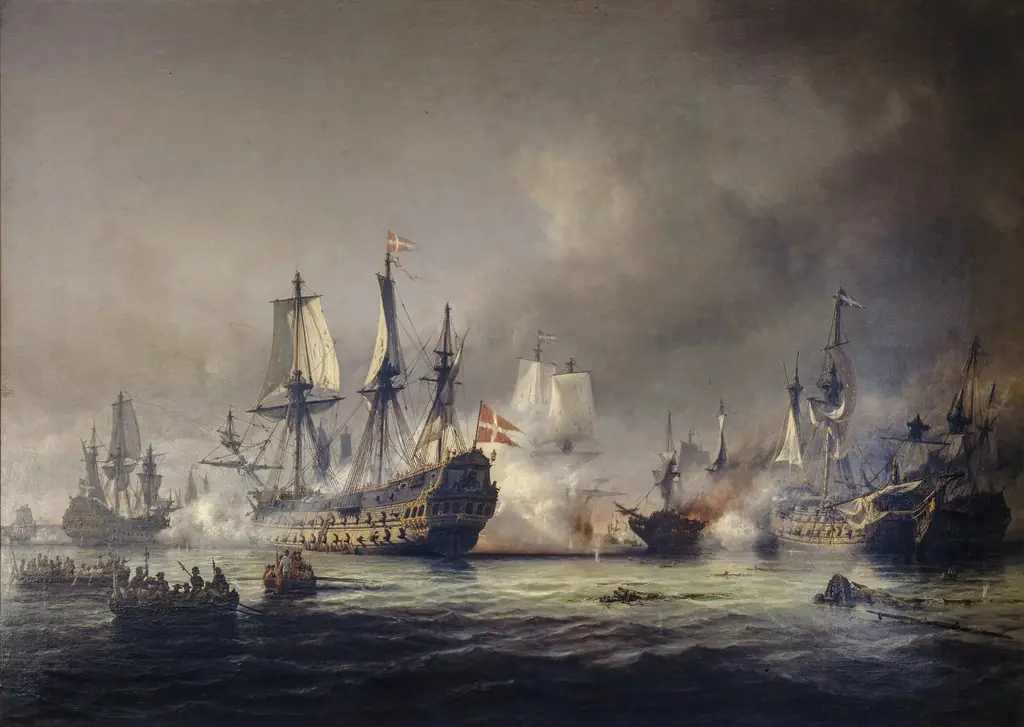 En episode af søslaget i Køge Bugt 1677
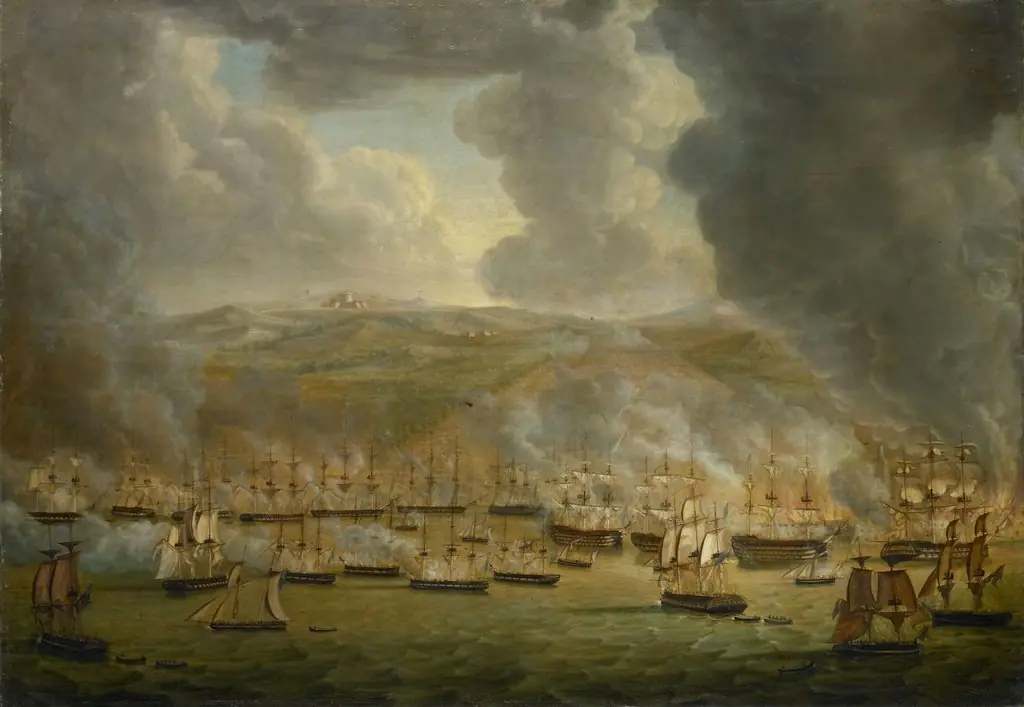 Bombardment of Algiers by the United Anglo-Dutch Naval Squadron, 1816
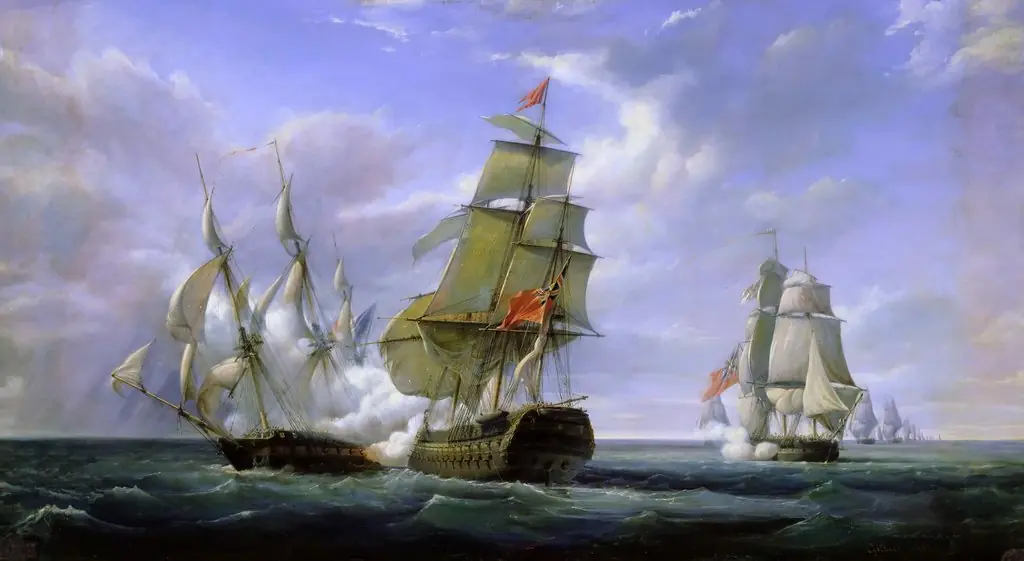 Fight of the British Third Rate 74-gun ship-of-the-line HMS Tremendous and HMS ''Hindostan against the French frigate Cannonière, 21 April 1806.
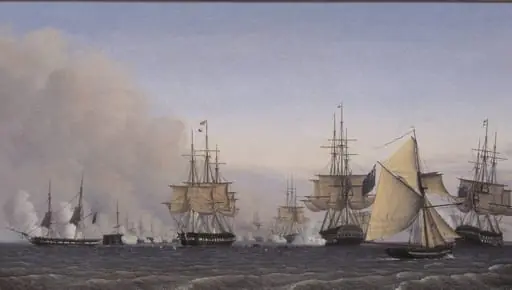 Slaget på Rheden den 2. april 1801
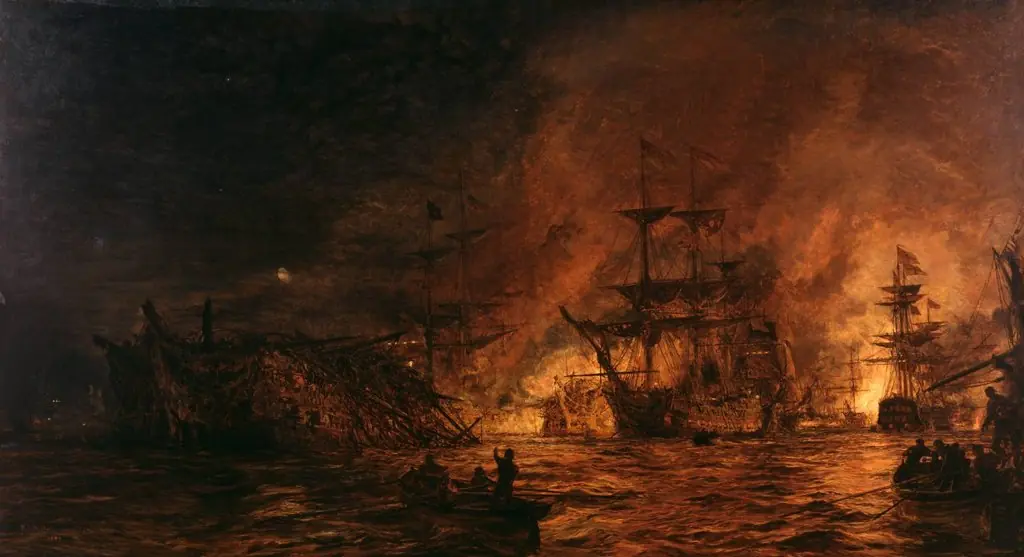 Battle of the Nile
 The Battle of Camperdown