Artwork
The Battle of Camperdown
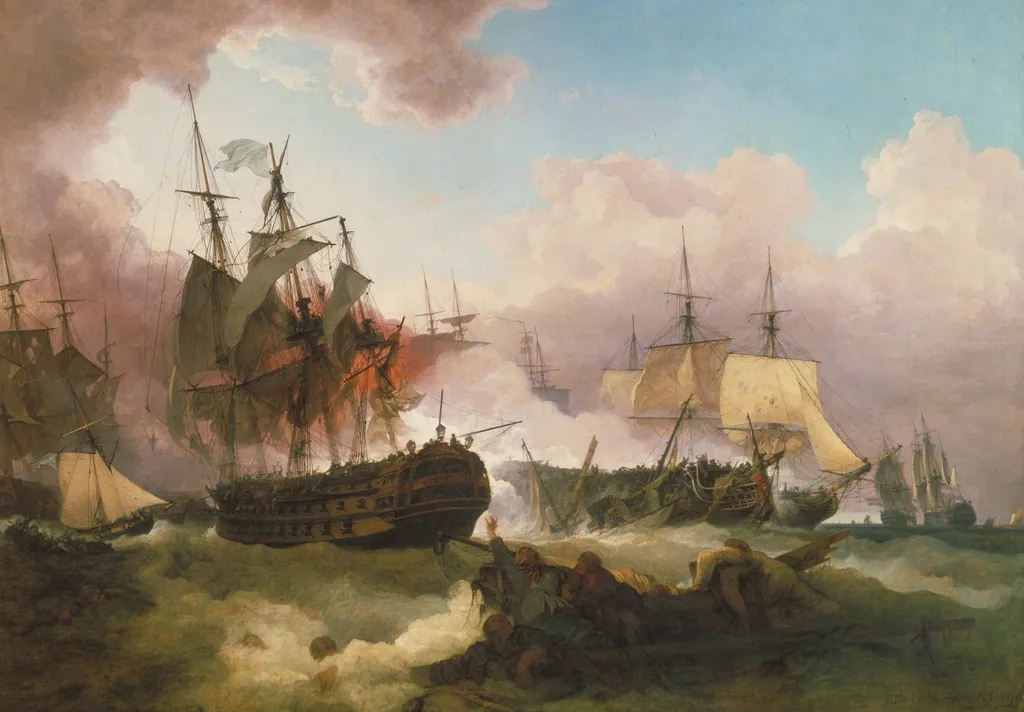
The Battle of Camperdown is an oil painting by Philip James de Loutherbourg. It dates from 1800 and is held in the collection of the Tate.
About this work
The Battle of Camperdown is a history painting. It was created by Philip James de Loutherbourg in 1799.
This painting is an example of a work that depicts a specific historical event. The event is likely to be of interest to those who enjoy learning about history.
To learn more about the style and methods used in this painting, look up the technique of glazing.
Overview
Executed in oil on canvas, the work belongs to a tradition of historical naval painting that sought to document recent military events.
Painted in 1799 by Philip James de Loutherbourg, The Battle of Camperdown captures a decisive naval engagement between British and Dutch fleets off the coast of the Netherlands. Executed in oil on canvas, the work belongs to a tradition of historical naval painting that sought to document recent military events. It was created as part of a pair, with its companion piece depicting the Battle of the Nile, both commissioned to commemorate British naval successes during the French Revolutionary Wars.
Subject & Meaning
The painting illustrates the 1797 Battle of Camperdown, in which Admiral Adam Duncan’s British fleet defeated the Dutch navy, preventing a potential alliance with France. De Loutherbourg emphasizes chaos and scale, portraying ships in close combat amid turbulent seas. The scene carries no overt heroism; instead, it presents the battle as a moment of strategic consequence, reflecting national pride through factual representation rather than mythologized glory.
Technique & Style
De Loutherbourg employed layered glazing to achieve depth in the sea and sky, enhancing atmospheric realism. His brushwork balances precise rendering of ship details with looser, dynamic strokes to convey motion and smoke. Influenced by theatrical staging, he arranged the composition to guide the viewer’s eye through the chaos, using light to distinguish key vessels and moments of impact without romantic embellishment.
History & Provenance
Commissioned shortly after the battle, the painting entered public collections in the 19th century and has remained in British institutional custody. It was paired with The Battle of the Nile (1800), another naval scene by the artist, both intended for display in government or naval contexts. Since the 20th century, the works have been held by Tate Britain, where they serve as records of early modern British maritime power.
Context
Created during a period of intense naval rivalry, the painting reflects Britain’s reliance on maritime strength to counter revolutionary France and its allies. De Loutherbourg, though French-born, worked within British artistic circles and was appointed official painter to the royal household. His naval scenes were part of a broader cultural effort to visually affirm national identity through documented military triumphs.
Legacy
Though less celebrated than later naval artists, de Loutherbourg’s works contributed to the development of British historical painting. The Battle of Camperdown remains a primary visual source for understanding how early 19th-century audiences perceived naval warfare. Its preservation in Tate Britain ensures continued access for scholars and the public, offering insight into the intersection of art, politics, and maritime history.
Own this work as a print
Artist & collection
Artist
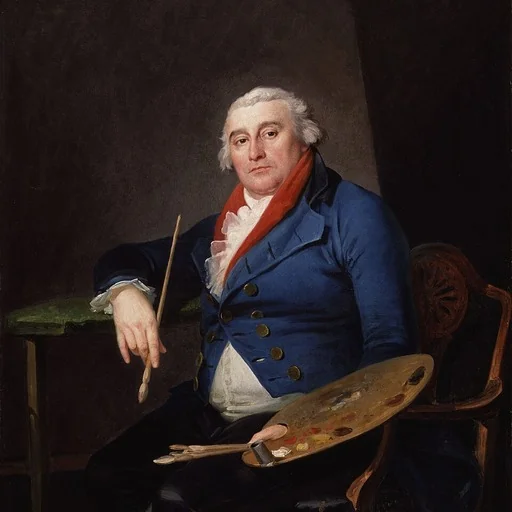
Philip James de Loutherbourg, RA (born Philippe Jacques de Loutherbourg; 31 October 1740 – 11 March 1812) was a French-born British painter who became known for his large naval works, his elaborate set designs for…

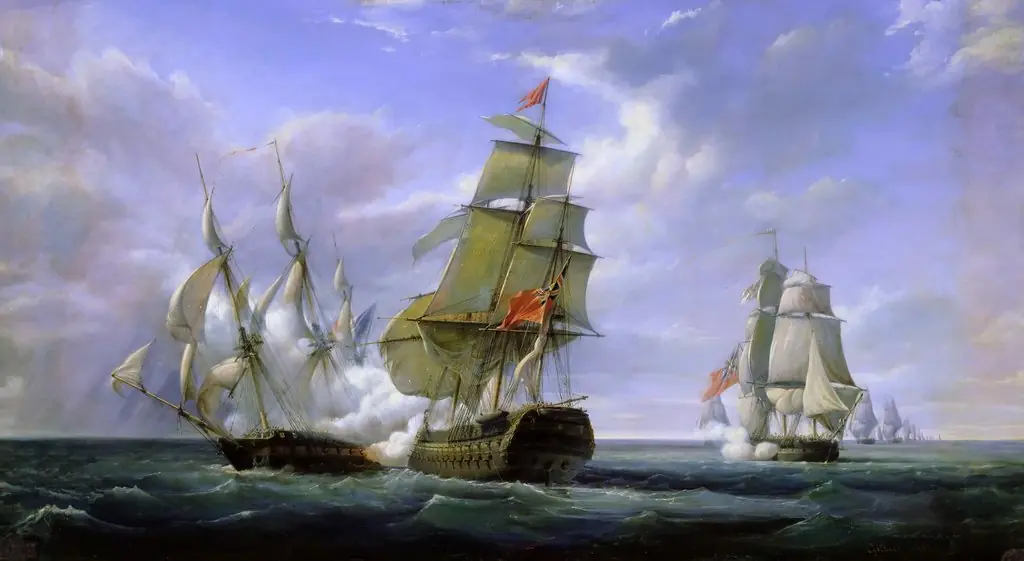 Fight of the British Third Rate 74-gun ship-of-the-line HMS Tremendous and HMS ''Hindostan against the French frigate Cannonière, 21 April 1806.
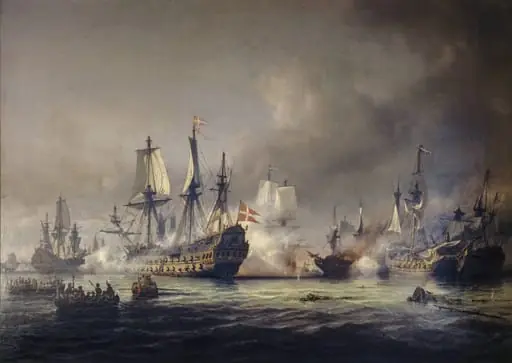 En episode af søslaget i Køge Bugt 1677
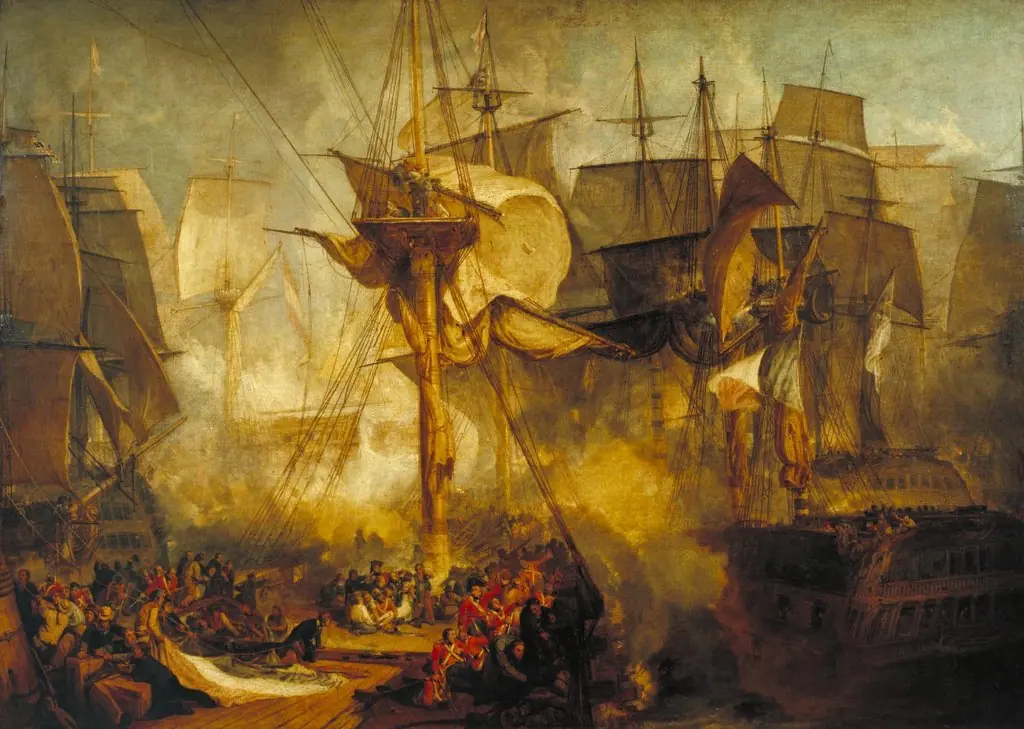 The Battle of Trafalgar (1806)
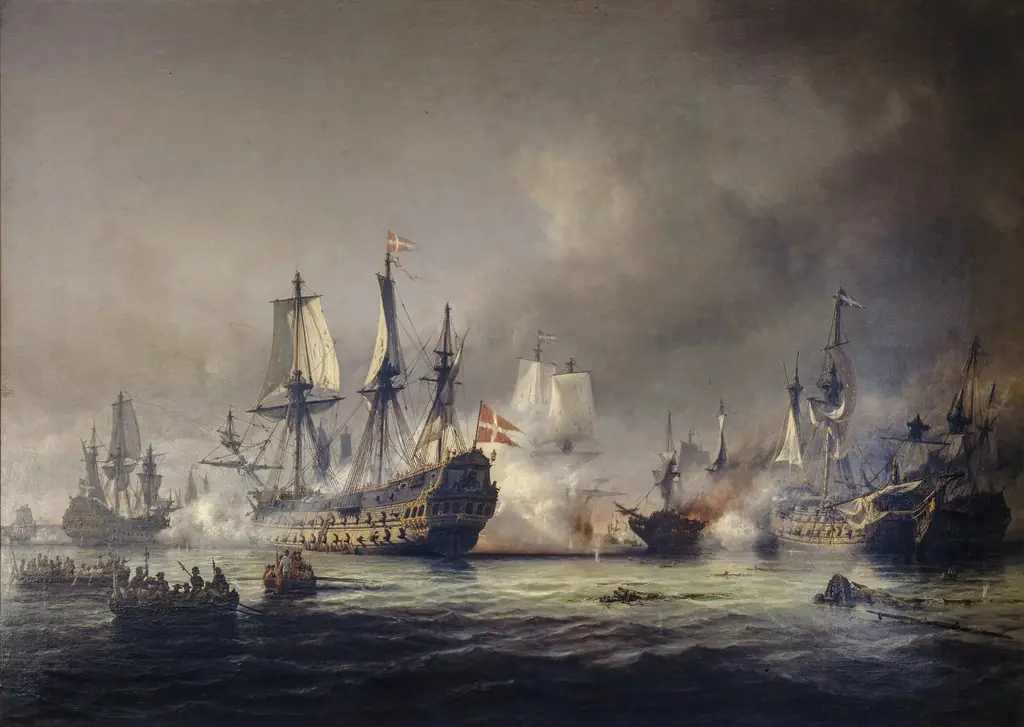 En episode af søslaget i Køge Bugt 1677
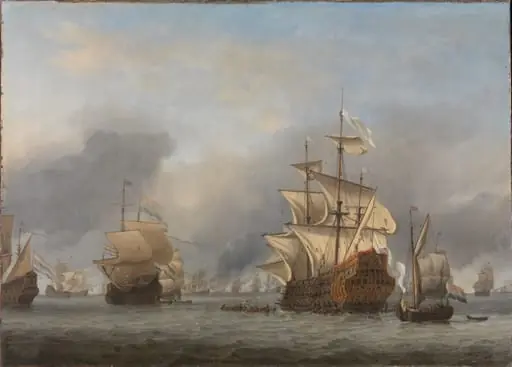 De verovering van de Royal Prince
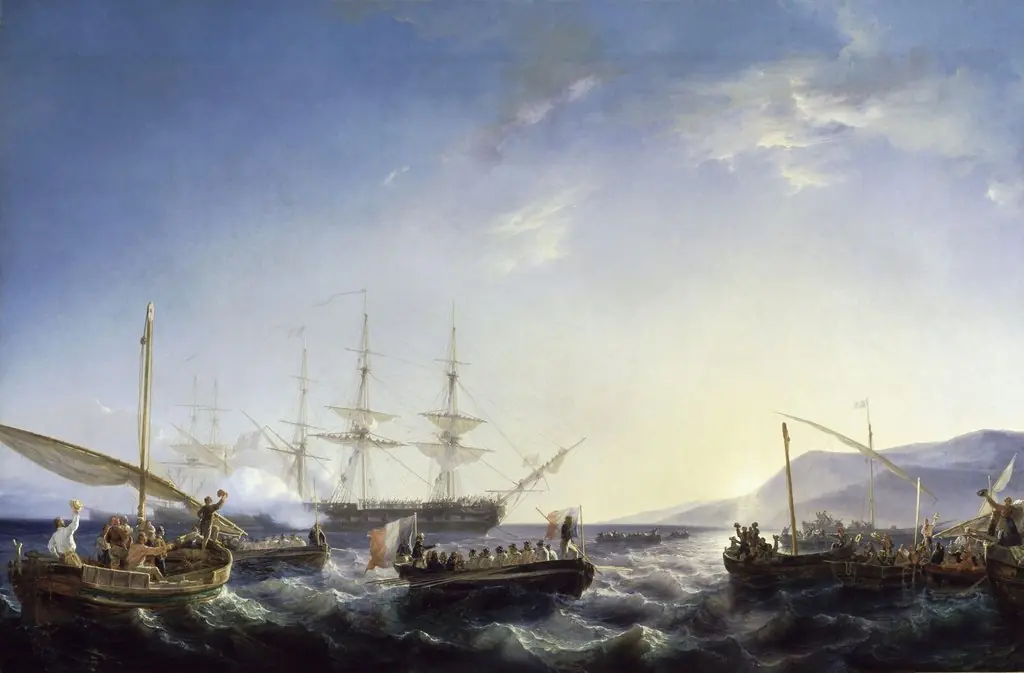 Bonaparte arriving in France back from Egypt on 9 October 1799
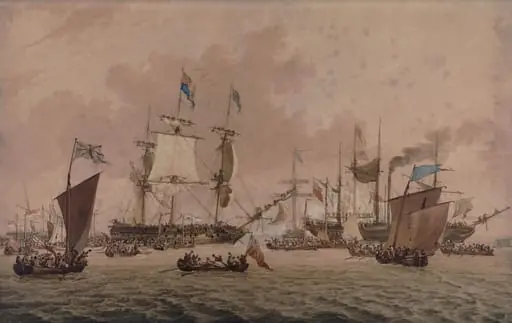 Shipping and boats: George IV passing Great Ormesby, Yarmouth, on his return from Edinburgh 1822
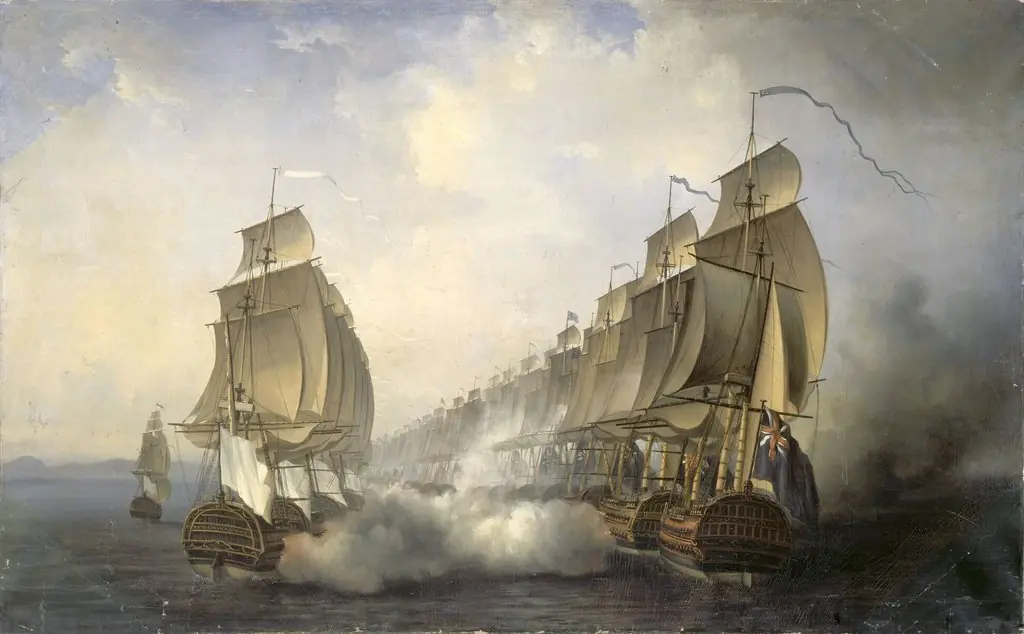 Naval battle of Gondelour, june 20, 1783
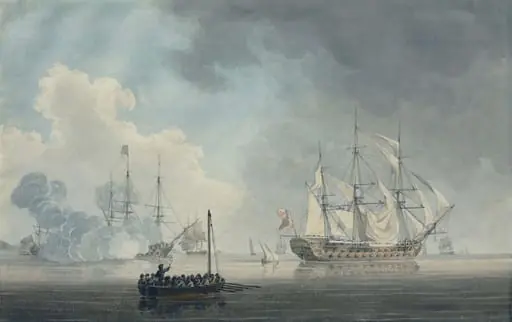 English Ships of War, one firing a salute
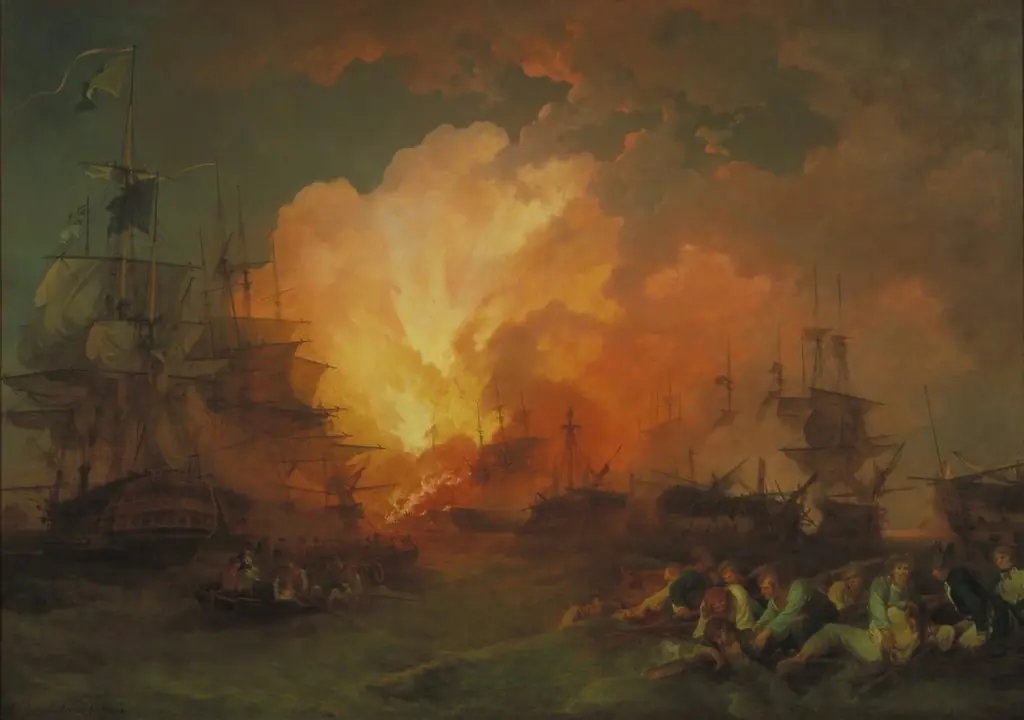 The Battle of the Nile