Artwork
Cattle Piece
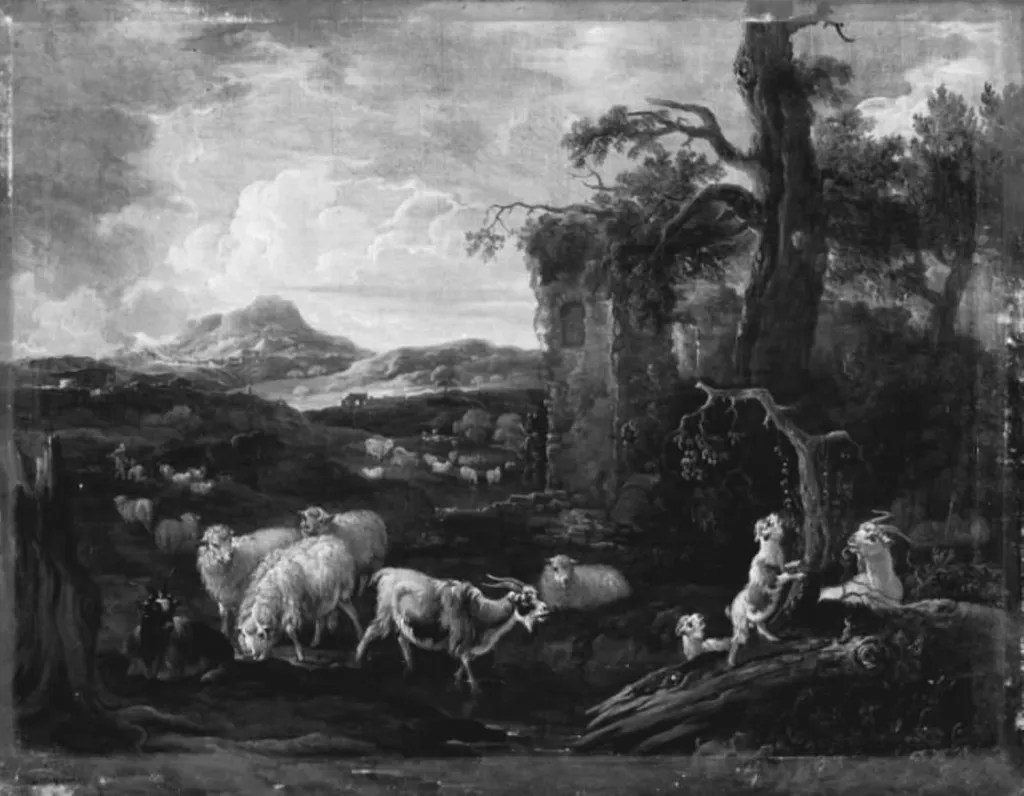
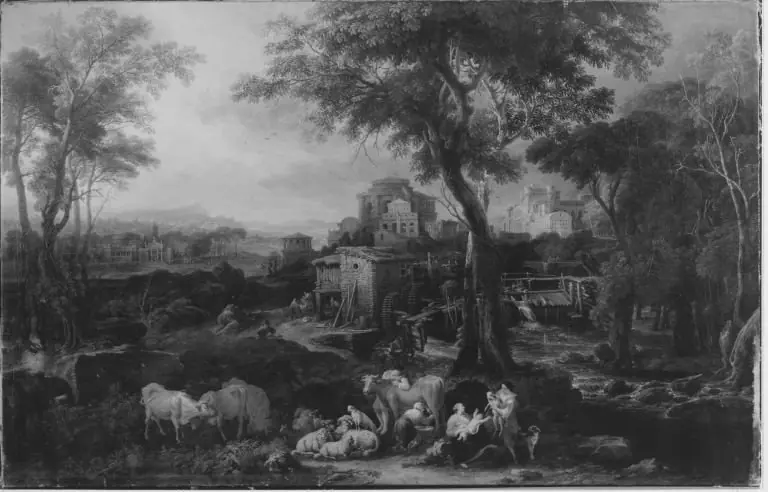
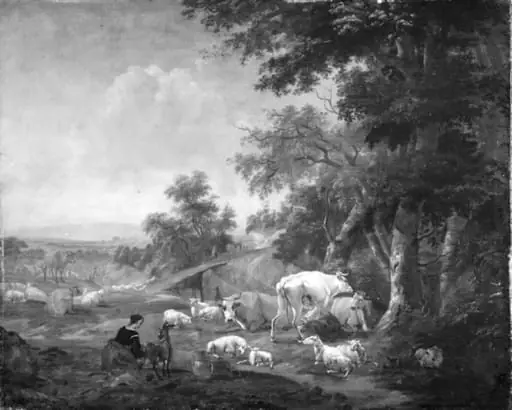
Cattle Piece is a photography by Unknown. It dates from 1750 and is held in the collection of the Statens Museum for Kunst.
About this work
Overview
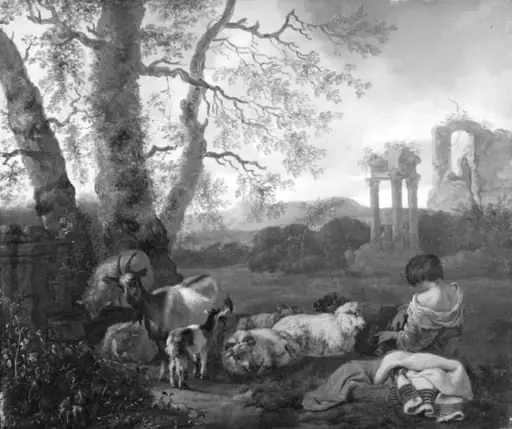
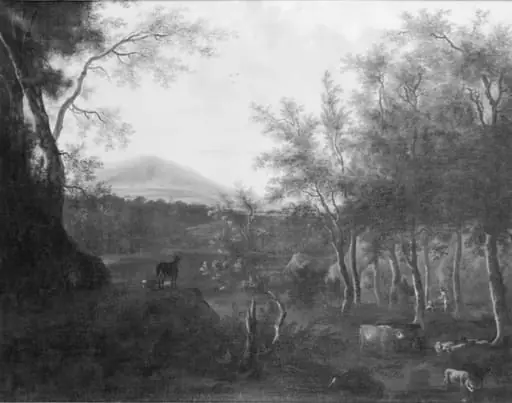
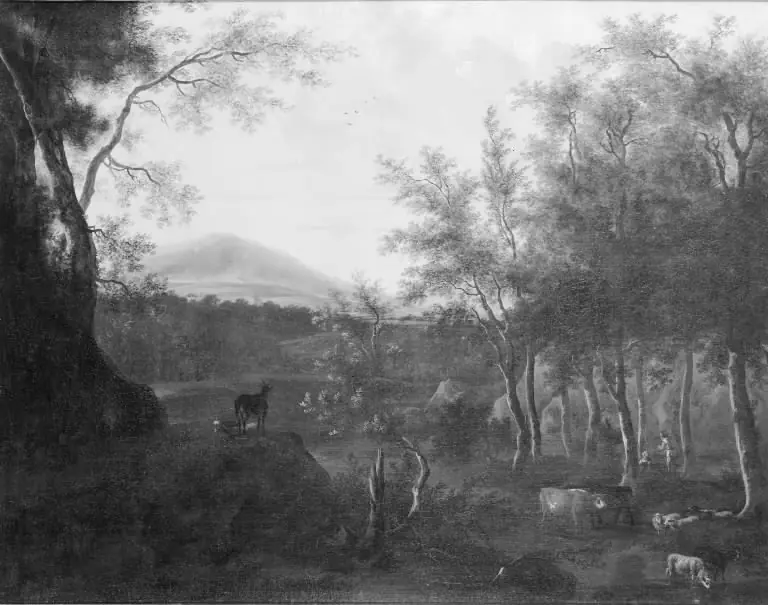
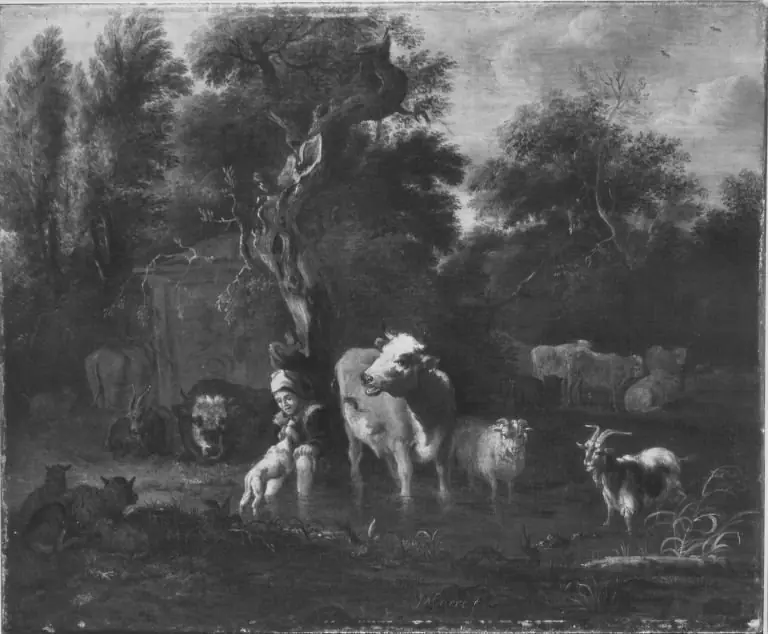
Created around 1750, Cattle Piece is a monochrome image depicting a rural pastoral scene. It is part of the collection at the Museum of Ethnography. The composition centers on livestock grazing near a stream, with two figures seated on a fallen log, observing the animals. The image captures a moment of quiet stillness, emphasizing the relationship between humans and animals in a natural setting.
Subject & Meaning
The scene portrays everyday rural life, focusing on the routine of herding and observation rather than drama or symbolism. The presence of both sheep and cattle suggests mixed farming practices, while the seated figures imply a watchful, patient engagement with the land. The absence of built structures reinforces a sense of nature’s dominance and the quiet rhythm of agricultural existence.
Technique & Style
The image employs chiaroscuro to define form and space, using stark contrasts between light and shadow to model the animals and figures. This technique enhances the three-dimensionality of the scene, drawing attention to textures of fur and fabric. The muted tonal range, limited to black, white, and gray, lends a somber, contemplative mood, aligning with the subdued atmosphere of the landscape.
History & Provenance
The work’s origin is tied to an artist identified only as 30907_person, whose broader oeuvre remains poorly documented. It entered the Museum of Ethnography’s collection in the early 20th century, likely acquired as an ethnographic record of rural European life. Its precise creation context and early ownership are unknown, but its preservation suggests it was valued for its documentary quality.
Context
Created during the mid-18th century, the image reflects a period when rural economies remained central to European society. While academic painting favored idealized landscapes, this work offers a grounded, unembellished view of agricultural labor. Its monochrome format may indicate it was intended as a study, sketch, or preparatory image rather than a finished exhibition piece.
Legacy
Cattle Piece endures as a quiet testament to pre-industrial rural life. Though not widely reproduced or studied, its inclusion in an ethnographic museum underscores its value as a visual record of everyday practices. The work contributes to broader understandings of how ordinary scenes were observed and preserved, offering insight into the visual culture of its time.
Artist & collection

 Domestic Scene
 Giacomo and Cardinal Marco, investing Andrea, Abbot of San Zeno, with his Benefice
 The Nymph of Fontainebleau
 Portrait of a Woman
 Madonna and Child with Saints in the Enclosed Garden
 Venus and Minerva
 Family Group of Four on Sofa
 Wall painting from Room H of the Villa of P. Fannius Synistor at Boscoreale