Artwork
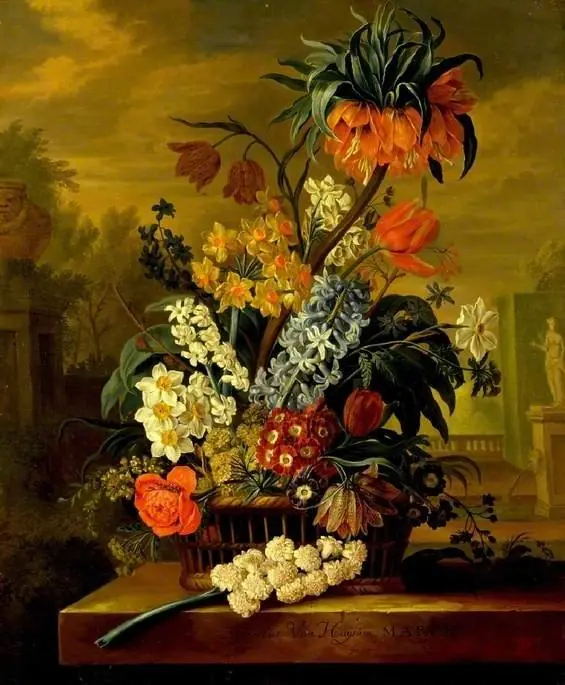
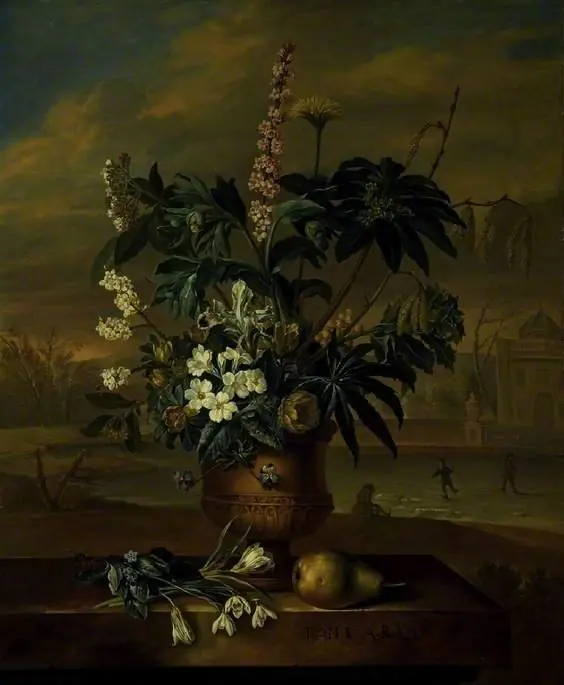
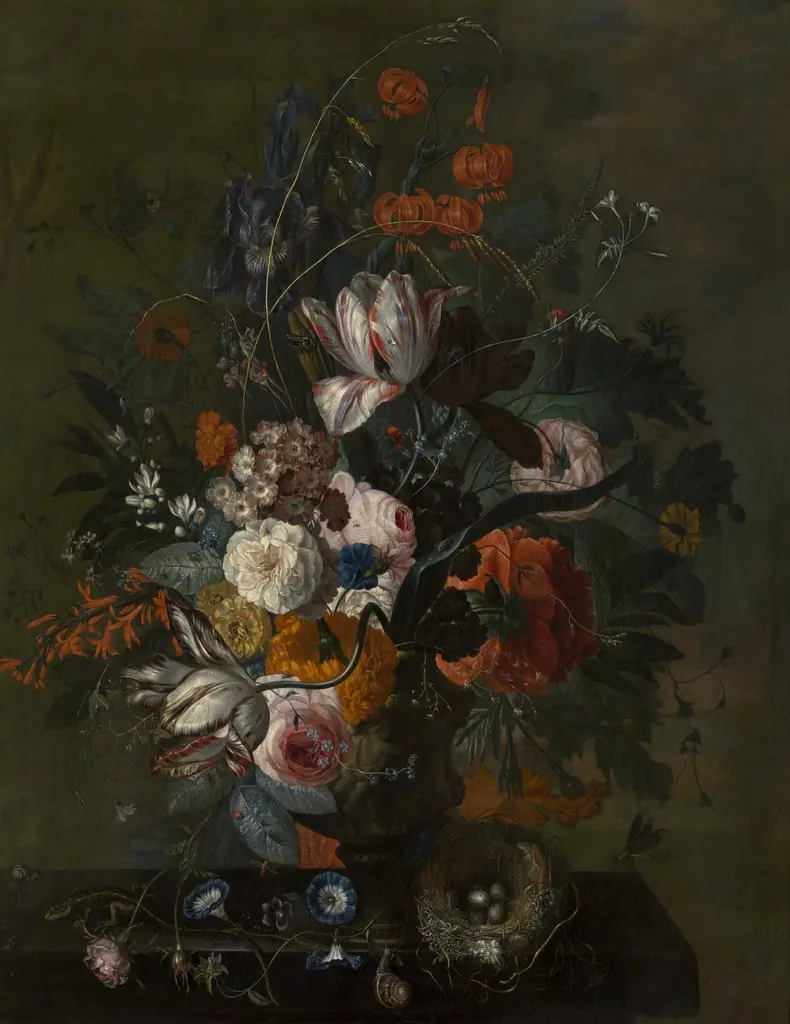
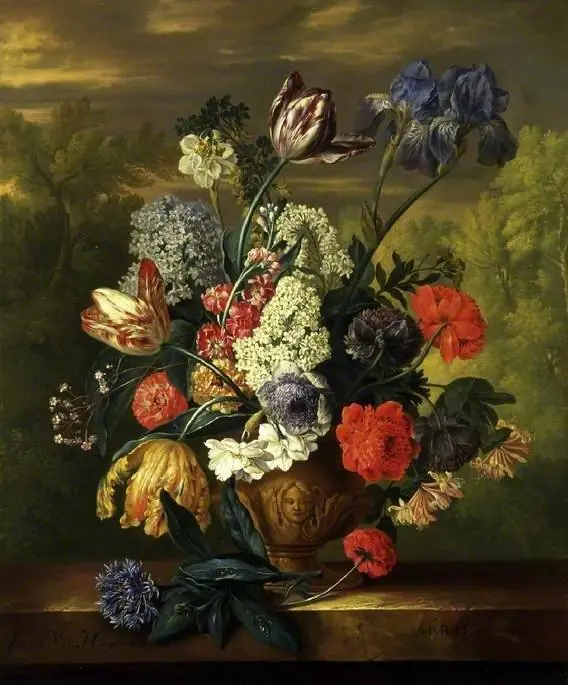
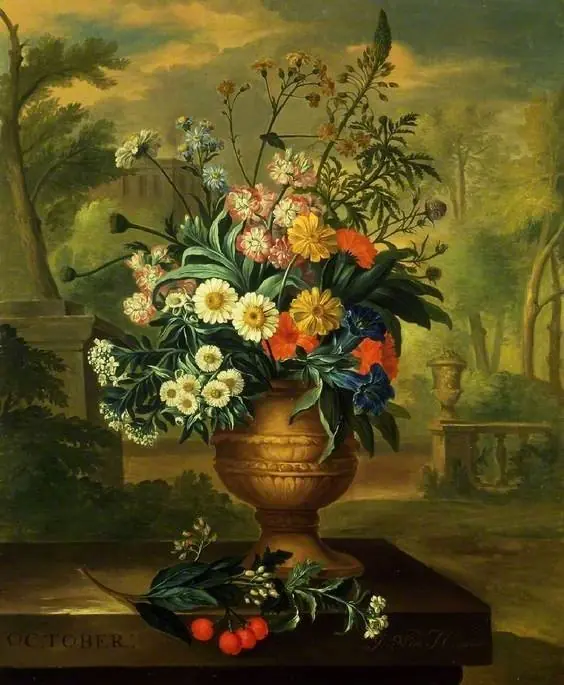
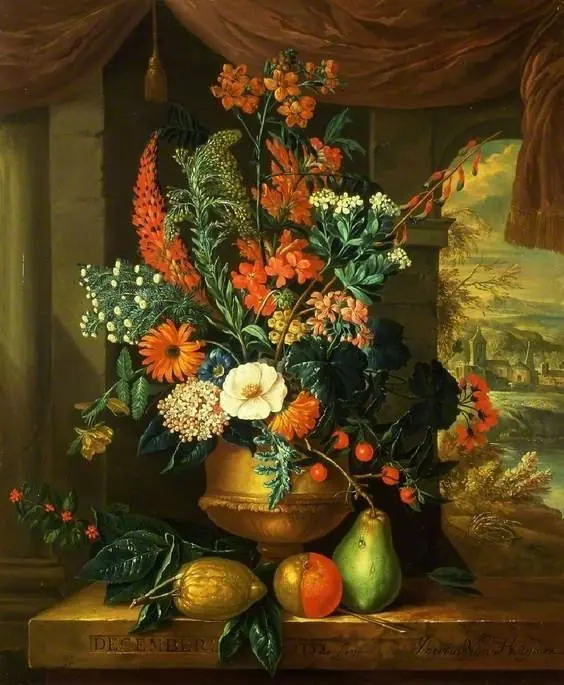
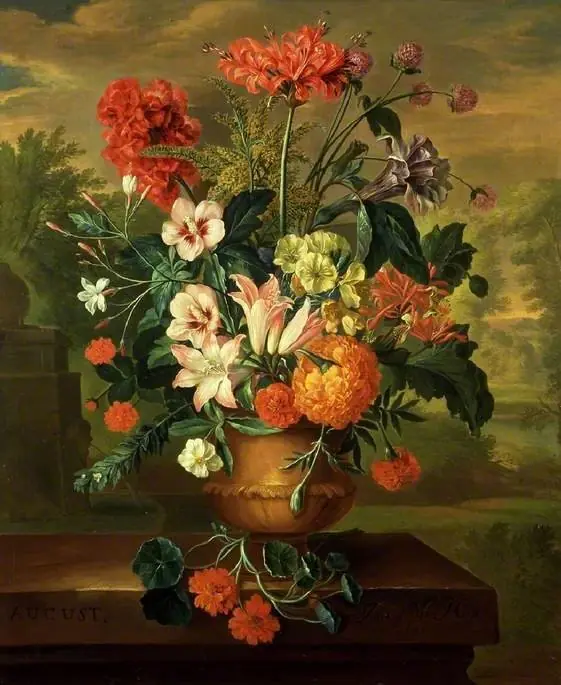
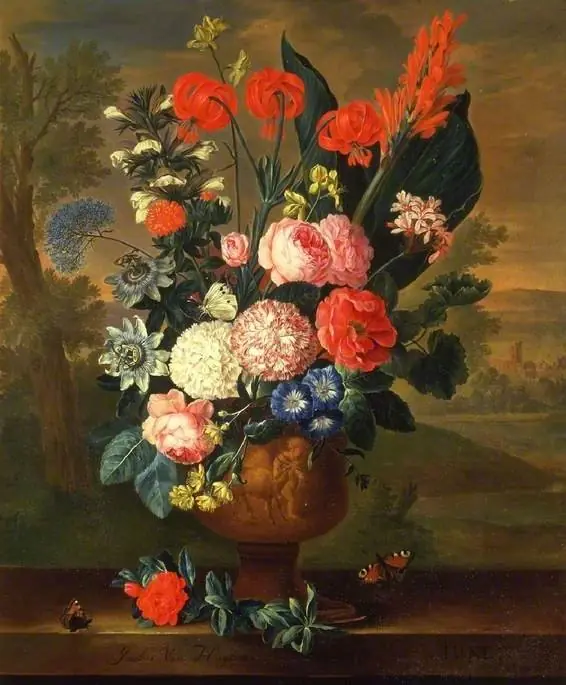
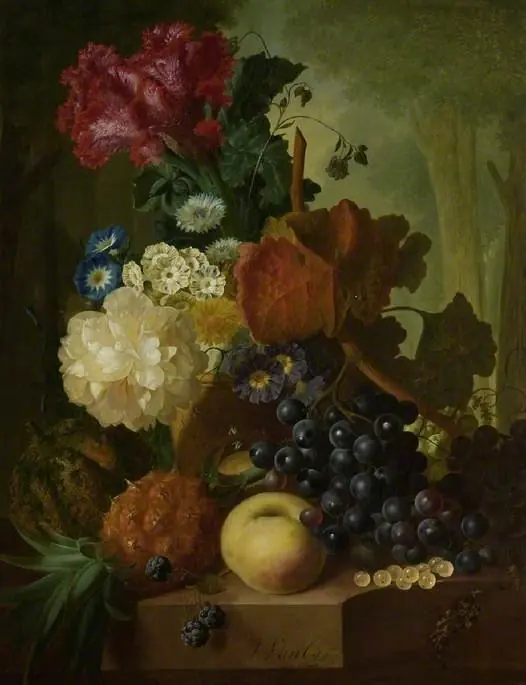
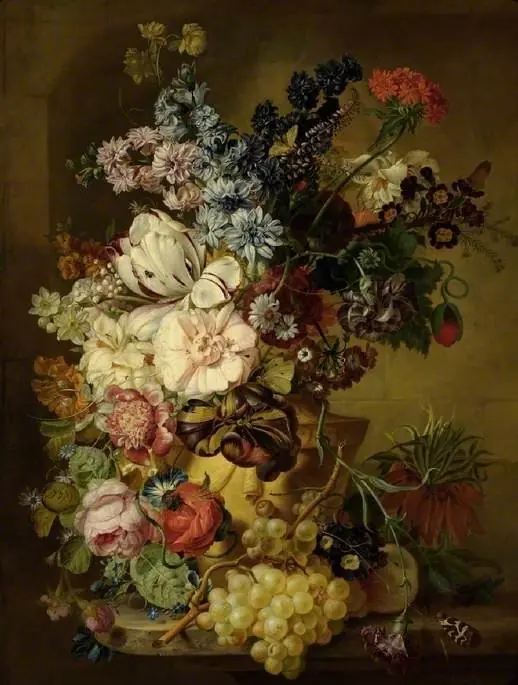
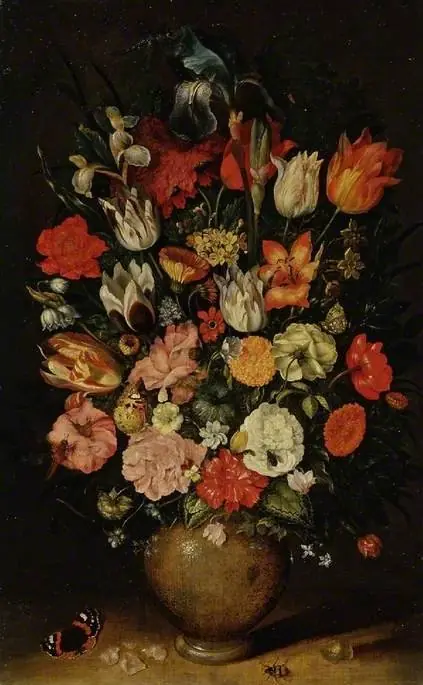
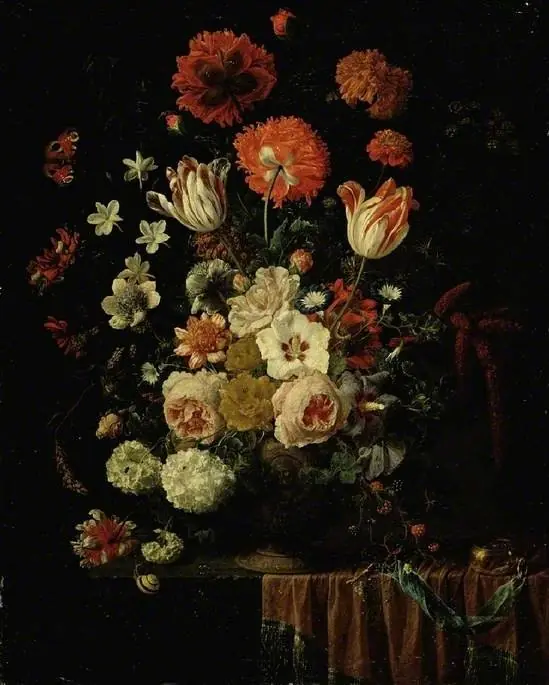
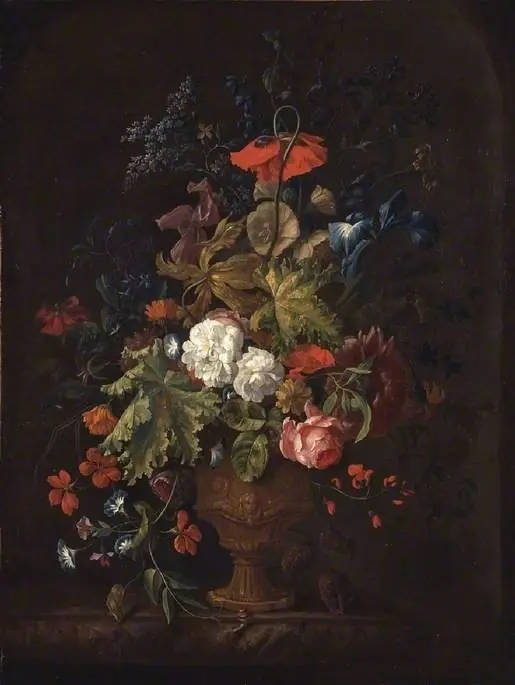
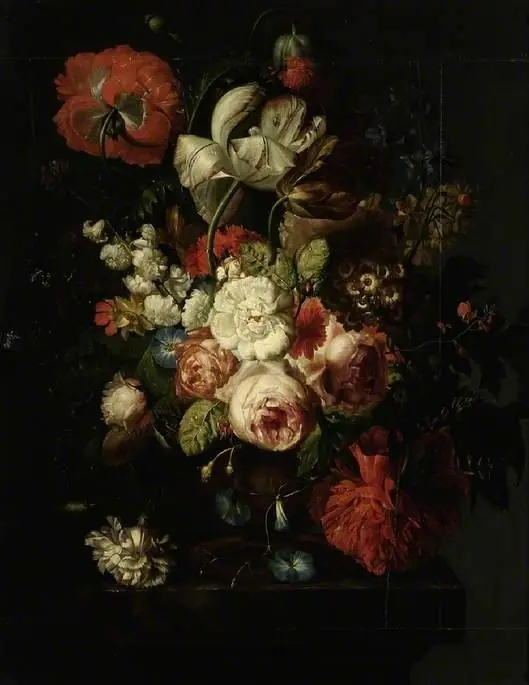
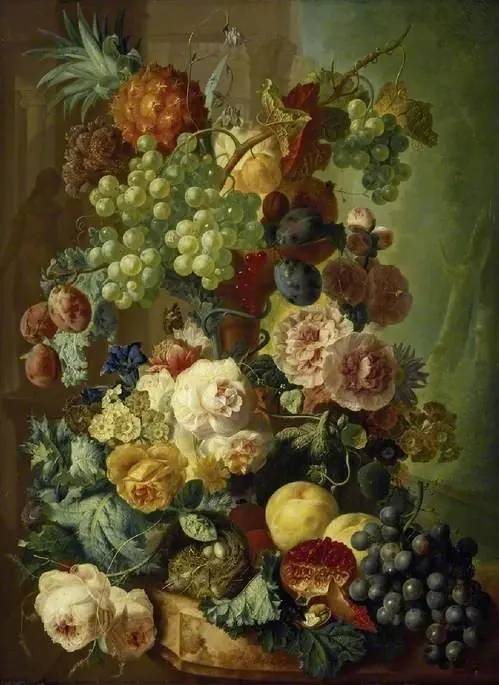
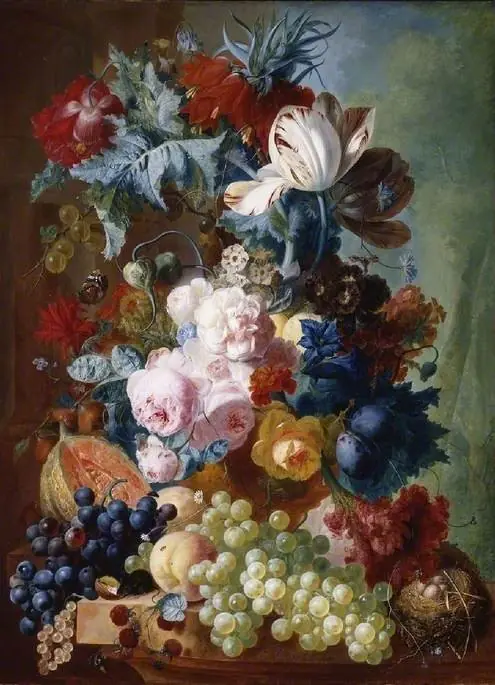
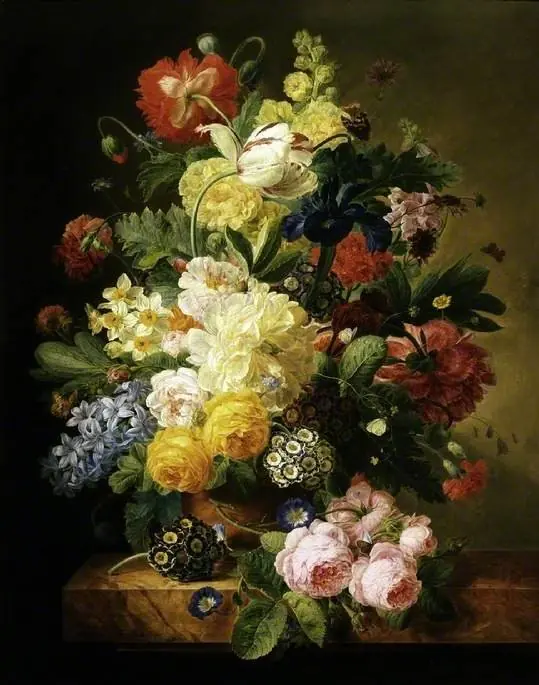
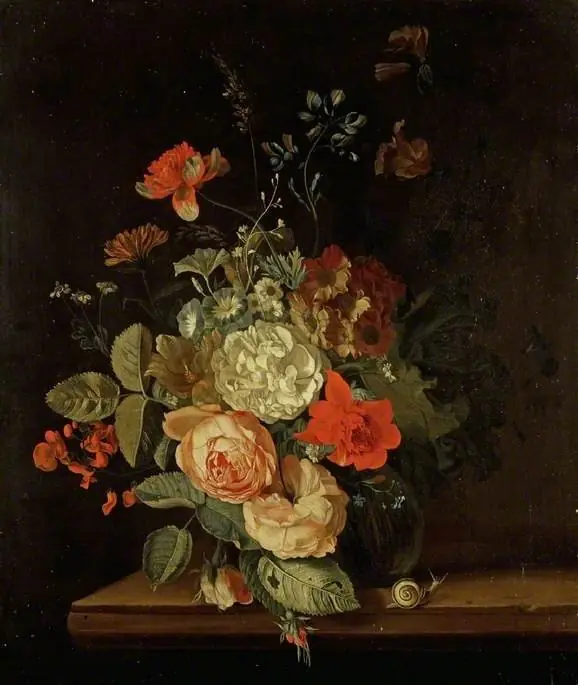
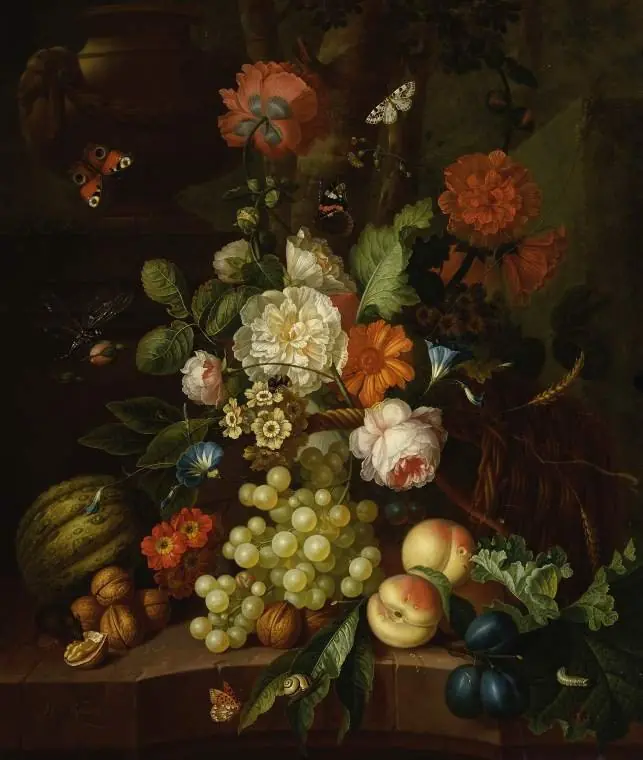
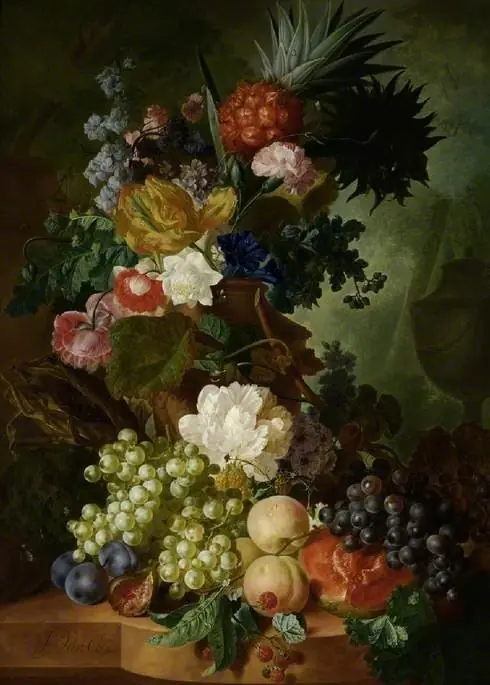
A vase of flowers with fruit
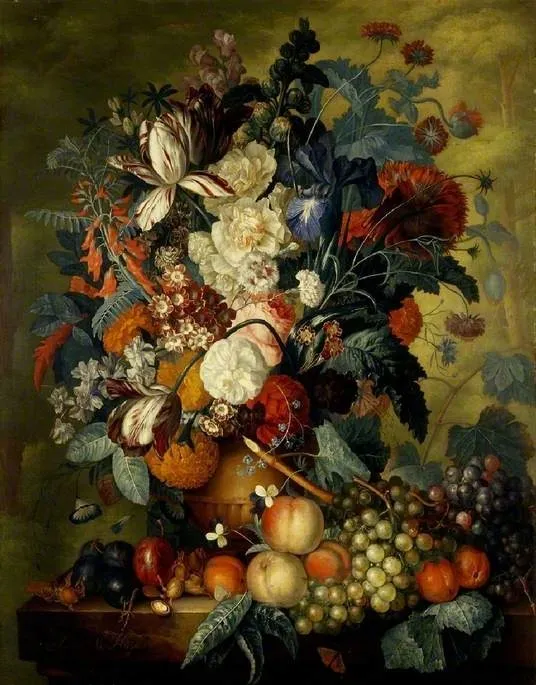
A vase of flowers with fruit is an oil painting by Jacob van Huysum. It dates from 1721 and is held in the collection of the Fitzwilliam Museum.
About this work
Overview
Van Huysum completed the piece the same year he relocated from the Dutch Republic to Great Britain, marking a transitional moment in his career.
Painted in 1721 by Jacob van Huysum, this oil-on-canvas still life depicts a lush arrangement of flowers and fruit in a ceramic or glass vase. The work reflects the Dutch tradition of detailed botanical representation, combining natural observation with compositional balance. Van Huysum completed the piece the same year he relocated from the Dutch Republic to Great Britain, marking a transitional moment in his career.
Subject & Meaning
The painting presents a varied selection of blossoms and seasonal fruits, arranged to suggest abundance without rigid symmetry. White and orange flowers, accented by green foliage, spill naturally over the vase’s rim, evoking the fleeting vitality of nature. While not overtly symbolic, the composition aligns with 18th-century still life conventions that celebrated earthly richness and the passage of time through organic decay and renewal.
Technique & Style
Van Huysum employed fine brushwork to render individual petals, fruit skins, and the vase’s surface with precision. The muted, earth-toned background isolates the vibrant flora, enhancing their luminosity. Light falls subtly across the forms, modeling volume without dramatic contrast. The loose, asymmetrical arrangement avoids artificiality, suggesting a moment caught mid-bloom rather than a staged display.
History & Provenance
Created in 1721, the painting entered the collection of the Fitzwilliam Museum in Cambridge, where it remains today. Van Huysum’s move to Britain that same year likely influenced its reception, as Dutch still life traditions gained interest among British collectors. No earlier ownership records are widely documented, but its preservation suggests it was valued early in its history.
Context
In early 18th-century Europe, still life painting flourished as a genre that merged scientific curiosity with aesthetic refinement. Van Huysum’s work fits within a Dutch lineage of floral painting, yet his relocation to Britain situates him at a cultural crossroads. His attention to botanical accuracy reflects broader Enlightenment interests in natural history, while his compositions catered to elite tastes for refined domestic decoration.
Legacy
Though less celebrated than some contemporaries, van Huysum’s precise technique and restrained elegance contributed to the evolution of British still life. His work, including this vase, helped bridge Dutch naturalism with emerging British sensibilities. The painting endures as a quiet example of how botanical observation could be elevated through careful composition and material sensitivity.
Artist & collection
Artist
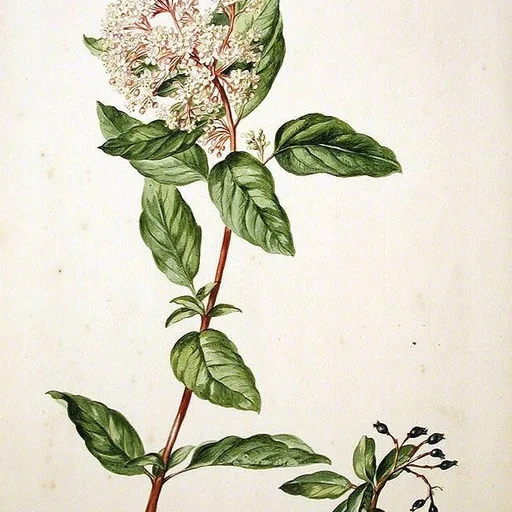
Jacob van Huysum (1688–1740) was an 18th-century botanical painter from the Dutch Republic who moved to the Kingdom of Great Britain in 1721.