Artwork
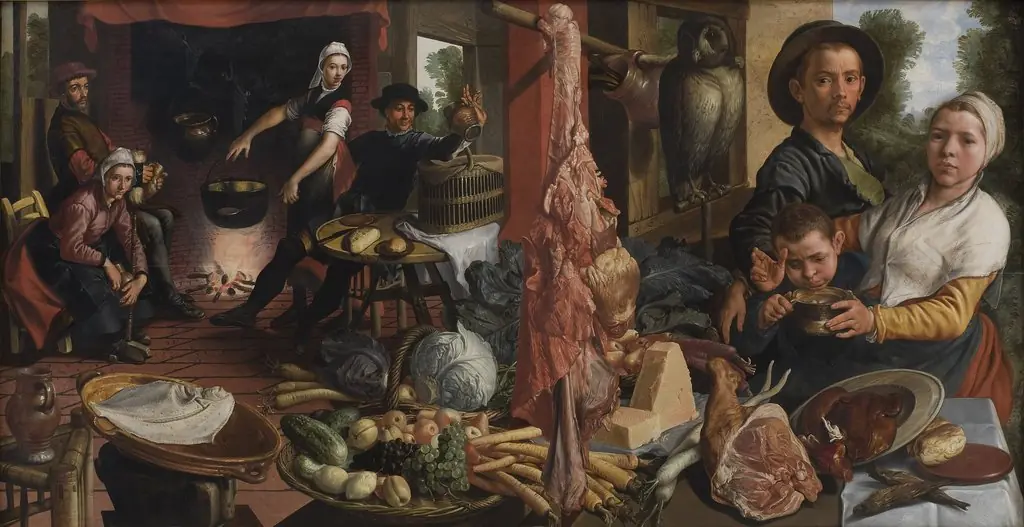
Kitchen Scene with the Parable of the Rich Man and Poor Lazarus
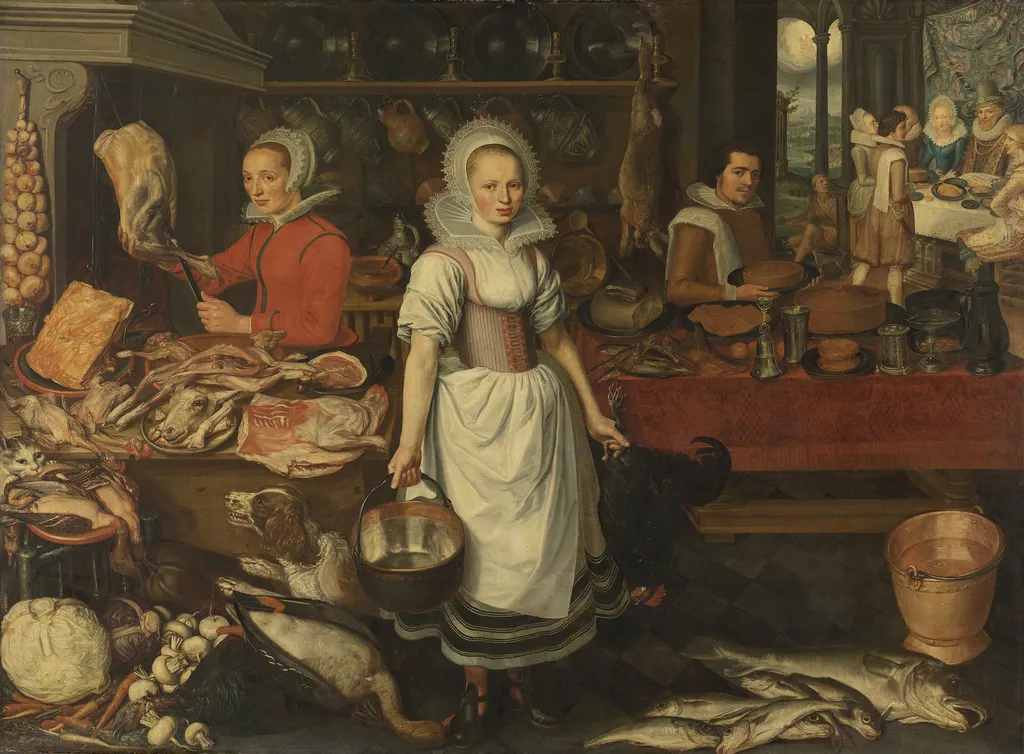
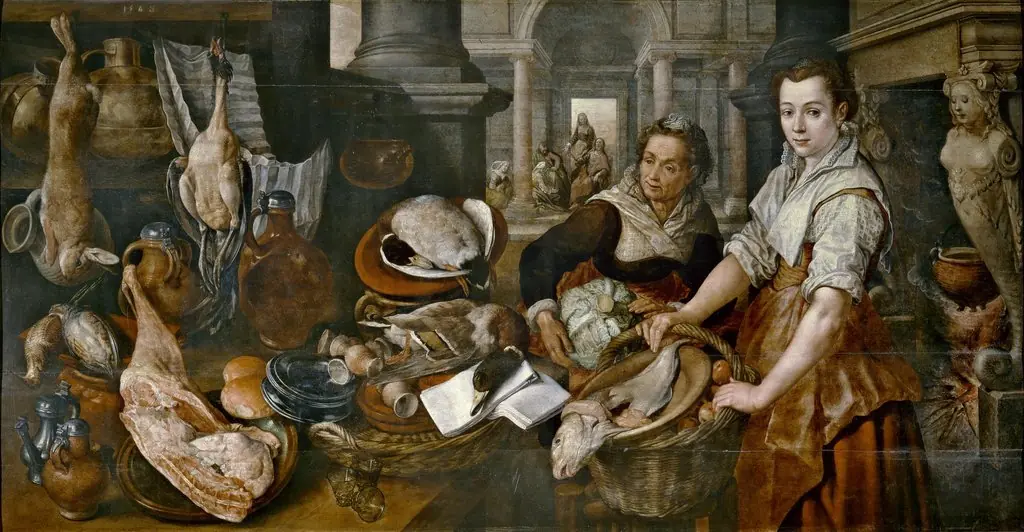
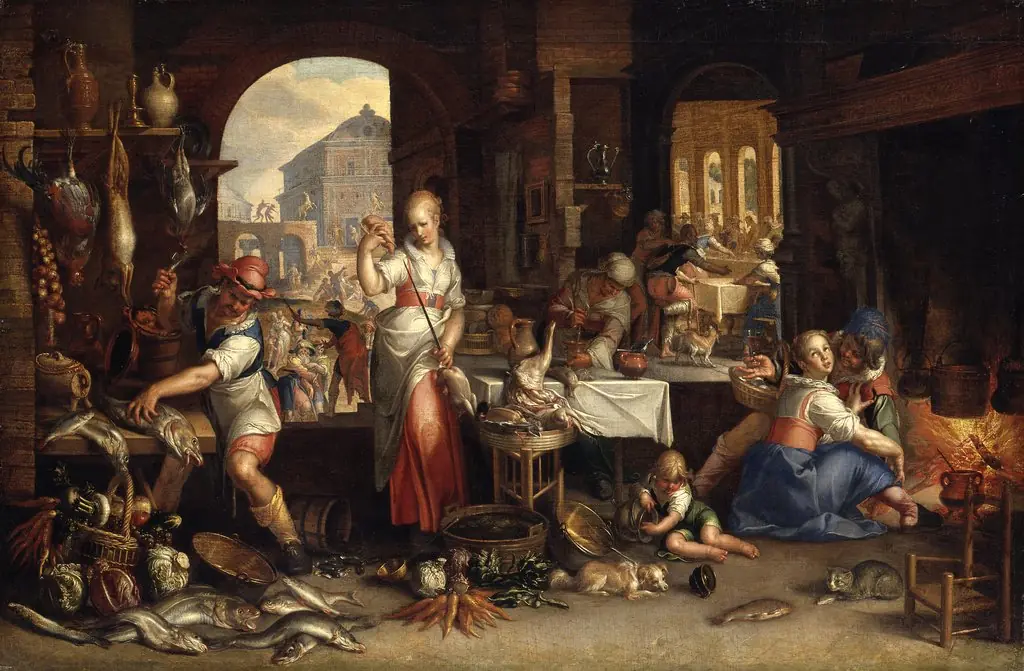
Kitchen Scene with the Parable of the Rich Man and Poor Lazarus is an oil painting by the Dutch Golden Age artist Pieter Cornelisz van Rijck. It dates from 1610 and is held in the collection of the Rijksmuseum.
About this work
Overview
Pieter Cornelisz van Rijck’s oil on canvas, dated 1610, depicts a bustling kitchen interior and is part of the Rijksmuseum collection. The work combines a genre scene of domestic labor with a subtle reference to the biblical parable of the rich man and Lazarus, integrating moral narrative into everyday activity.
Subject & Meaning
At the centre stands a woman in a white apron holding a bucket, while a second woman in a red dress slices meat at a nearby table.
At the centre stands a woman in a white apron holding a bucket, while a second woman in a red dress slices meat at a nearby table. A man in dark clothing carries a tray laden with food. The composition is punctuated by a dog at the floor and a glowing fireplace, suggesting a lively household. Small painted panels in the background portray the rich man and the beggar, linking the kitchen’s material abundance to the biblical lesson on wealth and compassion.
Technique & Style
Van Rijck employs chiaroscuro, contrasting illuminated areas—such as the light on the central figures and the fire’s glow—with deeper shadows that recede into the room’s corners. The meticulous rendering of textures, from the sheen of raw meat to the gleam of hanging game, demonstrates the artist’s skill in depicting material detail within a controlled, dramatic lighting scheme.
History & Provenance
Created in the early seventeenth century, the painting entered the Rijksmuseum’s holdings as part of its Dutch Golden Age collection. Its provenance prior to museum acquisition is not extensively documented, but the work has been recognized as a representative example of van Rijck’s integration of genre and religious motifs.
Context
The early 1600s saw Dutch painters frequently merge quotidian scenes with moralizing references, reflecting a culture that valued both domestic virtue and biblical instruction. Van Rijck’s kitchen scene follows this tradition, using a familiar setting to invite contemplation of the consequences of wealth and neglect.
Legacy
While not as widely reproduced as some contemporaneous works, the painting remains a valuable illustration of how Dutch artists embedded ethical narratives within genre painting, offering insight into the period’s visual strategies for moral education.
Own this work as a print
Artist & collection
Artist
Pieter Cornelisz van Rijck (1567–1635) was an artist, born in Delft.