Artwork
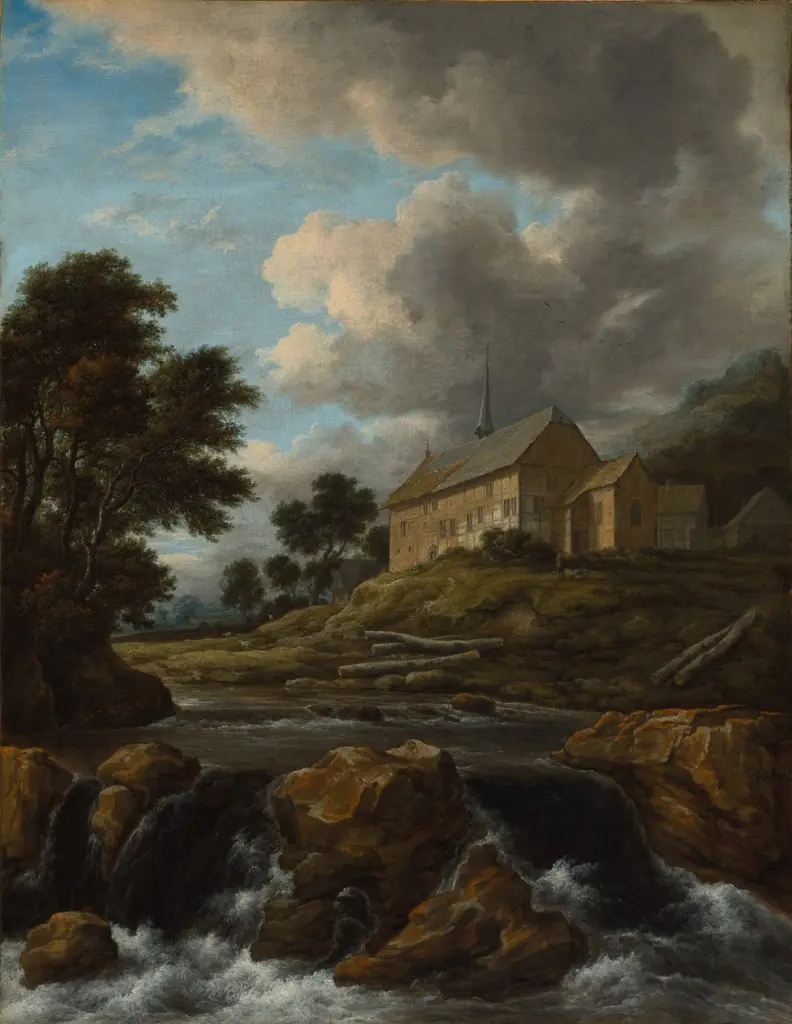
Hilly wooded landscape with a half-timbered house by a water fall
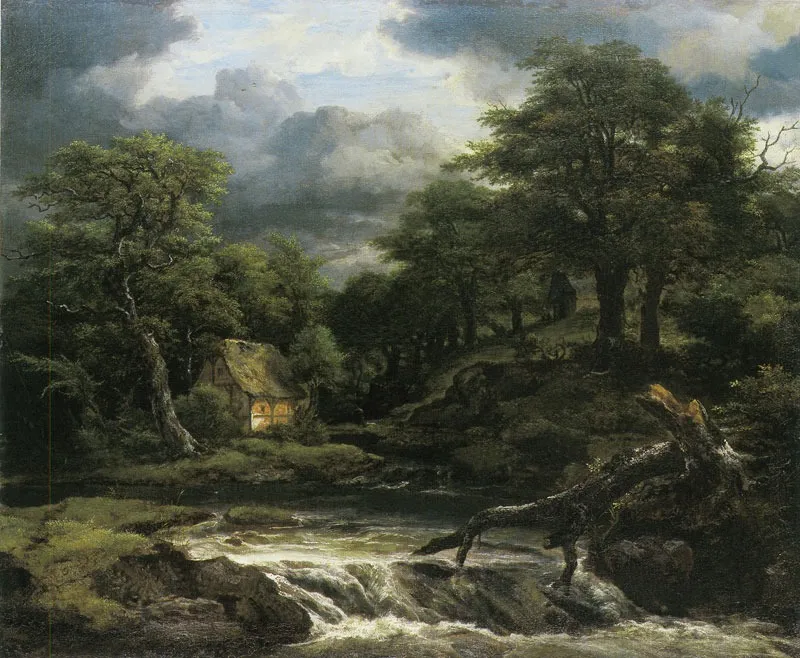
Hilly wooded landscape with a half-timbered house by a water fall is an oil painting by the Dutch Golden Age artist Jacob van Ruisdael. It dates from 1655 and is held in the collection of the Städel Museum. This oil painting, dated around 1655, presents a quiet rural scene in the Dutch countryside.
About this work
Overview
The composition emphasizes natural harmony over dramatic spectacle, reflecting the artist’s interest in understated, observational landscape.
This oil painting, dated around 1655, presents a quiet rural scene in the Dutch countryside. Created by Jacob van Ruisdael, it captures a gently rolling terrain covered in dense woodland, with a modest half-timbered dwelling nestled near a cascading waterfall. The composition emphasizes natural harmony over dramatic spectacle, reflecting the artist’s interest in understated, observational landscape.
Subject & Meaning
The scene centers on a humble timber-framed house, its structure weathered and integrated into the landscape, suggesting human presence as part of nature rather than dominant over it. The waterfall, framed by mossy rocks and leafy branches, adds movement and sound to the stillness. There is no human figure, reinforcing a contemplative mood, perhaps evoking themes of solitude and the passage of time in rural life.
Technique & Style
Ruisdael employed fine brushwork to render textures—rough bark, wet stone, and layered foliage—with meticulous care. The palette is restrained, dominated by earthy greens, browns, and muted grays, enhancing the painting’s atmospheric depth. Light filters diffusely through the canopy, casting soft shadows that model the terrain with subtle gradations, a hallmark of his naturalistic approach.
History & Provenance
The painting has been in the collection of the Städel Museum in Frankfurt since the 19th century, acquired during a period of growing interest in Dutch Golden Age works. Its documented history before that is limited, but its style and signature align with Ruisdael’s mature period, when he produced numerous landscapes characterized by quiet grandeur and technical precision.
Context
Painted during the Dutch Golden Age, this work reflects a cultural preference for landscapes that celebrated the nation’s rural character and natural resources. Unlike grand European traditions, Dutch artists often focused on ordinary scenes—forests, farms, waterways—as worthy subjects. Ruisdael’s attention to geological and botanical detail aligned with broader scientific curiosity of the era.
Legacy
Ruisdael’s landscapes influenced later generations of European painters, particularly in their emphasis on naturalism and emotional tone. This painting, though not widely exhibited, exemplifies his ability to convey tranquility through careful observation. It remains a representative example of 17th-century Dutch landscape painting, valued for its restraint and fidelity to the seen world.
Artist & collection
Artist
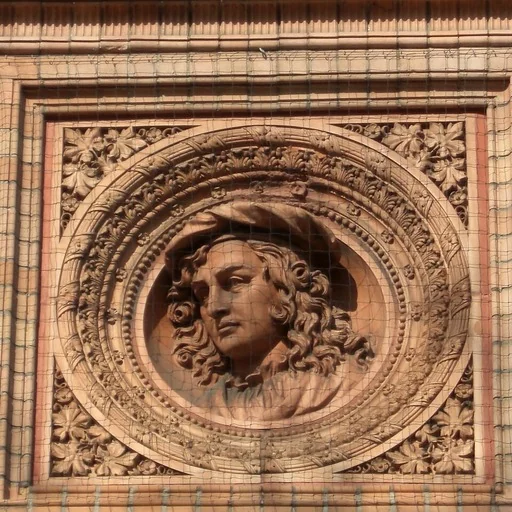
Jacob Isaackszoon van Ruisdael was a Dutch painter, draughtsman, and etcher. He is generally considered the pre-eminent landscape painter of the Dutch Golden Age, a period of great wealth and cultural achievement when…

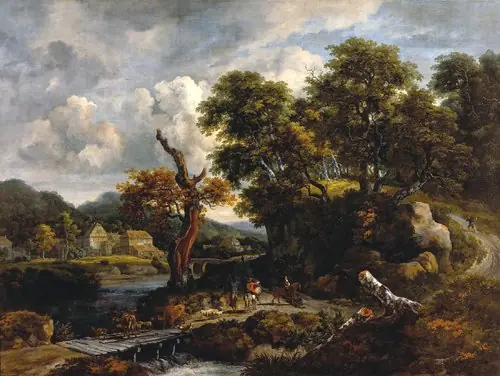 Travellers and shepherds at a crossroads near a dead tree
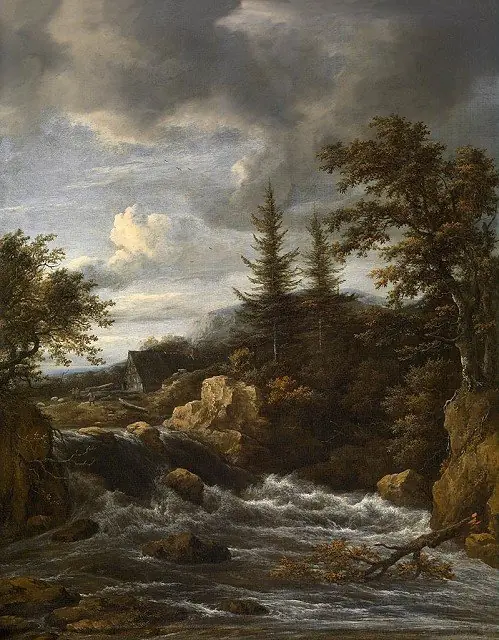 Waterfall in Norway
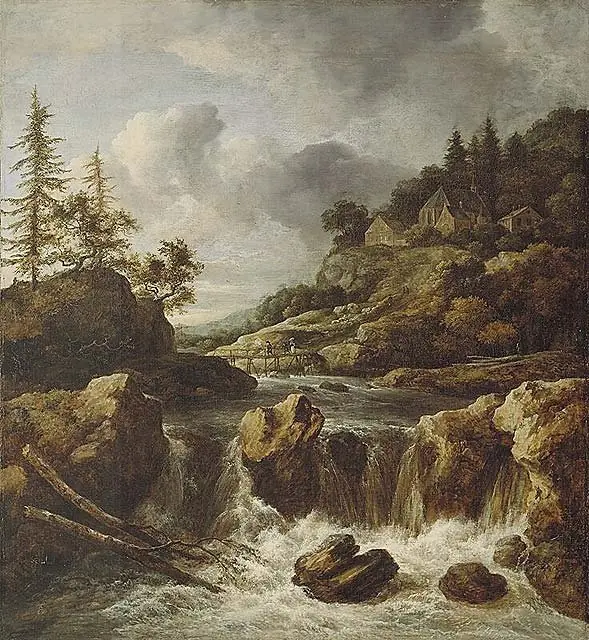 A Waterfall with village, footbridge and pine trees
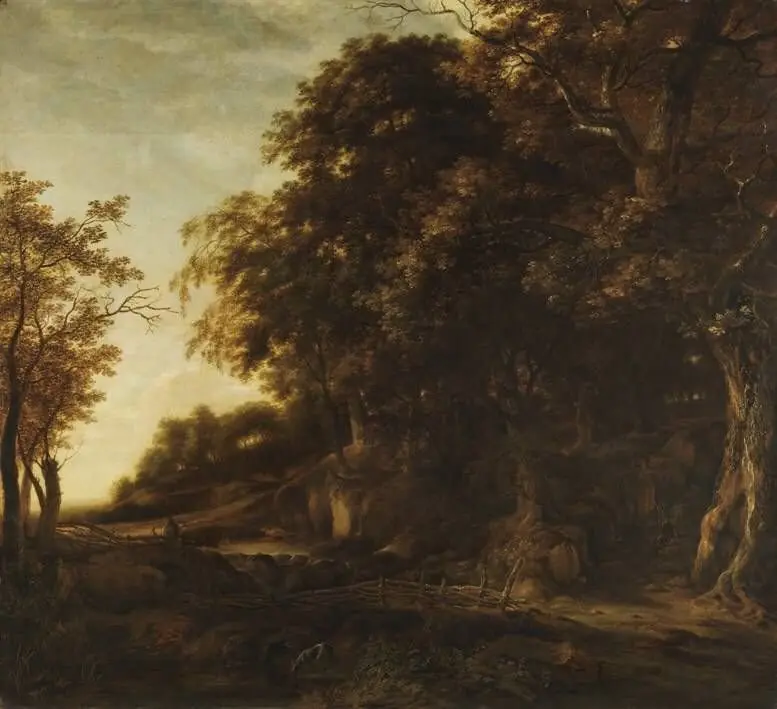 Eichenwald mit Jäger
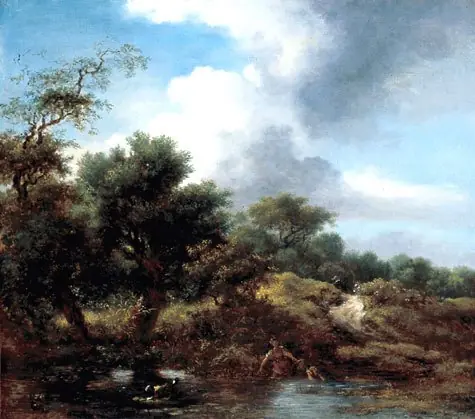 The Pond
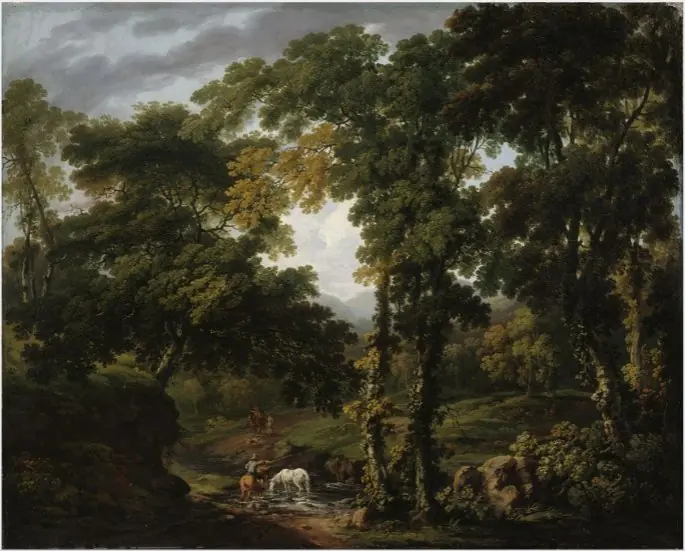 A Wooded River Landscape with Figures and Horses at a Ford and Fallow Deer in a Clearing
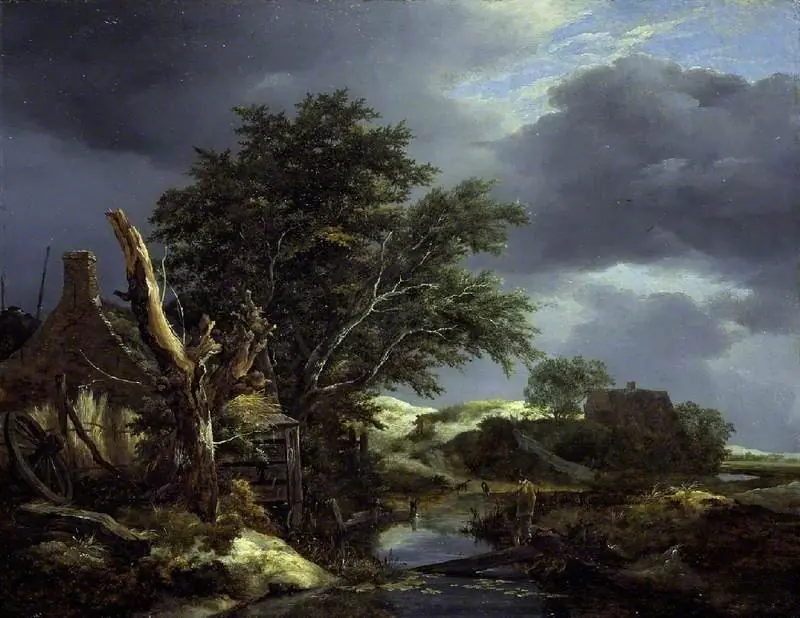 Landscape with a Blasted Tree near a House
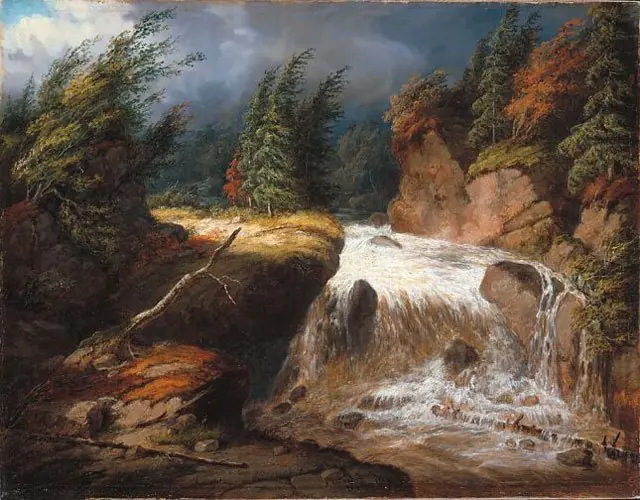 The Passing Storm, Saint-Ferréol
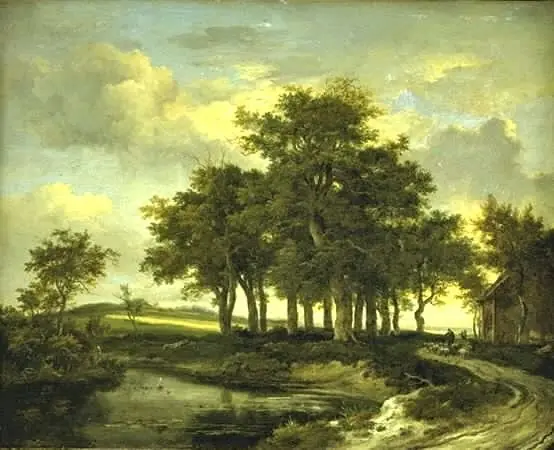 Oak Trees near a Road, Evening