Artwork
Landscape with a Blasted Tree near a House
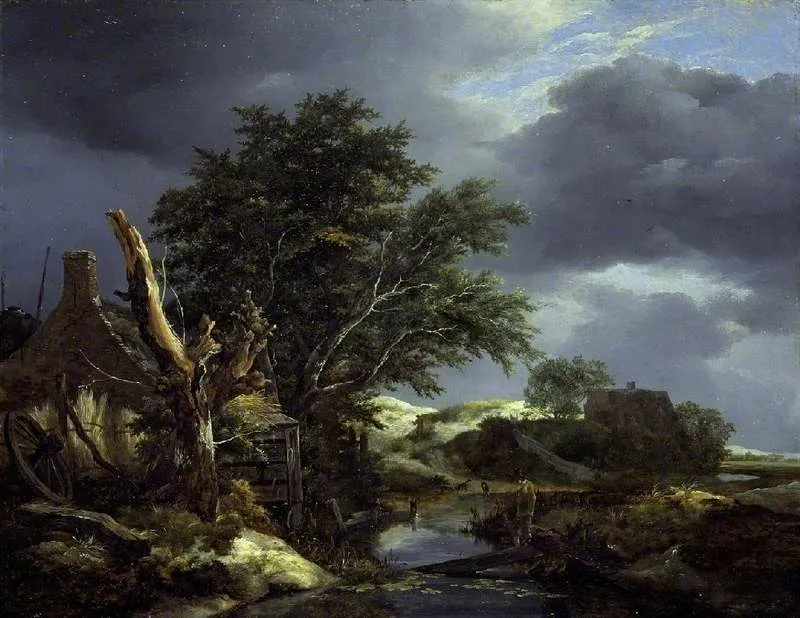
Landscape with a Blasted Tree near a House is an oil painting by Jacob van Ruisdael. It dates from 1645 and is held in the collection of the Fitzwilliam Museum.
About this work
Overview
Painted in 1645, this oil-on-canvas landscape by Jacob van Ruisdael presents a quiet, brooding scene in the Dutch countryside.
Painted in 1645, this oil-on-canvas landscape by Jacob van Ruisdael presents a quiet, brooding scene in the Dutch countryside. Centered on a gnarled, lightning-struck tree, the composition balances natural decay with subtle human presence. The work is part of the Fitzwilliam Museum’s collection and exemplifies Ruisdael’s early mastery of atmospheric perspective and emotional tone in landscape painting.
Subject & Meaning
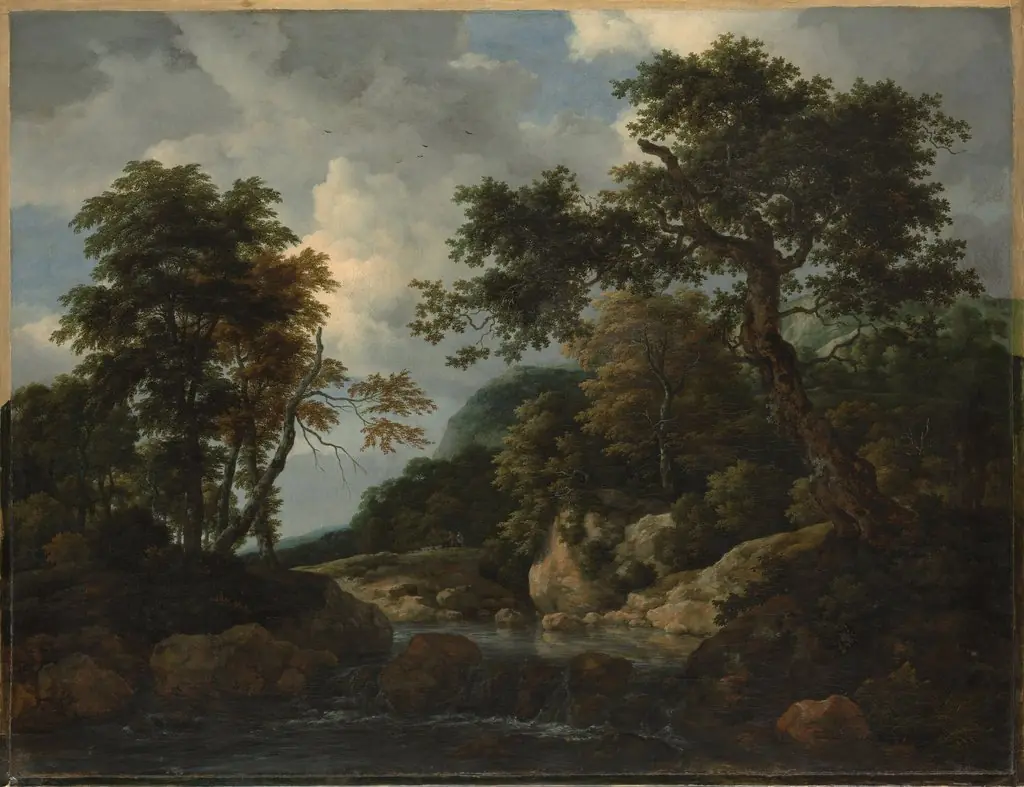
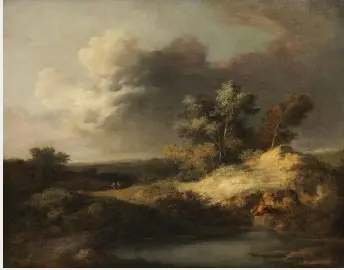
The blasted tree, split and charred, stands as a solitary emblem of nature’s violence and endurance. A modest house on the left suggests human habitation, while a lone figure by the water hints at quiet reflection. The dark, rolling clouds above contrast with patches of light, reinforcing a mood of stillness amid turmoil. The scene avoids narrative, instead inviting contemplation of impermanence and resilience in the natural world.
Technique & Style
Ruisdael employs chiaroscuro to heighten emotional contrast, guiding the eye toward the fractured trunk through sharp shifts in light and shadow. Brushwork is precise in the foreground foliage, while the sky is rendered with layered glazes to suggest depth and movement. The composition uses diagonal lines—tree, water, clouds—to create tension without disrupting the scene’s calm equilibrium.
History & Provenance
The painting entered the Fitzwilliam Museum’s collection in the 19th century, having passed through private hands since its creation. Its attribution to Ruisdael has been consistently supported by stylistic analysis and archival records. No major alterations or restorations are documented, preserving its original tonal harmony and surface texture.
Context
Created during the Dutch Golden Age, the work reflects a cultural shift toward introspective landscape painting, away from idealized scenery. Ruisdael’s focus on weathered nature and moody skies aligned with contemporary philosophical interests in transience and the sublime. Such scenes resonated with viewers familiar with the Netherlands’ struggle against elemental forces.
Legacy
This painting exemplifies how Dutch landscape artists transformed ordinary terrain into vehicles for emotional and moral reflection. Ruisdael’s treatment of the blasted tree influenced later generations, including Romantic painters who saw in such imagery a metaphor for human endurance. Its quiet power endures as a benchmark in the evolution of landscape as a serious artistic subject.
Artist & collection
Artist
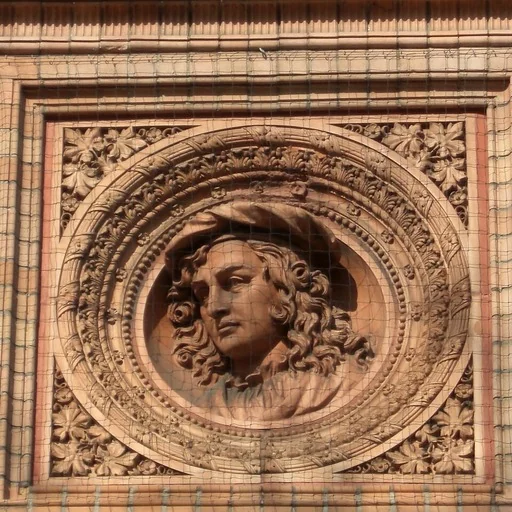
Jacob Isaackszoon van Ruisdael was a Dutch painter, draughtsman, and etcher. He is generally considered the pre-eminent landscape painter of the Dutch Golden Age, a period of great wealth and cultural achievement when…

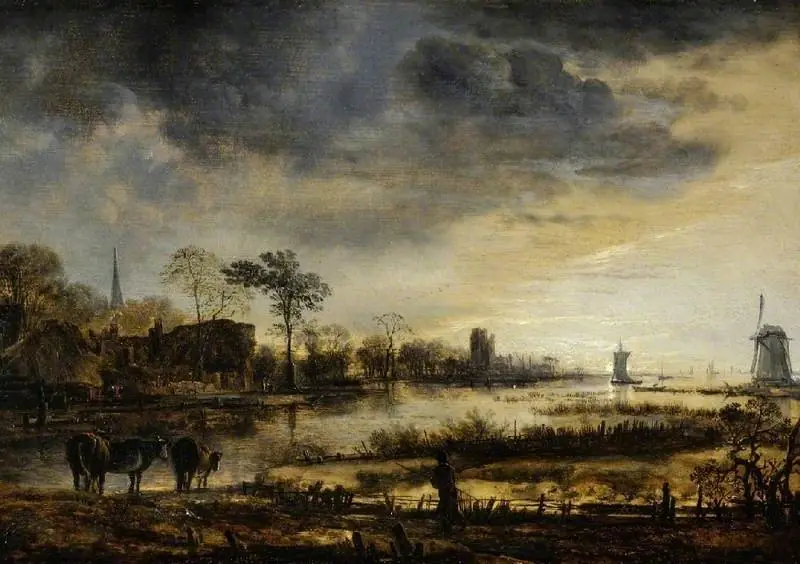 An estuary by moonlight
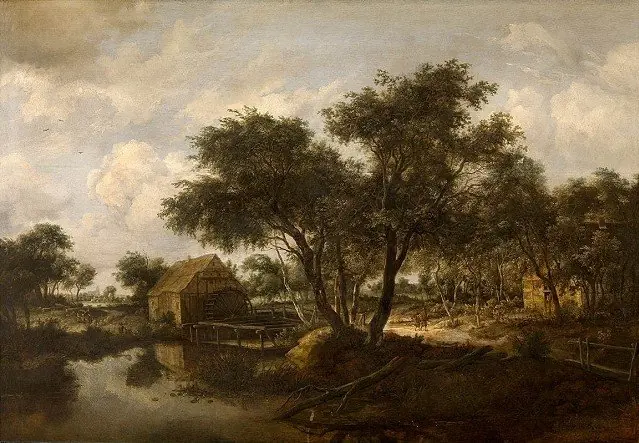 The Watermill
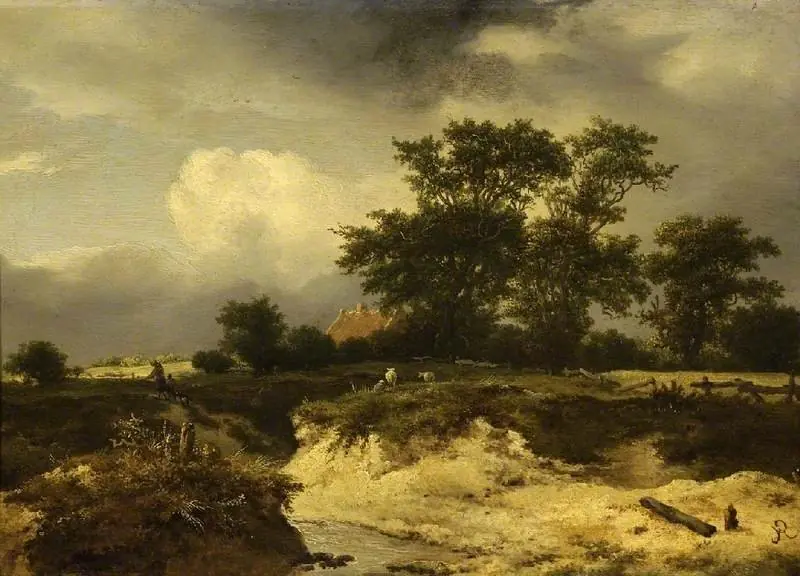 Landscape, a brook and farm-house among trees
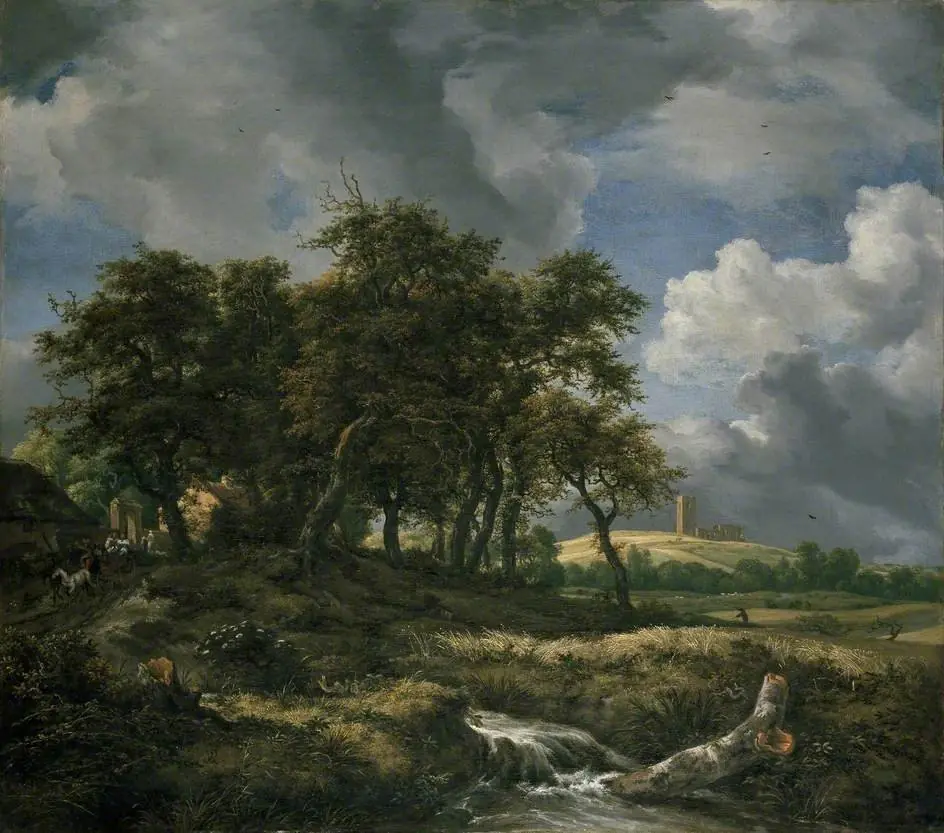 Landscape near Muiderberg
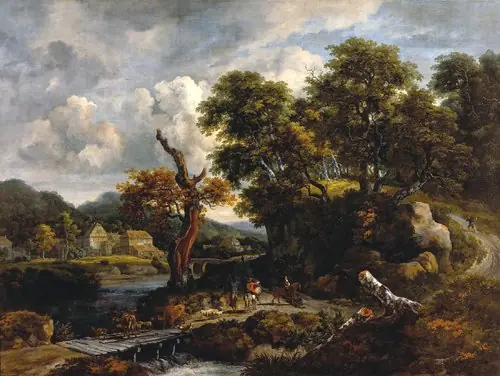 Travellers and shepherds at a crossroads near a dead tree
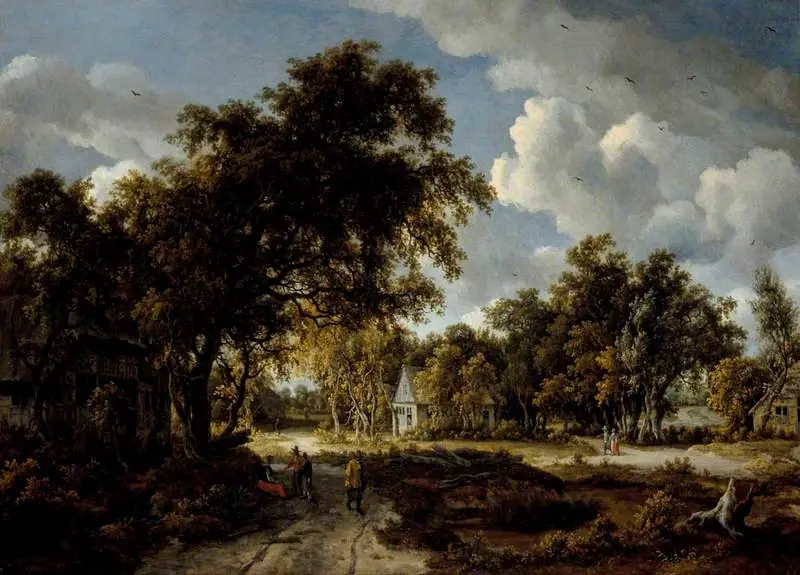 Wooded Landscape
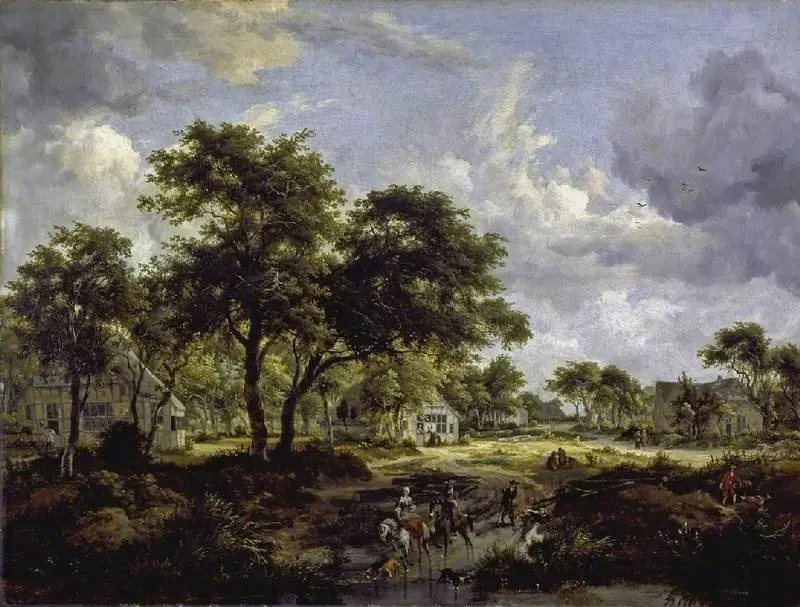 Wooded landscape
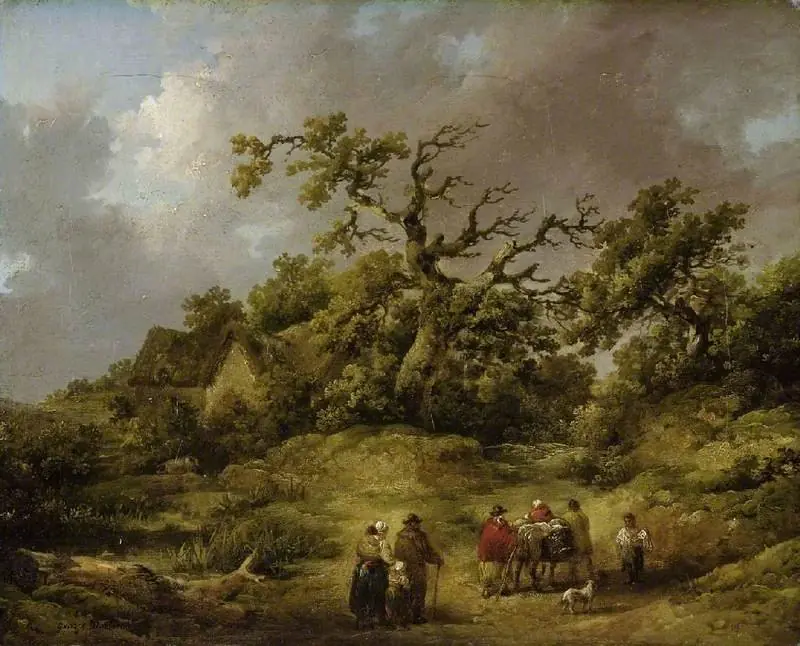 Landscape with figures
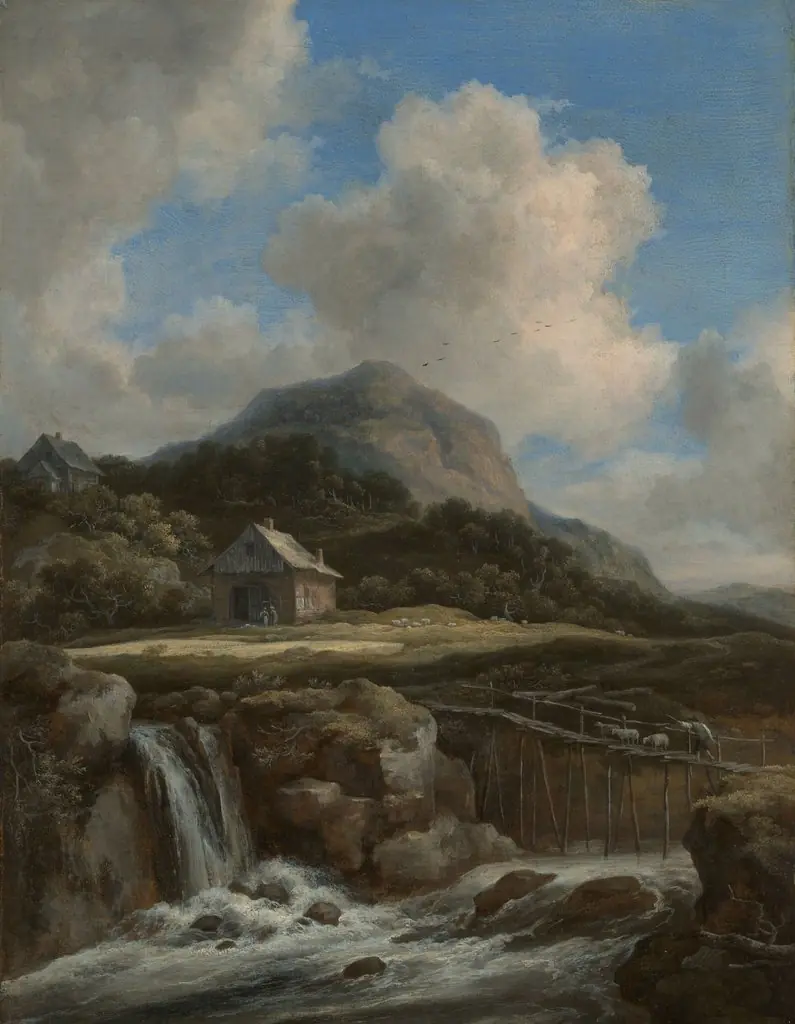
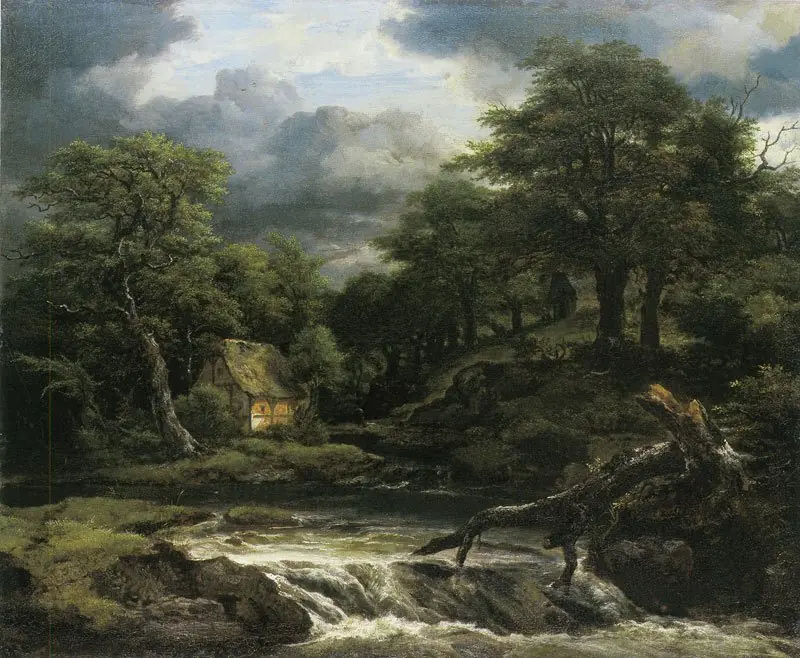 Hilly wooded landscape with a half-timbered house by a water fall
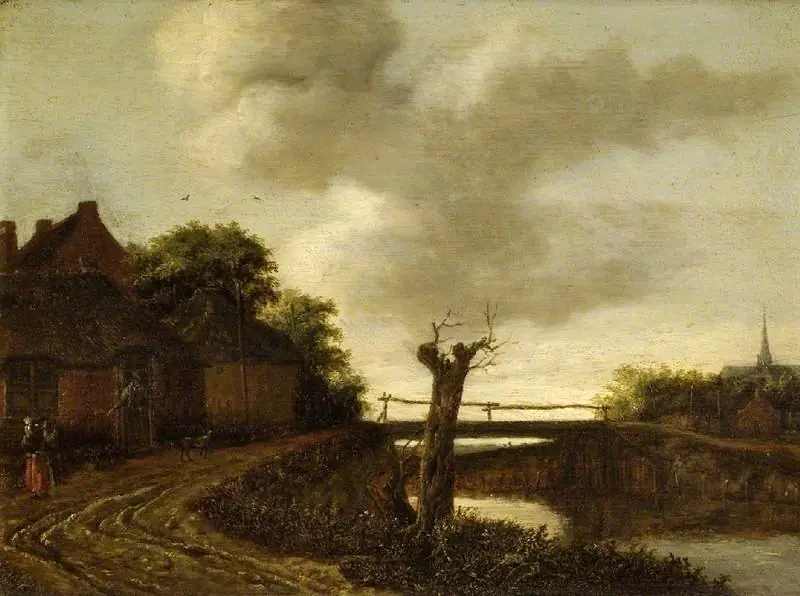 Landscape with a bridge
 A Heath Scene: Sun after Storm
 Landschaft