Artwork
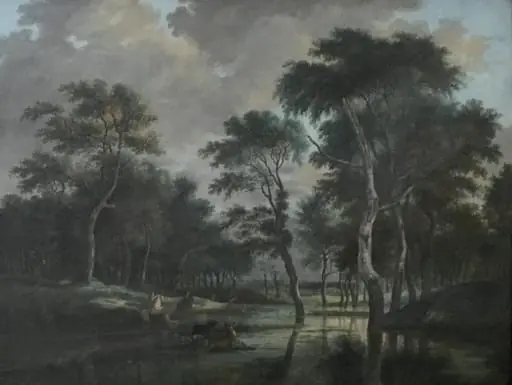
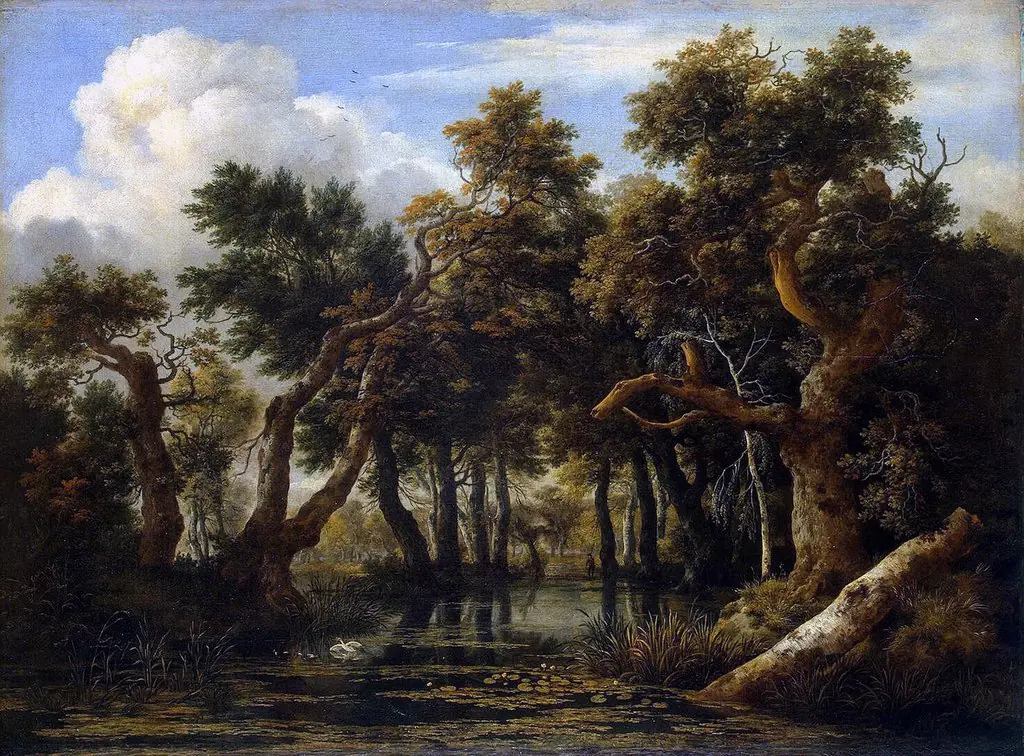
Stag Hunt in a Wood with a Marsh
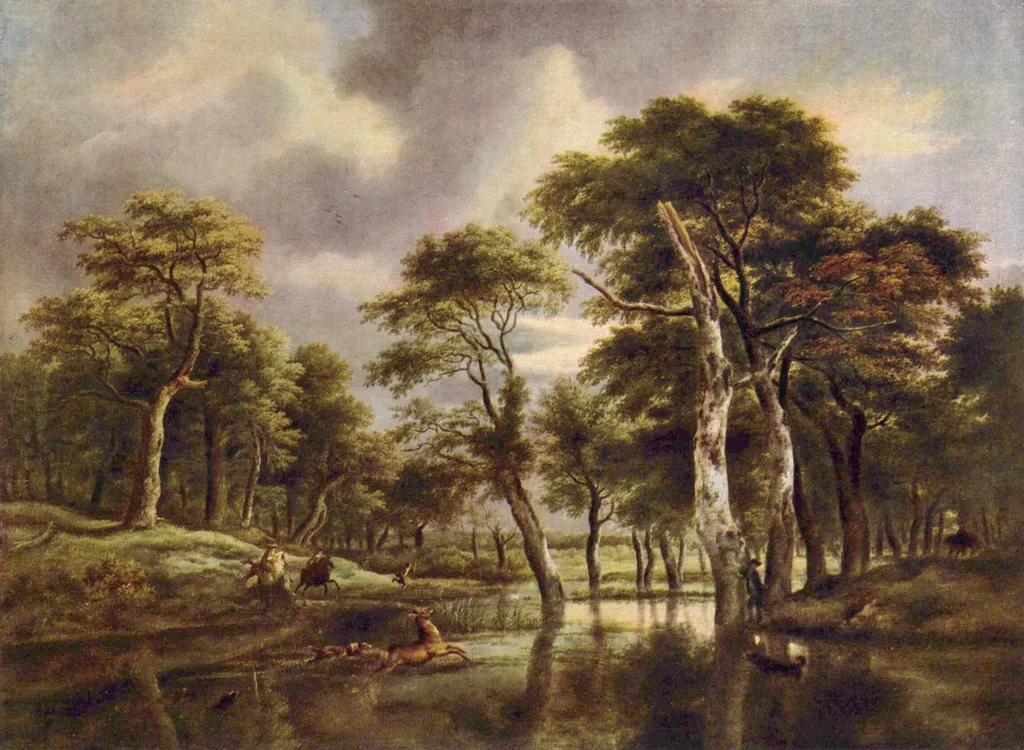
Stag Hunt in a Wood with a Marsh is an oil painting by the Dutch Golden Age artist Jacob van Ruisdael. It dates from 1660 and is held in the collection of the Staatliche Kunstsammlungen Dresden.
About this work
Overview
Painted in 1660, this oil on panel landscape by Jacob van Ruisdael portrays a quiet woodland marsh, where a group of stags moves through the undergrowth.
Painted in 1660, this oil on panel landscape by Jacob van Ruisdael portrays a quiet woodland marsh, where a group of stags moves through the undergrowth. The scene is framed by tall, gnarled trees and a muted, overcast sky. Its composition balances naturalism with a restrained sense of drama, characteristic of Dutch Golden Age landscape painting. The work resides in the Gemäldegalerie Alte Meister in Dresden.
Subject & Meaning
The stag hunt is implied rather than enacted: the animals are depicted in repose, not pursuit. Their presence evokes themes of nature’s autonomy and the quiet tension between wild life and human intervention. The marsh, neither fully hostile nor tame, suggests a liminal space—untouched by cultivation, yet observed with intimate attention. The scene resists narrative climax, favoring contemplation over action.
Technique & Style
Ruisdael employs subtle chiaroscuro to model the forms of trees and stags, enhancing spatial depth without theatrical contrast. Brushwork varies from fine detailing of foliage to broader, atmospheric strokes in the sky. Reflections of the animals in the still water add quiet realism. The palette is subdued—ochres, greens, and greys—reinforcing the mood of somber serenity and reinforcing the naturalism central to his approach.
History & Provenance
The painting entered the collection of the Dresden Gemäldegalerie in the 18th century, likely through the Saxon royal acquisitions of Dutch and Flemish works. Its attribution to Ruisdael has remained consistent since its documentation in early museum catalogs. No significant alterations or restorations are recorded, preserving its original tonal harmony and surface integrity.
Context
Created during the height of Dutch landscape painting, this work reflects a broader cultural interest in nature as a subject worthy of serious artistic treatment. Unlike Italianate idealized vistas, Ruisdael’s scenes root themselves in the specific topography of the Netherlands. The stag, a symbol of nobility and wilderness, appears frequently in Dutch art as a marker of untamed land, often contrasting with human settlements.
Legacy
Ruisdael’s restrained depiction of nature influenced later generations of landscape artists, including those of the Romantic period. His ability to convey mood through subtle light and texture, rather than dramatic events, set a precedent for observational painting. This work exemplifies how Dutch painters transformed everyday natural scenes into meditative compositions, shaping the evolution of landscape as a genre.
Own this work as a print
Artist & collection
Artist
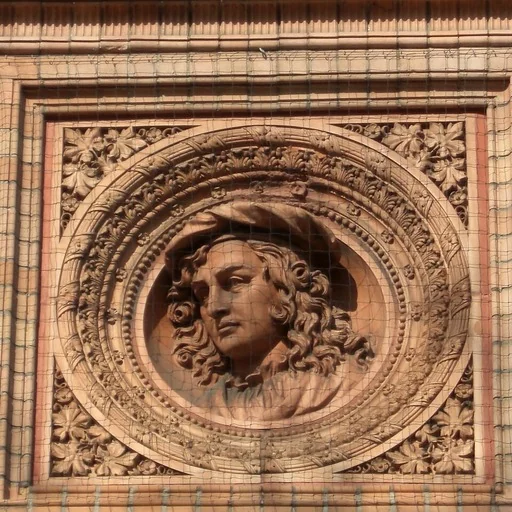
Jacob Isaackszoon van Ruisdael was a Dutch painter, draughtsman, and etcher. He is generally considered the pre-eminent landscape painter of the Dutch Golden Age, a period of great wealth and cultural achievement when…

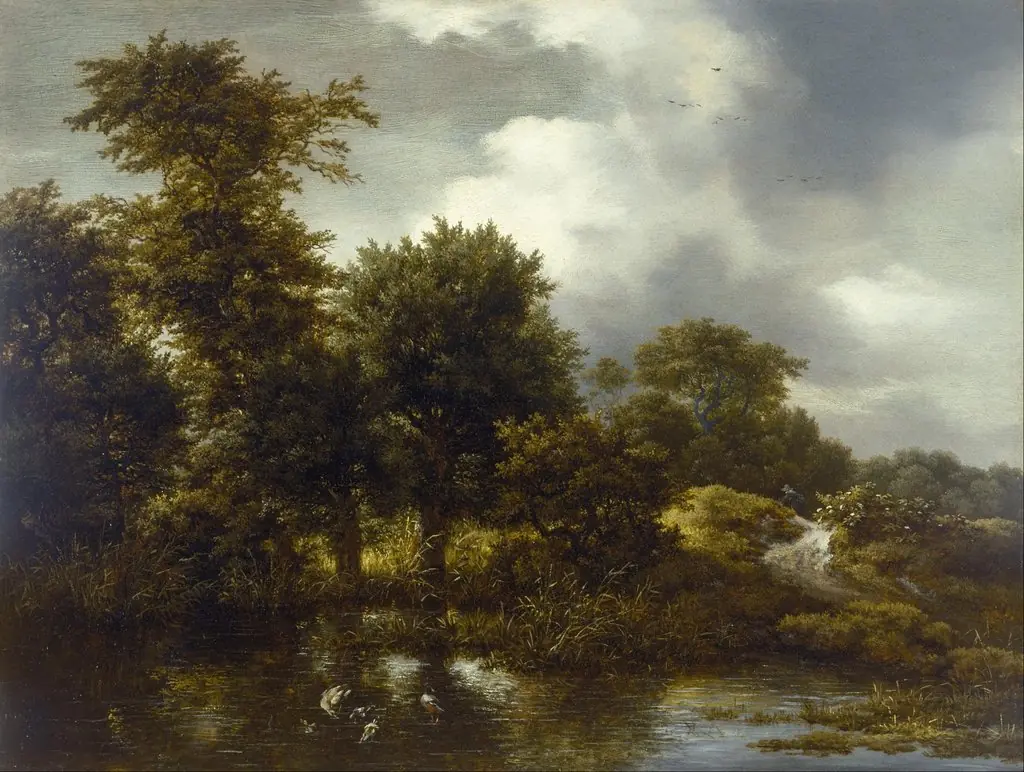 A Wooded Landscape with a Pond
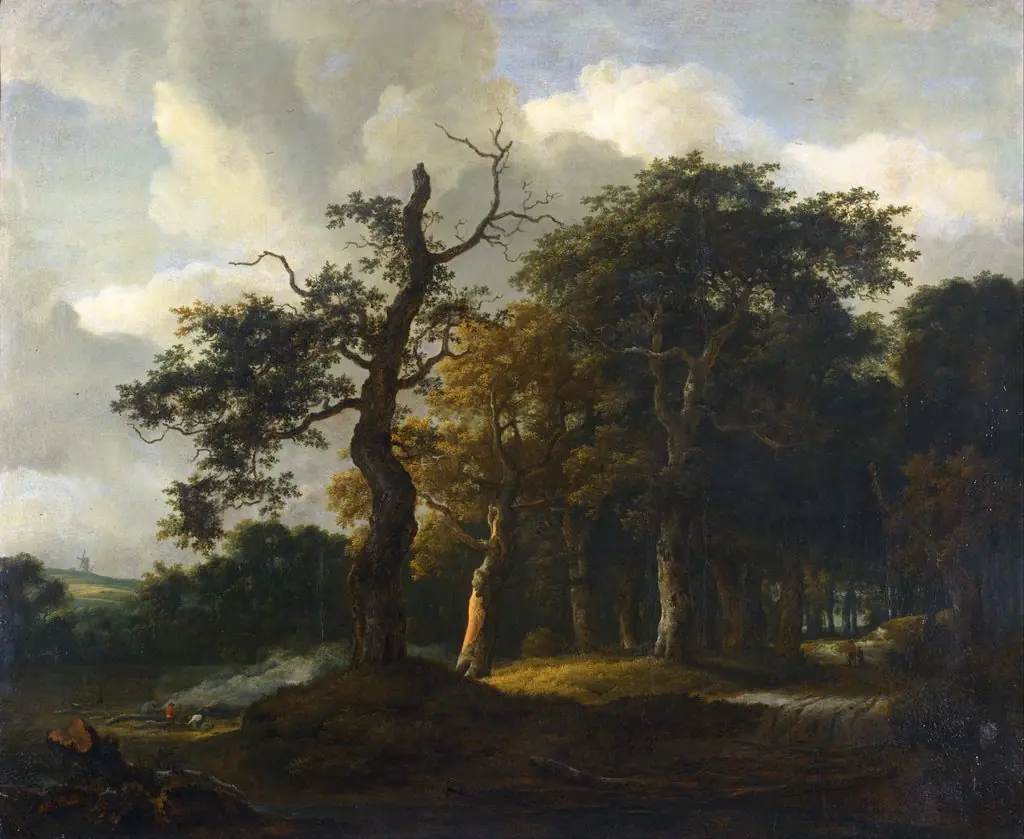 A Road through an Oak Wood
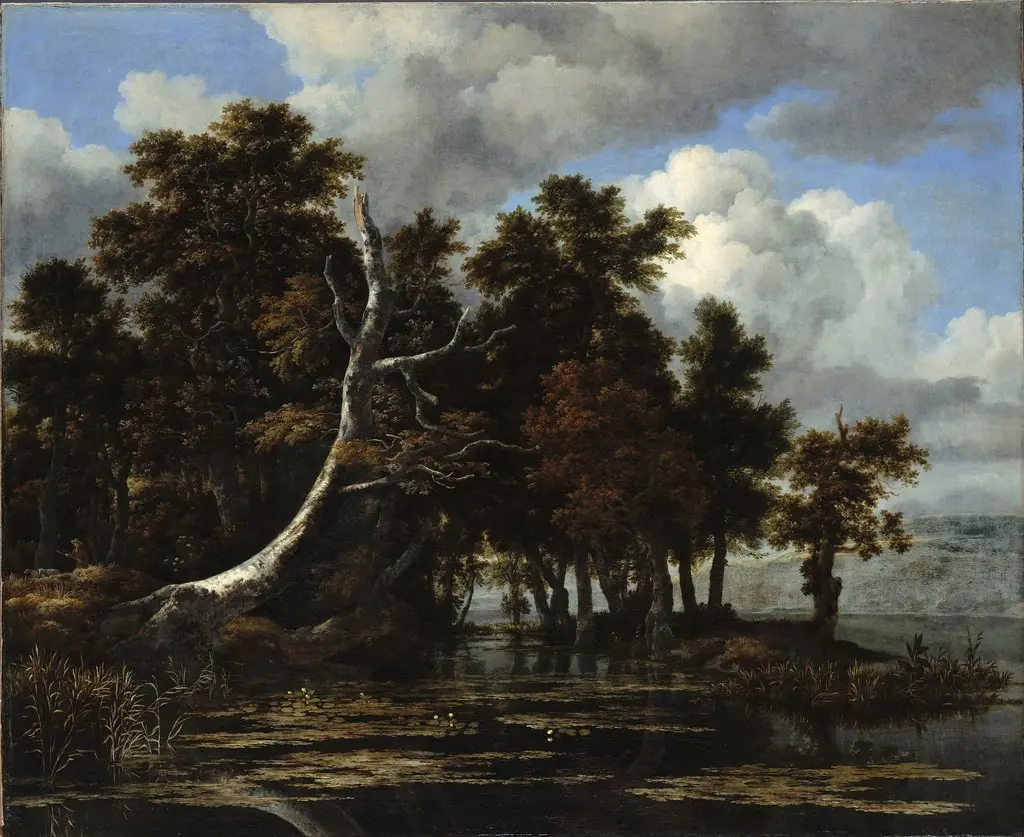 Oaks at a lake with Water Lilies
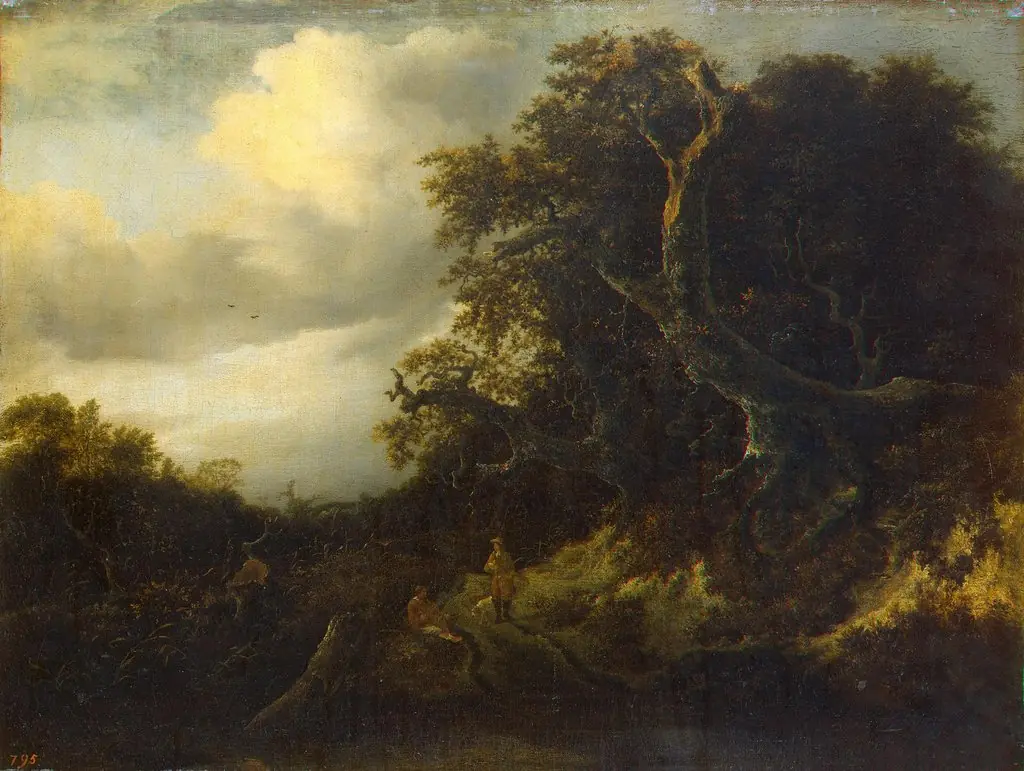 Road at the Edge of the Forest
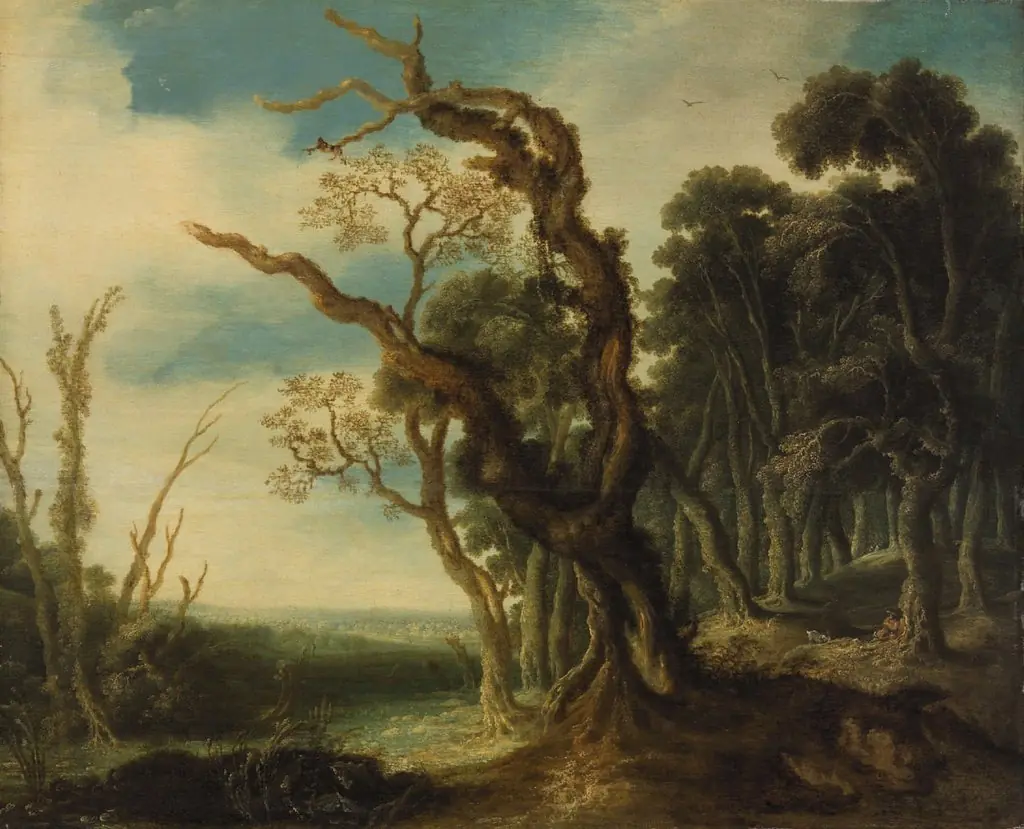 Wooded landscape with a goatherd
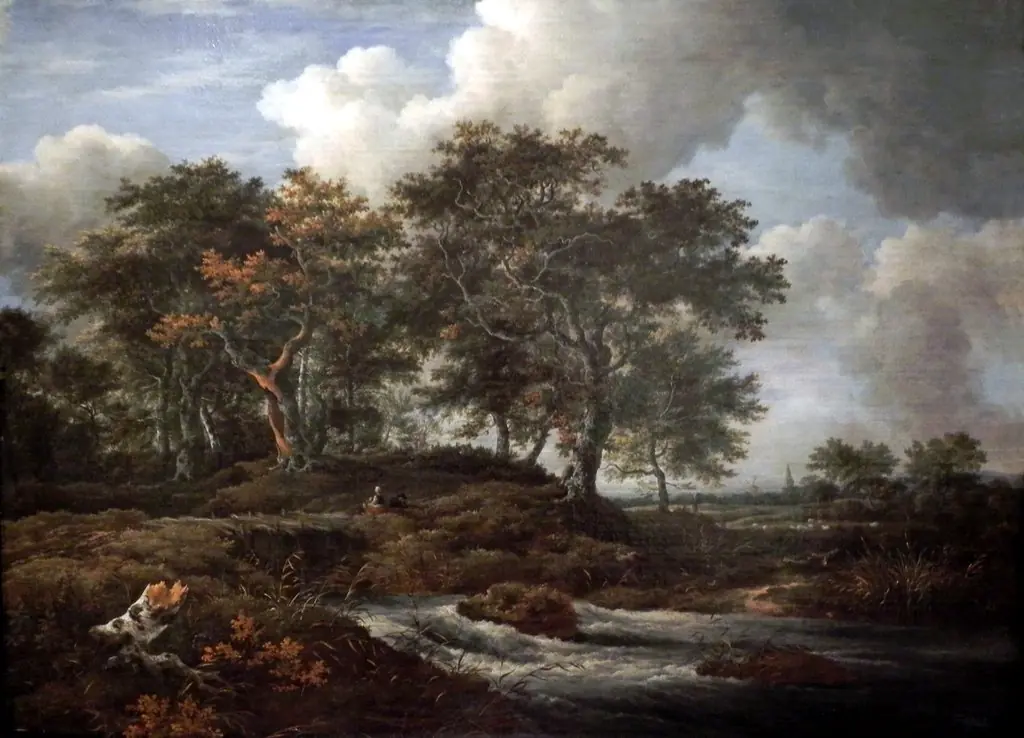 Torrent with Oak Trees
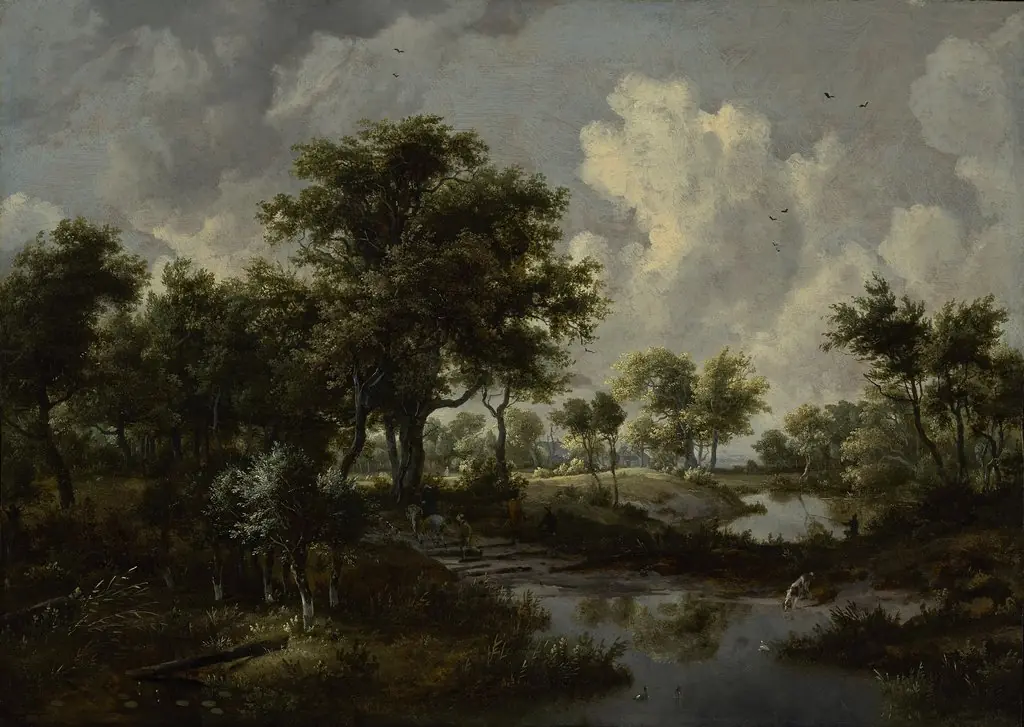 A Wooded Landscape
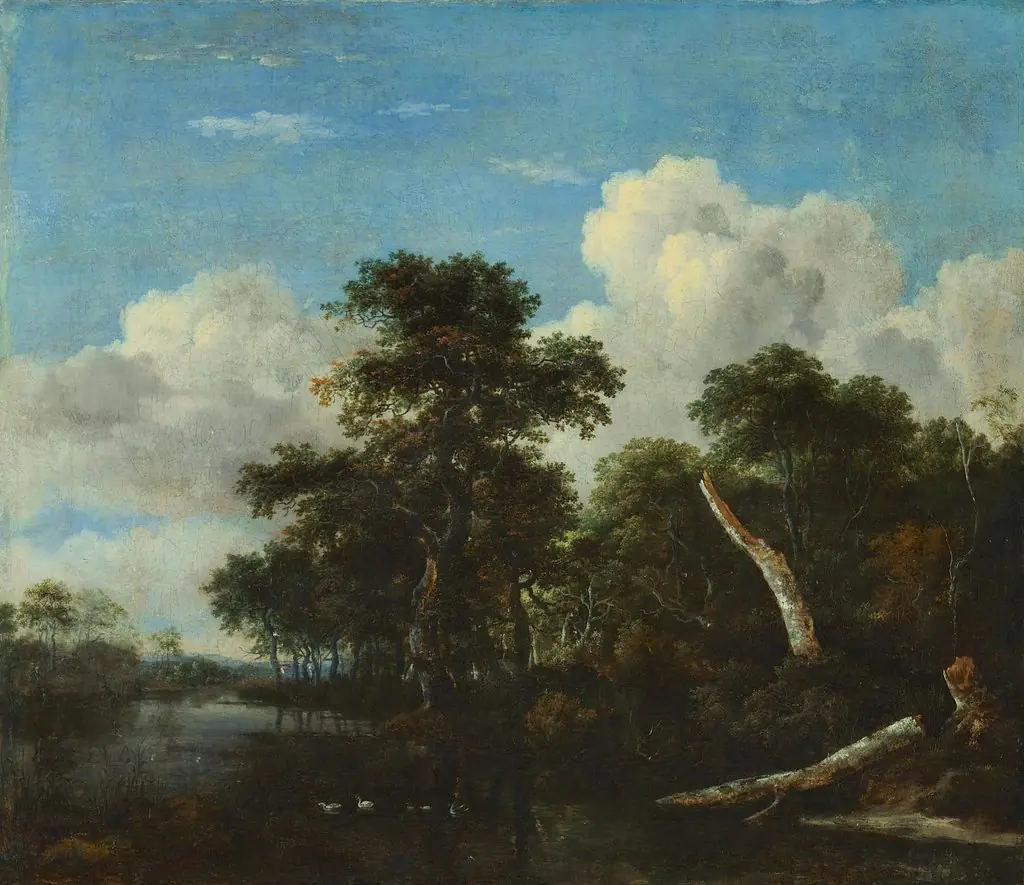 Forest thicket
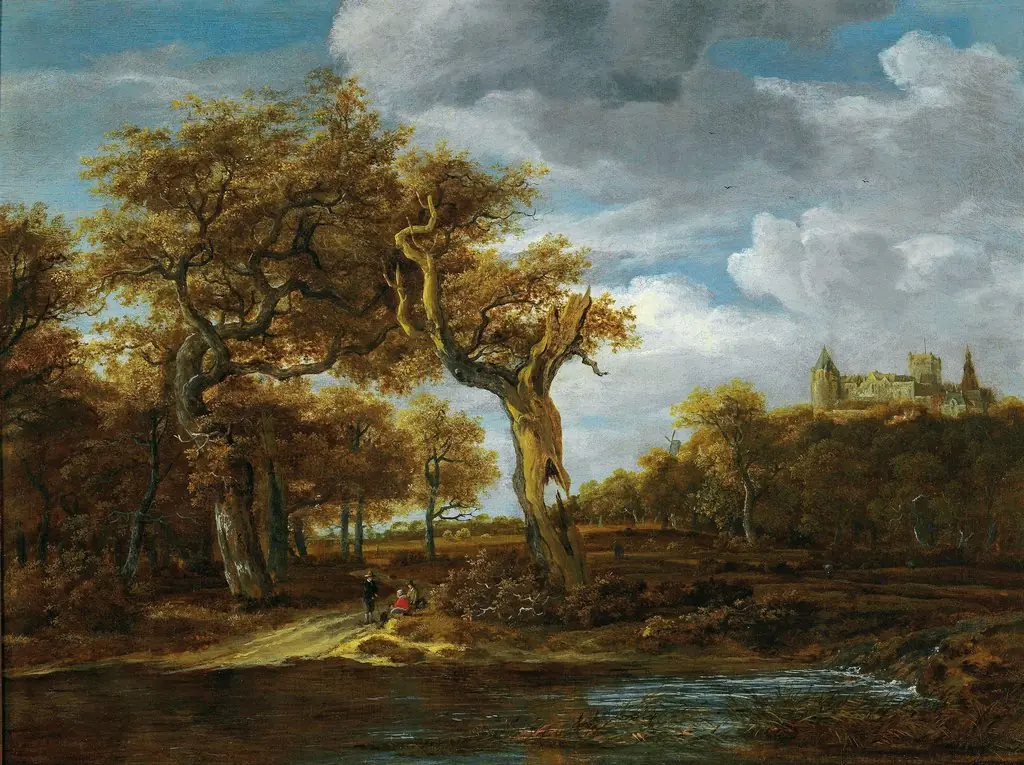 Wooded Landscape with the Castle of Bentheim
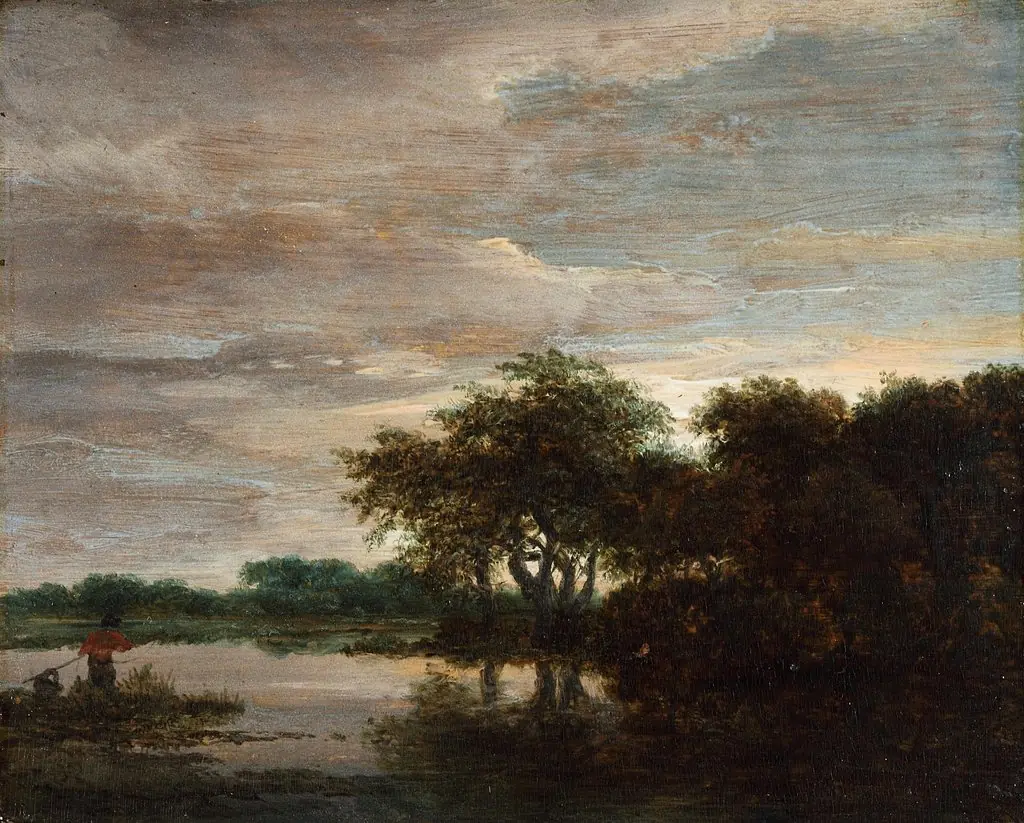 Woodland Scene with Lake
 Die Hirschjagd
 A Wooded Marsh