Artwork
The watermill
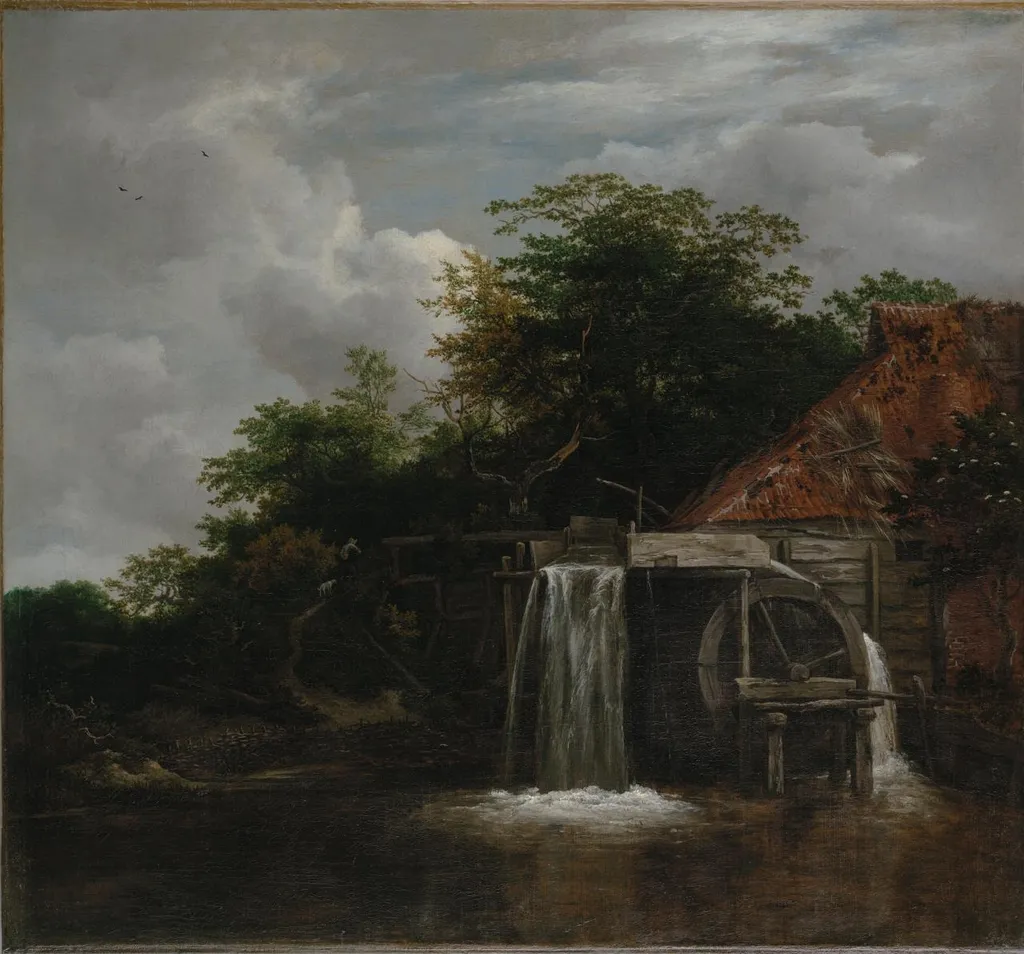
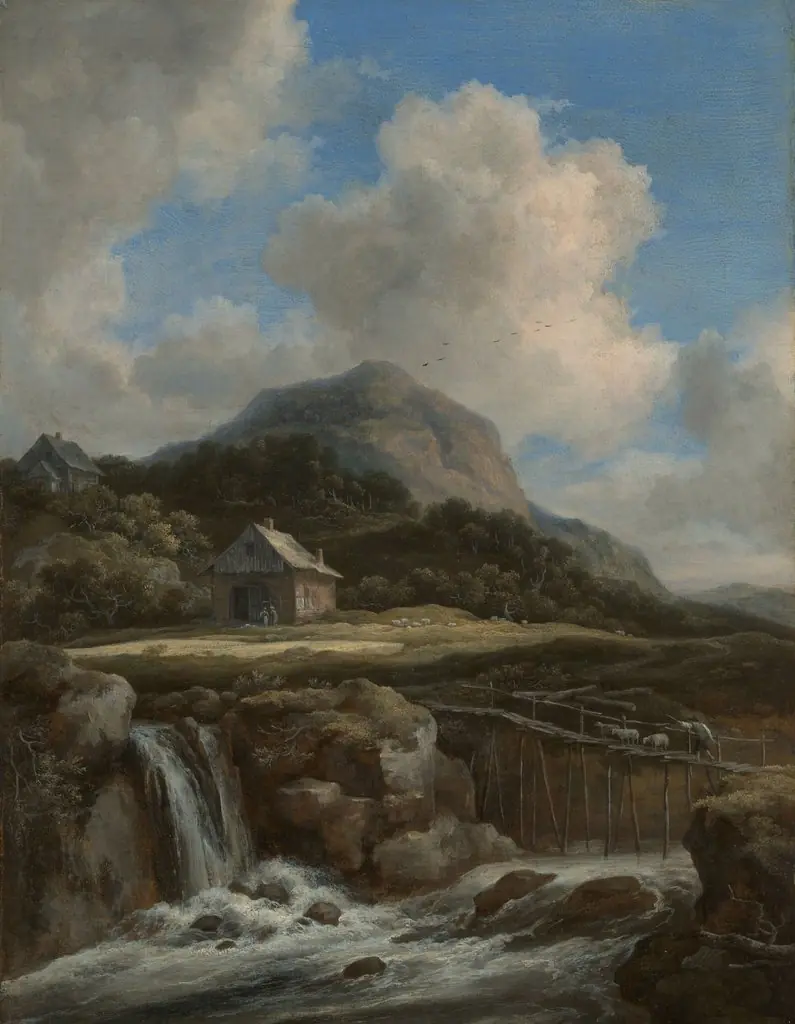
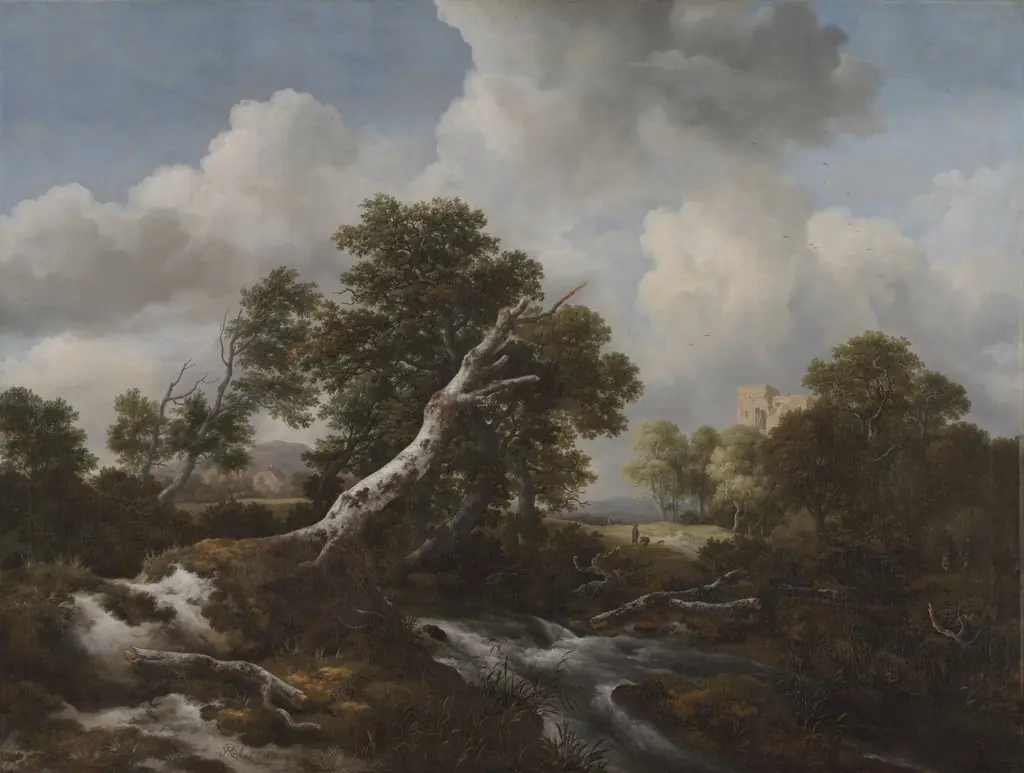
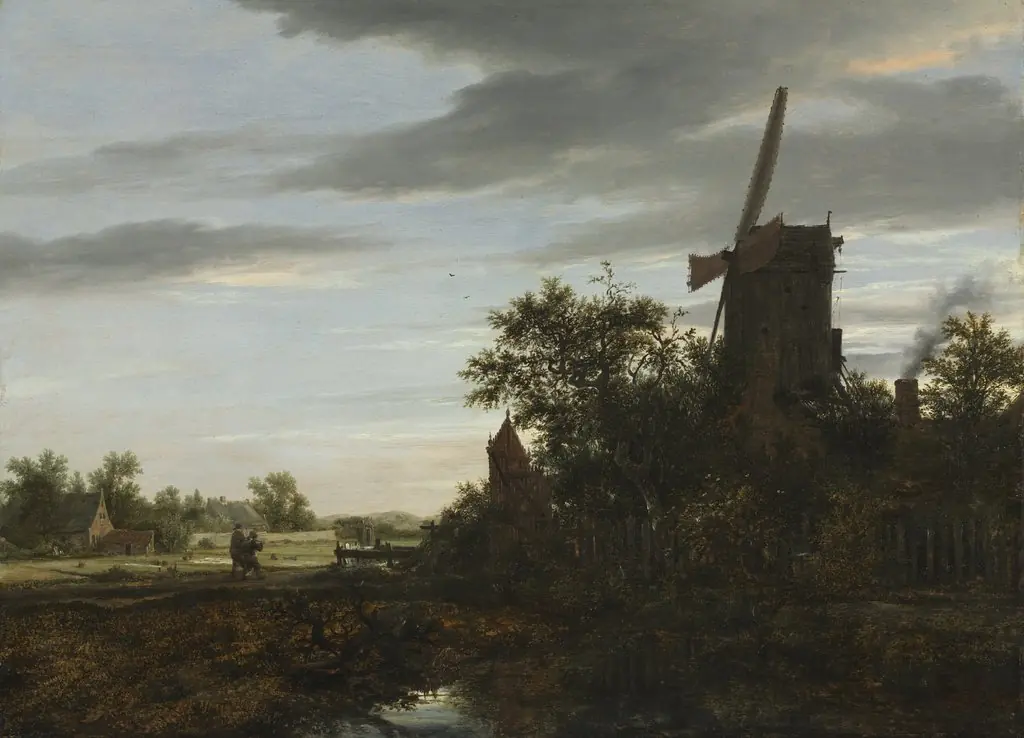
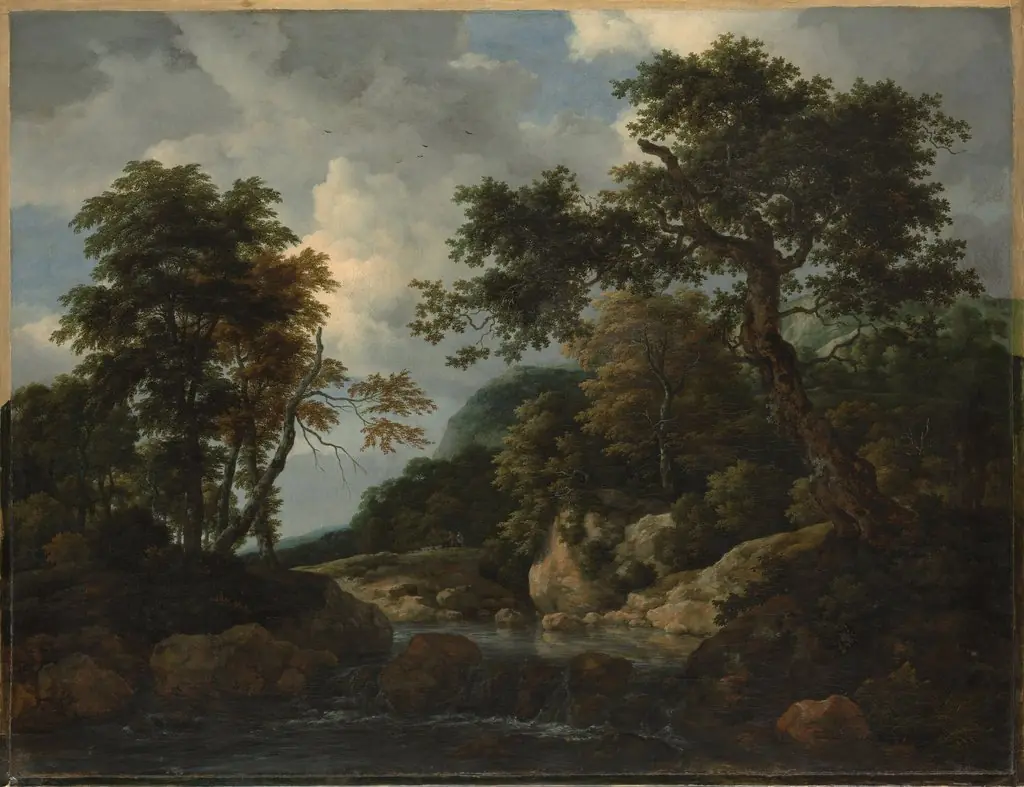
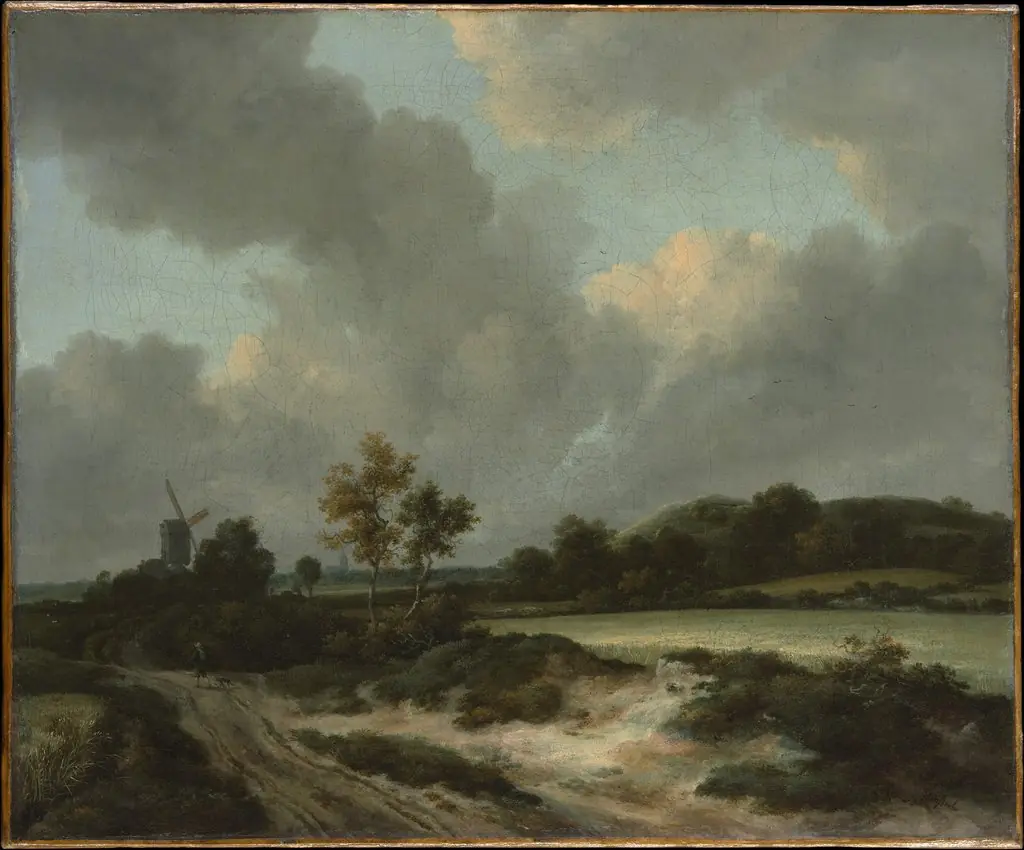
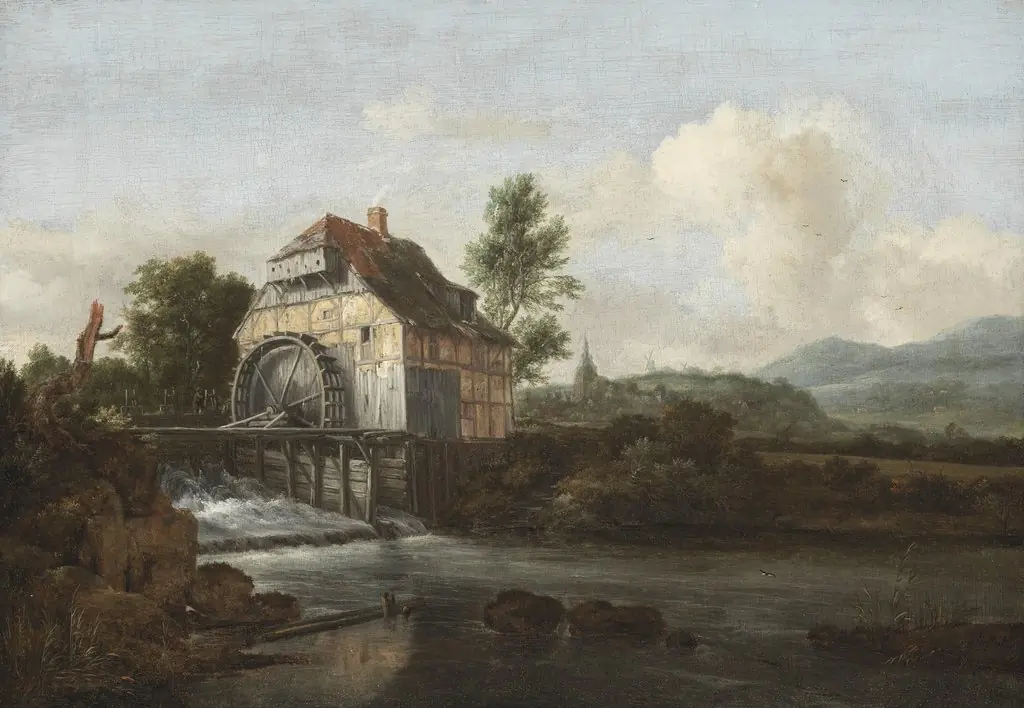
The watermill is an oil painting by the Dutch Golden Age artist Jacob van Ruisdael. It dates from 1660 and is held in the collection of the National Gallery of Victoria.
About this work
Overview
The Watermill is an oil on canvas painting created by Jacob van Ruisdael around 1660. It is a representative work of Dutch Golden Age landscape painting and is currently held in the National Gallery of Victoria.
Subject & Meaning
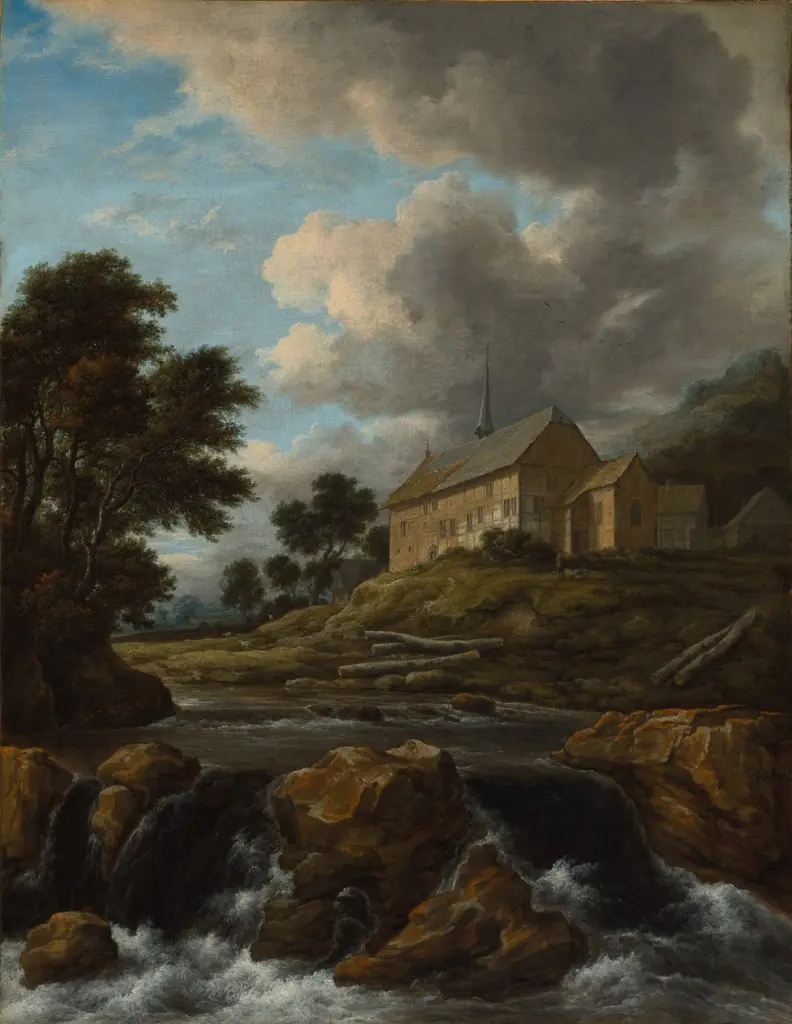
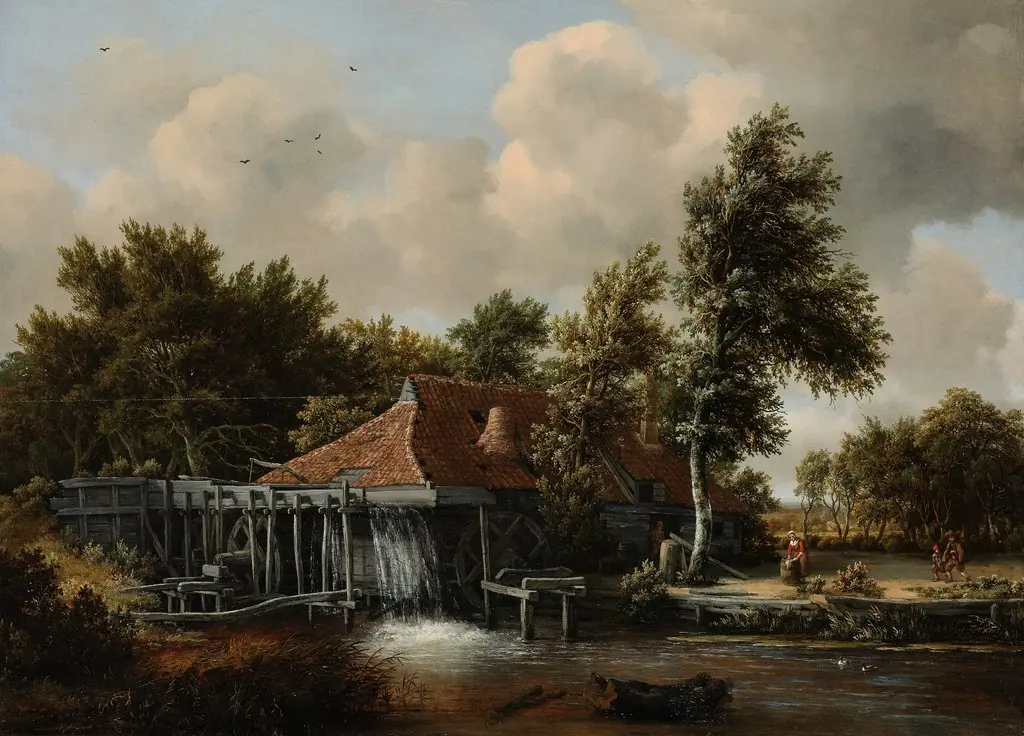
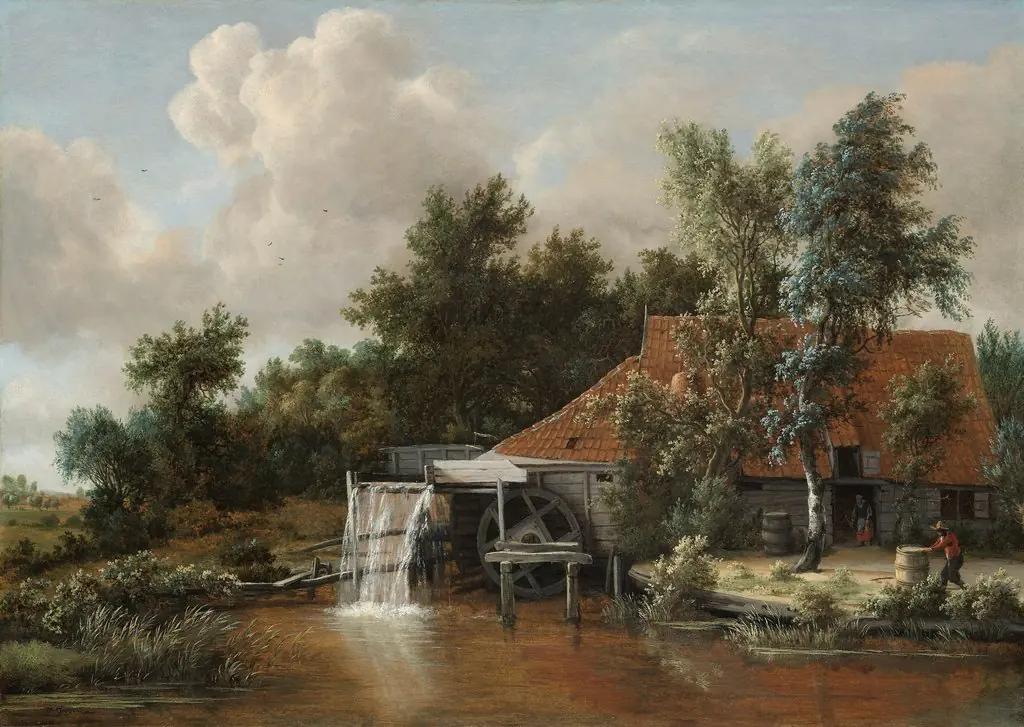
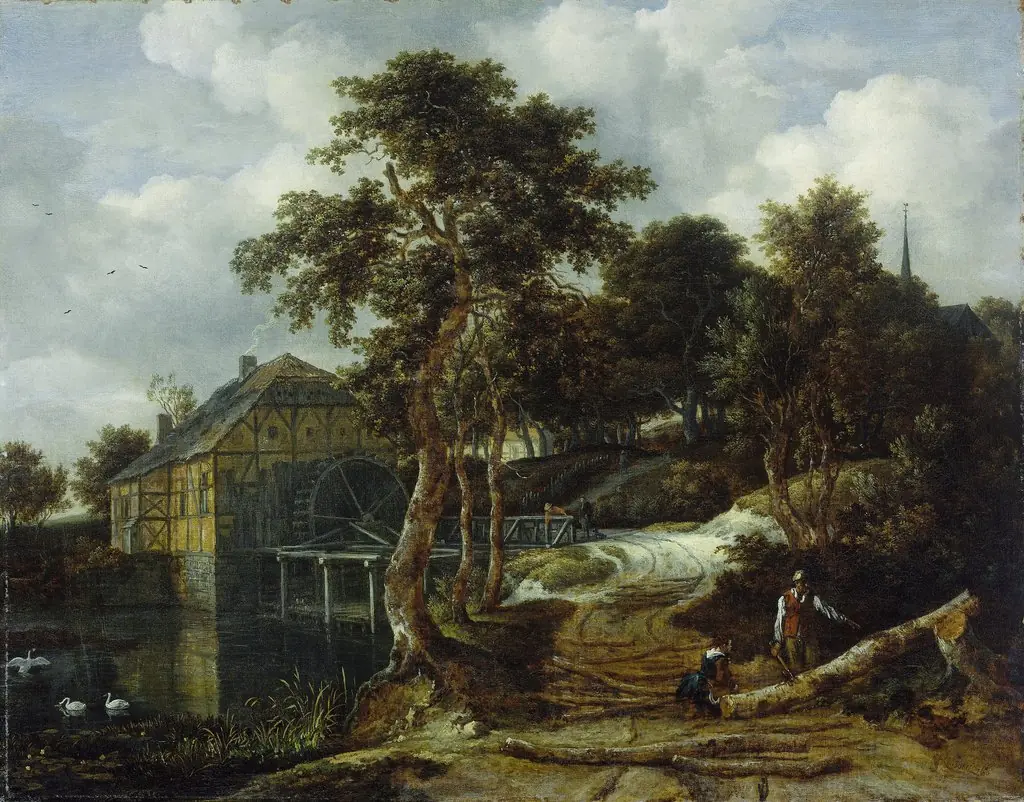
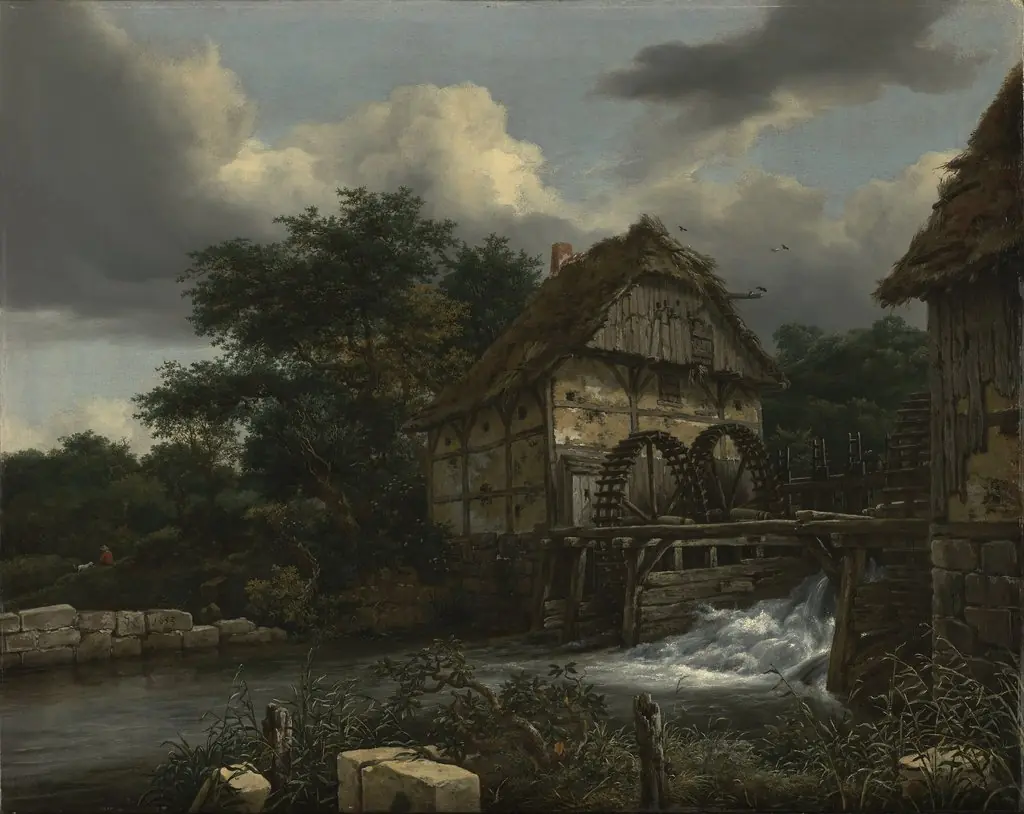
The painting depicts a serene watermill scene with a large wheel, surrounded by trees and a small waterfall. The composition is characterized by a predominance of green and brown hues, evoking a natural atmosphere. The mill's wooden structure and thatched roof are rendered in detail.
Technique & Style
Ruisdael's use of light, coming from the left side, creates a sense of depth and makes the water and trees appear shiny. The painting's style is consistent with Ruisdael's work from the 1660s, a period during which he collaborated with his pupil Hobbema.
History & Provenance
The painting was documented by Hofstede de Groot in 1911 and was exhibited at the Royal Academy Winter Exhibition in London in 1876 and 1902. It was once in the collection of the Right Hon. Lewis Fry in Clifton, Bristol.
Context
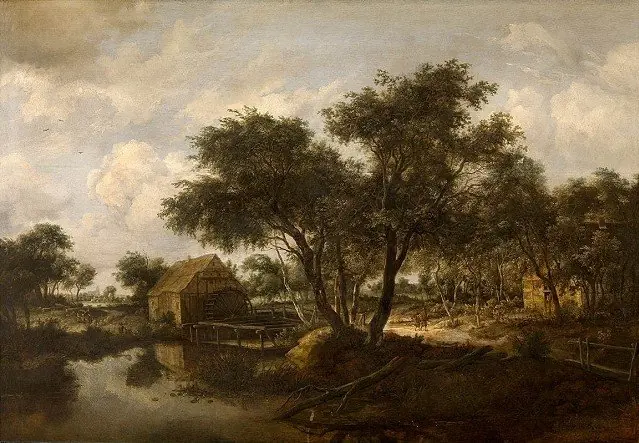
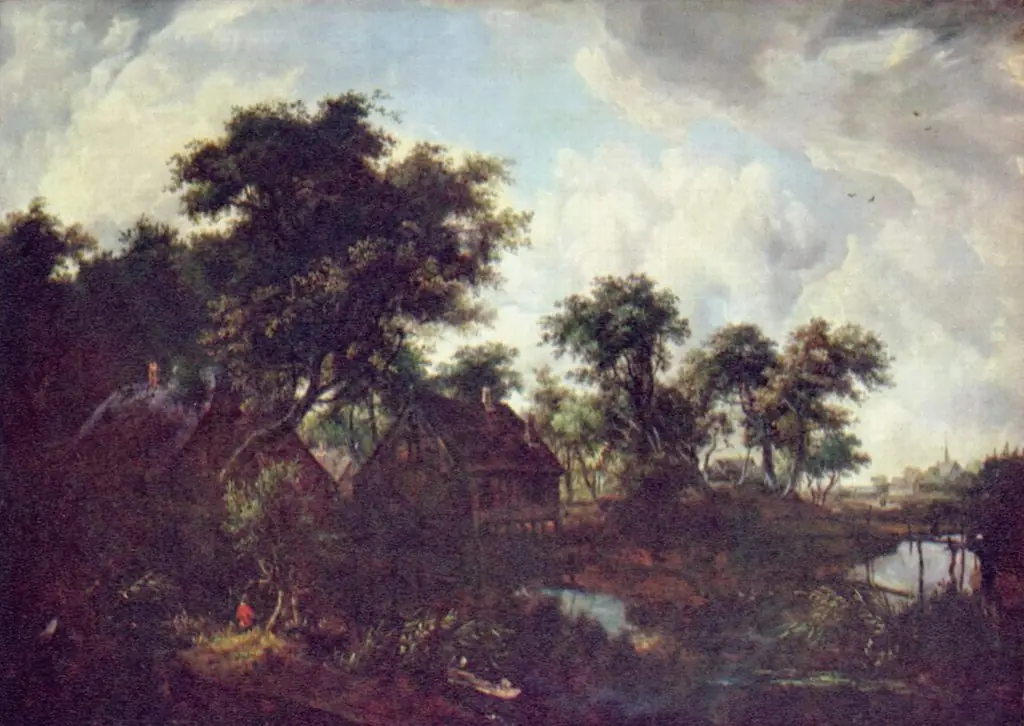
The Watermill is one of several similar paintings by Ruisdael and Hobbema from this period, suggesting a shared inspiration or subject. Scholars have attempted to identify the specific watermill depicted, but its exact location remains unknown, believed to be somewhere in Gelderland.
Artist & collection
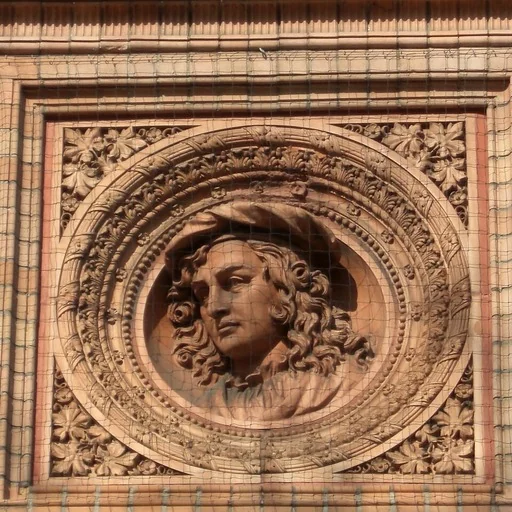
Artist
Jacob Isaackszoon van Ruisdael was a Dutch painter, draughtsman, and etcher. He is generally considered the pre-eminent landscape painter of the Dutch Golden Age, a period of great wealth and cultural achievement when…