Artwork
Foreshore Scene with Windmill
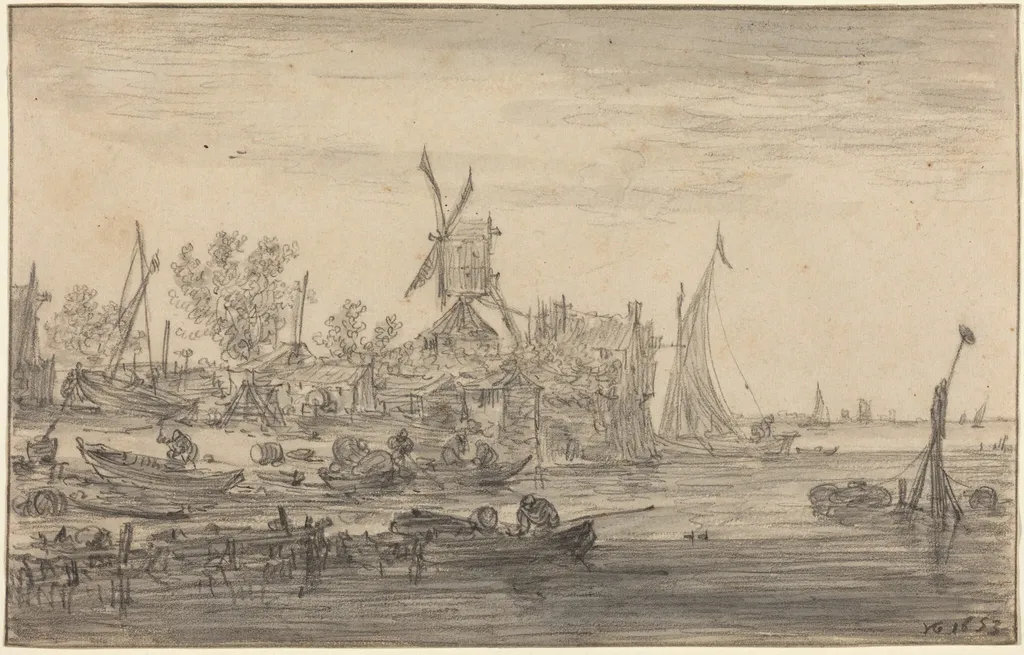
Foreshore Scene with Windmill is a graphite drawing by the Baroque artist Jan van Goyen. It dates from 1653 and is held in the collection of the National Gallery of Art.
About this work
Overview
Foreshore Scene with Windmill, created in 1653, is a graphite and gray wash drawing on laid paper by Jan van Goyen, a prolific Dutch landscape artist of the 17th century.
Subject & Meaning
The drawing captures a bustling riverside scene, featuring a windmill, trees, small buildings, and various boats with people engaged in daily activities, highlighting everyday Dutch coastal life.
Technique & Style
Van Goyen employed soft lines and subtle gray wash shading to achieve depth, characteristic of his approach to capturing atmospheric effects in landscape drawings.
History & Provenance
Part of van Goyen's extensive body of over 1,000 drawings, this work is representative of his prolific output during the Dutch Golden Age.
Context
Created within the Baroque period, the drawing aligns with the era's focus on depicting everyday life and mundane scenes, reflecting van Goyen's contribution to the genre.
Legacy
Van Goyen's influence on subsequent landscape artists underscores his central role in the Dutch Golden Age of landscape art, with works like Foreshore Scene with Windmill exemplifying his impact.
Artist & collection
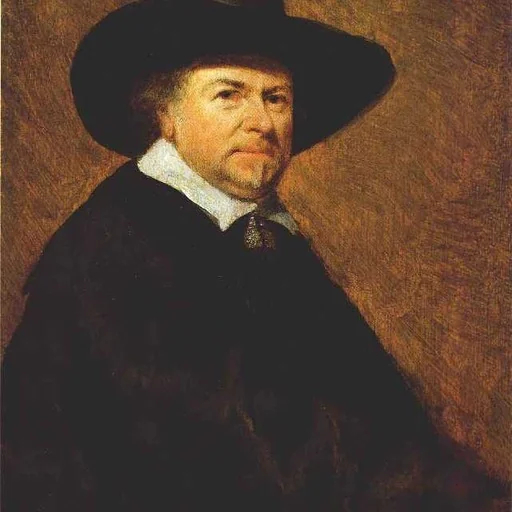
Artist
Jan Josephszoon van Goyen (Dutch pronunciation: ; 13 January 1596 – 27 April 1656) was a Dutch landscape painter.

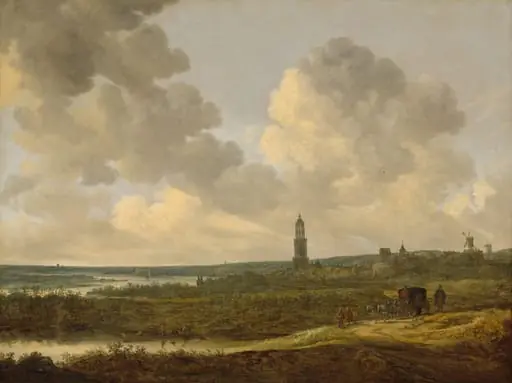
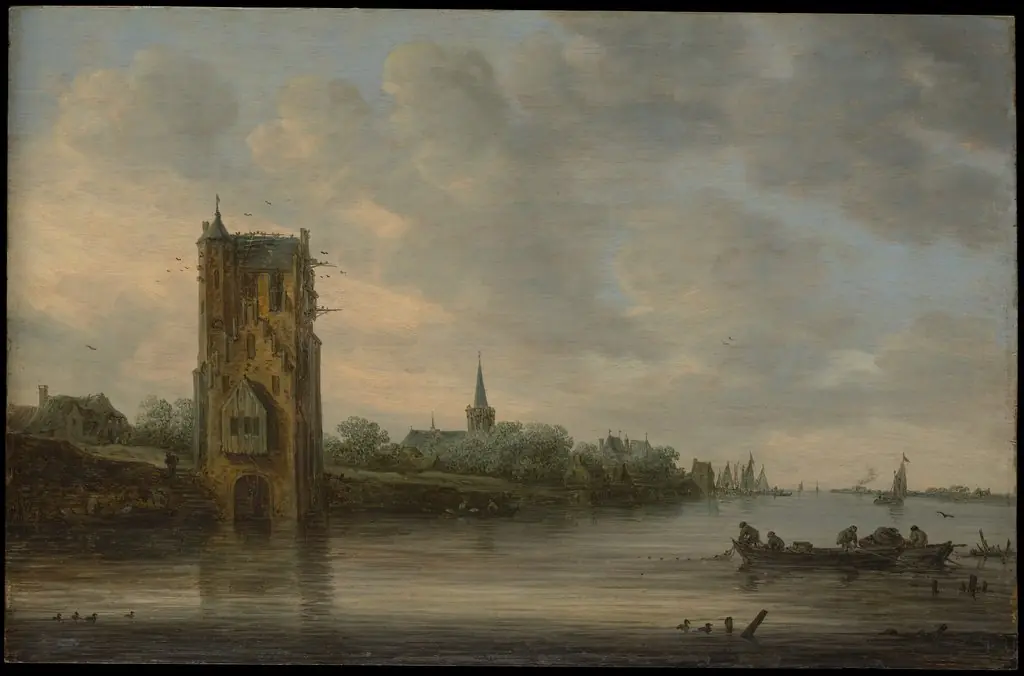
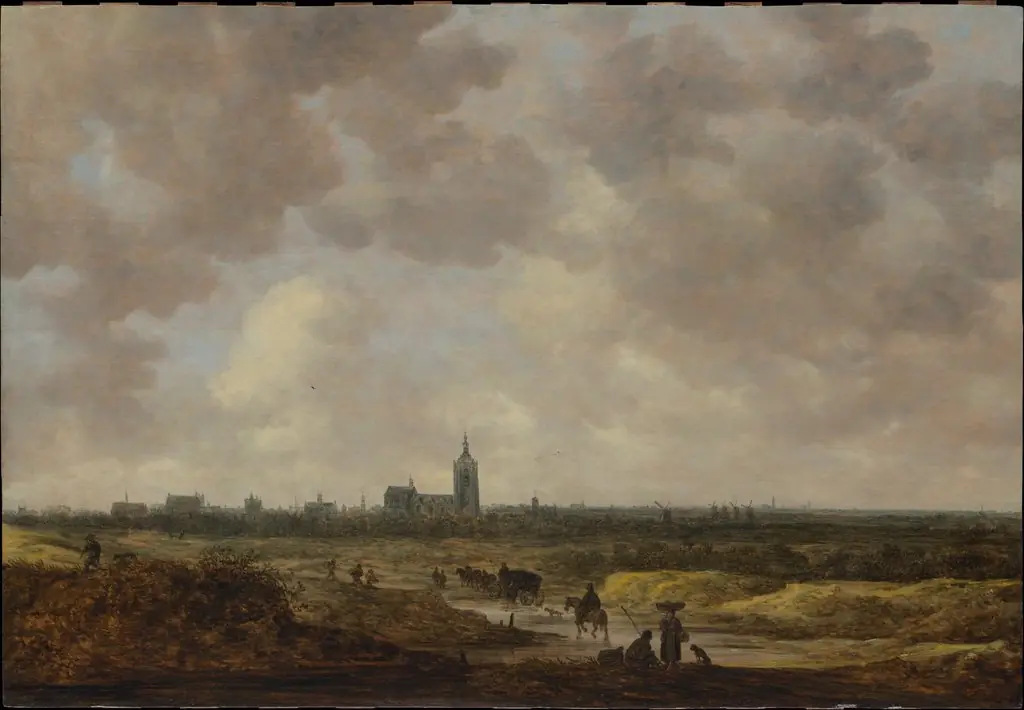
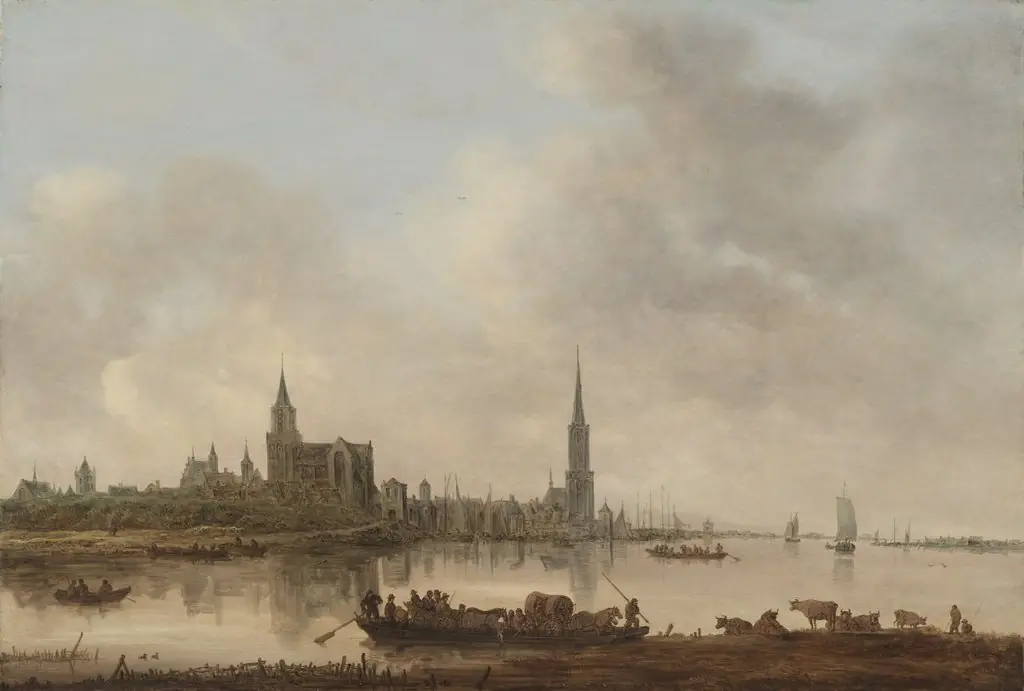
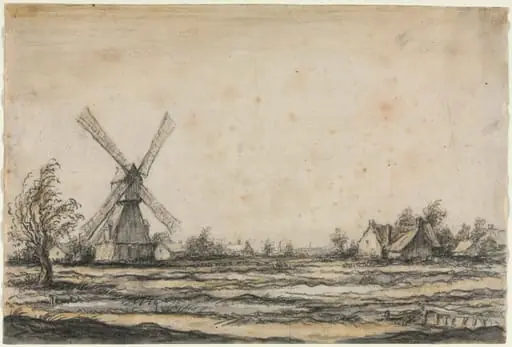 Landscape with a Windmill near a Farmstead
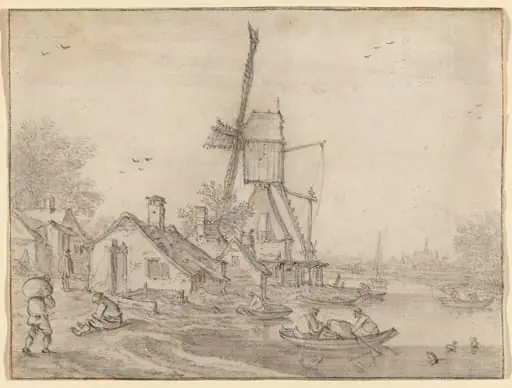 A Windmill and Cottages on a River Bank, Men in Rowing Boats
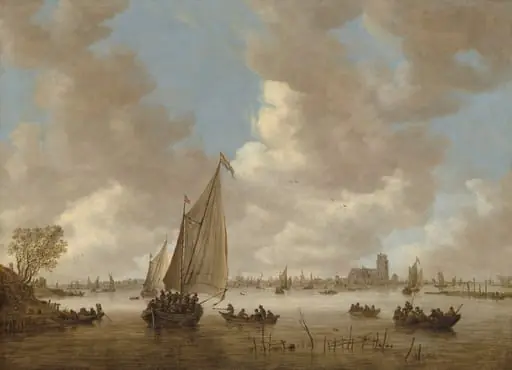
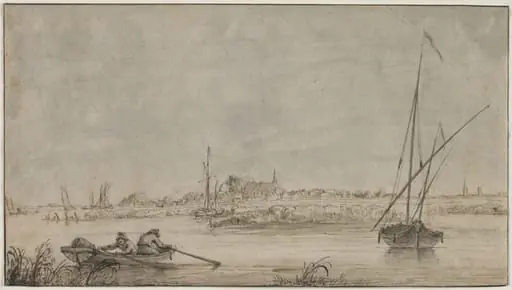 View of Dordrecht from the River
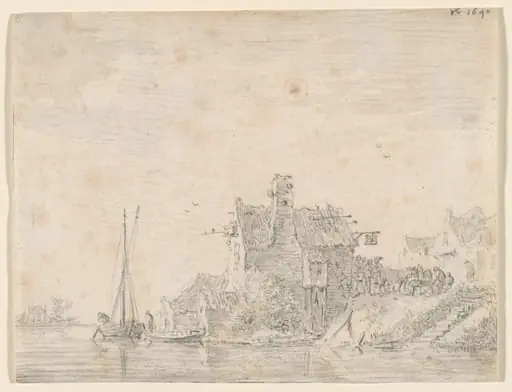 A Tavern by a River
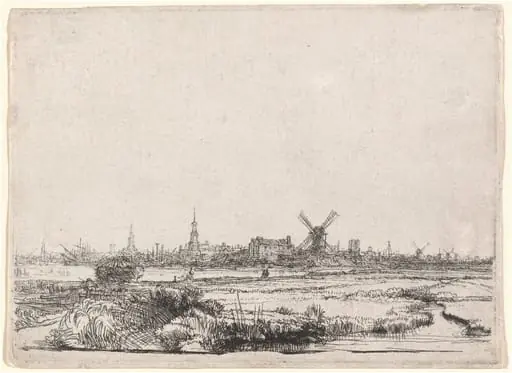 View of Amsterdam from the Northwest
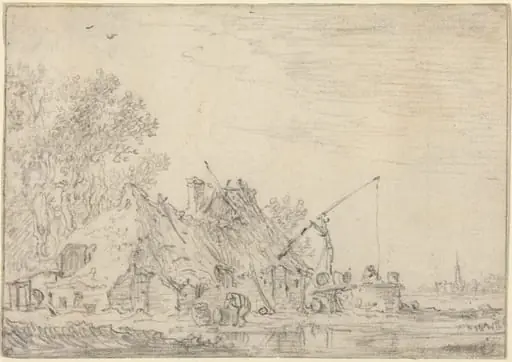 Rustic House with a Well
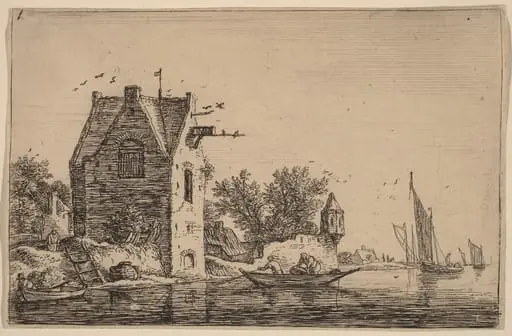 The Sentry Box on the Wall
![View of Houtewael near the Sint Anthoniespoort [recto], by Rembrandt](https://artifactworldgallery.com/img/rembrandt--view-of-houtewael-near-the-sint-anthoniespoort-recto--2919925de9060e70-w320.webp) View of Houtewael near the Sint Anthoniespoort [recto]
View of Houtewael near the Sint Anthoniespoort [recto]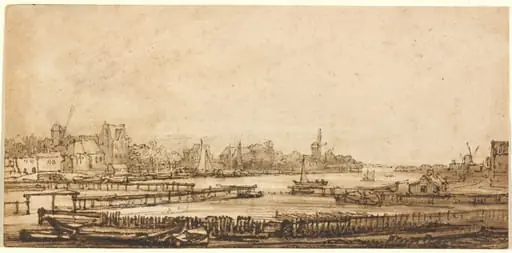 View over the Amstel from the Rampart