Artwork
Portrait of Johannes Thedens, Governor-General of the Dutch East India Company
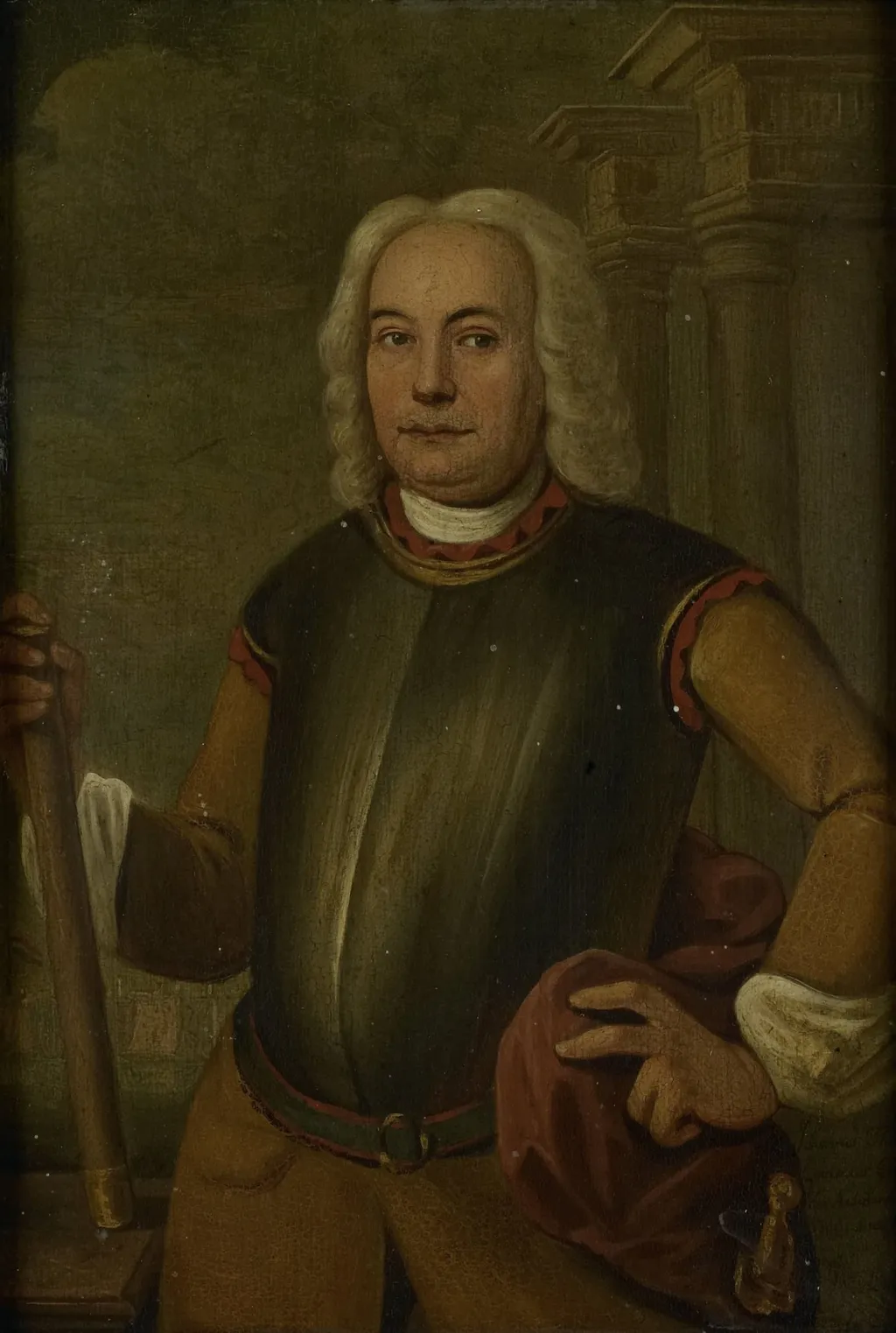
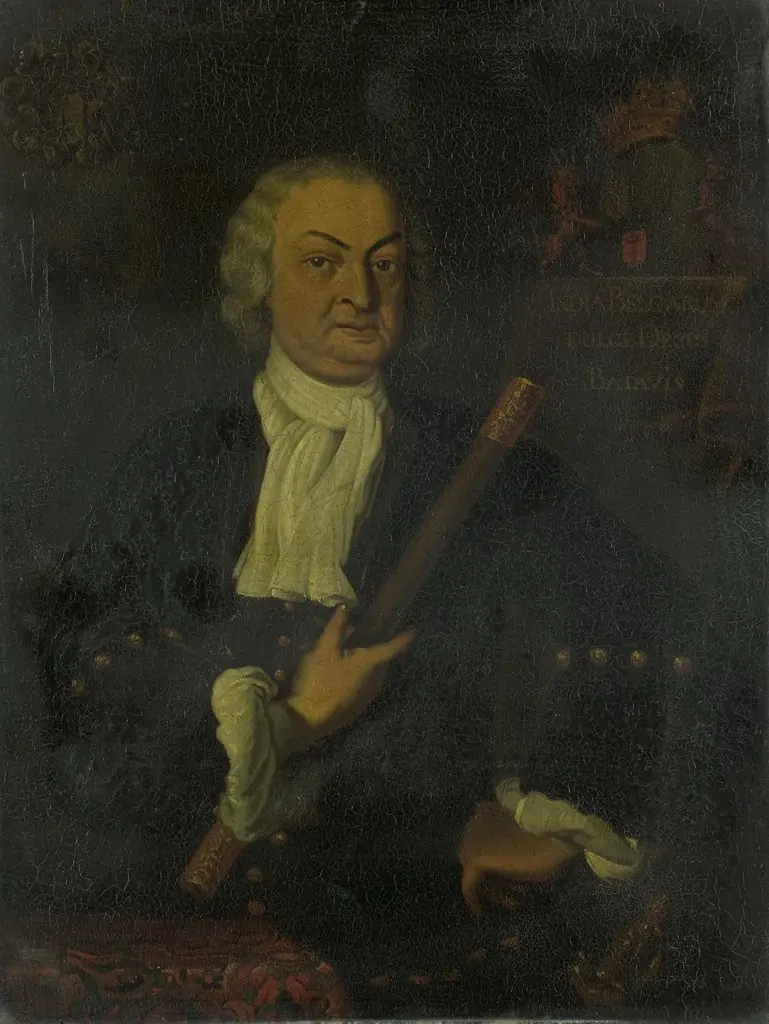
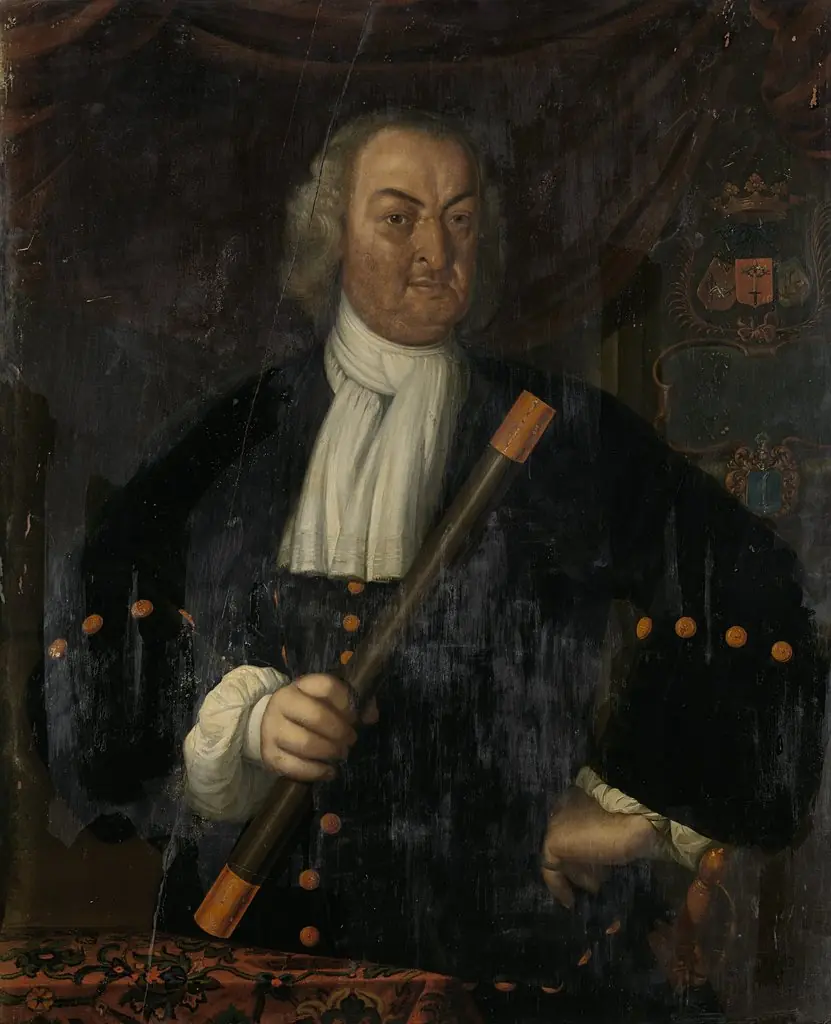
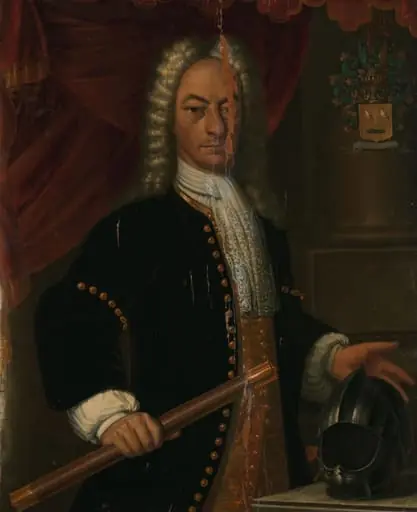
Portrait of Johannes Thedens, Governor-General of the Dutch East India Company is an unspecified painting by the Rococo painting artist Jacobus Oliphant. It dates from 1742 and is held in the collection of the Rijksmuseum. The work depicts Johannes Thedens, who served as Governor‑General of the Dutch East India Company from 1741 to 1743.
About this work
Overview
The work depicts Johannes Thedens, who served as Governor‑General of the Dutch East India Company from 1741 to 1743. Rendered as a half‑length standing figure, he wears a breastplate and holds a command staff in his right hand, while his left hand rests at his side. The background includes a representation of Batavia’s castle on the left and a pair of classical columns on the right.
Subject & Meaning
The portrait presents Thedens in martial attire, emphasizing his authority and the military dimension of his colonial administration. The calm, almost detached expression suggests a dignified composure expected of a high‑ranking official, while the inclusion of Batavia’s fort underscores the geographic locus of his power within the Dutch East Indies.
Technique & Style
Executed in oil on canvas, the image follows the conventions of 18th‑century Dutch portraiture, with a restrained palette and careful modelling of light on metal armor and fabric. The architectural elements are rendered with linear clarity, providing a balanced backdrop that frames the figure without overwhelming his presence.
History & Provenance
The painting belongs to a series of copies made of official portraits of VOC governors‑general, likely commissioned by the company to document its leadership abroad. It is a free copy of an original catalogued as SK‑A‑3779, suggesting it was reproduced for archival or diplomatic purposes rather than as a unique work.
Context
Batavia, now Jakarta, served as the administrative centre of the Dutch East Indies, and its castle appears in the portrait to signal the seat of colonial governance. Such portraits were commonly sent back to the Netherlands, providing the metropole with visual confirmation of its overseas officials and reinforcing the imperial hierarchy.
Artist & collection

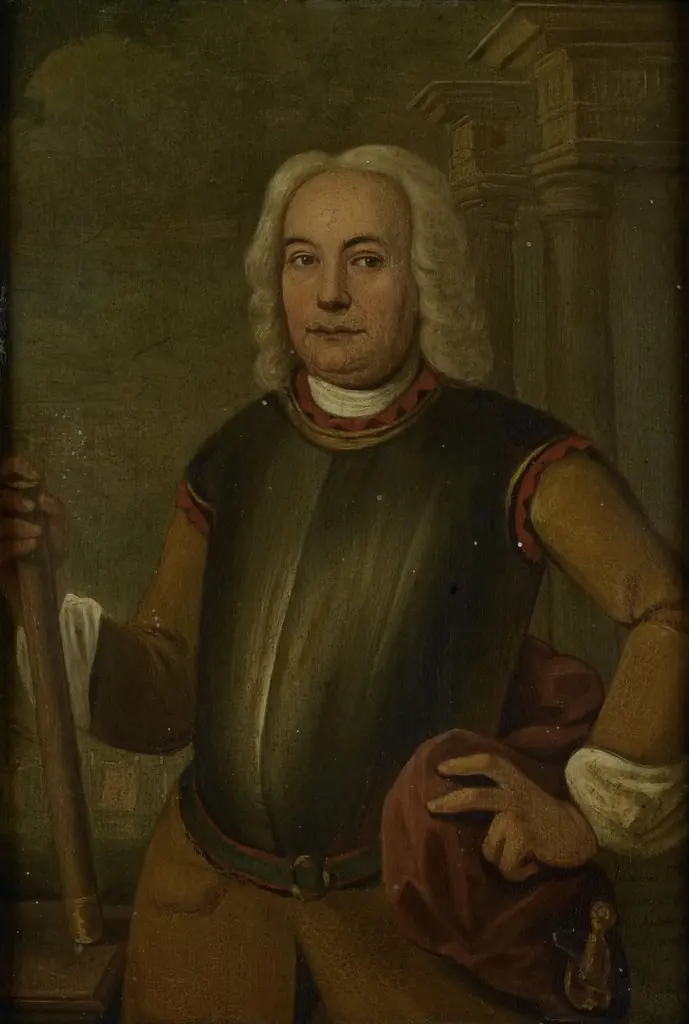 Portrait of Johannes Thedens (1680-1748). Gouverneur-generaal (1741-43)
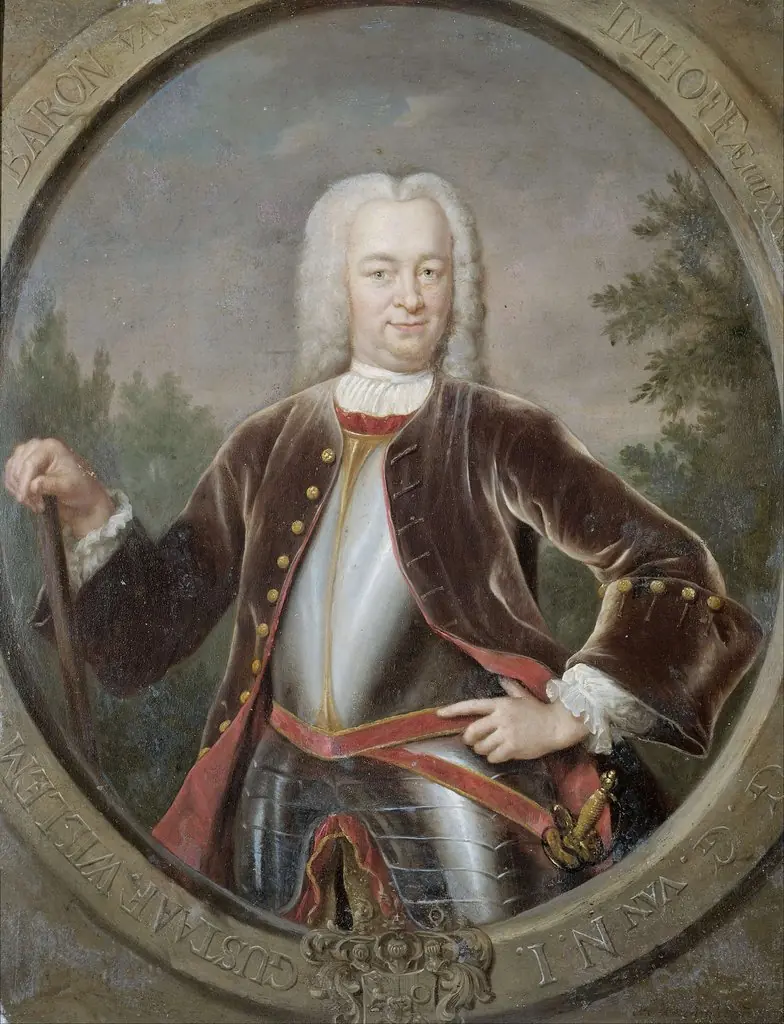 Portrait of Gustaaf Willem, Baron van Imhoff, Governor-General of the Dutch East India Company
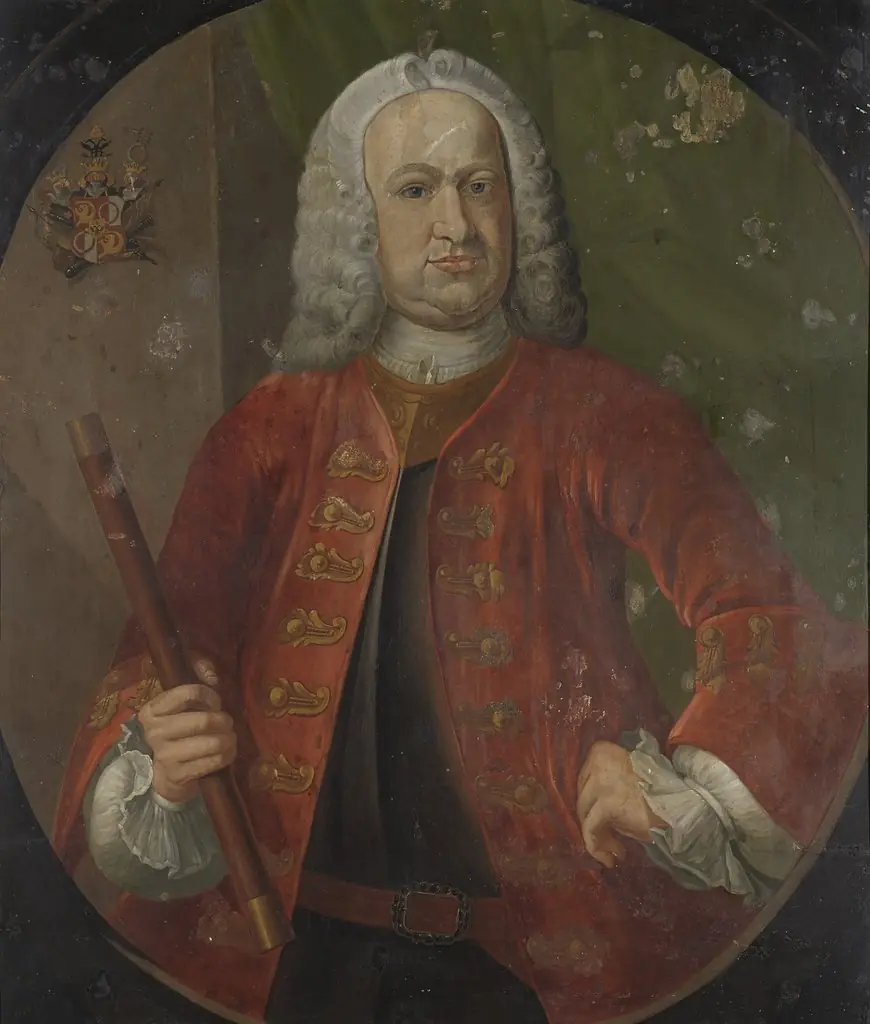 Portrait of Gustaaf Willem, Baron van Imhoff, Governor-General of the Dutch East India Company
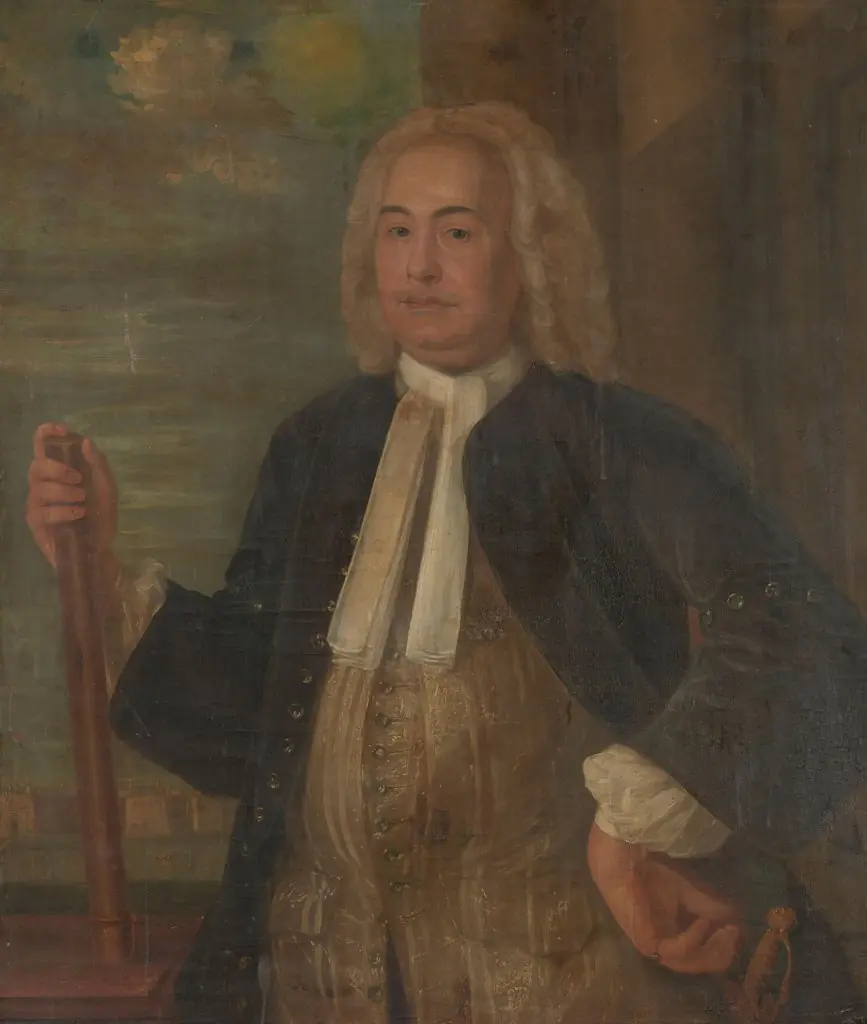 Portrait of Johannes Thedens, Governor-General of the Dutch East India Company
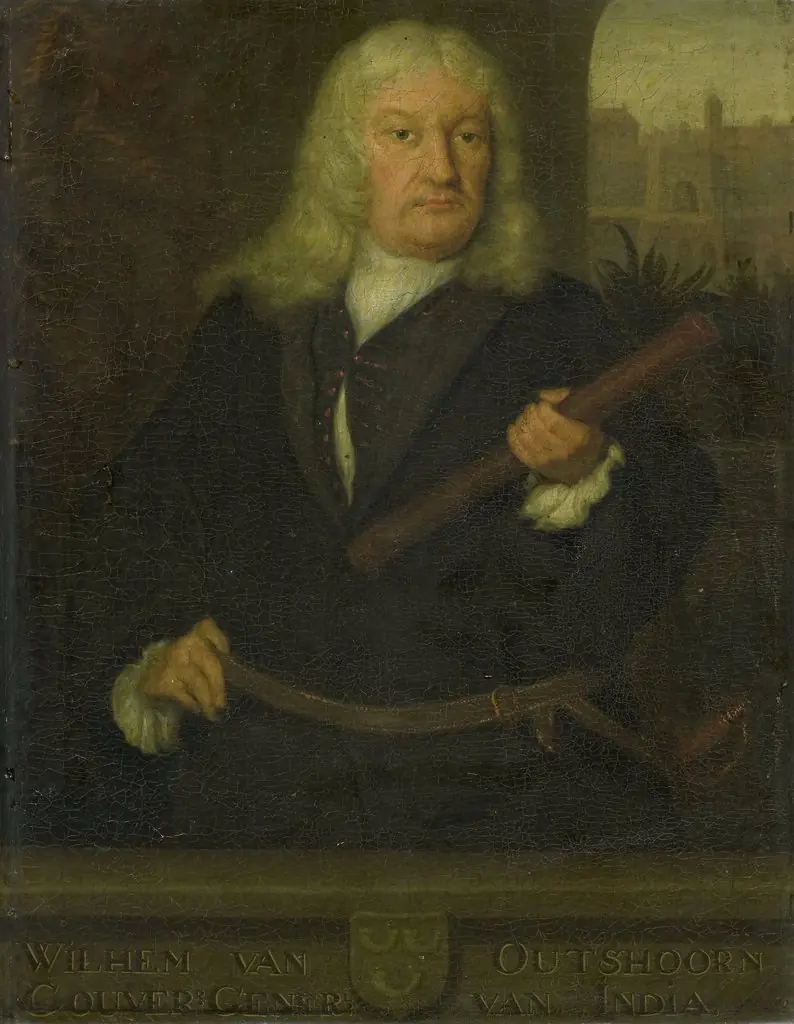 Portrait of Willem van Outhoorn, Governor General of the Dutch East Indies
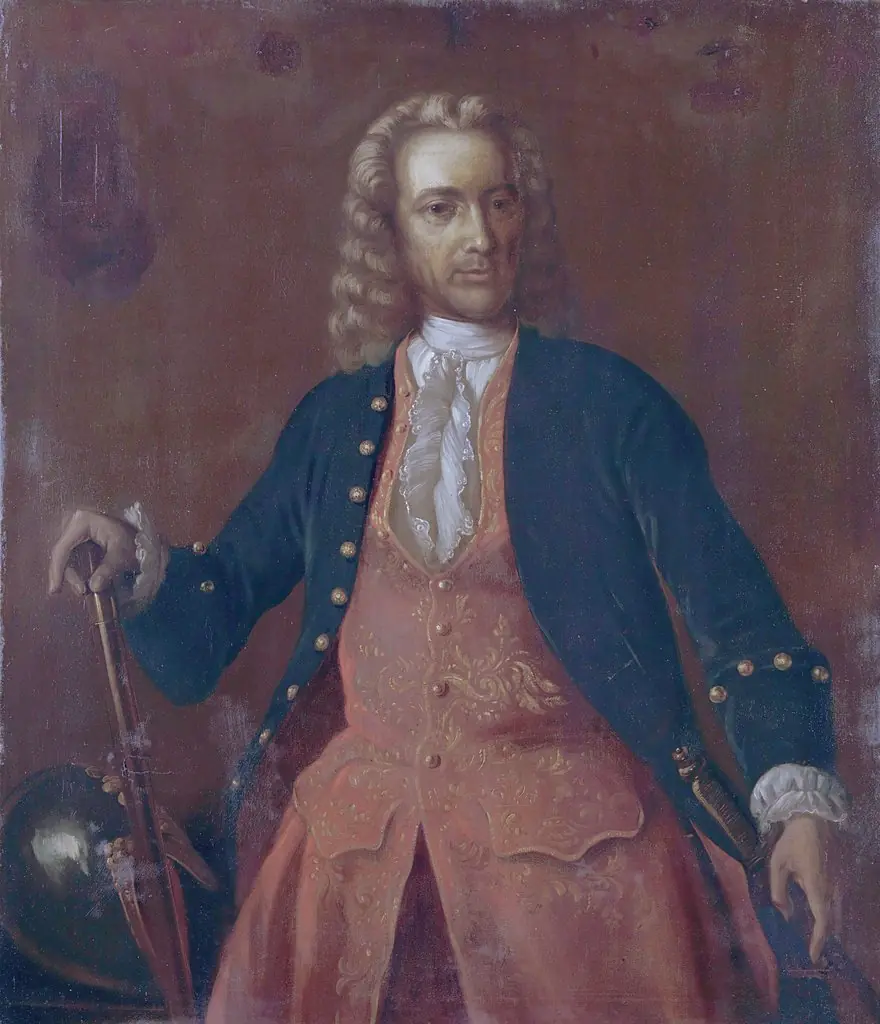 Portrait of Jacob Mossel, Governor-General of the Dutch East India Company
 Diederik van Durven (1729-1730)