Artwork
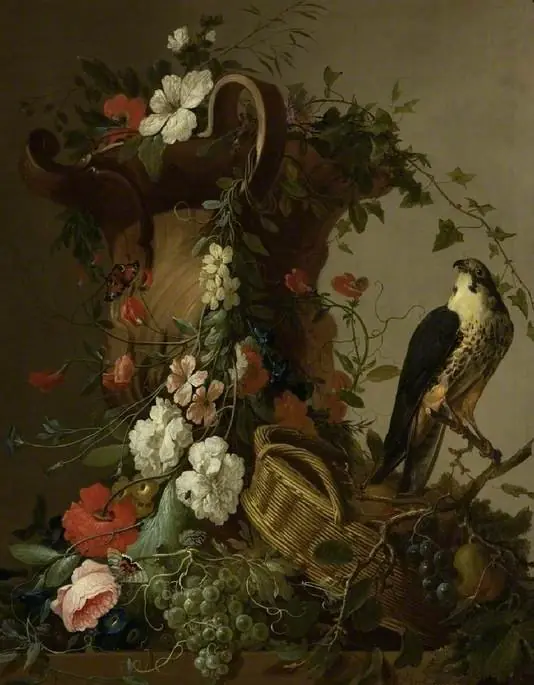
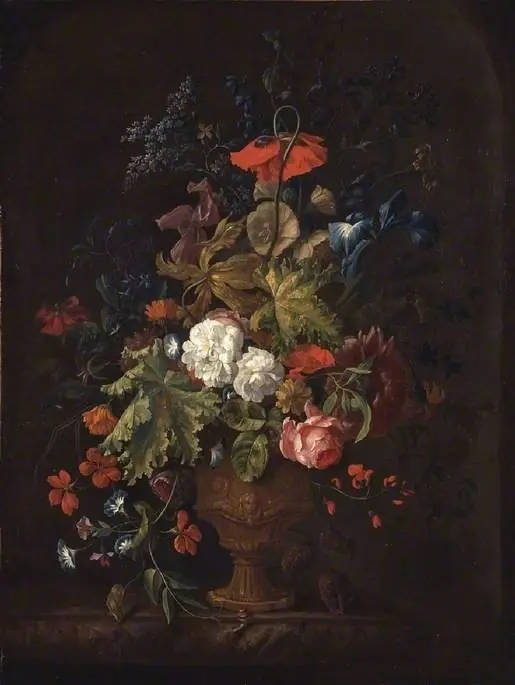
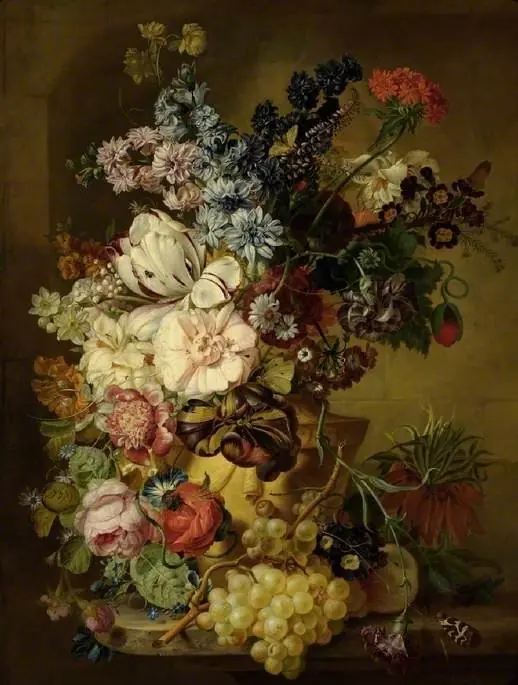
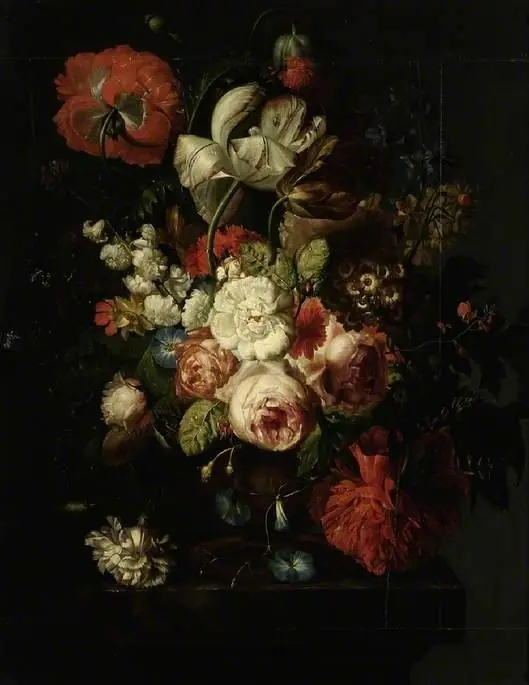
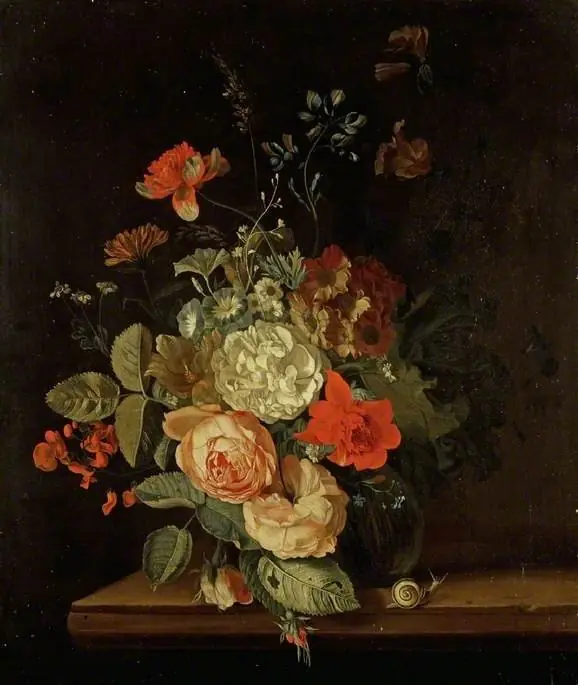
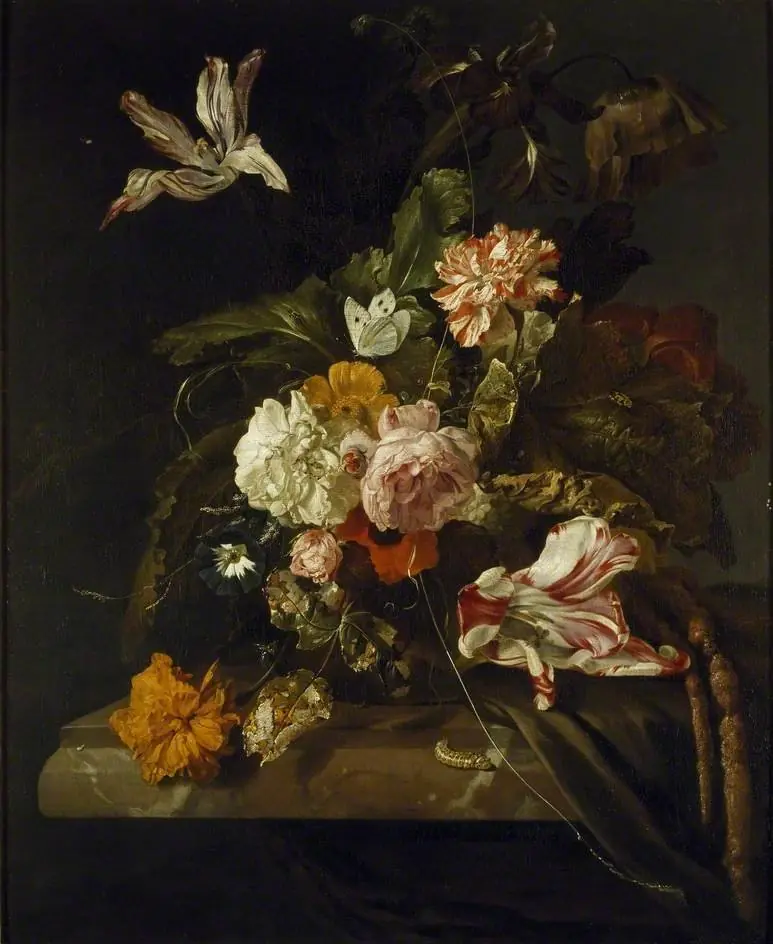
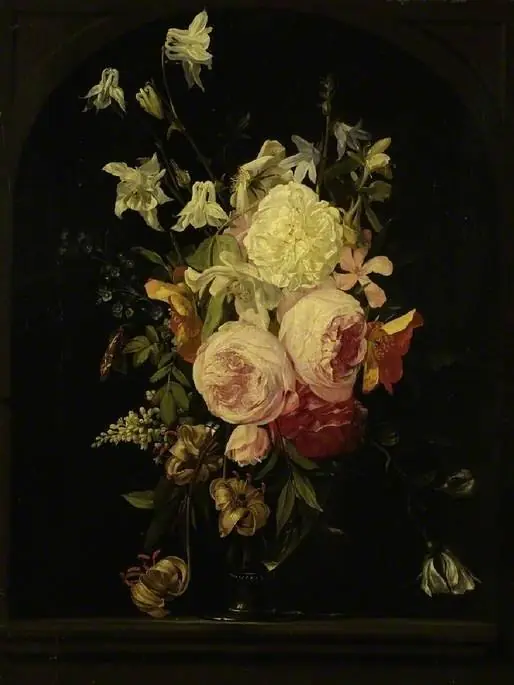
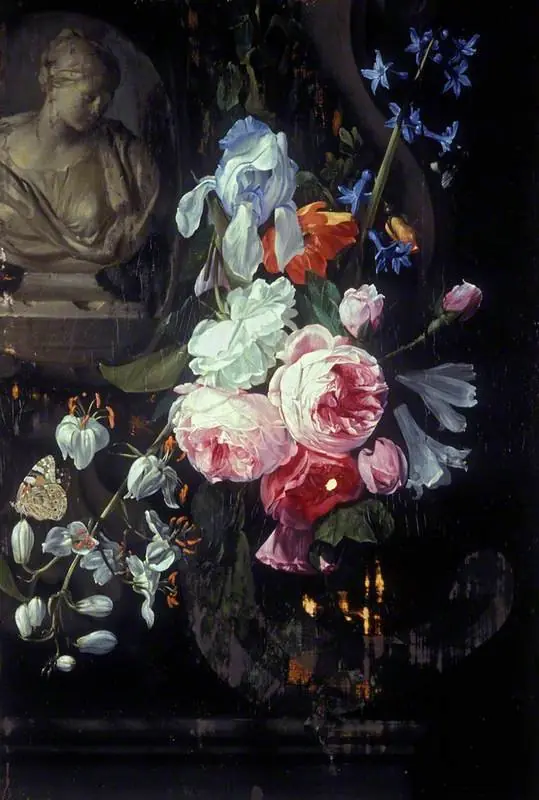
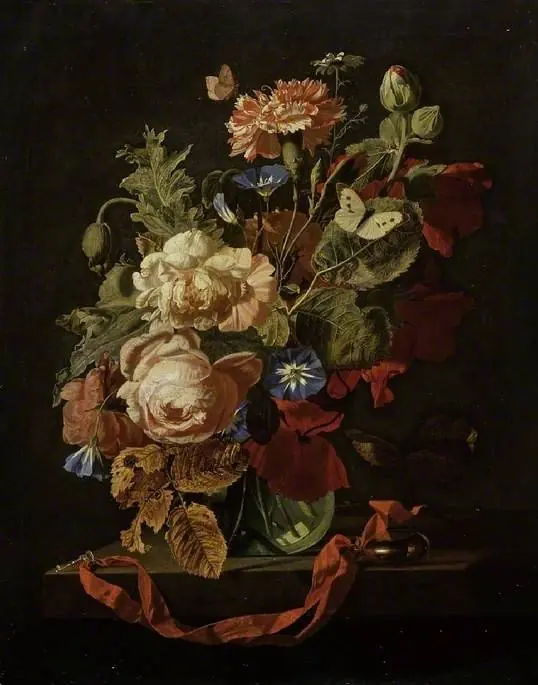
A sculpted stone vase with Roses, Anniula, Poppies, Convolvulus, with a Jay on a ledge
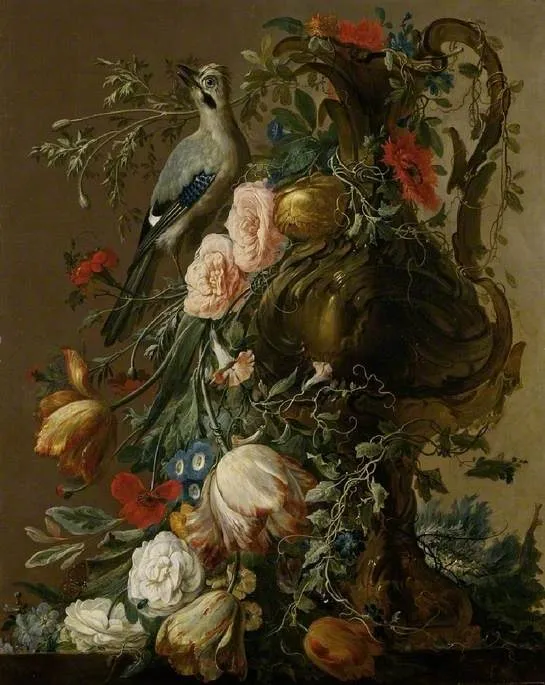
A sculpted stone vase with Roses, Anniula, Poppies, Convolvulus, with a Jay on a ledge is an oil painting by the Rococo painting artist Jacobus Vonck. It dates from 1760 and is held in the collection of the Fitzwilliam Museum.
About this work
Overview
The composition is set against a subdued brown backdrop, allowing the delicate colors of the flowers and the bird’s plumage to dominate the visual field.
Jacobus Vonck’s 1760 oil painting presents a stone vase brimming with an assortment of blossoms—roses, anemones, poppies and convolvulus—accompanied by a jay perched on an adjacent ledge. The composition is set against a subdued brown backdrop, allowing the delicate colors of the flowers and the bird’s plumage to dominate the visual field. The work resides in the collection of the Fitzwilliam Museum.
Subject & Meaning
The arrangement juxtaposes the solidity of the sculpted vase with the fleeting vitality of the flowers, a common motif in 18th‑century still‑life that underscores the transience of nature. The jay, rendered with attentive realism, adds a narrative element, suggesting observation and the quiet interaction between fauna and flora.
Technique & Style
Vonck employs a smooth, controlled brushwork typical of Dutch still‑life painters, rendering the stone texture of the vase and the velvety petals with subtle gradations of light. The muted earth tone of the background serves to isolate the bright pinks, whites and greens, enhancing depth through careful chiaroscuro.
History & Provenance
Executed in 1760, the painting entered the Fitzwilliam Museum’s holdings as part of its 19th‑century acquisitions of Dutch decorative art. Its provenance prior to museum acquisition remains documented only through the museum’s catalogues, which trace its attribution to Vonck based on stylistic analysis.
Context
During the mid‑1700s, Dutch artists frequently explored botanical subjects, reflecting both scientific curiosity and decorative taste. Vonck’s work aligns with this tradition, integrating a variety of cultivated and wild species to showcase horticultural knowledge and aesthetic refinement.
Legacy
The piece exemplifies the period’s meticulous approach to still‑life, influencing later collectors and scholars interested in the intersection of art and natural history. Its preservation at the Fitzwilliam Museum continues to provide insight into 18th‑century Dutch painting practices.
Artist & collection