Artwork
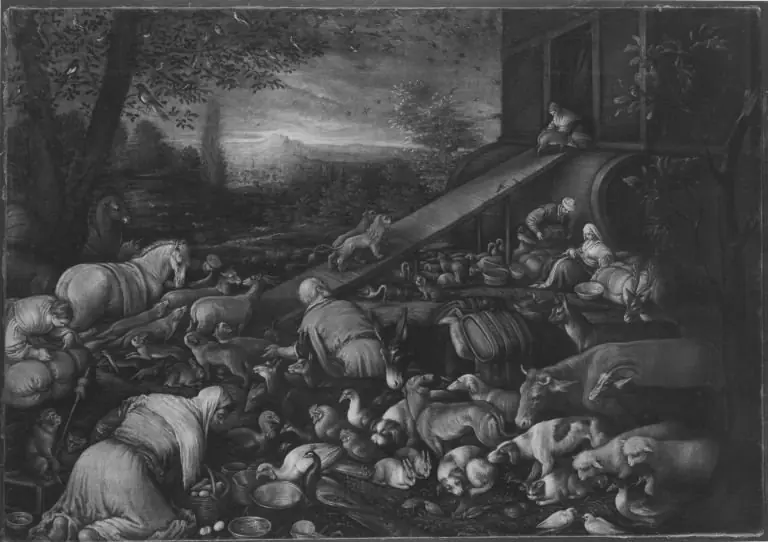
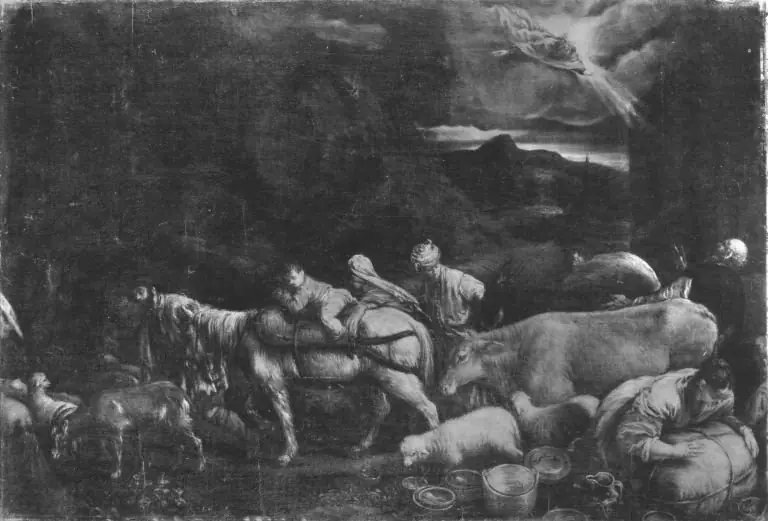
Einzug der Tiere in die Arche Noah (Kopie nach)
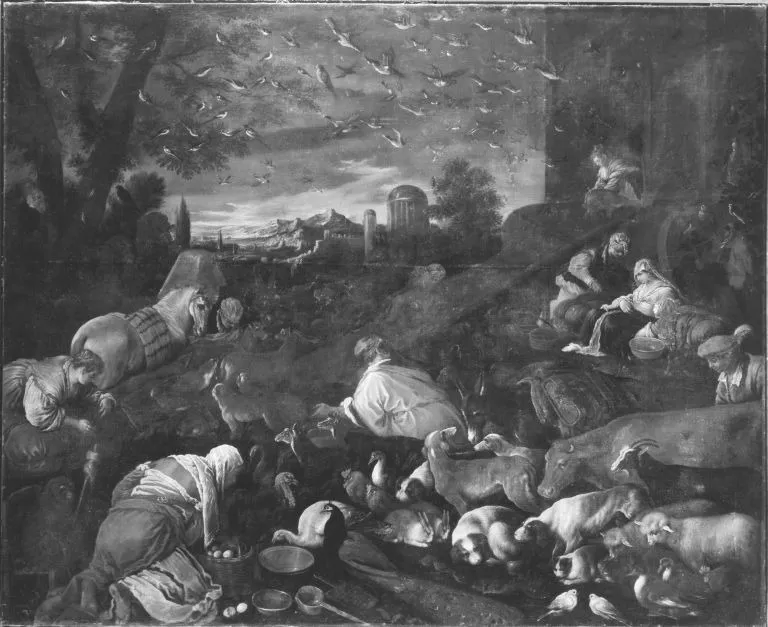
Einzug der Tiere in die Arche Noah (Kopie nach) is an unspecified painting by the Early Baroque Italian artist Jacopo Bassano. It is held in the collection of the Bavarian State Painting Collections.
About this work
Overview
Created in 1596, this religious canvas by Jacopo Bassano—catalogued as Q29952174—depicts the moment animals enter Noah’s Ark. The work is part of the collection of Munich’s Alte Pinakothek and presents a bustling, rural tableau that combines human figures with a multitude of creatures under a dramatic sky.
Subject & Meaning
The composition illustrates the biblical episode of the Ark’s loading, emphasizing the chaotic convergence of people and beasts. Figures are shown kneeling or prostrate amid both living and dead animals, suggesting the urgency and gravity of the divine command while underscoring themes of salvation and judgment.
Technique & Style
Bassano employs a pronounced chiaroscuro, juxtaposing deep shadows with bright highlights to model forms and generate spatial depth. The stark lighting accentuates the texture of fur and flesh, while the aerial perspective of distant village structures adds a sense of scale and narrative tension.
History & Provenance
The painting is a later copy after an earlier composition by Bassano, reflecting the artist’s practice of reproducing successful motifs. It entered the Alte Pinakothek’s holdings in the 19th century, where it has remained a representative example of late‑Renaissance religious narrative in the museum’s Italian collection.
Context
Executed toward the end of Bassano’s career, the work aligns with the Counter‑Reformation’s demand for vivid, emotionally charged biblical scenes. Its rural setting and inclusion of everyday figures echo the Venetian tradition of grounding sacred stories in familiar, earthly environments.
Artist & collection
Artist
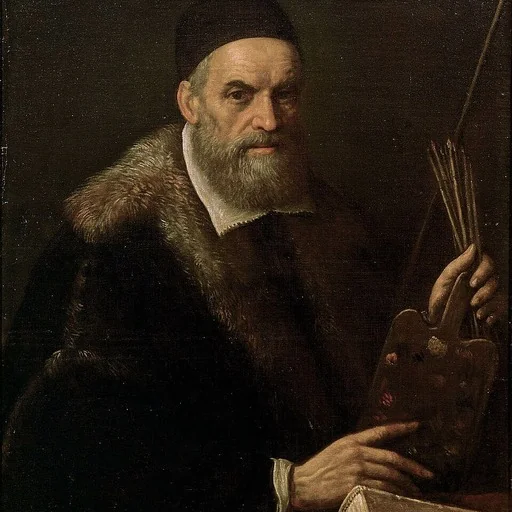
Jacopo Bassano was an Italian Renaissance painter of the Venetian school. He was born and died in Bassano del Grappa, and took the village as his surname. Having trained in the workshop of his father, Francesco the…

 Der Einzug der Tiere in die Arche (Werkstattkopie)
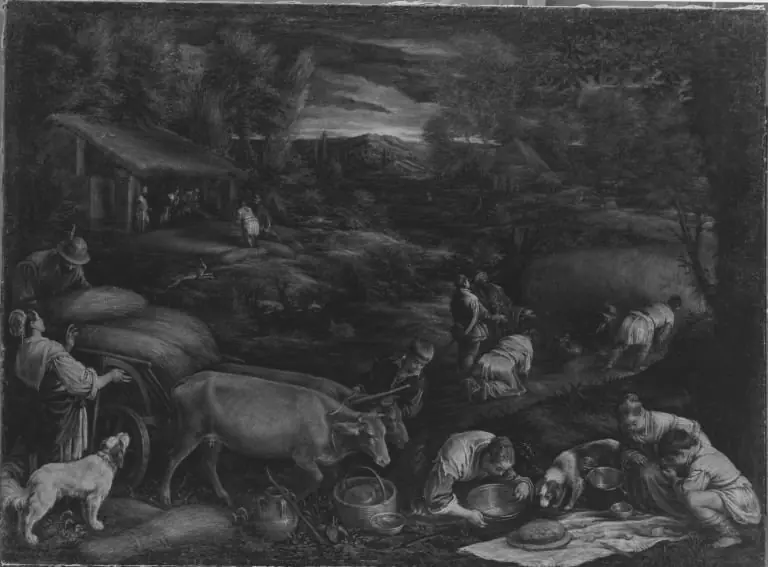 Der Sommer (Boas und Ruth)
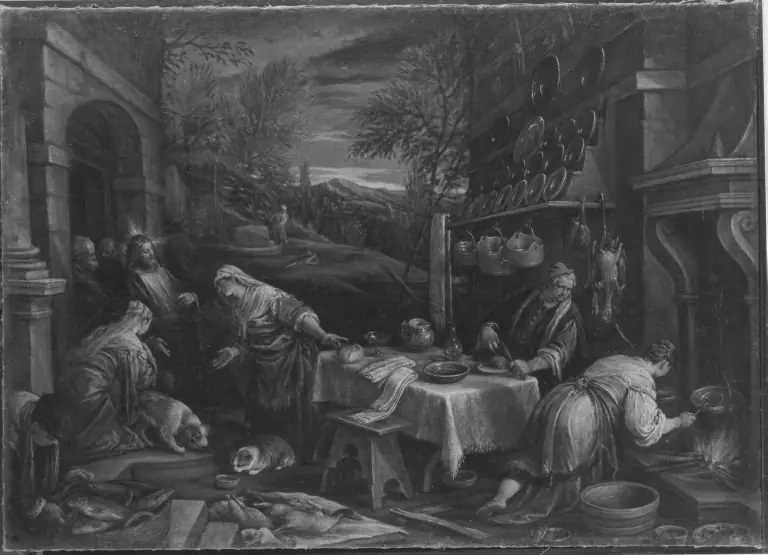 Christus bei Maria und Martha (Werkstatt)
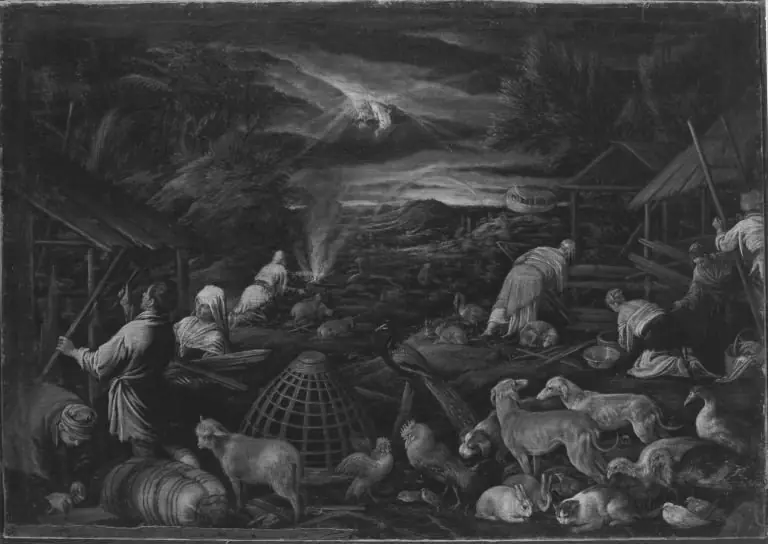 Noahs Dankopfer (Werkstatt)
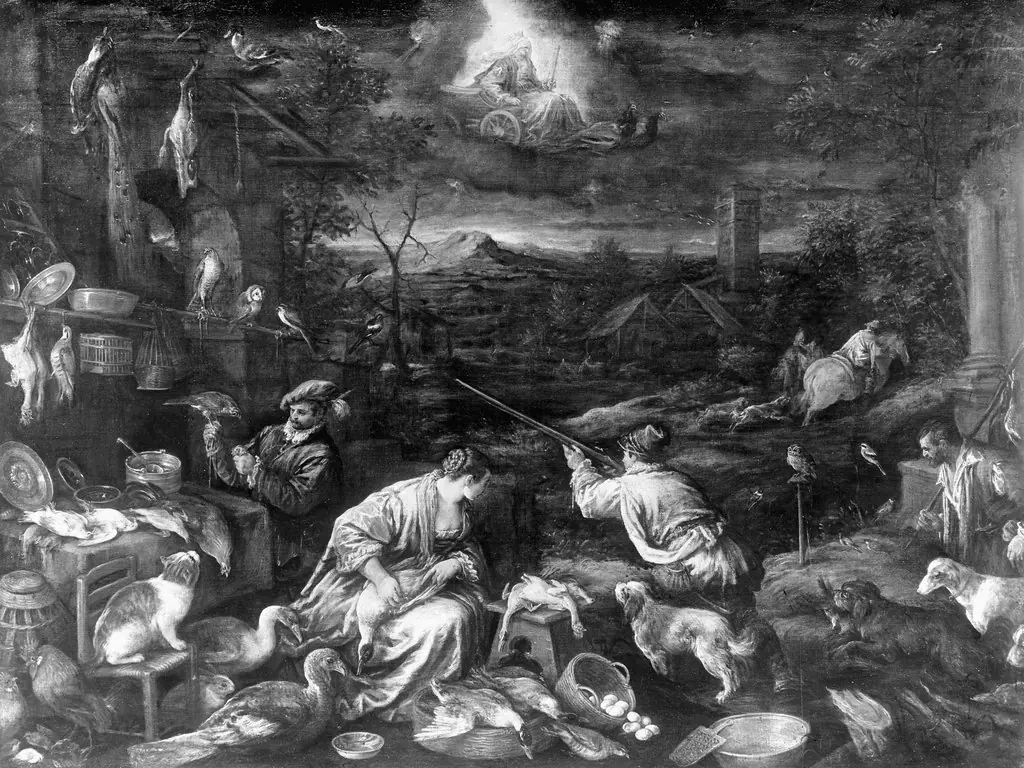 Allegory of the Air
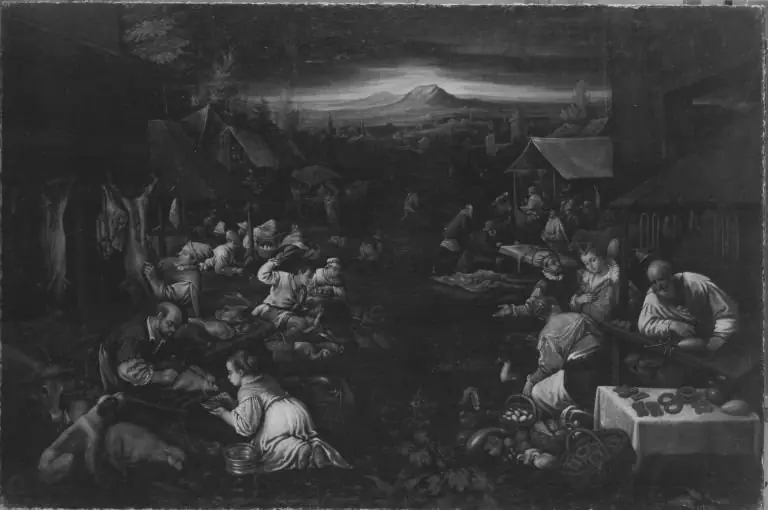 Der Markt
 Verkündigung an die Hirten
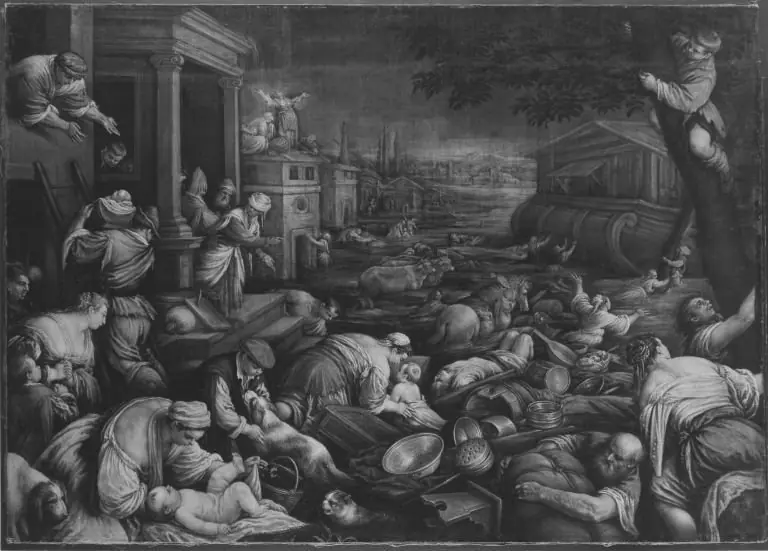 Die Sintflut (Werkstattkopie)
 Allegory of autumn
 Die Sintflut (zugeschrieben)
 Abrahams Auszug nach Kanaan (Werkstattkopie)