Artwork
Die Sintflut (Werkstattkopie)
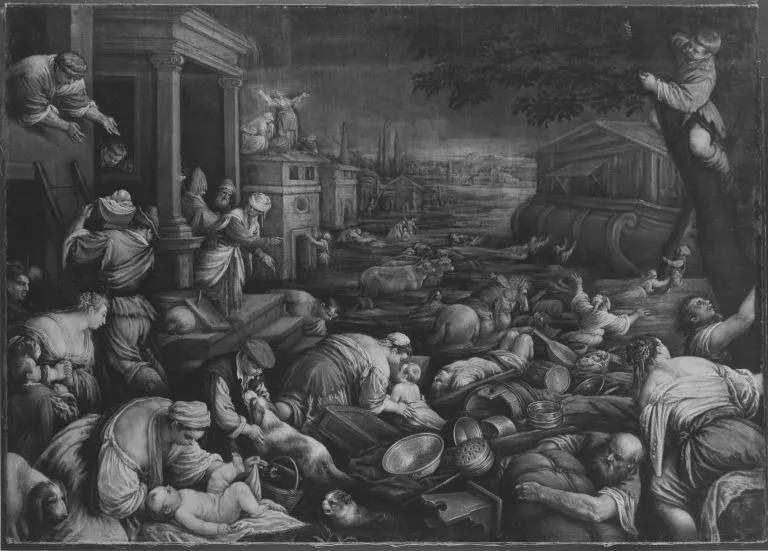
Die Sintflut (Werkstattkopie) is an unspecified painting by the Early Baroque Italian artist Jacopo Bassano. It dates from 1553 and is held in the collection of the Bavarian State Painting Collections.
About this work
Overview
Its current location is the Alte Pinakothek in Munich, where it remains as a testament to the workshop traditions of 16th-century Venetian painting.
This painting, a workshop copy of Jacopo Bassano’s 1553 composition, depicts the biblical flood as a moment of human desperation. Executed in oil on canvas, it captures the chaos of rising waters engulfing the landscape. The scene is densely populated with figures in varied states of panic and exhaustion, arranged to convey urgency and disarray. Its current location is the Alte Pinakothek in Munich, where it remains as a testament to the workshop traditions of 16th-century Venetian painting.
Subject & Meaning
The work illustrates the story of Noah’s Flood from Genesis, emphasizing divine judgment and human vulnerability. Figures scramble for safety, some collapse under the weight of despair, while others cling to the last dry ground or the roof of a crumbling structure. A partially submerged vessel suggests the impending salvation of the righteous, though its presence is overshadowed by the overwhelming scale of suffering. The narrative is rendered without idealization, focusing on raw physical and emotional strain.
Technique & Style
The artist employs strong chiaroscuro to heighten emotional intensity, using deep shadows and sharp highlights to isolate figures against the darkened sky and flooded earth. Brushwork is vigorous, with loose, expressive strokes defining limbs and drapery, enhancing the sense of motion. The composition is tightly packed, avoiding spatial clarity to amplify the feeling of entrapment. Light falls selectively, drawing attention to faces contorted in fear and hands reaching desperately into the chaos.
History & Provenance
Though attributed to Jacopo Bassano’s studio, the painting likely stems from a collaborator or follower working under his direction, as was common in Renaissance workshops. It entered the Alte Pinakothek’s collection in the 19th century, having passed through private European holdings. Its status as a workshop piece reflects the period’s practice of reproducing popular compositions, preserving Bassano’s influence beyond his own hand.
Context
Created during the Counter-Reformation, the painting aligns with a broader Catholic emphasis on emotionally engaging religious narratives. Venetian artists like Bassano favored dynamic, human-centered biblical scenes over serene idealism. The flood’s depiction as a visceral catastrophe resonated with audiences confronting themes of sin, redemption, and divine power, offering a moral spectacle grounded in tangible suffering rather than abstraction.
Legacy
This version preserves the compositional energy and emotional gravity of Bassano’s original, influencing later artists who sought to convey biblical drama through physical realism. While not as widely studied as the autograph version, it exemplifies how workshop production disseminated stylistic innovations across northern Italy. Its presence in a major public collection ensures continued access to the visual language of 16th-century religious storytelling.
Artist & collection
Artist
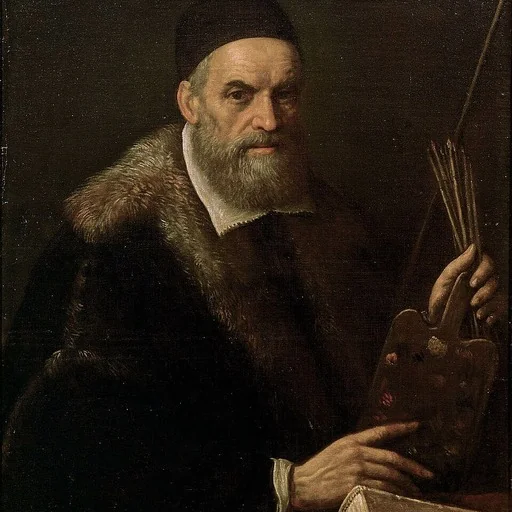
Jacopo Bassano was an Italian Renaissance painter of the Venetian school. He was born and died in Bassano del Grappa, and took the village as his surname. Having trained in the workshop of his father, Francesco the…

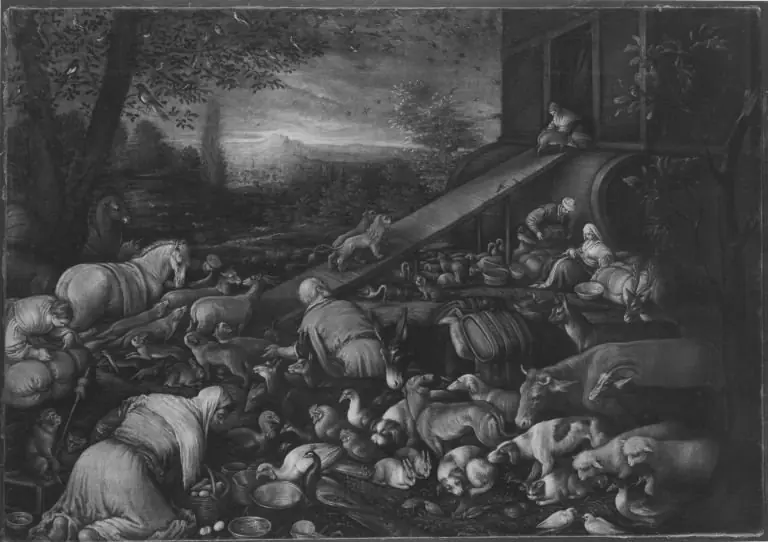 Der Einzug der Tiere in die Arche (Werkstattkopie)
 Der bethlehemitische Kindermord
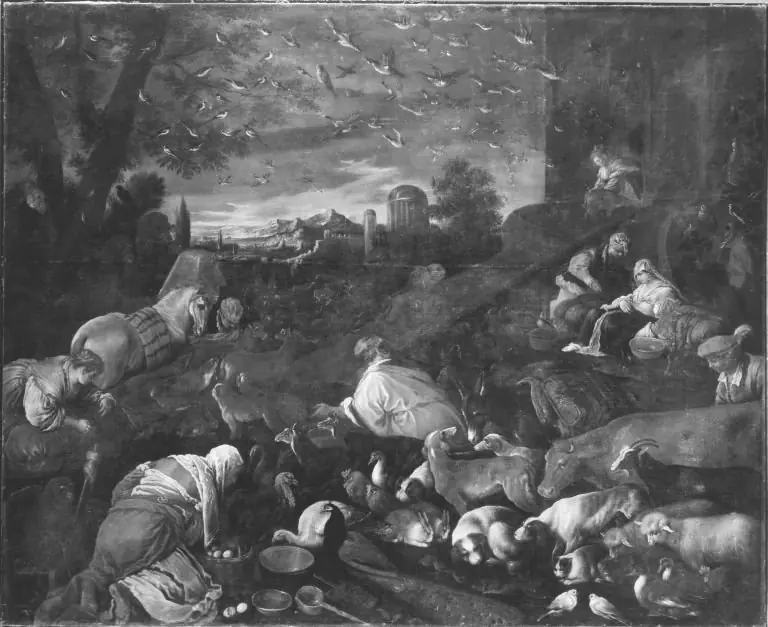 Einzug der Tiere in die Arche Noah (Kopie nach)
 The Trojans Hauling the Wooden Horse into Troy
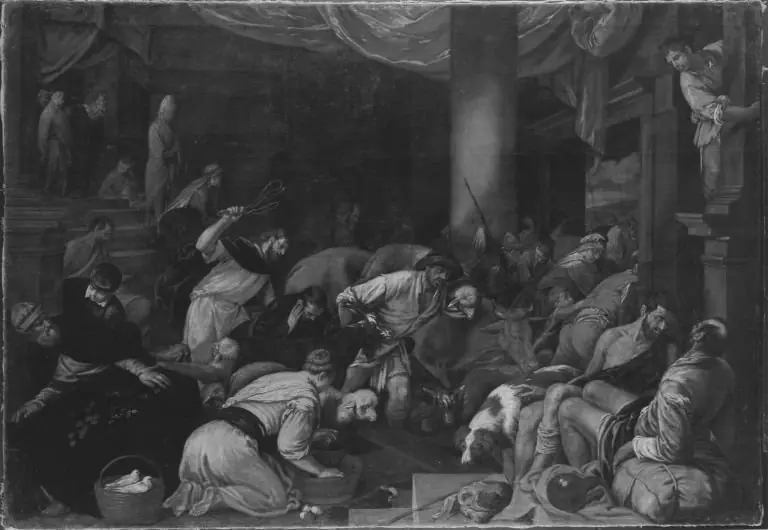 Vertreibung der Händler aus dem Tempel
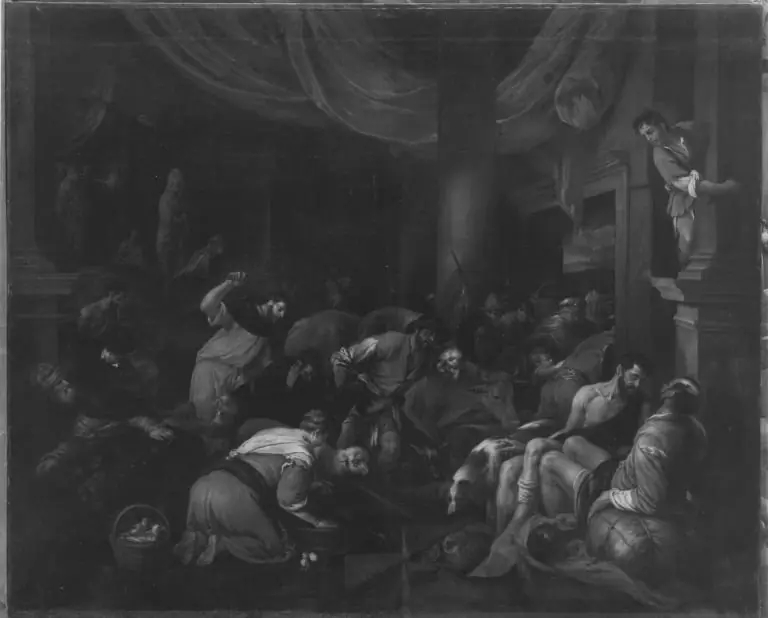 Vertreibung der Wechsler aus dem Tempel (Kopie nach)
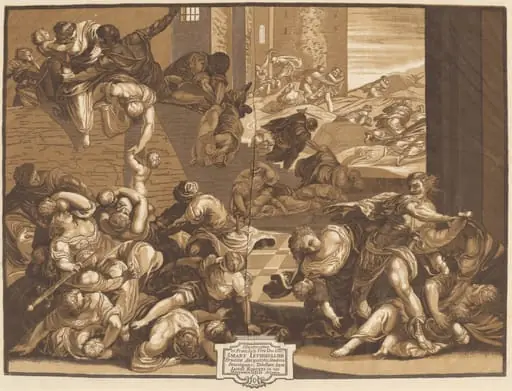 Massacre of the Innocents
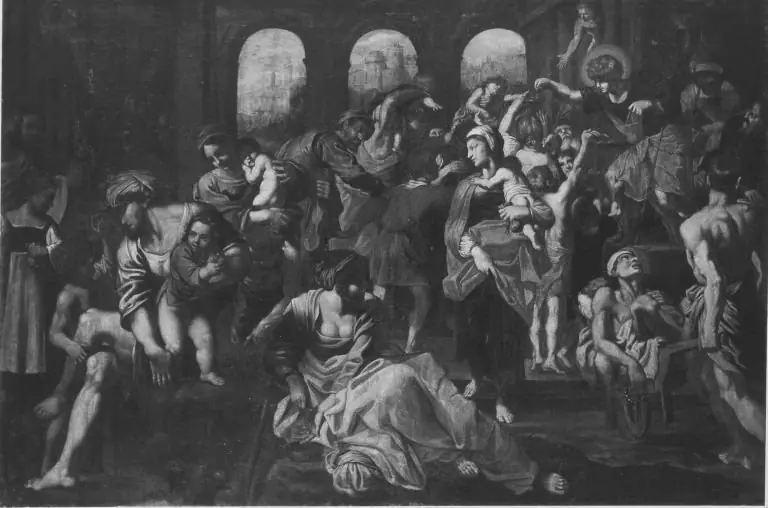 Der hl. Rochus verteilt Almosen
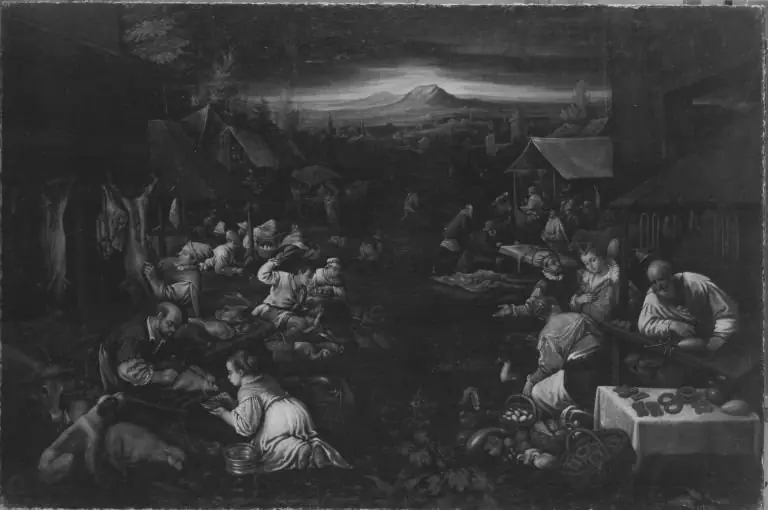 Der Markt
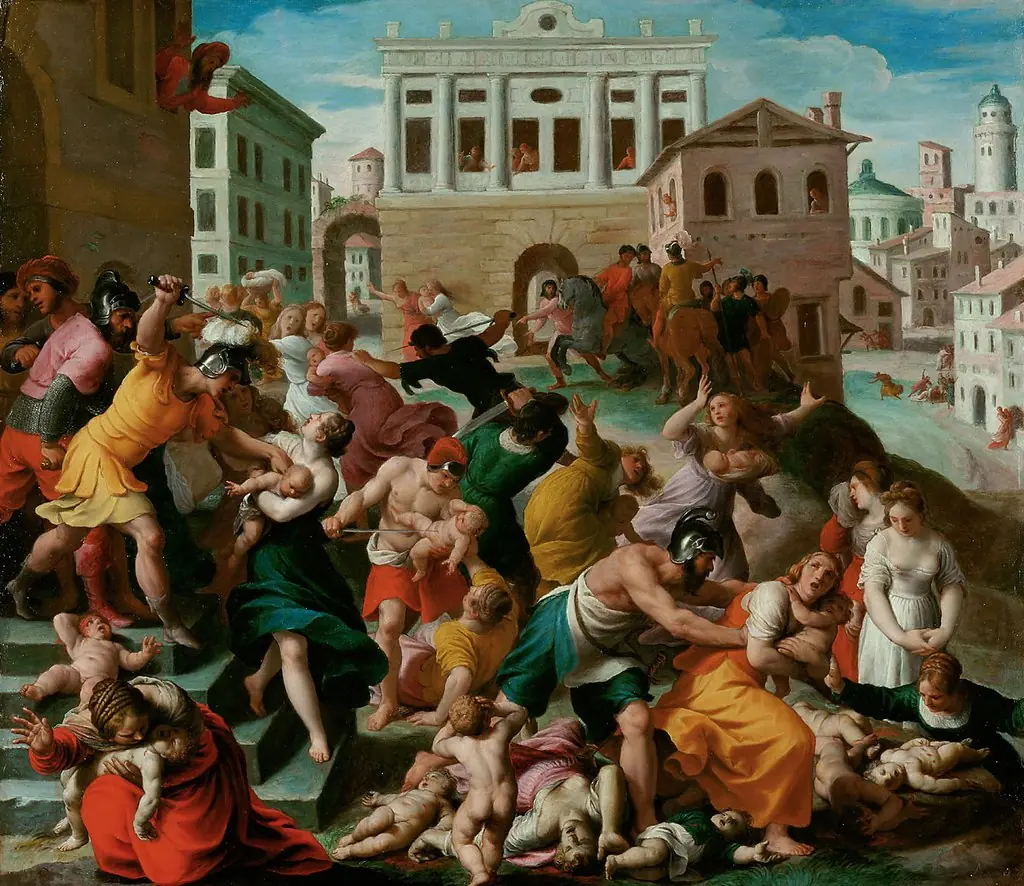 Bethlehemic Child Murder
 Apostles Peter and John Healing the Sick
 The Temptation of St Anthony