Artwork
St John the Evangelist
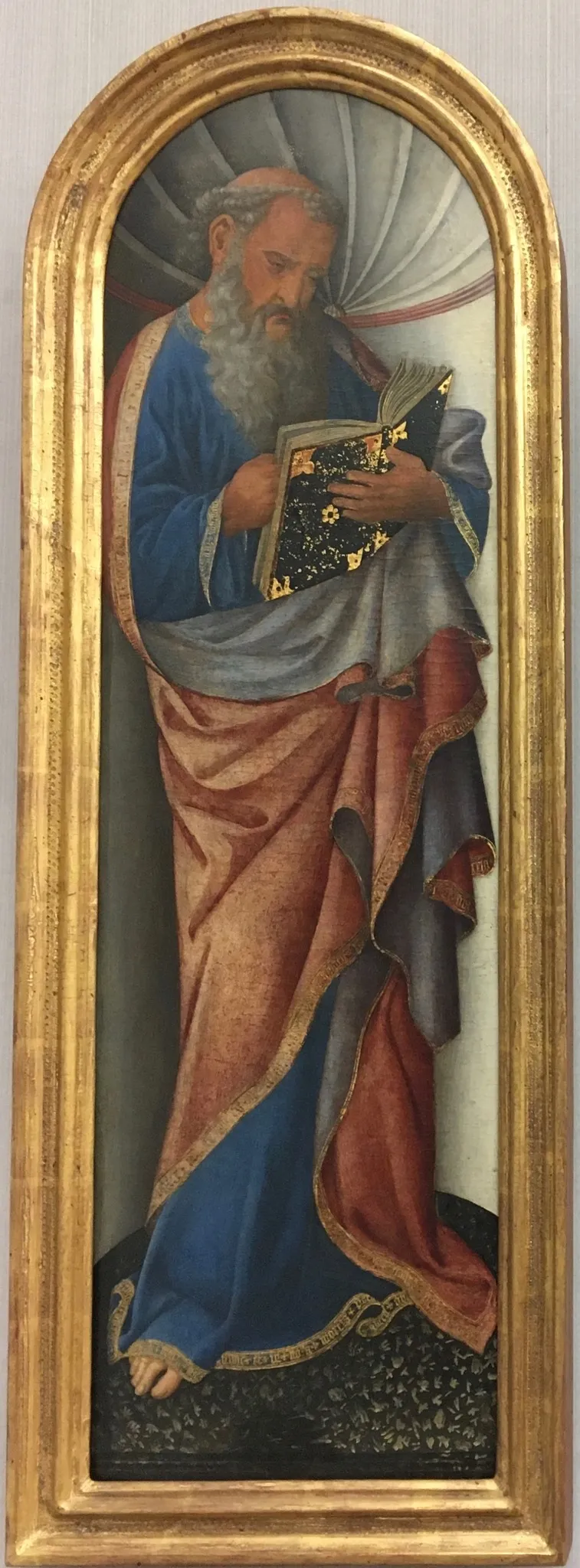
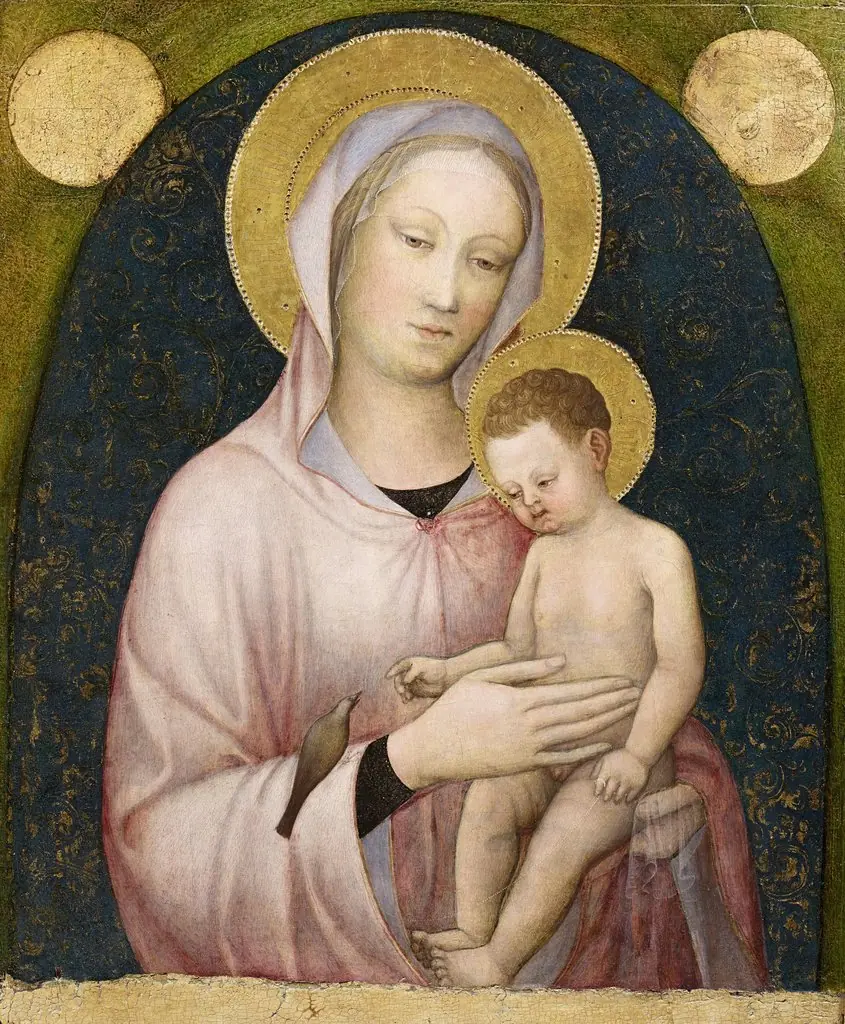
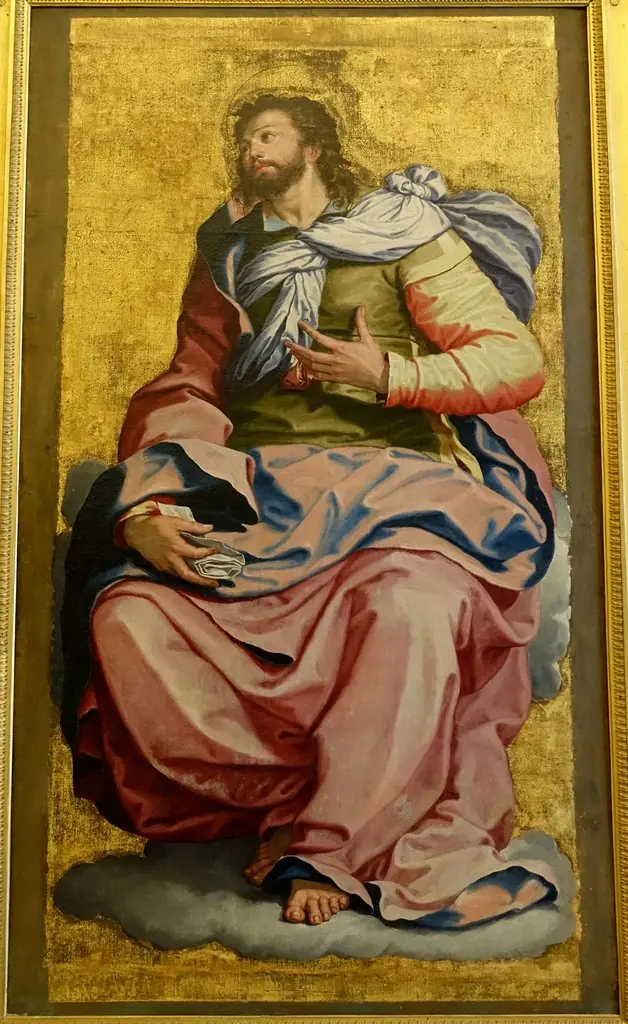
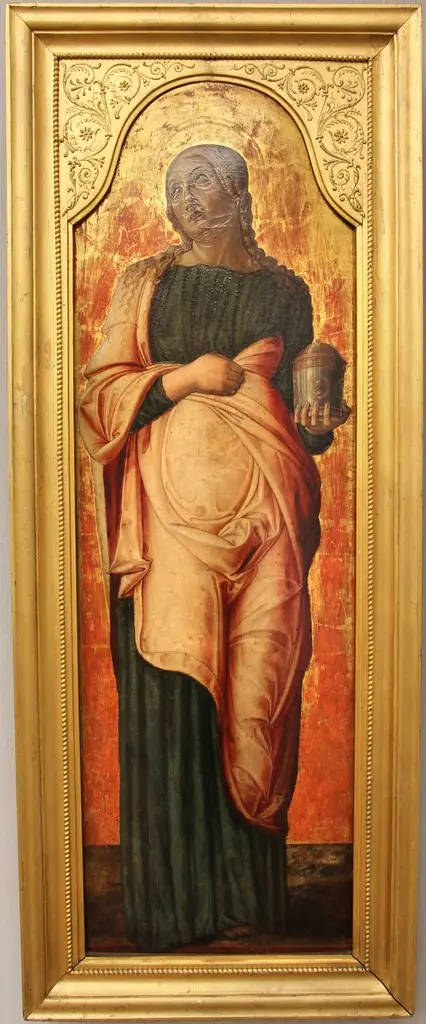
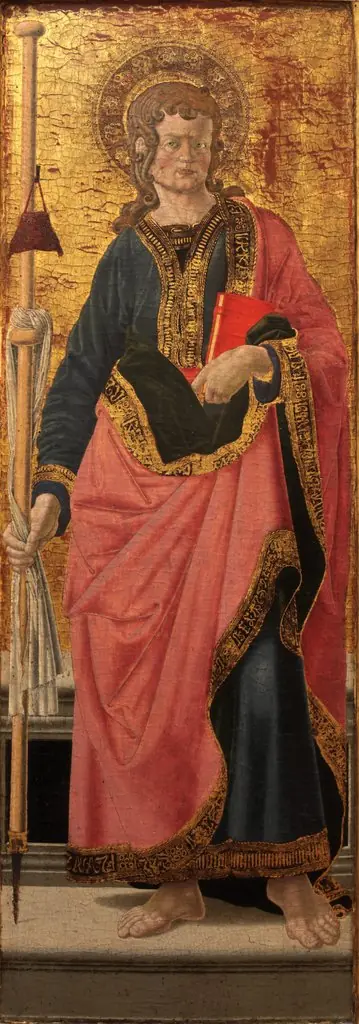
St John the Evangelist is an unspecified painting by the Early Renaissance artist Jacopo Bellini. It dates from 1432 and is held in the collection of the Gemäldegalerie Berlin.
About this work
Overview
Bellini, a pivotal figure in the transition from Gothic to Renaissance styles in northern Italy, focused on naturalism and spatial depth.
Painted in 1432 by Jacopo Bellini, this work is one of the few surviving panel paintings from the early Venetian Renaissance. Bellini, a pivotal figure in the transition from Gothic to Renaissance styles in northern Italy, focused on naturalism and spatial depth. The painting portrays St John the Evangelist as a contemplative scholar, rendered with restrained elegance and attention to textile detail, reflecting the period’s shift toward human-centered religious imagery.
Subject & Meaning
The figure represents St John the Evangelist, one of Christ’s apostles and the traditional author of the Gospel of John. His long white beard and scholarly demeanor signify wisdom and divine inspiration. The black book with gold ornamentation alludes to his role as a sacred writer, while the rich colors of his robe and cloak denote spiritual authority. The plain gray background isolates the figure, emphasizing his inner contemplation rather than narrative context.
Technique & Style
Bellini employed tempera on panel, a common medium of the time, with careful layering to achieve subtle tonal transitions. The folds of the blue robe and red cloak are rendered with linear precision, suggesting volume without heavy modeling. Gold leaf accents on the book convey luminosity and sacredness. The minimal background and frontal pose reflect early Renaissance experimentation with spatial clarity, moving away from the flatness of medieval iconography.
History & Provenance
The painting has been held since the 19th century in the Gemäldegalerie Berlin, part of the Prussian royal collection. Its early history is undocumented, but its style aligns with Bellini’s known works from the 1430s. Few of his finished paintings remain; most of his artistic legacy survives through his extensive sketchbooks, now in the British Museum and the Louvre, which reveal his studies of architecture and landscape.
Context
Created during the early Renaissance, this painting emerged as Venetian artists began integrating Florentine innovations—such as perspective and anatomical accuracy—with local traditions of color and surface decoration. Bellini’s work laid groundwork for his sons Gentile and Giovanni, who would dominate Venetian painting later in the century. The emphasis on individual presence over symbolic hierarchy marks a broader cultural turn toward humanist ideals in religious art.
Legacy
Though few of Jacopo Bellini’s paintings survive, this work exemplifies his role in shaping Venetian Renaissance aesthetics. His attention to material texture, spatial arrangement, and psychological presence influenced generations of artists. The painting’s quiet dignity and refined technique stand as a testament to the transition from medieval devotional imagery to the more naturalistic, human-focused art that defined the Renaissance in northern Italy.
Artist & collection

Artist
Jacopo Bellini (c. 1400 – c. 1470) was one of the founders of the Renaissance style of painting in Venice and northern Italy. His sons Gentile and Giovanni Bellini, and his son-in-law Andrea Mantegna, were also famous…