Artwork
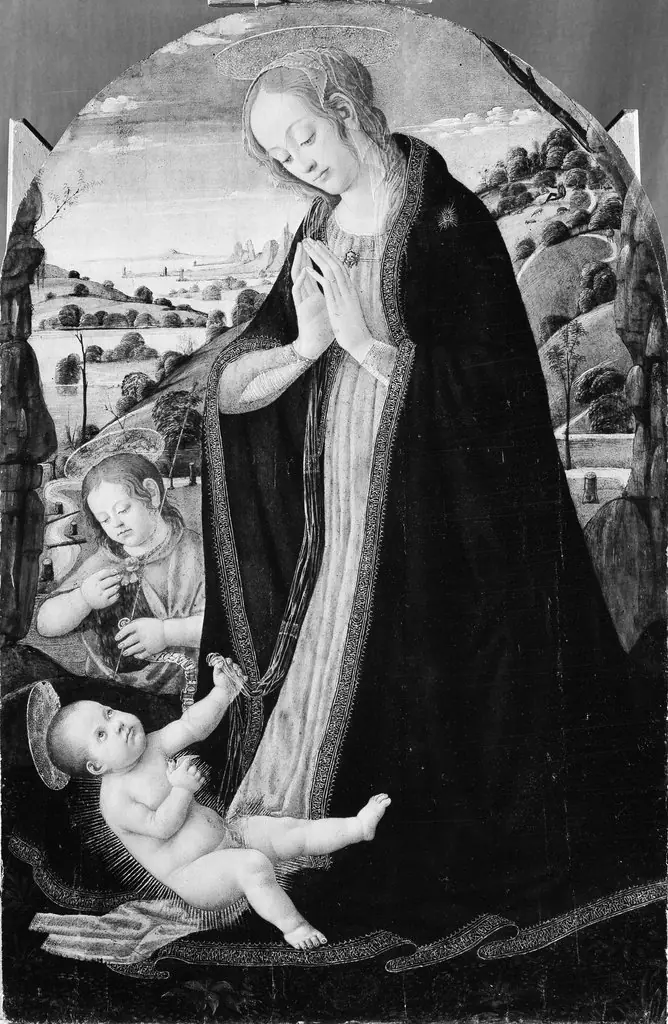
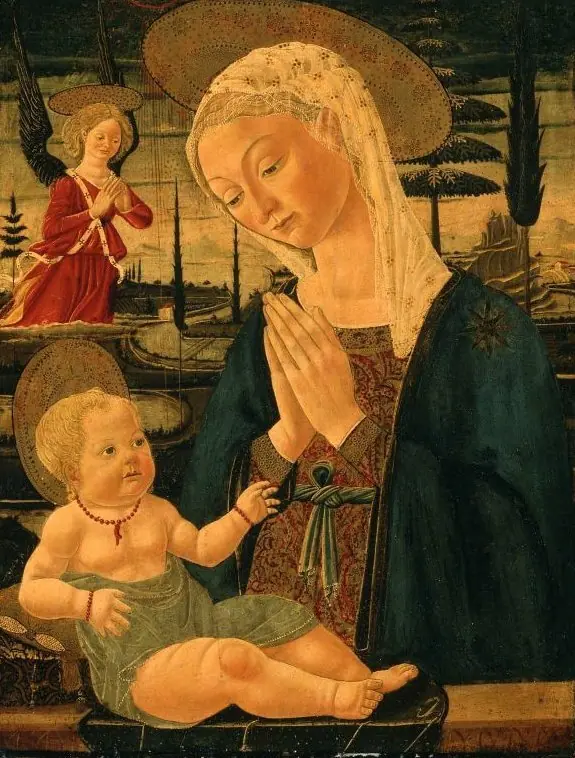
Virgin adoring the Child
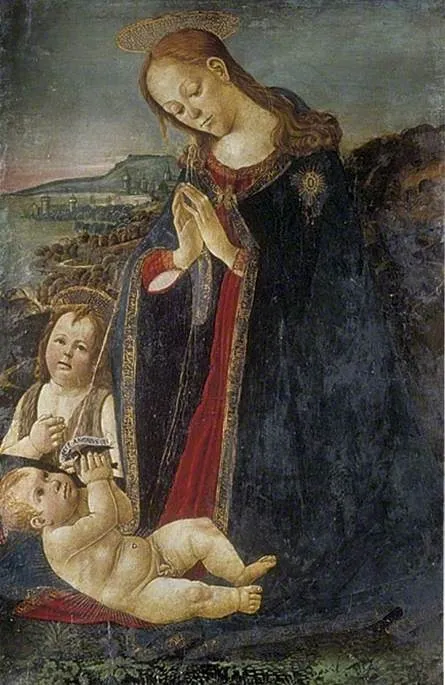
Virgin adoring the Child is an unspecified painting by the Early Renaissance artist Jacopo da Sellaio. It dates from 1473 and is held in the collection of the Fitzwilliam Museum.
About this work
Overview
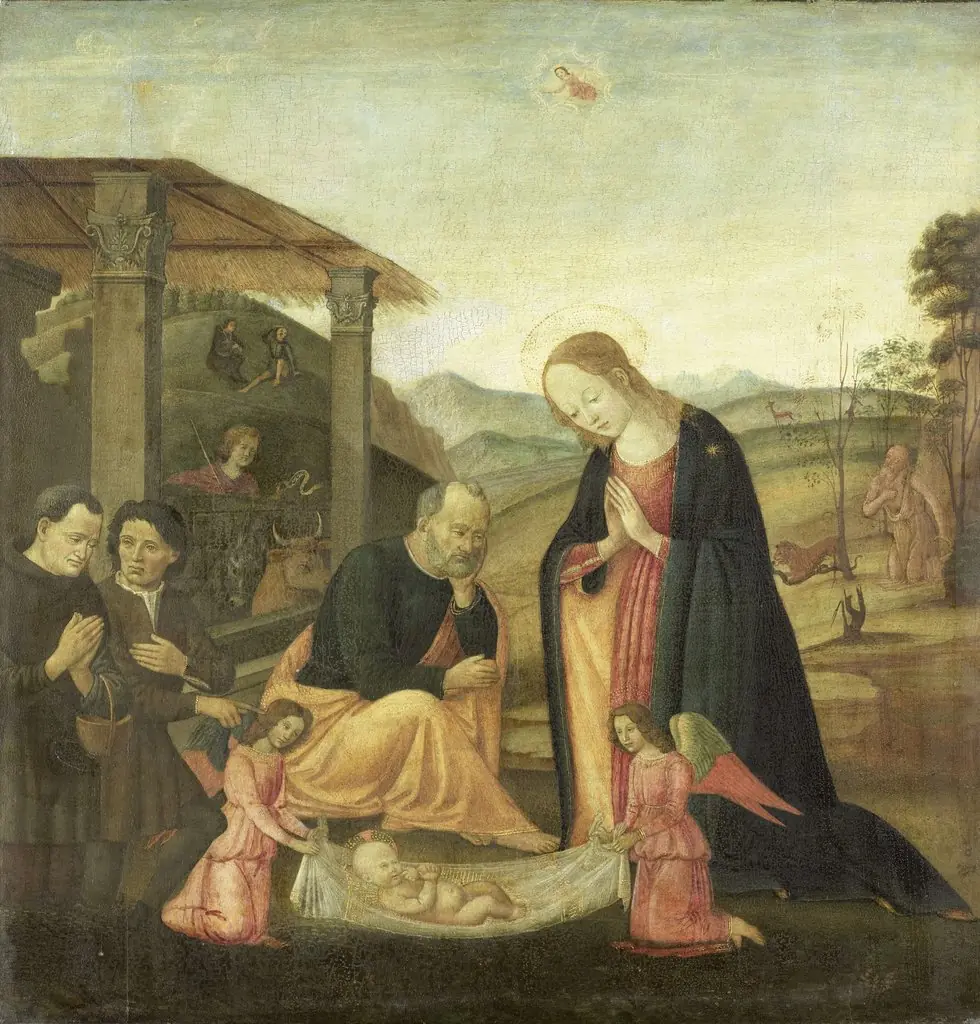
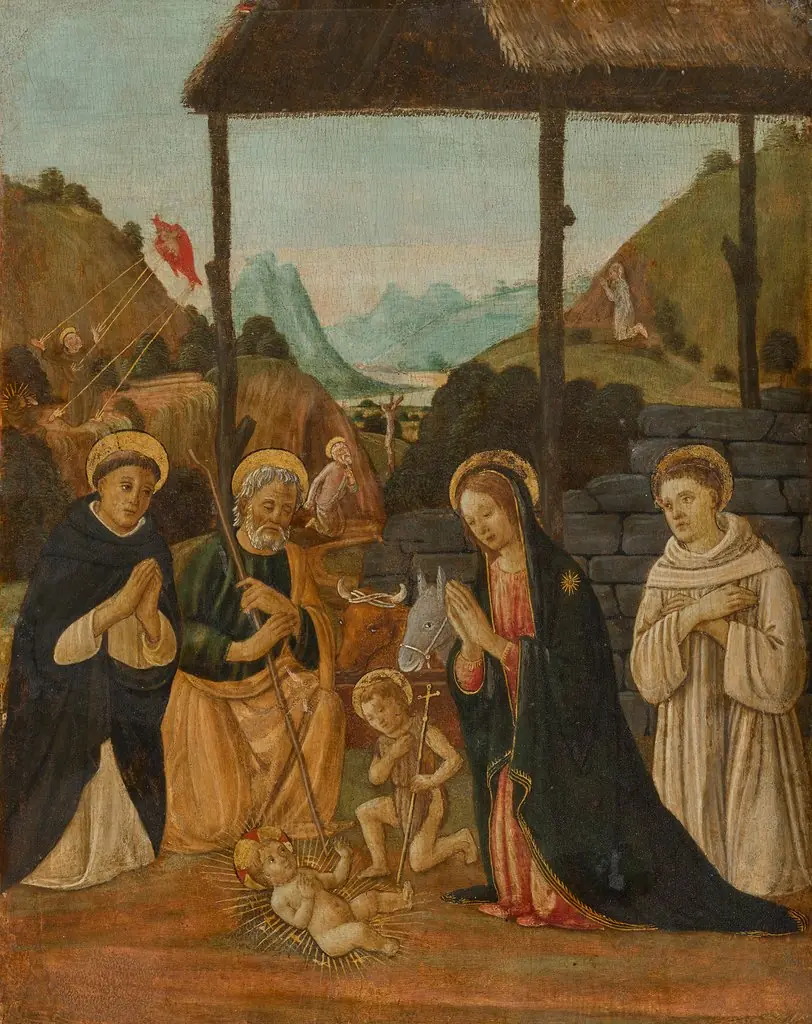
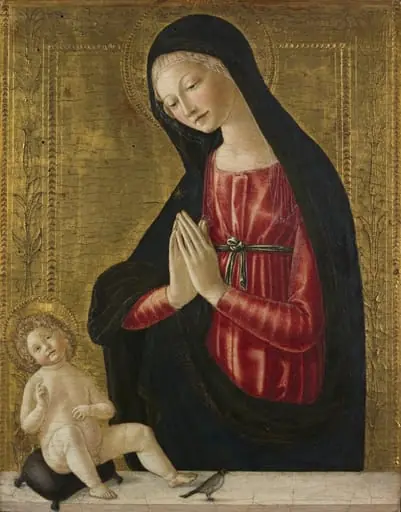
Virgin adoring the Child, painted in 1473 by Jacopo da Sellaio, is a religious painting exemplifying mid-15th-century Florentine art. Characterized by muted colors and devotional themes, it features the Virgin Mary kneeling beside the infant Jesus, set against a landscape backdrop.
Subject & Meaning
The painting depicts a poignant moment of maternal devotion, with the Virgin Mary, adorned with a halo and dressed in a dark blue, gold-trimmed robe, gazing at the baby Jesus. She holds a rosary, symbolizing prayer, while the infant lies on his back, clutching a small, unidentified object. This composition conveys a sense of serene reverence.
Technique & Style
Sellaio's technique blends influences from prominent Florentine artists of his time, including Botticelli, Filippino Lippi, and Domenico Ghirlandaio. Notable are the intricate, draped folds of the Virgin's robe and the strategic use of light and shadow, which enhance the three-dimensionality of the figures and invite viewer engagement.
History & Provenance
Created during Sellaio's independent practice following his time in Fra Filippo Lippi's workshop, *Virgin adoring the Child* is now part of the Fitzwilliam Museum's collection.
Artist & collection

Artist
Jacopo del Sellaio (1441/42–1493) was an Italian painter of the early Renaissance, active in his native Florence.