Artwork
Allegorical Figure with a Cat and a Pig
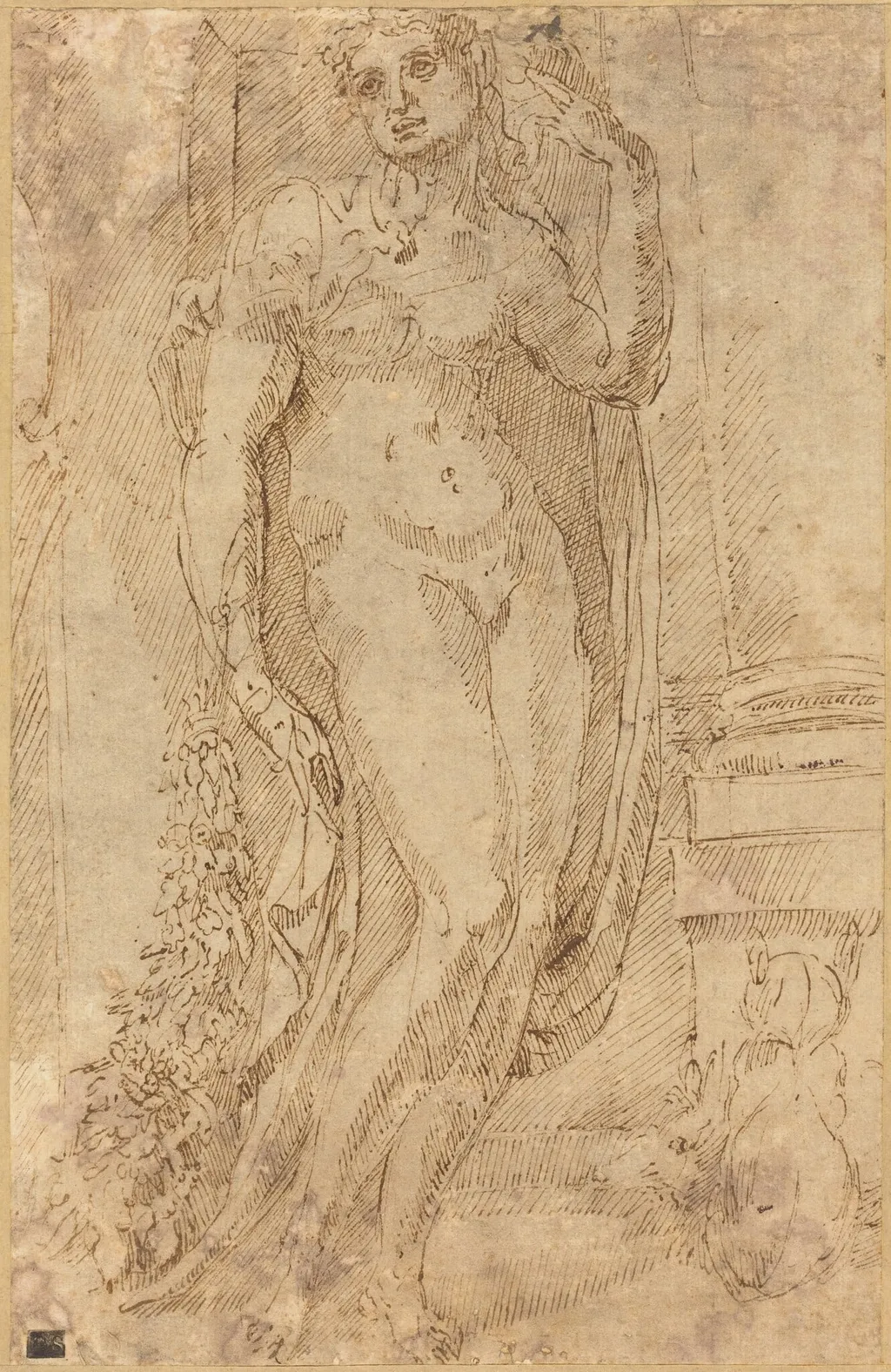
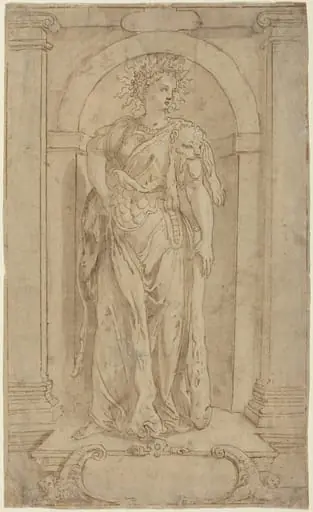
Allegorical Figure with a Cat and a Pig is an ink drawing by the Renaissance artist Jacopo di Giovanni di Francesco. It dates from 1530 and is held in the collection of the National Gallery of Art.
About this work
Overview
The work is not a finished painting but a preparatory or independent graphic study, reflecting the period’s interest in moral and metaphorical themes.
This drawing, executed around 1530, is attributed to Jacopo di Giovanni di Francesco, a lesser-known artist active in central Italy during the early 16th century. Rendered in pen and brown ink with faint traces of black chalk on laid paper, it belongs to a category of allegorical studies that were common among Renaissance draftsmen exploring symbolic imagery. The work is not a finished painting but a preparatory or independent graphic study, reflecting the period’s interest in moral and metaphorical themes.
Subject & Meaning
The central figure, likely representing a moral or philosophical concept, is accompanied by a cat and a pig—animals traditionally associated with specific human traits. The cat may suggest cunning or independence, while the pig could imply gluttony or base instincts. Together, they form a visual allegory, possibly commenting on human vice or the tension between reason and appetite. The ambiguity of the figure’s identity invites multiple interpretations, typical of Renaissance allegory.
Technique & Style
The artist employed fine pen lines to define form and shadow, layered over faint underdrawings in black chalk. The ink washes suggest subtle modeling, while the chalk underdrawing reveals a focus on structure and gesture. The composition is compact and intimate, emphasizing expressive contours over detailed background. This technique reflects a working method common among Florentine and Sienese draftsmen, prioritizing clarity and emotional resonance over finish.
History & Provenance
The drawing’s early ownership is undocumented, but it entered a major European collection by the 19th century. Its attribution to Jacopo di Giovanni di Francesco, a figure with limited surviving works, was established through stylistic comparison with other drawings from his circle. It has remained in institutional hands since at least the mid-1900s, with no record of public exhibition prior to the 20th century.
Context
Created during a period when allegorical imagery flourished in manuscript illumination and graphic arts, the drawing aligns with broader humanist interests in moral symbolism. Artists in central Italy often used such subjects to explore philosophical ideas without religious dogma. Though not part of a known larger series, it reflects the intellectual climate of the 1530s, where classical themes were reinterpreted through everyday symbols.
Legacy
As one of the few surviving works by Jacopo di Giovanni di Francesco, this drawing offers insight into the practices of minor Renaissance draftsmen whose contributions are often overshadowed by more prominent contemporaries. It remains a quiet example of how allegory functioned in private artistic circles—used not for public display but for contemplation, study, and the exploration of human nature through symbolic association.
Artist & collection


![Half-Length of Mary Magdalene [verso], by Federico Barocci](https://artifactworldgallery.com/img/federico-barocci--half-length-of-mary-magdalene-verso--6214516eb7a1b850-w320.webp)
![Hercules Leaning on His Club [recto], by Parri Spinelli](https://artifactworldgallery.com/img/parri-spinelli--hercules-leaning-on-his-club-recto--1ed658247dda4bac-w320.webp)