Artwork
Minerva Sending Away Mars from Peace and Prosperity
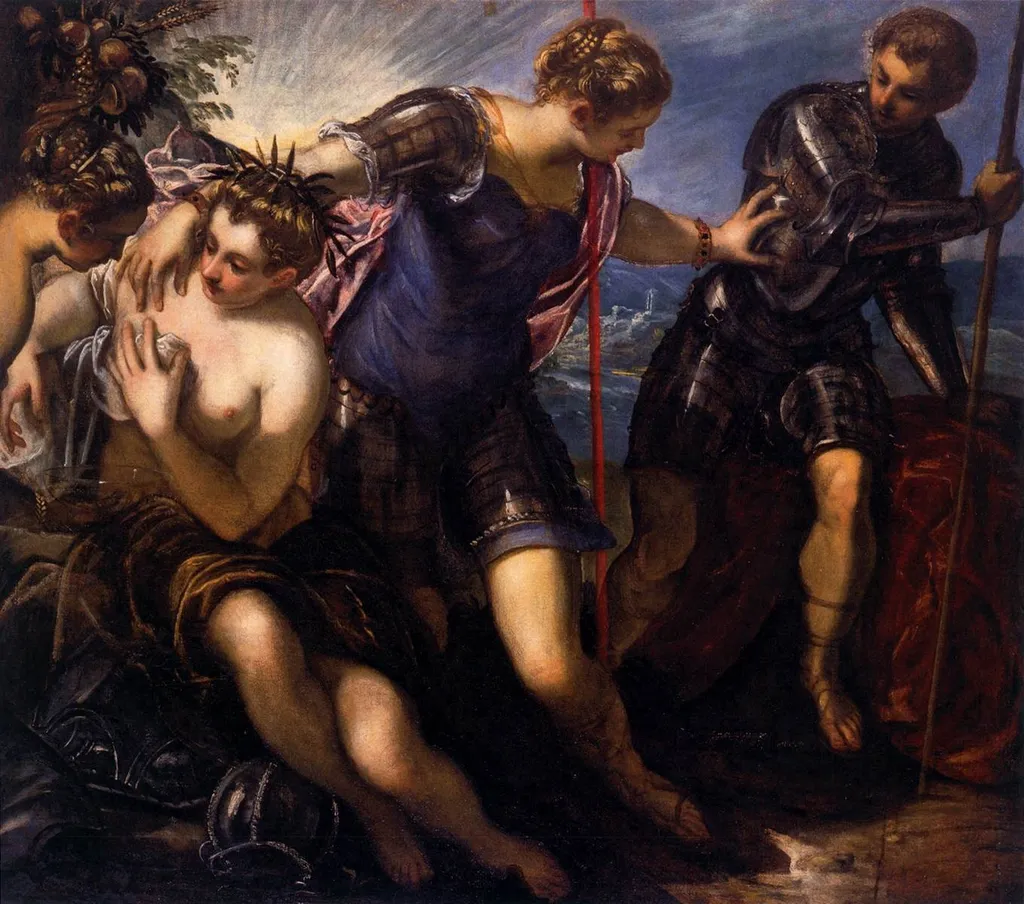
Minerva Sending Away Mars from Peace and Prosperity is an oil painting by the Mannerist artist Jacopo Tintoretto. It dates from 1588 and is held in the collection of the Doge's Palace.
About this work
Overview
The scene unfolds beneath a clear sky, with a distant cityscape forming the backdrop, and is currently displayed in the Doge’s Palace, Venice.
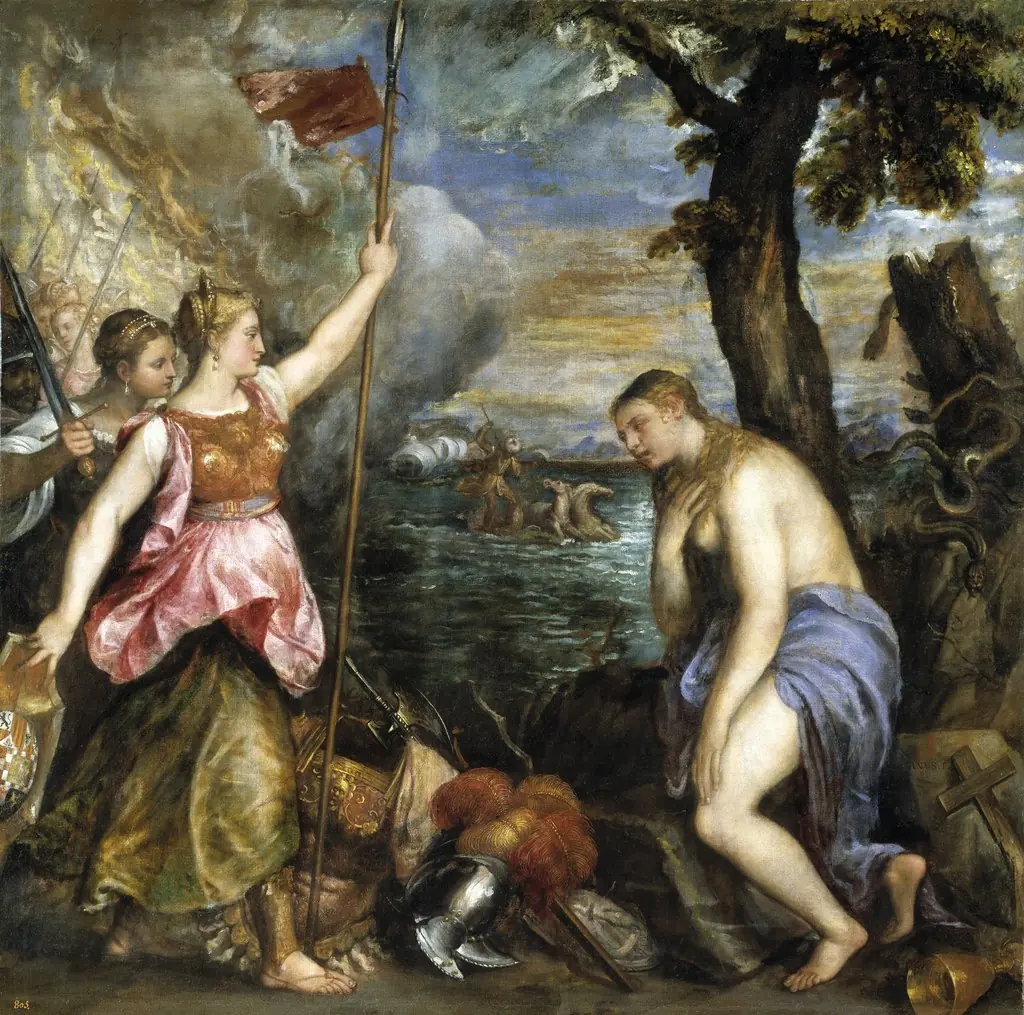
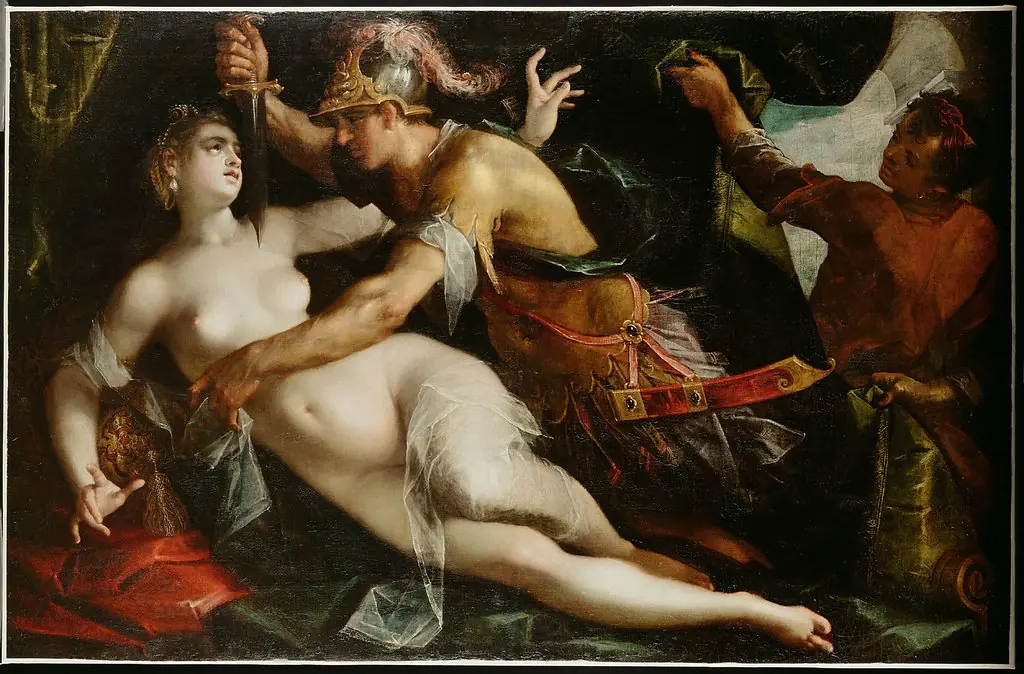
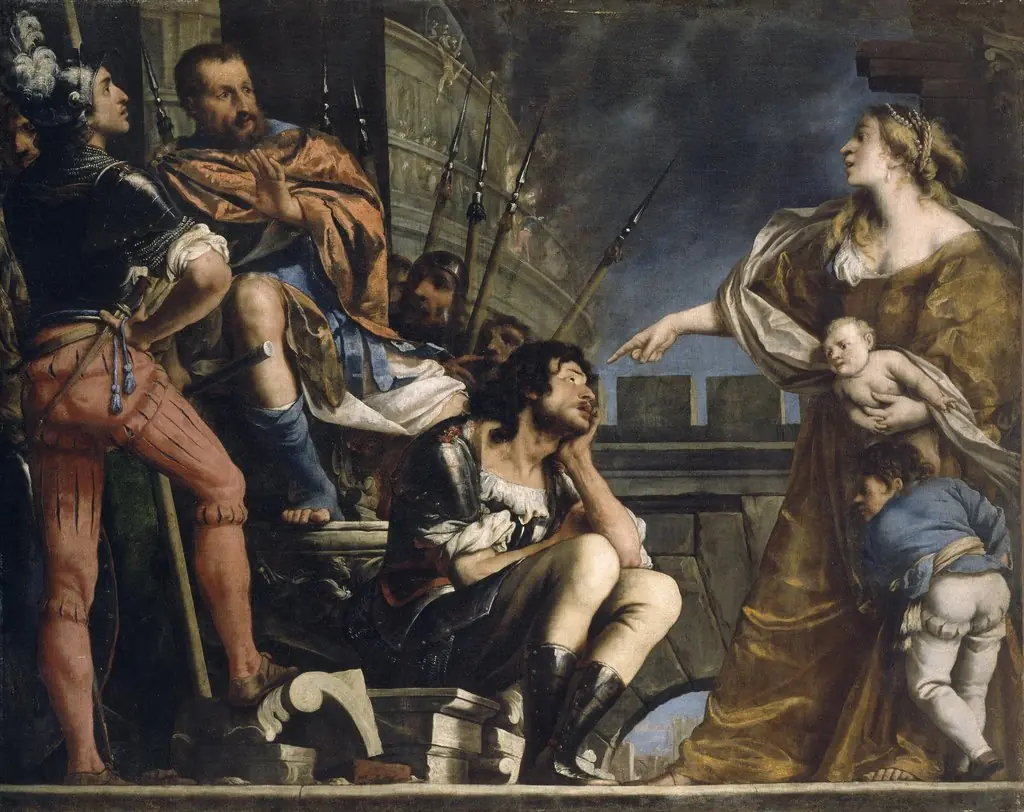
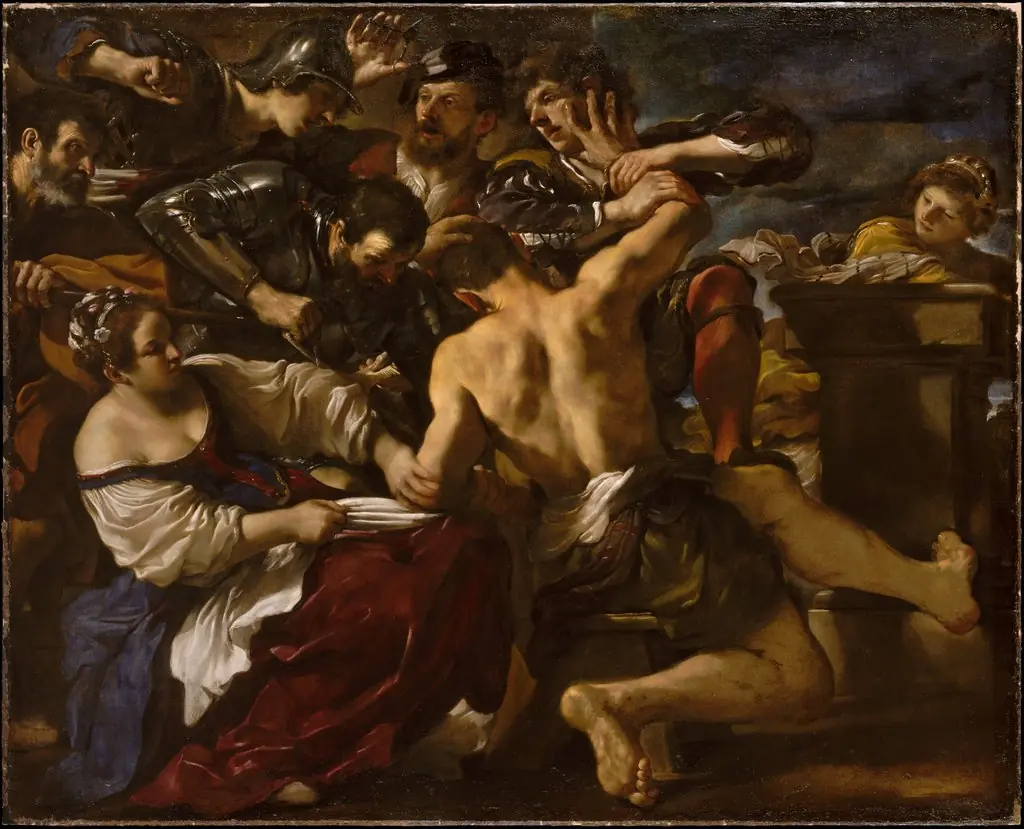
Jacopo Tintoretto’s 1588 oil on canvas, *Minerva Sending Away Mars from Peace and Prosperity*, presents a compact allegorical tableau. Central to the composition is a woman in blue and red who thrusts a armored figure outward, while two secondary figures observe the exchange. The scene unfolds beneath a clear sky, with a distant cityscape forming the backdrop, and is currently displayed in the Doge’s Palace, Venice.
Subject & Meaning
The work visualises the Roman goddess Minerva confronting the war deity Mars, symbolically removing him from a setting that represents civic tranquility and abundance. By portraying Minerva’s decisive gesture, Tintoret0 underscores the triumph of wisdom and civic order over martial aggression, a theme resonant with contemporary Venetian ideals of peace and prosperity.
Technique & Style
Executed in the Mannerist idiom, the painting showcases Tintoretto’s hallmark muscular anatomy and exaggerated poses. The figures are rendered with vigorous brushwork, and the composition employs a pronounced diagonal perspective that heightens the drama. The contrast of bright blues and reds against a muted background amplifies the tension between the opposing deities.
History & Provenance
Created toward the end of Tintoretto’s prolific career, the canvas was acquired for the Doge’s Palace, where it has remained in the Venetian collection. Its presence in the palace underscores the work’s function as a civic emblem, reinforcing the Republic’s self‑image as a guardian of peace and cultural refinement.
Context
Tintoretto painted this piece during a period when Venice sought to reaffirm its political stability after decades of conflict. The allegorical subject aligns with the city‑state’s propaganda, linking mythological narrative to contemporary concerns about war, trade, and the maintenance of civic harmony.
Artist & collection
Artist
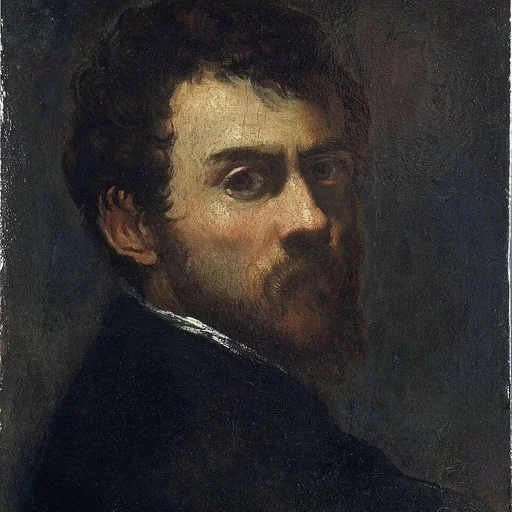
Jacopo Robusti (late September or early October 1518 – 31 May 1594), best known as Tintoretto ( TIN-tə-RET-oh; Italian: ; Venetian: ), was an Italian Renaissance painter of the Venetian school.