Artwork
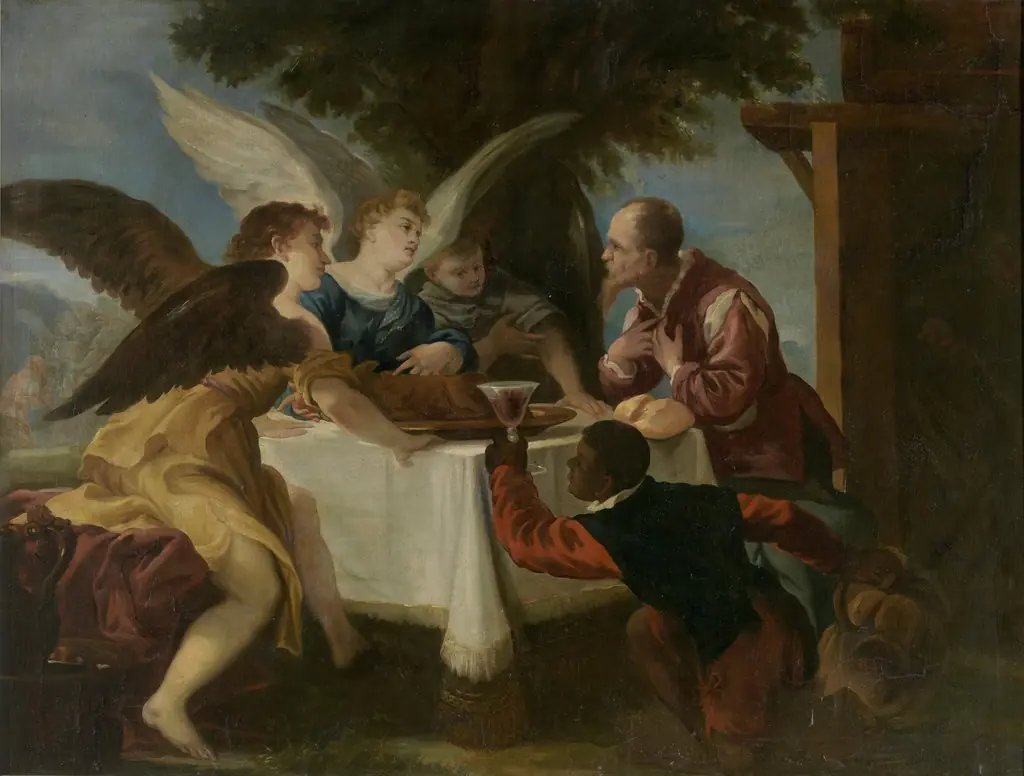
David and Abigail
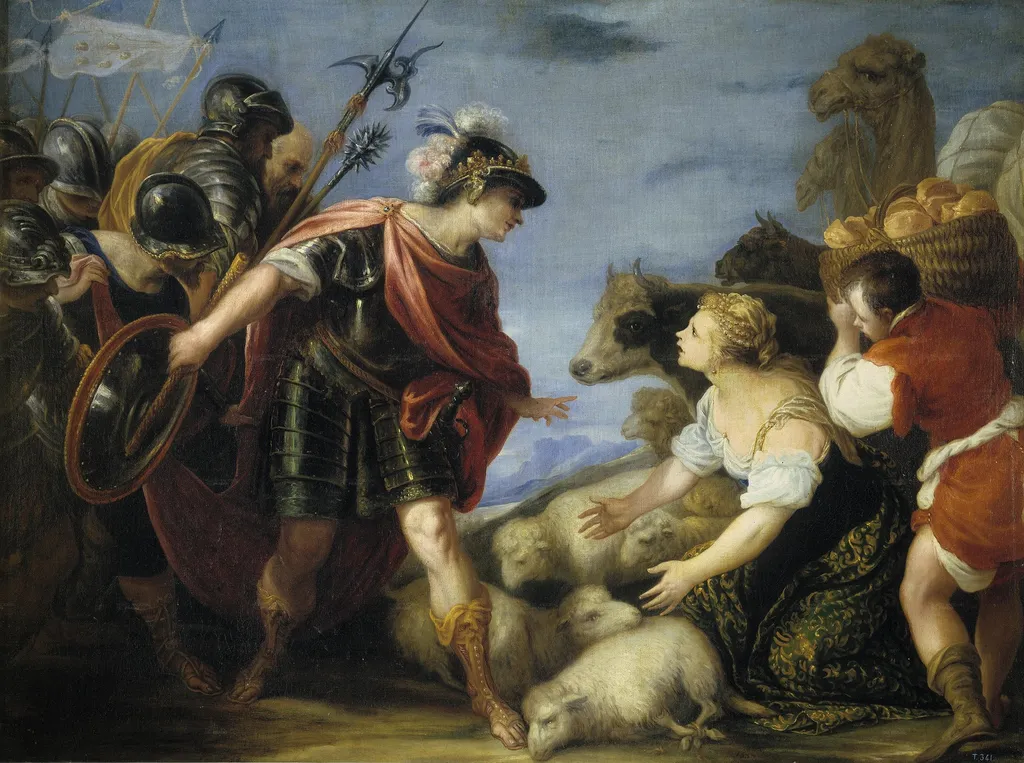
David and Abigail is an oil painting by the Early Baroque Italian artist Juan Antonio de Frías y Escalante. It dates from 1667 and is held in the collection of the Museo del Prado.
About this work
Overview
Juan Antonio de Frías y Escalante, a Spanish painter active in the mid-17th century, completed *David and Abigail* in 1667 using oil on canvas.
Juan Antonio de Frías y Escalante, a Spanish painter active in the mid-17th century, completed *David and Abigail* in 1667 using oil on canvas. Born in Córdoba in 1633, he trained in Madrid under Francisco Ricci and later served at the Spanish court. The work is part of the Museo del Prado’s collection and reflects the artist’s engagement with religious narratives common in Spanish Baroque painting, though its style shows influences from broader Italian Baroque traditions.
Subject & Meaning
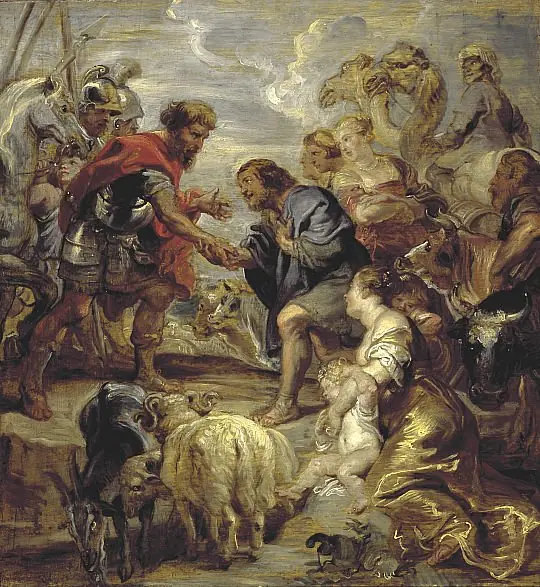
The painting illustrates a biblical episode from 1 Samuel 25, in which Abigail, wife of Nabal, meets David to prevent violence by offering provisions and pleading for mercy. The armored figure is David, gesturing toward Abigail, who sits serenely beside a slaughtered boar—symbolizing the gift she brings. A lamb nearby suggests peace and innocence. The soldiers in the background, armed and alert, underscore the tension between impending conflict and diplomatic resolution.
Technique & Style
Frías y Escalante employs chiaroscuro to model the figures with strong contrasts of light and shadow, enhancing their three-dimensionality and emotional gravity. The armor and fabrics are rendered with careful attention to texture, while the soft, hazy sky provides a tranquil backdrop that isolates the central figures. The composition directs attention to the interaction between David and Abigail, using directional gestures and spatial arrangement to convey narrative urgency without overt drama.
History & Provenance
Painted in 1667, just two years before the artist’s death in 1669, the work likely originated from Frías y Escalante’s time in Madrid, where he was active in court circles. It entered the Museo del Prado’s collection in the 19th century, following the secularization of religious institutions and the consolidation of Spanish royal holdings. Its survival reflects its recognition as a significant example of late Spanish Baroque religious painting.
Context
During the 17th century, Spanish artists frequently depicted biblical stories to reinforce Catholic doctrine amid the Counter-Reformation. While Frías y Escalante’s output included Marian subjects, *David and Abigail* stands out for its focus on a narrative of diplomacy and restraint. The painting aligns with broader European trends that favored emotionally resonant, psychologically nuanced biblical scenes over overtly theatrical compositions.
Legacy
Though Frías y Escalante’s career was brief and his oeuvre limited, *David and Abigail* remains a representative work of his mature style. It contributes to the understanding of how Spanish painters adapted Italian Baroque techniques to serve domestic religious narratives. The painting continues to be studied for its restrained drama and skilled handling of light, offering insight into a lesser-known but technically accomplished figure of the Spanish Golden Age.
Own this work as a print
Artist & collection
Artist
Juan Antonio de Frías y Escalante
Juan Antonio de Frías y Escalante (1633 in Cordoba–1669 in Madrid) was a Spanish Baroque Golden Age painter.