Artwork
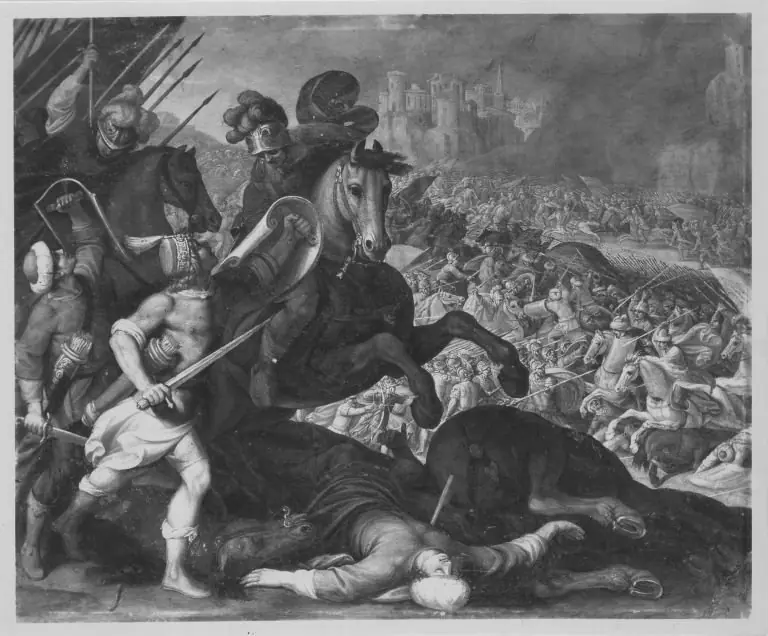
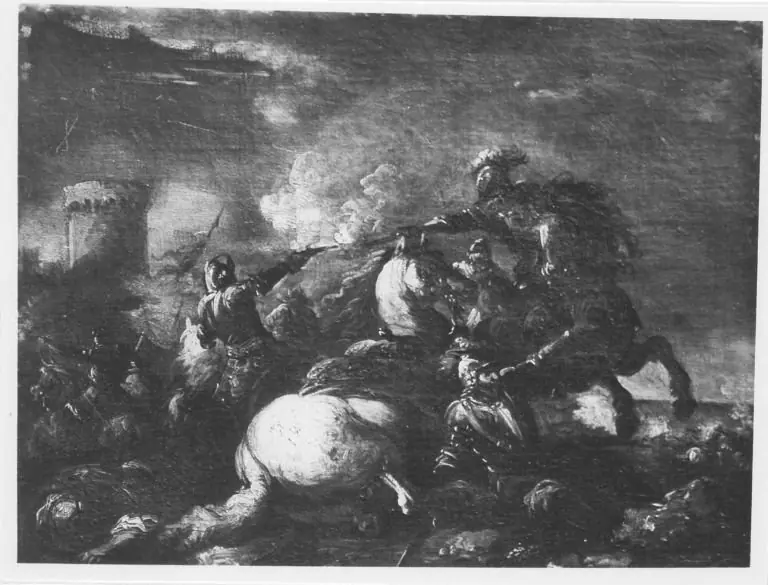
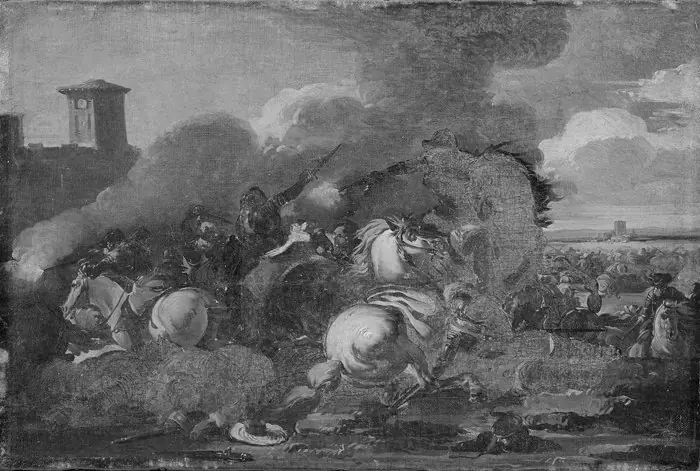
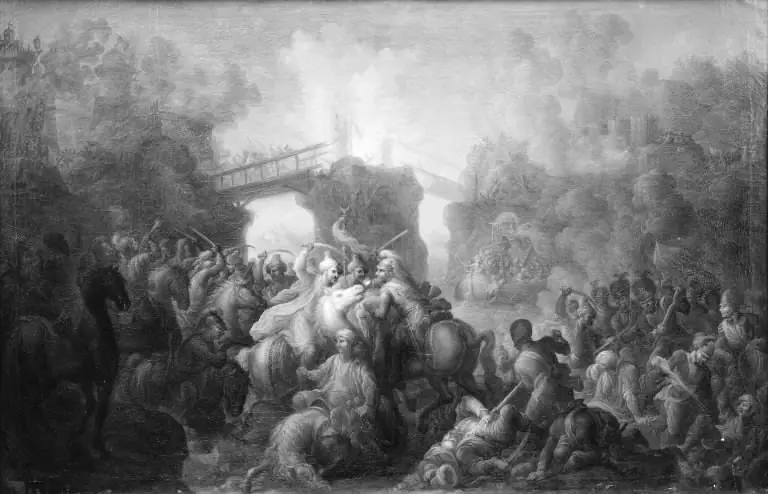
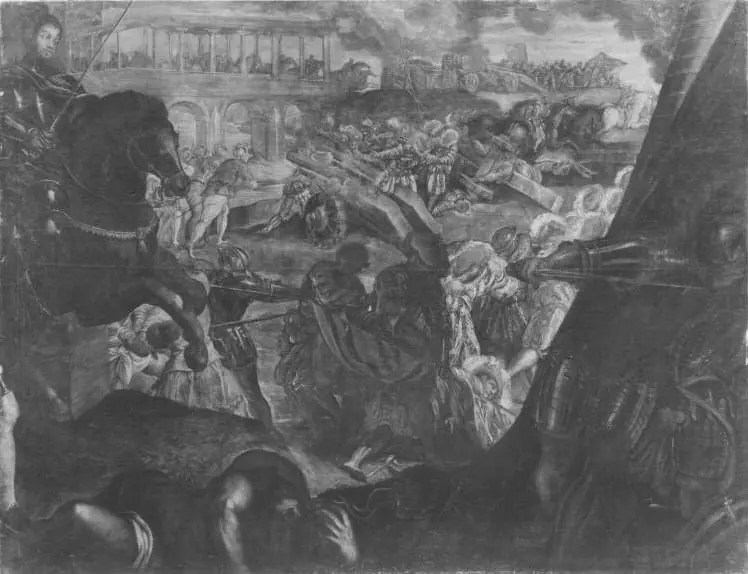
Gonzaga-Zyklus, II. Reihe, 1. Einnahme von Mailand
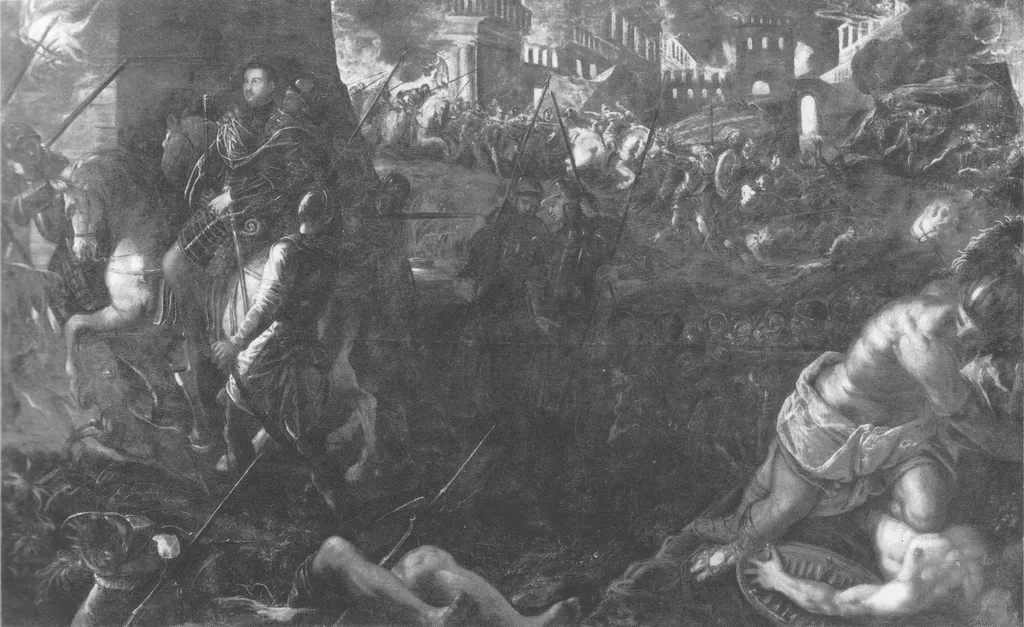
Gonzaga-Zyklus, II. Reihe, 1. Einnahme von Mailand is an oil painting by the Mannerist artist Jacopo Tintoretto. It dates from 1590 and is held in the collection of the Bavarian State Painting Collections.
About this work
The painting is titled Gonzaga-Zyklus, II. Reihe, 1. Einnahme von Mailand.
It was created by Jacopo Tintoretto in 1579.
The artist used oil paint for this work, which is an allegory, and it's held at the Alte Pinakothek.
This painting has a specific title and date, which suggests it might be part of a series.
You can learn more about similar techniques by looking into glazing.
Overview
Jacopo Tintoretto’s oil painting *Gonzaga‑Zyklus, II. Reihe, 1. Einnahme von Mailand* dates from the late 16th century, around 1579. It forms the opening piece of the second series in the Gonzaga Cycle, portraying the historical seizure of Milan. The work resides in Munich’s Alte Pinakothek, where it is displayed among other Tintoretto canvases.
Subject & Meaning
The composition illustrates the military capture of Milan, a pivotal episode in the power struggles of northern Italy. By foregrounding the victorious troops and the city’s surrender, Tintoretto emphasizes themes of conquest and political authority, aligning the scene with the Gonzaga family’s patronage and dynastic ambitions.
Technique & Style
Executed in the Mannerist idiom, the painting features elongated, muscular figures rendered with vigorous brushwork. Tintoretto employs a dramatic, diagonal perspective that pushes the viewer’s eye deep into the battlefield, while the layered oil glazes create a luminous contrast between illuminated soldiers and shadowed architecture.
History & Provenance
Commissioned as part of a larger narrative series for the Gonzaga court, the canvas entered the collection of the Alte Pinakothek in the 19th century. Its acquisition reflects the museum’s effort to assemble representative works of Venetian Mannerism, and it has remained in the museum’s holdings since that transfer.
Context
Tintoretto created the Gonzaga Cycle during a period when Venetian artists were responding to the heightened emotionalism of Mannerism, moving beyond the balanced compositions of the High Renaissance. The painting’s focus on dynamic movement and stark lighting mirrors contemporary trends in courtly historiography, which favored vivid visual storytelling.
Artist & collection
Artist
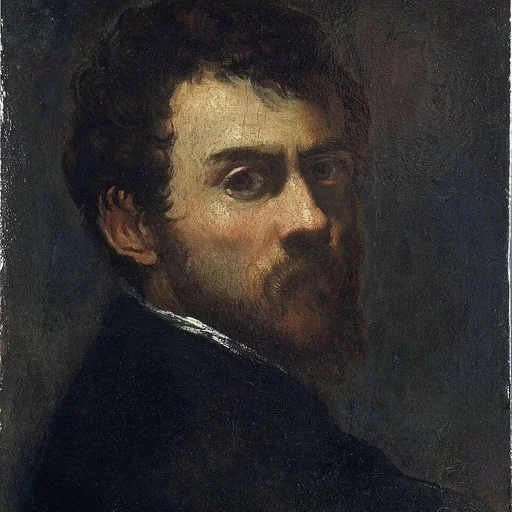
Jacopo Robusti (late September or early October 1518 – 31 May 1594), best known as Tintoretto ( TIN-tə-RET-oh; Italian: ; Venetian: ), was an Italian Renaissance painter of the Venetian school.