Artwork
St George
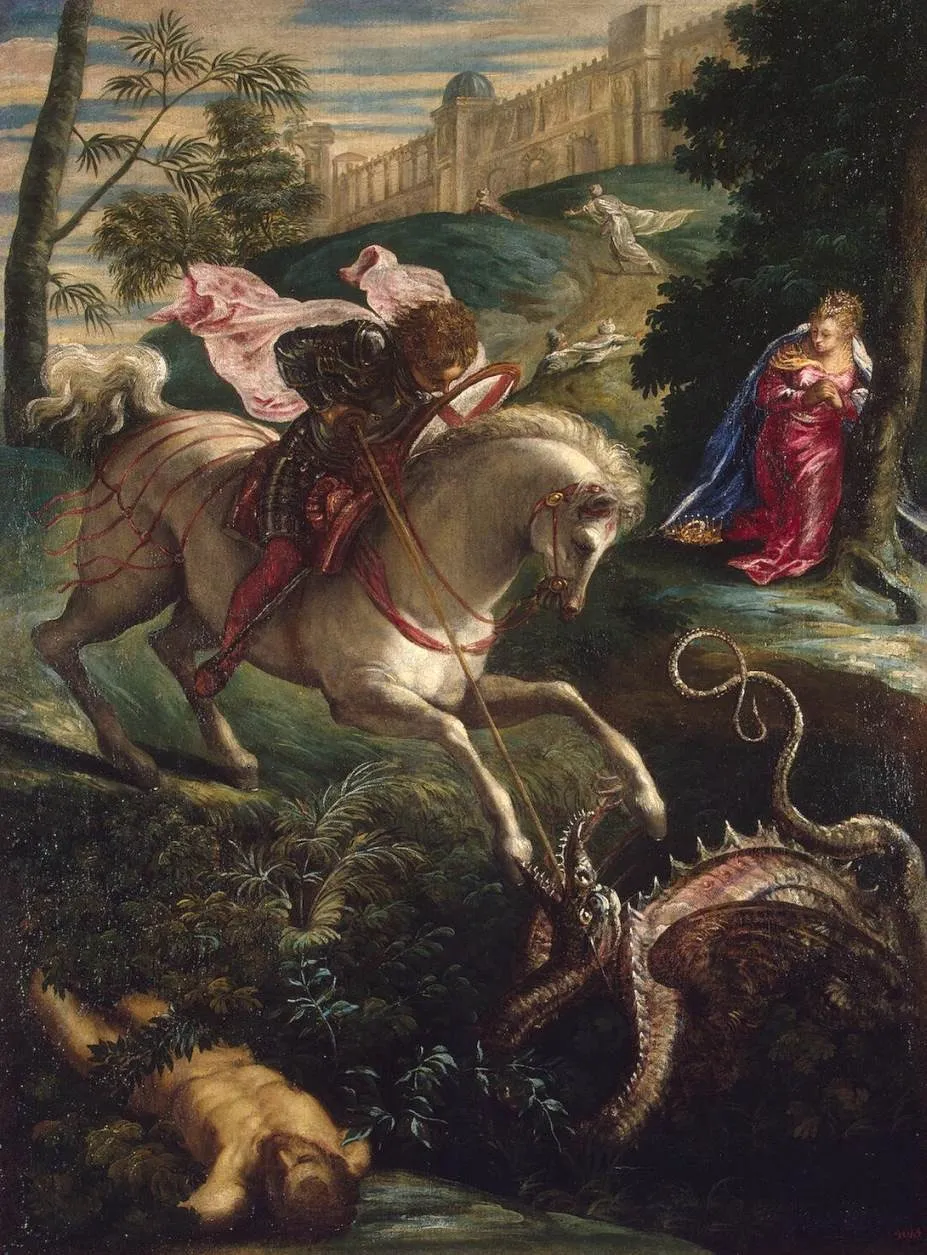
St George is an oil painting by the Mannerist artist Jacopo Tintoretto. It dates from 1543 and is held in the collection of the Hermitage Museum.
About this work
Overview
Painted in 1543 by Jacopo Robusti, known as Tintoretto, this oil-on-canvas work depicts the legendary confrontation between Saint George and a dragon.
Painted in 1543 by Jacopo Robusti, known as Tintoretto, this oil-on-canvas work depicts the legendary confrontation between Saint George and a dragon. Executed during the artist’s early career, it reflects the emerging Mannerist tendencies in Venetian painting. The piece is now held in the State Hermitage Museum, where its dynamic composition and expressive energy continue to draw attention for its departure from classical calm.
Subject & Meaning
The painting illustrates the apocryphal tale of Saint George slaying a dragon to rescue a princess. The knight, clad in red armor and crowned with a pink hat, charges forward on a rearing horse, sword raised. Behind him, a woman in red stands near a stone structure, likely the princess. The scene merges religious symbolism with chivalric narrative, emphasizing divine intervention through heroic action, a common theme in Counter-Reformation art.
Technique & Style
Tintoretto employed vigorous brushwork and exaggerated motion to heighten tension. The horse’s arched neck and the dragon’s coiled form create diagonal energy across the canvas. Dark, deep shadows contrast sharply with illuminated armor and fabric, employing chiaroscuro to intensify the drama. The palette is restrained yet focused—reds and earth tones dominate—while the background recedes into muted greens and grays, directing focus to the central struggle.
History & Provenance
Commissioned during Tintoretto’s formative years in Venice, the painting entered the Hermitage collection in the 18th century, likely through imperial acquisitions of Italian art. Its early date places it among his first major religious commissions, predating his large-scale decorative cycles. The work’s survival in good condition offers insight into his evolving style before he became known for monumental compositions in Venetian churches.
Context
In mid-16th century Venice, religious subjects remained central to artistic patronage, even as artists began to prioritize emotional intensity over idealized harmony. Tintoretto’s approach diverged from Titian’s colorism and Veronese’s grandeur, favoring kinetic energy and psychological immediacy. This painting aligns with broader Mannerist trends in northern Italy, where movement and tension replaced Renaissance balance, reflecting a shift in spiritual and aesthetic values.
Legacy
Though less celebrated than Tintoretto’s later altarpieces, this early work reveals the foundations of his distinctive style: bold gesture, dramatic lighting, and a disregard for static composition. It influenced subsequent generations of Venetian painters who sought to convey spiritual urgency through physical dynamism. The painting remains a key example of how Mannerism adapted religious iconography to express heightened emotion and movement.
Artist & collection
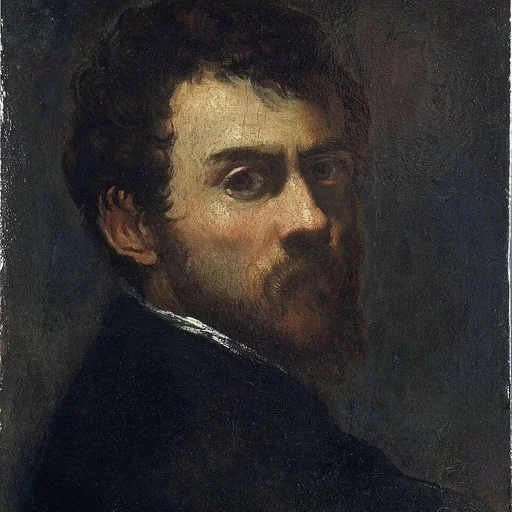
Artist
Jacopo Robusti (late September or early October 1518 – 31 May 1594), best known as Tintoretto ( TIN-tə-RET-oh; Italian: ; Venetian: ), was an Italian Renaissance painter of the Venetian school.