Artwork
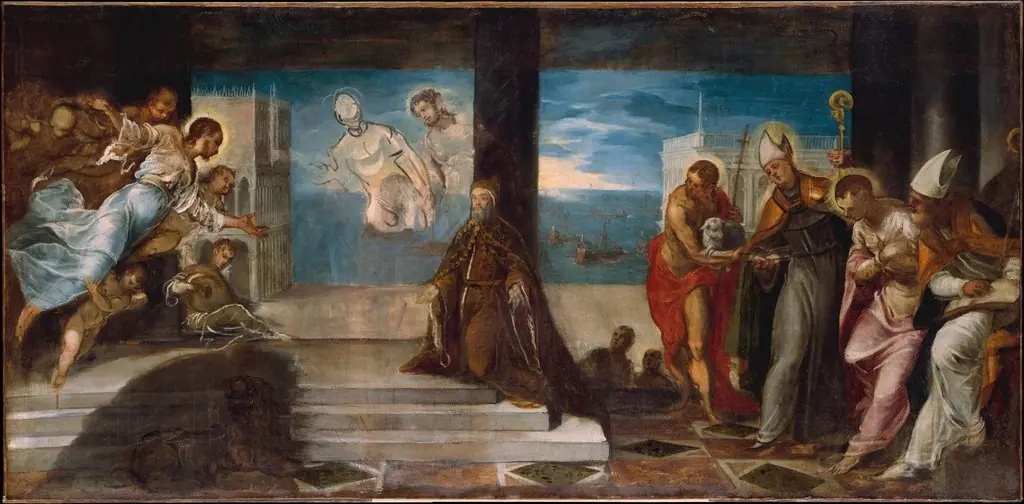
Three Venetian city chamberlains before St. Mark
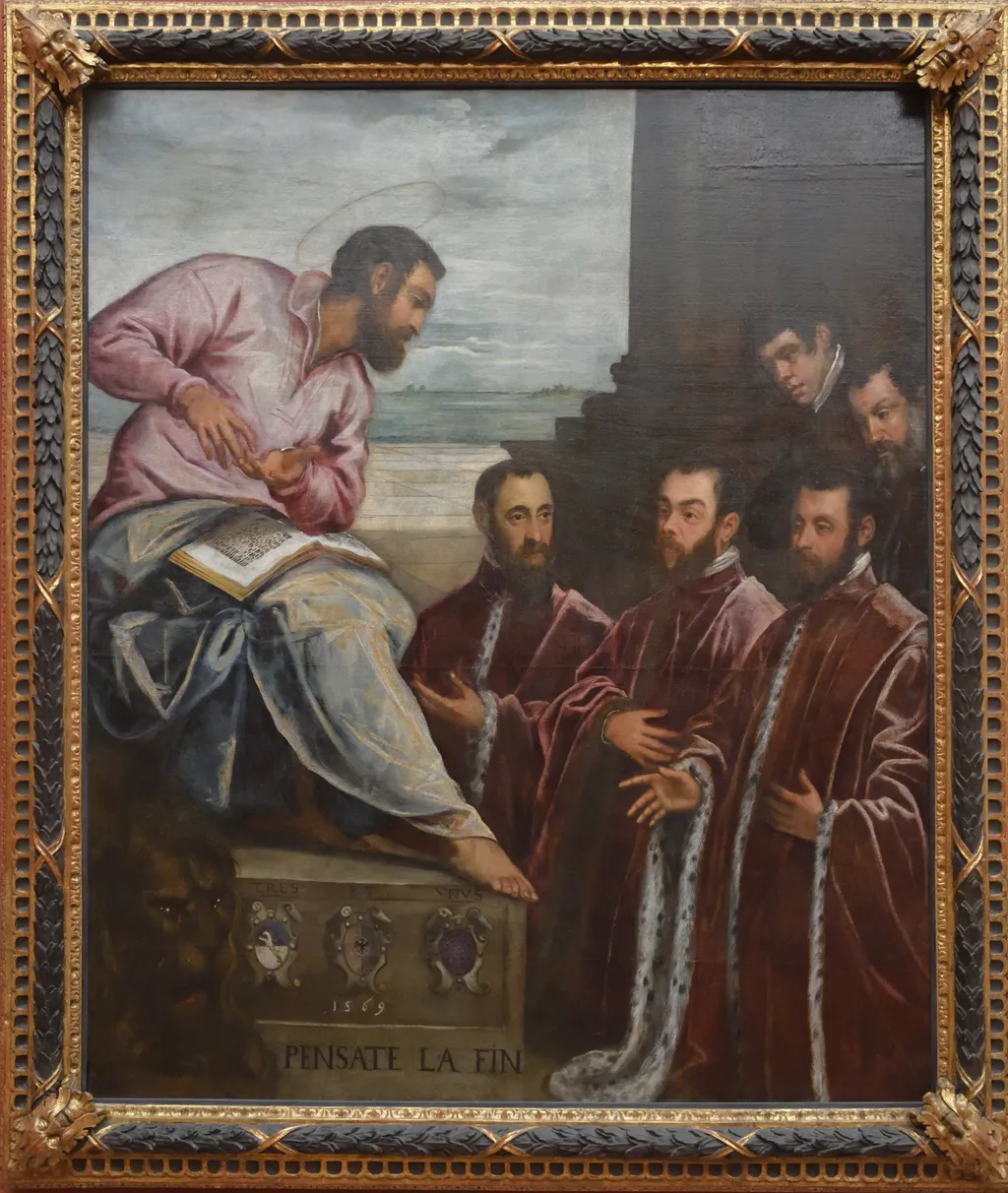
Three Venetian city chamberlains before St. Mark is a paint painting by the Mannerist artist Jacopo Tintoretto. It dates from 1571 and is held in the collection of the Gemäldegalerie Berlin.
About this work
Overview
Executed in oil on canvas, the painting reflects the artist’s signature energy and compositional boldness.
Painted in 1571 by Jacopo Robusti, known as Tintoretto, this work portrays three Venetian civic officials in the presence of a celestial figure associated with the city’s patron saint. Executed in oil on canvas, the painting reflects the artist’s signature energy and compositional boldness. Its vertical format and layered spatial arrangement draw the viewer’s eye upward, reinforcing the hierarchical relationship between mortal authorities and divine symbolism.
Subject & Meaning
The three figures are chamberlains, high-ranking administrators of Venice, depicted in ceremonial robes as they stand before a seated figure representing St. Mark, identifiable by his halo and open book. The lion at his side, emblem of the Republic, anchors the sacred authority of the city’s religious and political identity. The officials’ postures—respectful, attentive—convey submission to divine sanction, aligning civic duty with spiritual legitimacy in Venetian state ideology.
Technique & Style
Tintoretto employs dynamic foreshortening and exaggerated gestures to heighten emotional intensity, characteristic of Mannerism. His brushwork is swift and textured, creating a sense of movement even in still figures. The contrast between the richly patterned fabrics of the officials’ garments and the softer, luminous rendering of the saint’s robes demonstrates a deliberate use of chiaroscuro to distinguish the sacred from the earthly, enhancing the painting’s spiritual gravity.
History & Provenance
Commissioned for a civic space in Venice, likely the Doge’s Palace or a government chamber, the painting served to visually affirm the city’s divine mandate. It remained in Venetian institutional collections through the centuries, documented in 17th-century inventories. Its survival through political upheavals, including Napoleonic seizures and later restorations, underscores its enduring role as a symbol of Venetian governance and identity.
Context
Created during a period of political tension and economic strain for Venice, the painting reinforced the Republic’s narrative of divine favor amid external threats. Tintoretto’s style, distinct from Titian’s harmony or Veronese’s grandeur, emphasized emotional immediacy and spatial innovation. This work aligns with other civic commissions of the era that fused religious iconography with state authority, reflecting Venice’s unique blend of theocratic and republican values.
Legacy
Though less celebrated than Tintoretto’s larger religious cycles, this painting remains a key example of how Venetian art served political ideology. Its influence is seen in later civic portraiture that merged sacred and secular authority. Art historians value it for its unvarnished depiction of institutional power and its role in documenting the visual language of Venetian governance during the late Renaissance.
Artist & collection
Artist
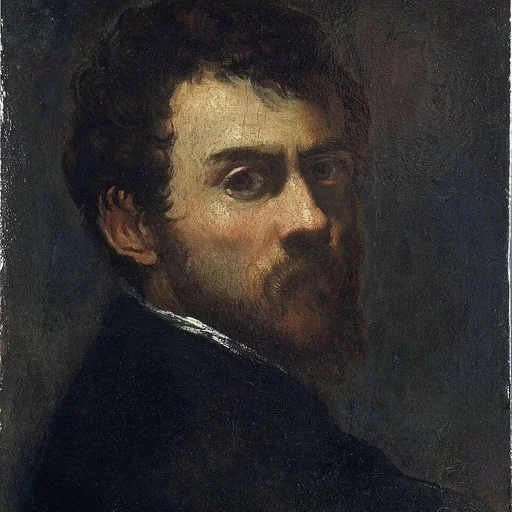
Jacopo Robusti (late September or early October 1518 – 31 May 1594), best known as Tintoretto ( TIN-tə-RET-oh; Italian: ; Venetian: ), was an Italian Renaissance painter of the Venetian school.

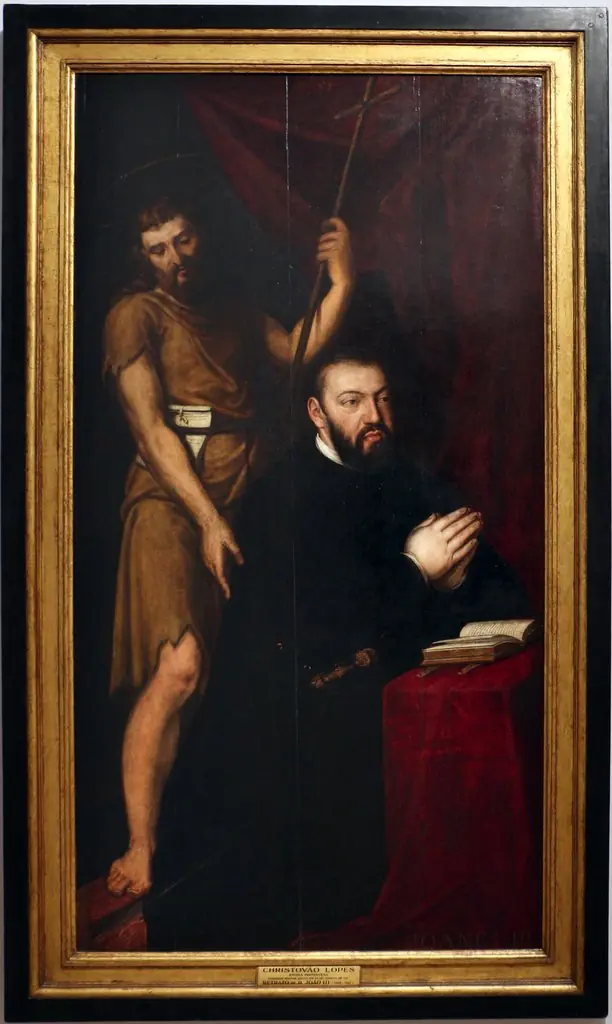 John III of Portugal and John the Baptist
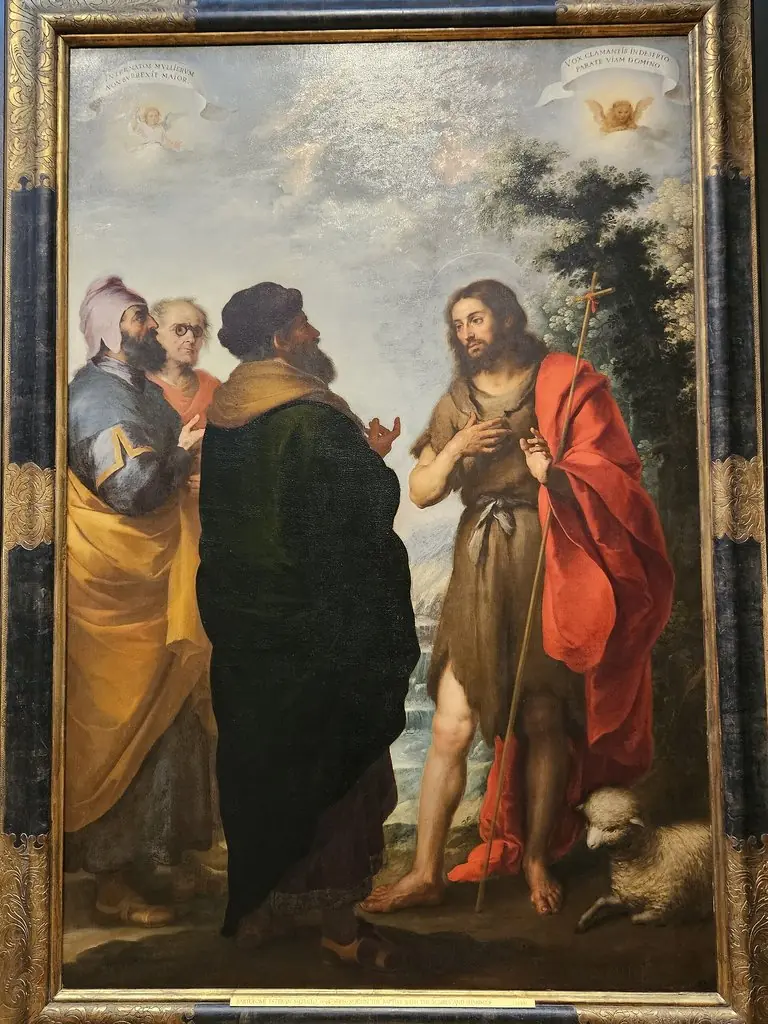 St. John the Baptist with the Scribes and Pharisees
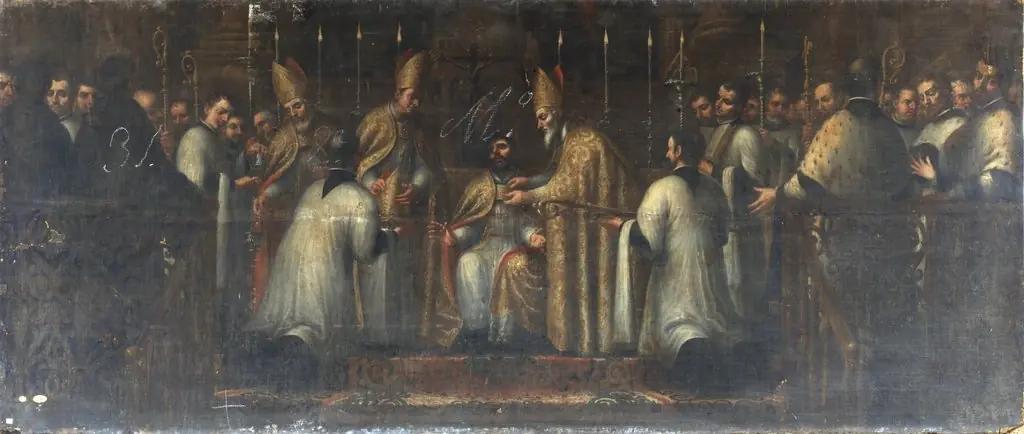 San Agustín discutiendo con el maniqueo Fortunato
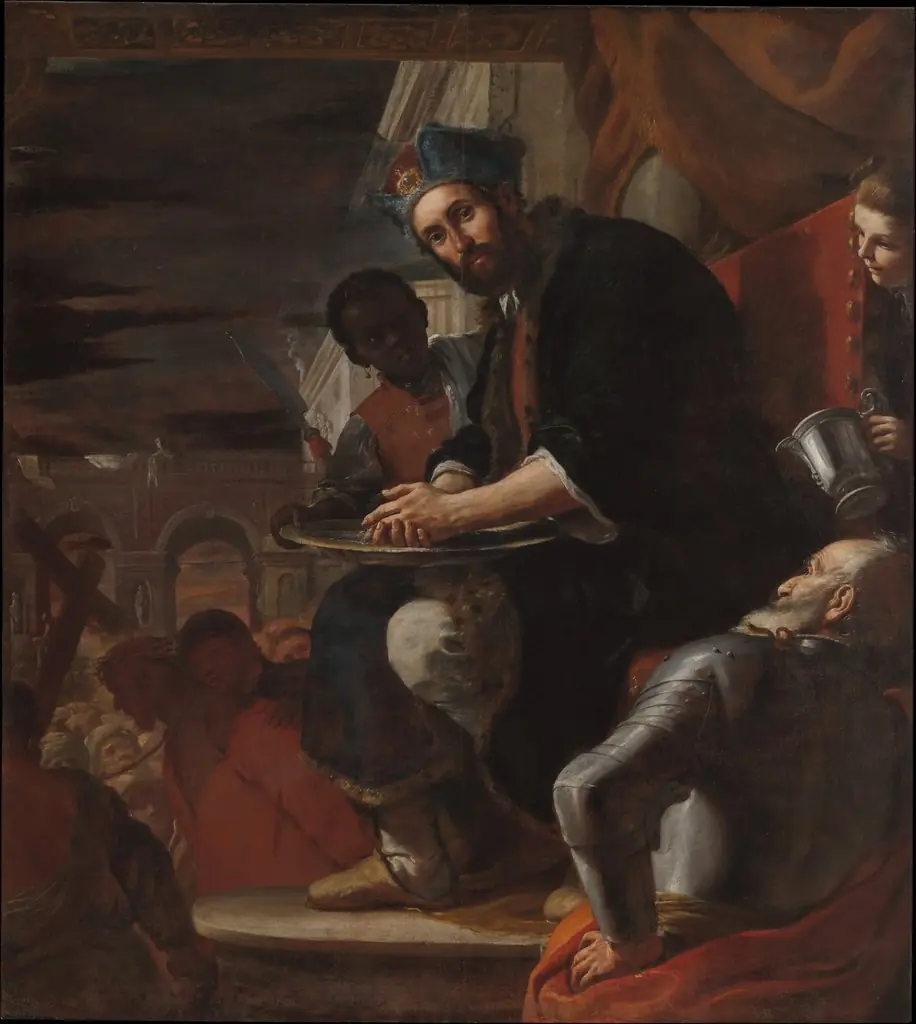 Pilate Washing His Hands
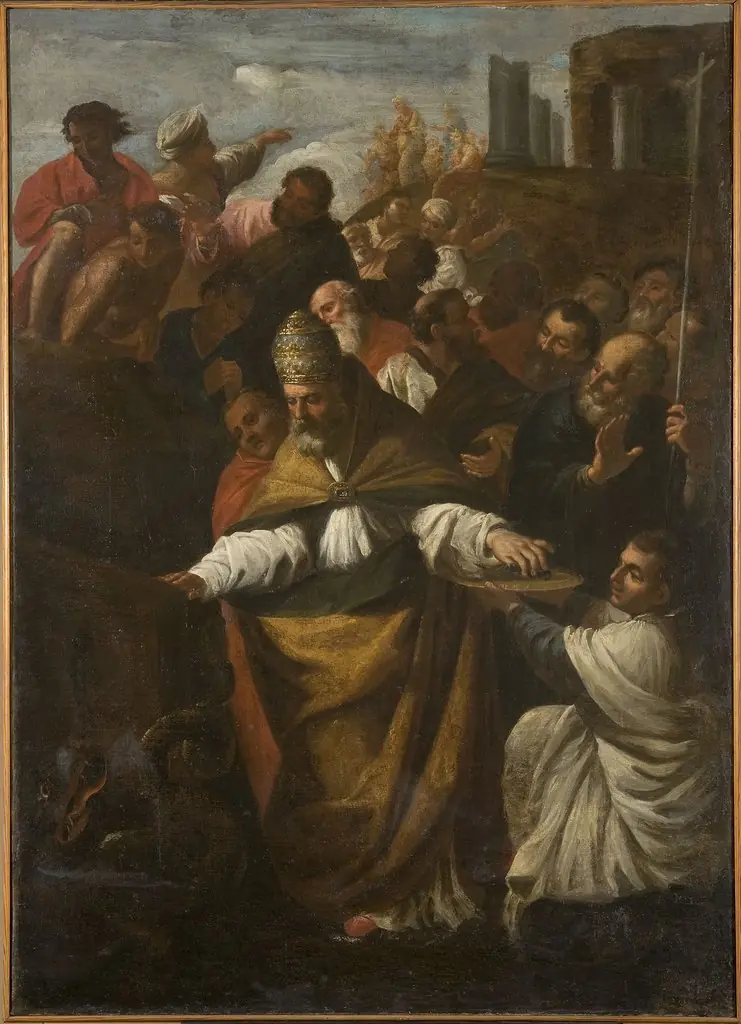 Miracle of the Church
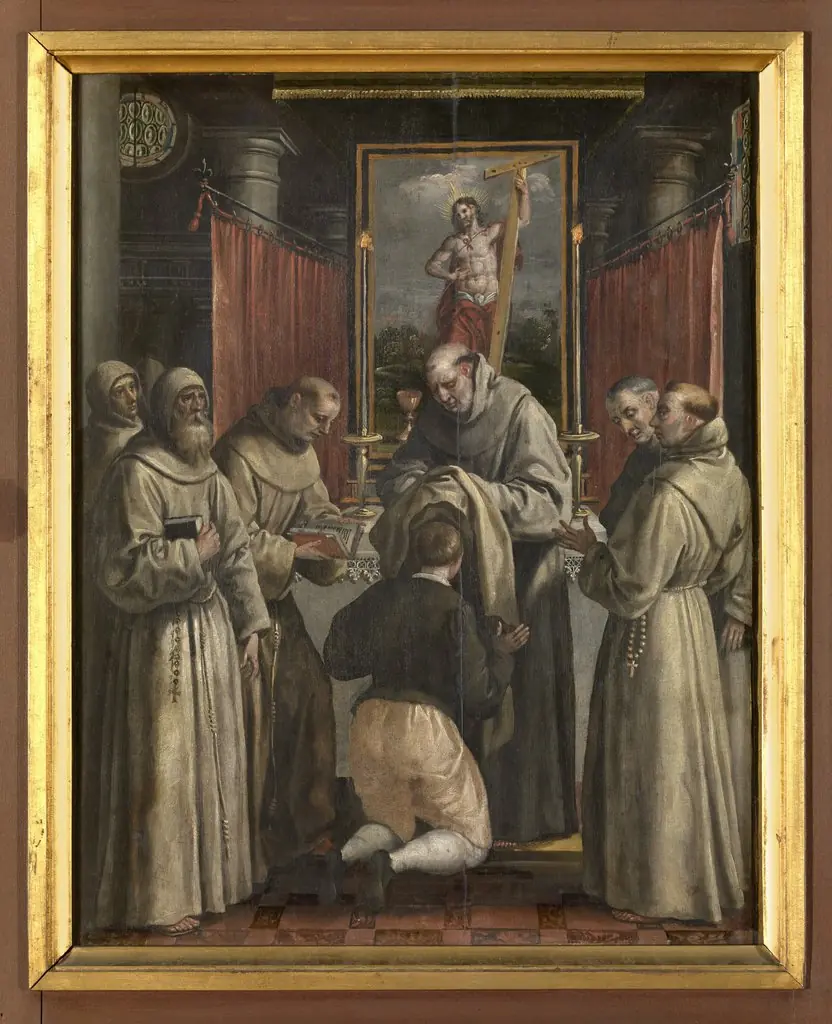 The Story of Saint Didacus of Alcalà
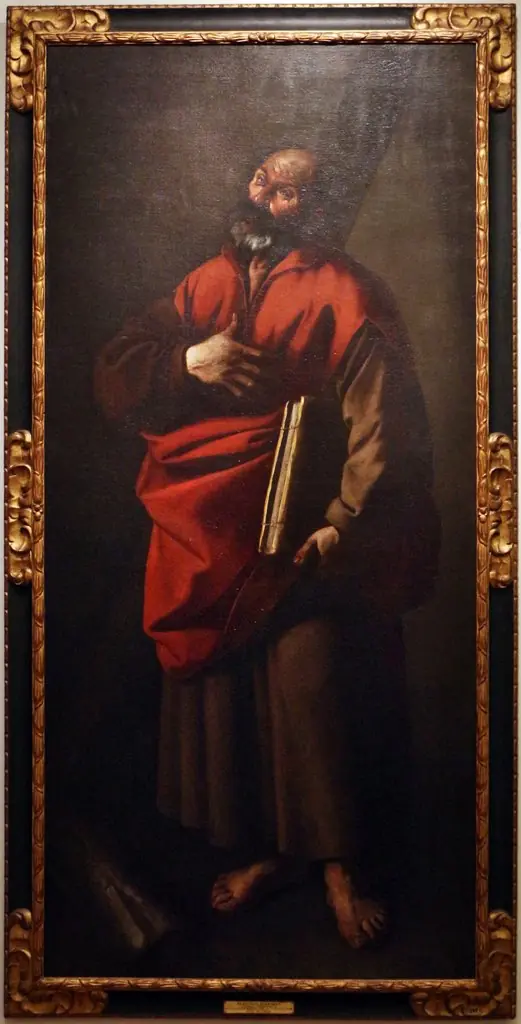 Saint Matthew
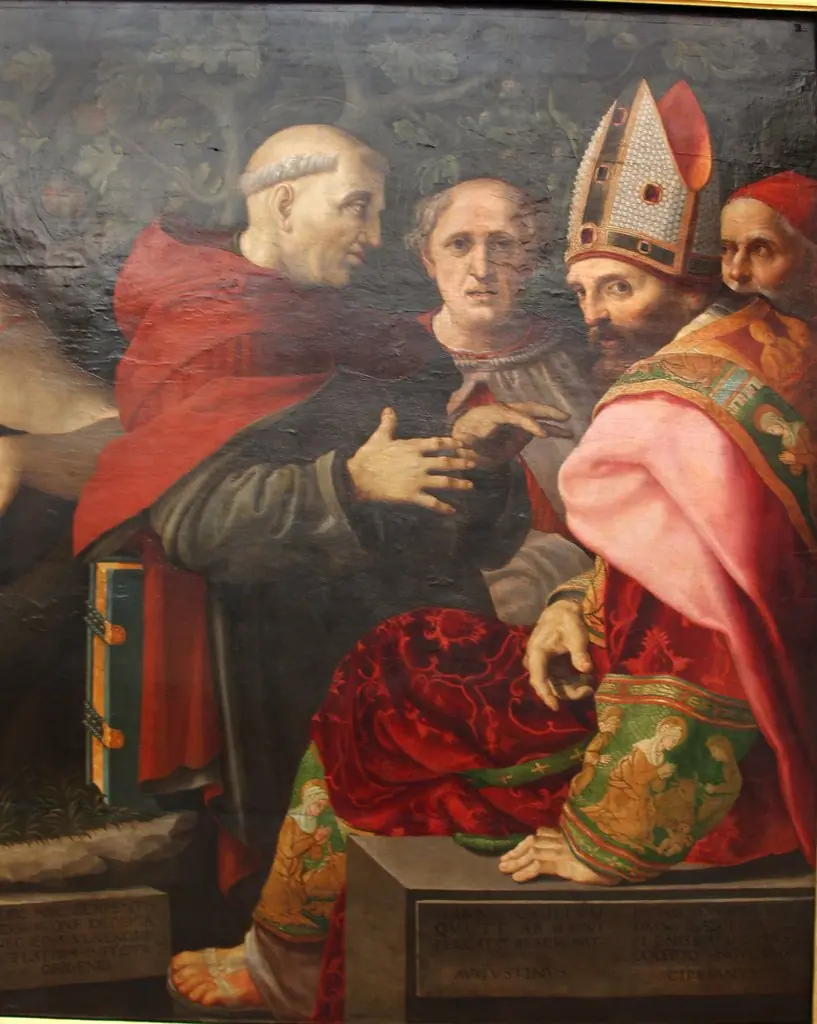 Der Disput von Kirchenlehrern über das Mysterium der unbefleckten Empfängnis
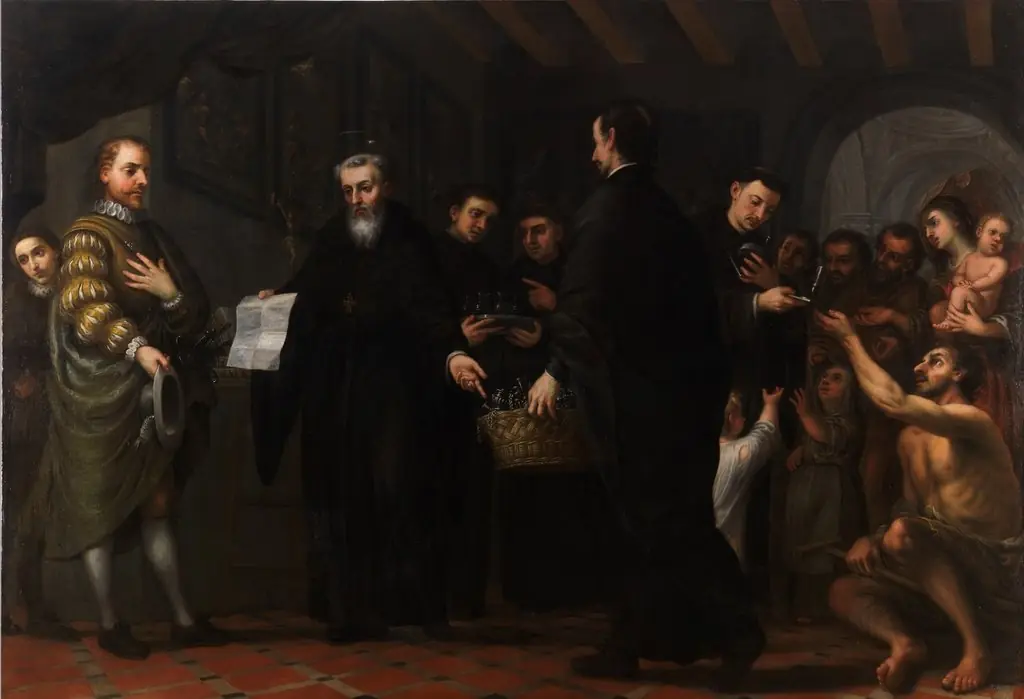 San Agustín repartiendo los bienes de los ricos entre los pobres
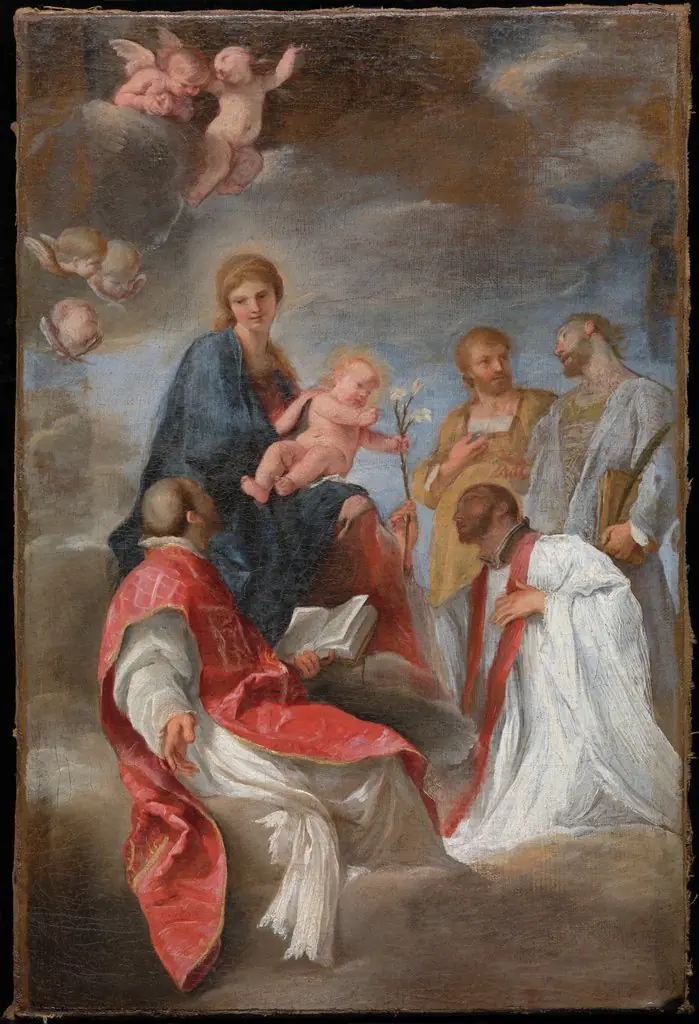 The Madonna and Child with Saints Ignatius of Loyola, Francis Xavier, Cosmas and Damian