Artwork
The Madonna and Child with Saints Ignatius of Loyola, Francis Xavier, Cosmas and Damian
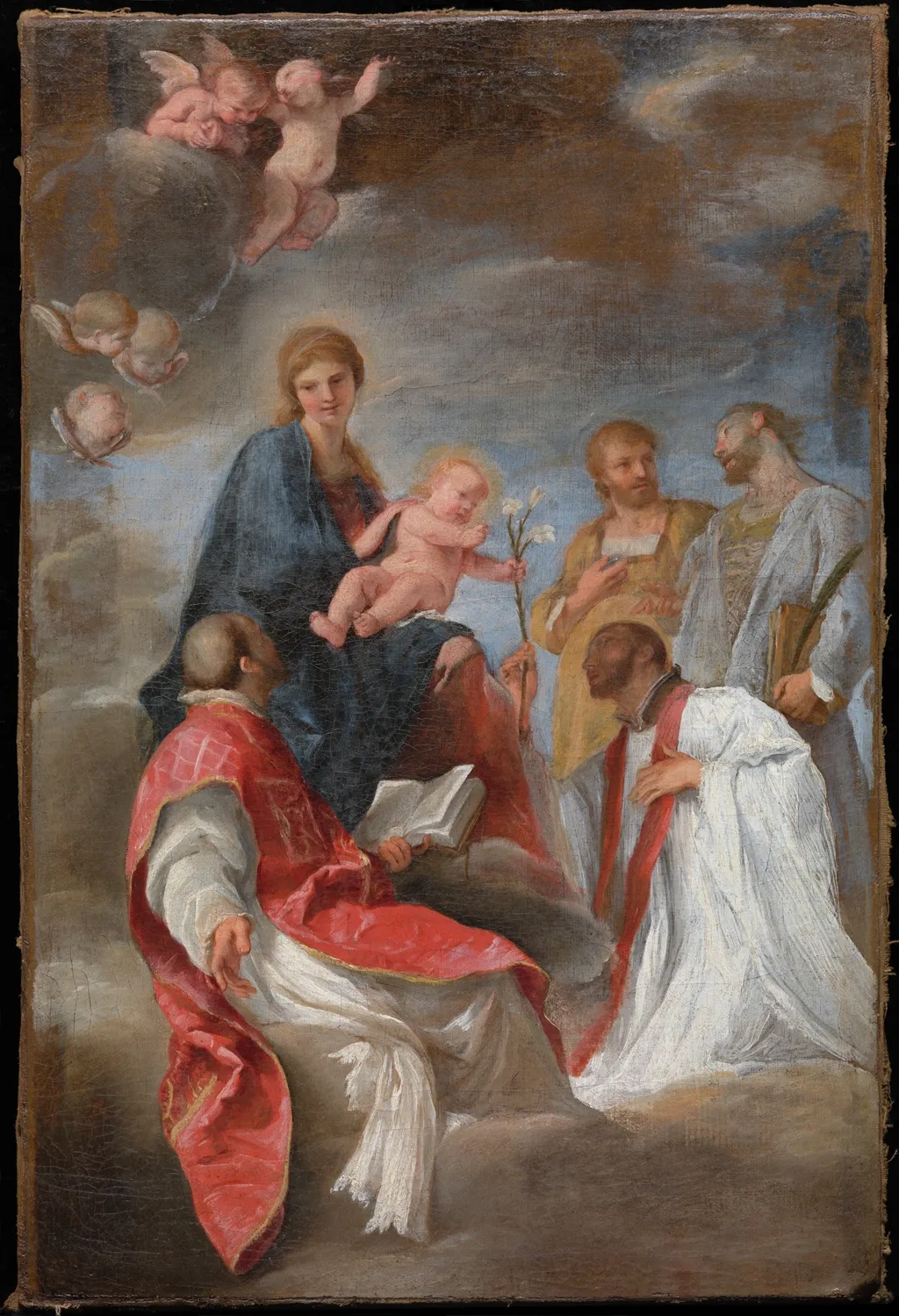
The Madonna and Child with Saints Ignatius of Loyola, Francis Xavier, Cosmas and Damian is an oil painting by the Early Baroque Italian artist Andrea Sacchi. It dates from 1629 and is held in the collection of the Detroit Institute of Arts.
About this work
Overview
Created during Sacchi’s time in Rome, the painting exemplifies early Baroque Classicism, blending spiritual gravity with restrained grandeur.
Painted in 1629 by Andrea Sacchi, this oil-on-canvas work presents the Virgin Mary and Christ Child surrounded by four saints: Ignatius of Loyola, Francis Xavier, Cosmas, and Damian. Created during Sacchi’s time in Rome, the painting exemplifies early Baroque Classicism, blending spiritual gravity with restrained grandeur. It is now part of the Detroit Institute of Arts collection, where it remains a key example of Roman devotional art from the period.
Subject & Meaning
The composition centers on the Virgin Mary, depicted with the Christ Child, as a symbol of divine grace and intercession. The four saints—two Jesuit founders and two patron saints of physicians—represent the convergence of spiritual authority and earthly healing. Their presence underscores the Catholic Church’s emphasis on intercessory prayer and the sanctity of both faith and medicine, reflecting Counter-Reformation ideals of devotion and service.
Technique & Style
Sacchi employed chiaroscuro to model forms with subtle gradations of light and shadow, enhancing the three-dimensionality of the figures. His palette—dominated by deep blues, rich reds, and luminous whites—creates visual harmony without theatrical excess. The figures are arranged in a calm, balanced group, avoiding the dynamism of later Baroque works, aligning instead with classical ideals of order and restraint that Sacchi championed alongside Poussin.
History & Provenance
Commissioned for a Jesuit context, the painting likely adorned a chapel or religious institution in Rome. It entered the Detroit Institute of Arts collection in the 20th century, though its earlier ownership history remains partially undocumented. Its survival and preservation reflect its enduring significance within ecclesiastical art, despite the upheavals of centuries of religious and political change in Europe.
Context
Created during the height of the Counter-Reformation, the painting responds to the Church’s call for clear, emotionally resonant religious imagery. Sacchi’s restrained style contrasted with the more dramatic tendencies of contemporaries like Caravaggio, favoring intellectual clarity over visceral intensity. The inclusion of Jesuit saints highlights the order’s growing influence, positioning the work within a broader effort to visually affirm Catholic doctrine and institutional identity.
Legacy
Sacchi’s approach influenced later Roman painters who sought to reconcile emotional depth with classical balance. Though less widely known today than his peers, this painting stands as a testament to his role in shaping a quieter, more contemplative strand of Baroque art. Its presence in a major American museum ensures continued scholarly attention to the nuanced devotional aesthetics of 17th-century Italy.
Own this work as a print
Artist & collection
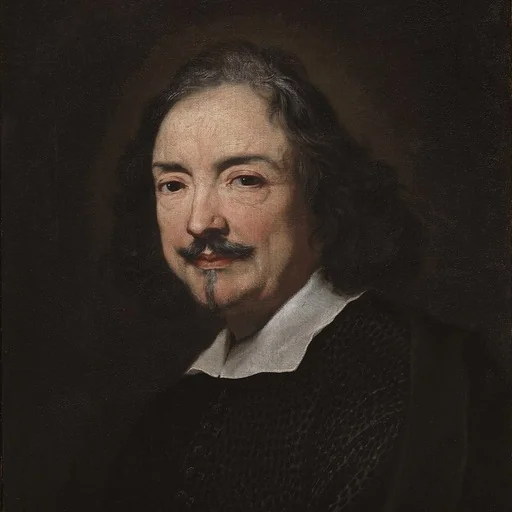
Artist
Andrea Sacchi (30 November 1599 – 21 June 1661) was an Italian painter of High Baroque Classicism, active in Rome.

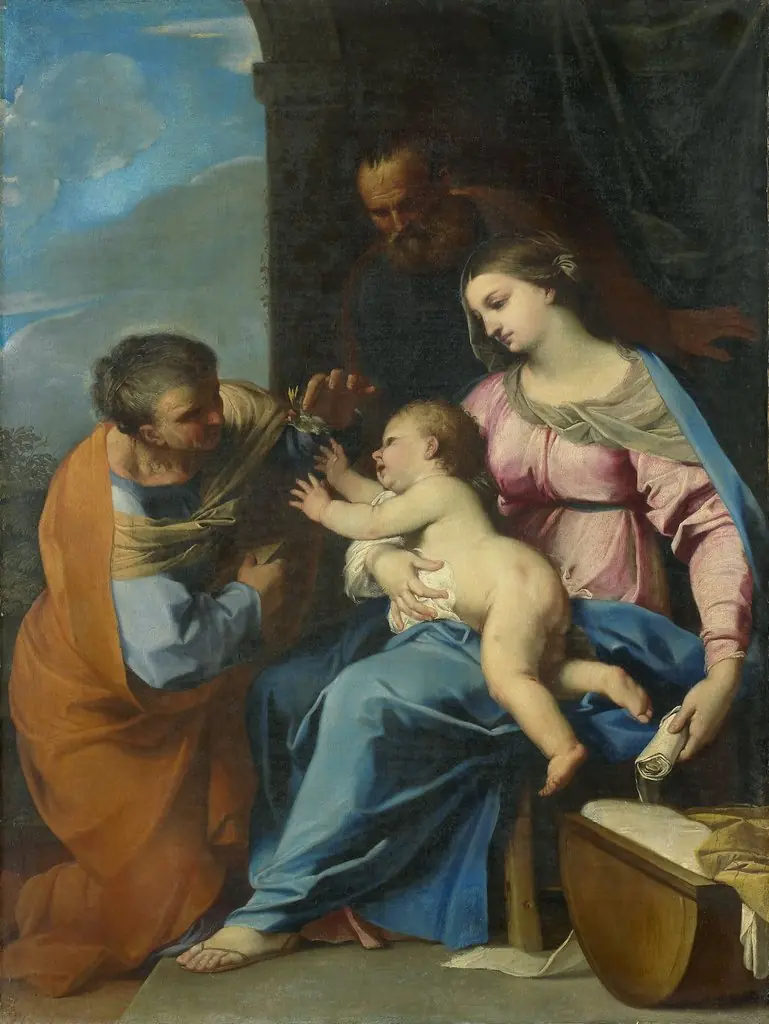 Holy Family
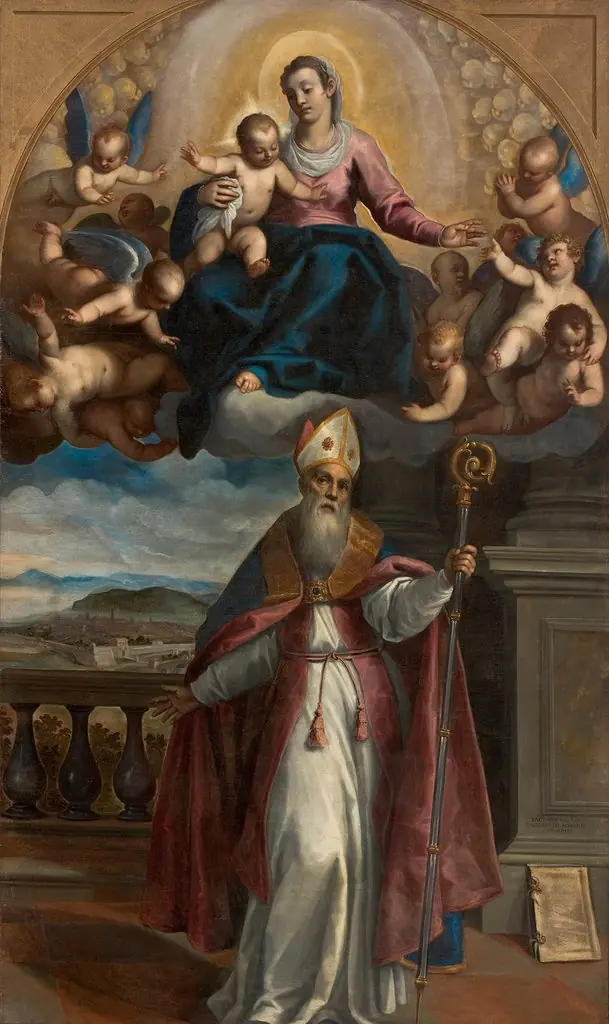 Aparição da Virgem com o Menino a santo Ubaldo, bispo de Gubbio, que indica ao fundo a cidade de Pesaro
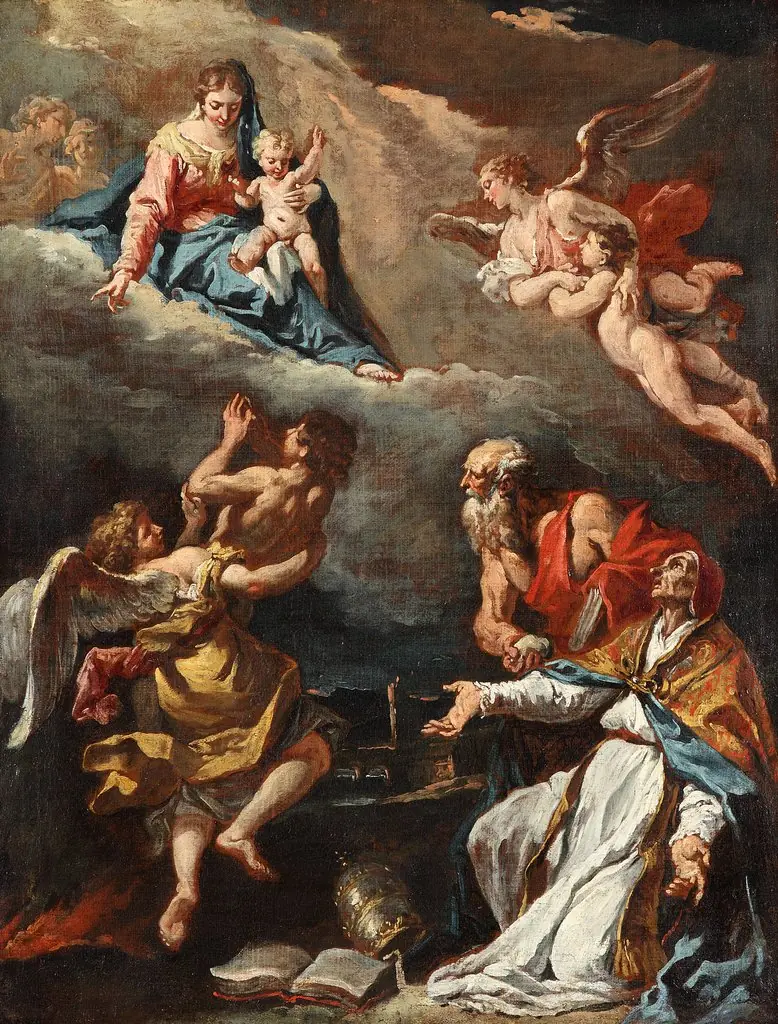 Die Fürbitte des Heiligen Gregor für die Seelen im Fegefeuer
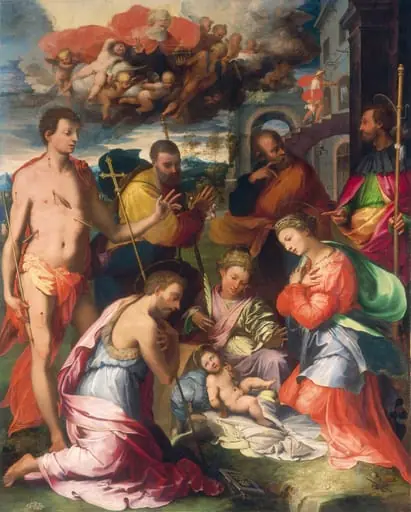 The Nativity
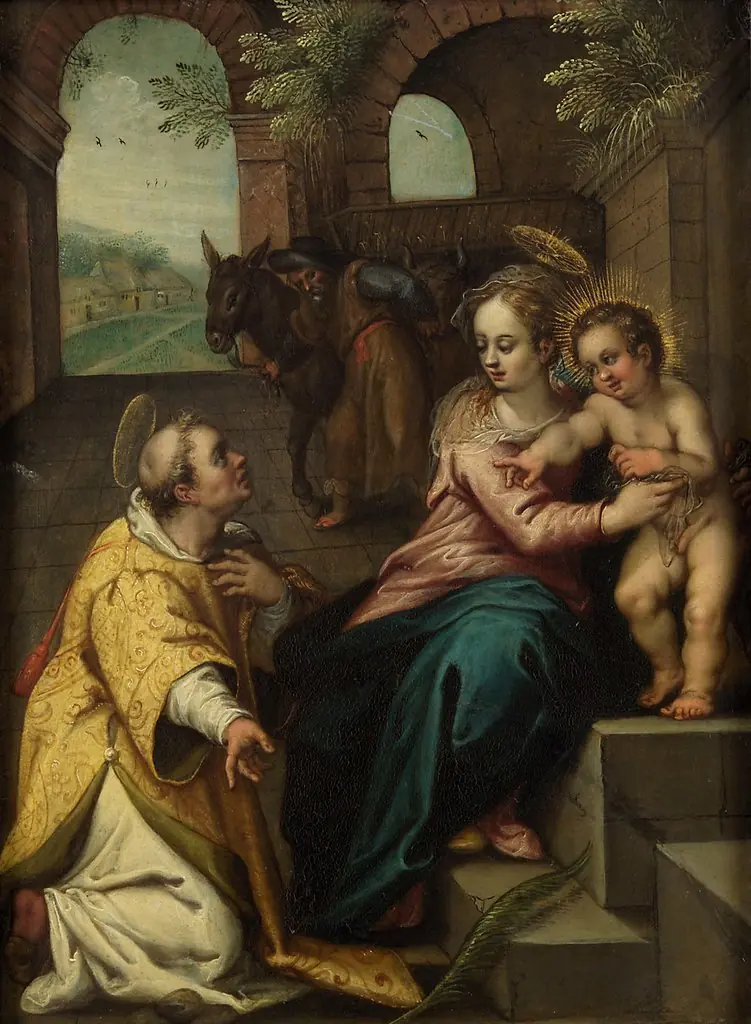 Holy Family with Saint Stephen
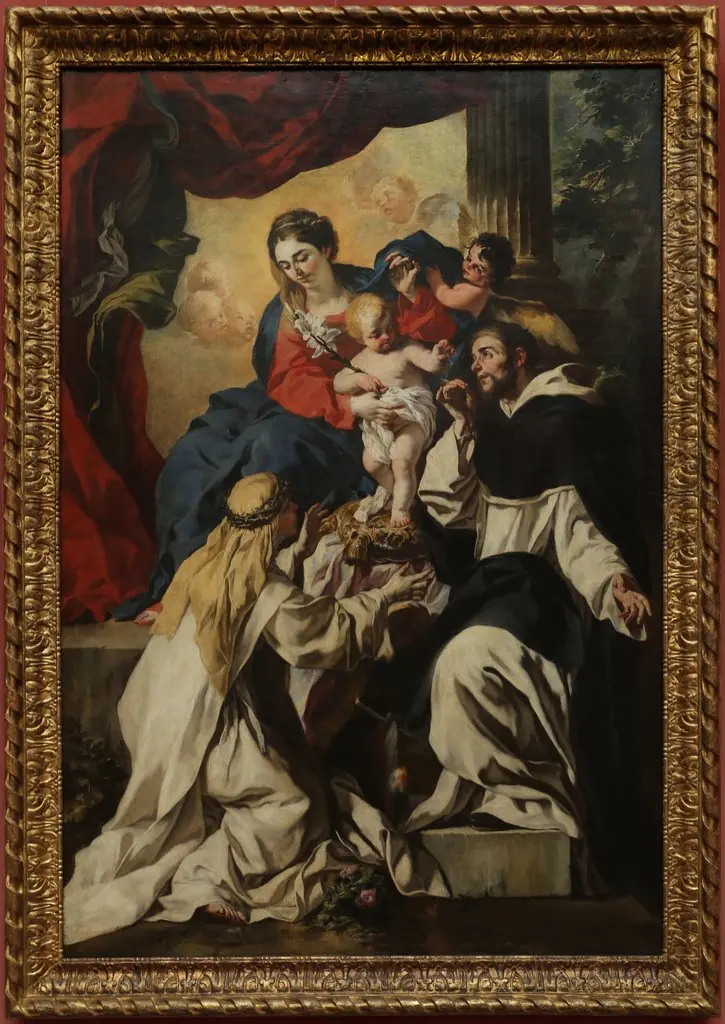 Die thronende Maria mit dem Kind, dem Heiligen Dominikus und der Heiligen Katharina von Siena (Rosenkranzmadonna)
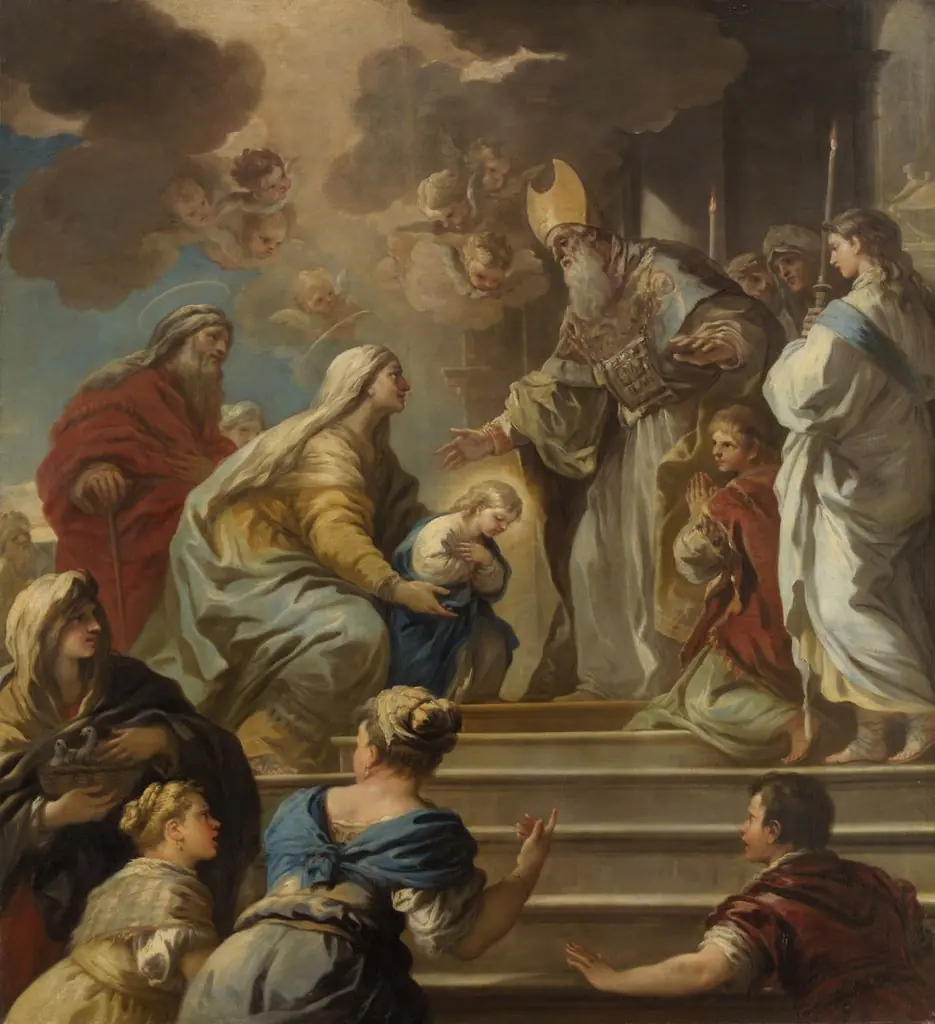 Tempelgang Mariae
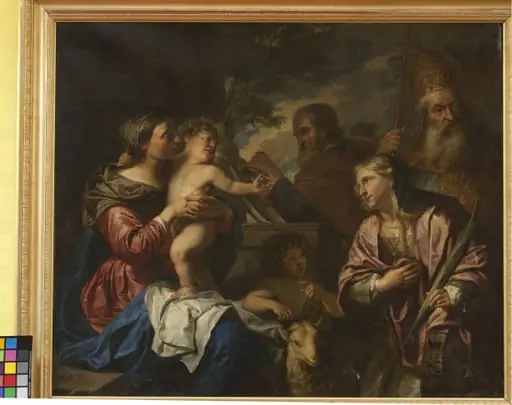 The Mystic Marriage of St Catherine
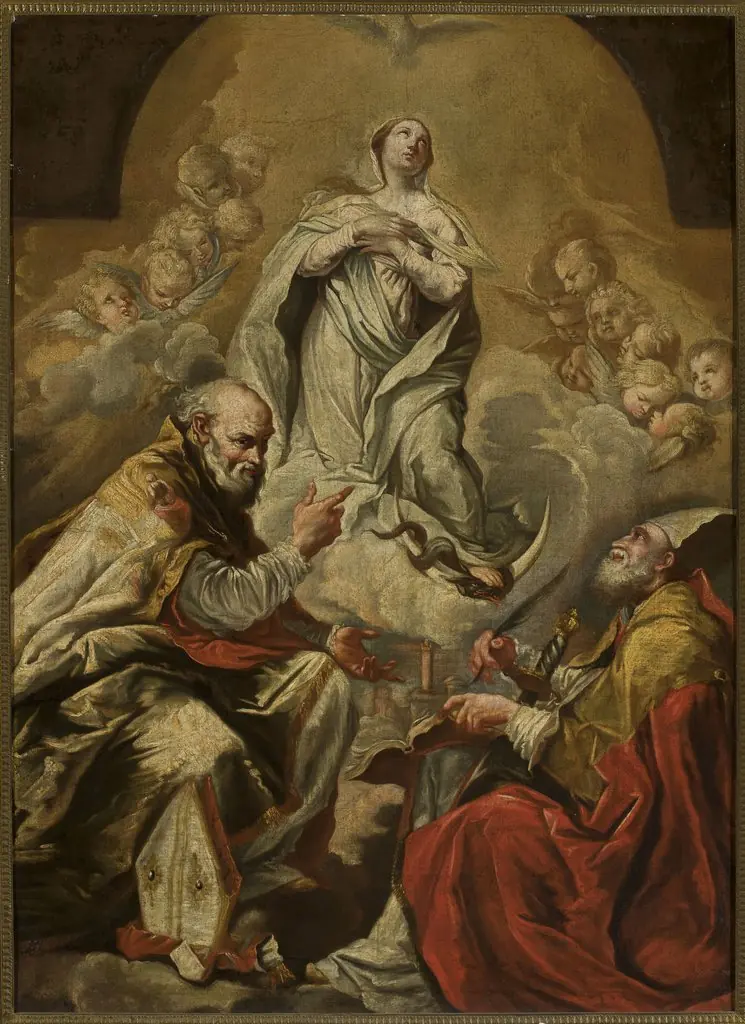 Adoration of Virgin Mary by St. Petronius and Dionysius the Areopagite
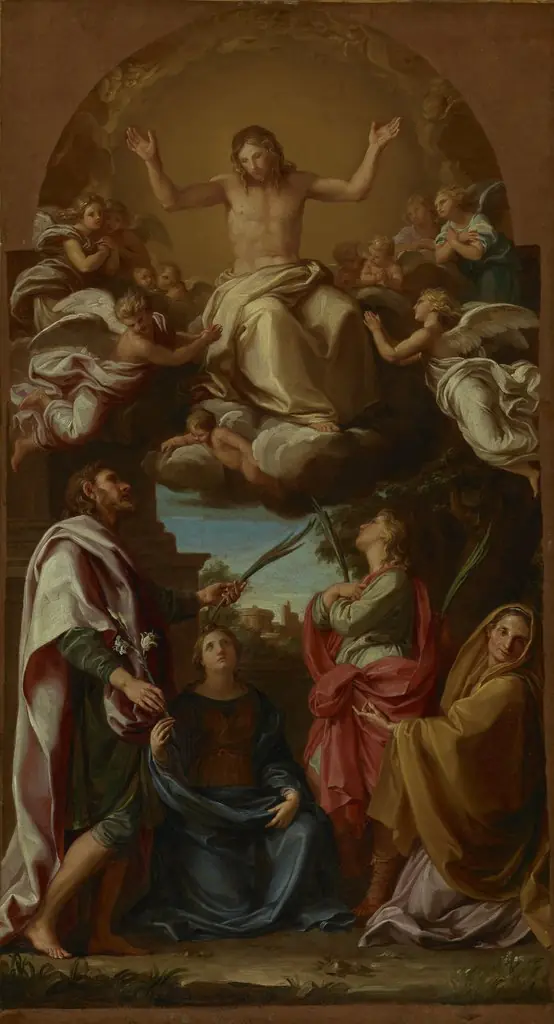 Christ in Glory with Saints Celsus, Julian, Marcionilla and Basilissa
 Saint Nicholas of Bari, John the Baptist and Philip
 Madonna and Child with Saints Francis and Dominic and Angels