Artwork
L'eau (Water)
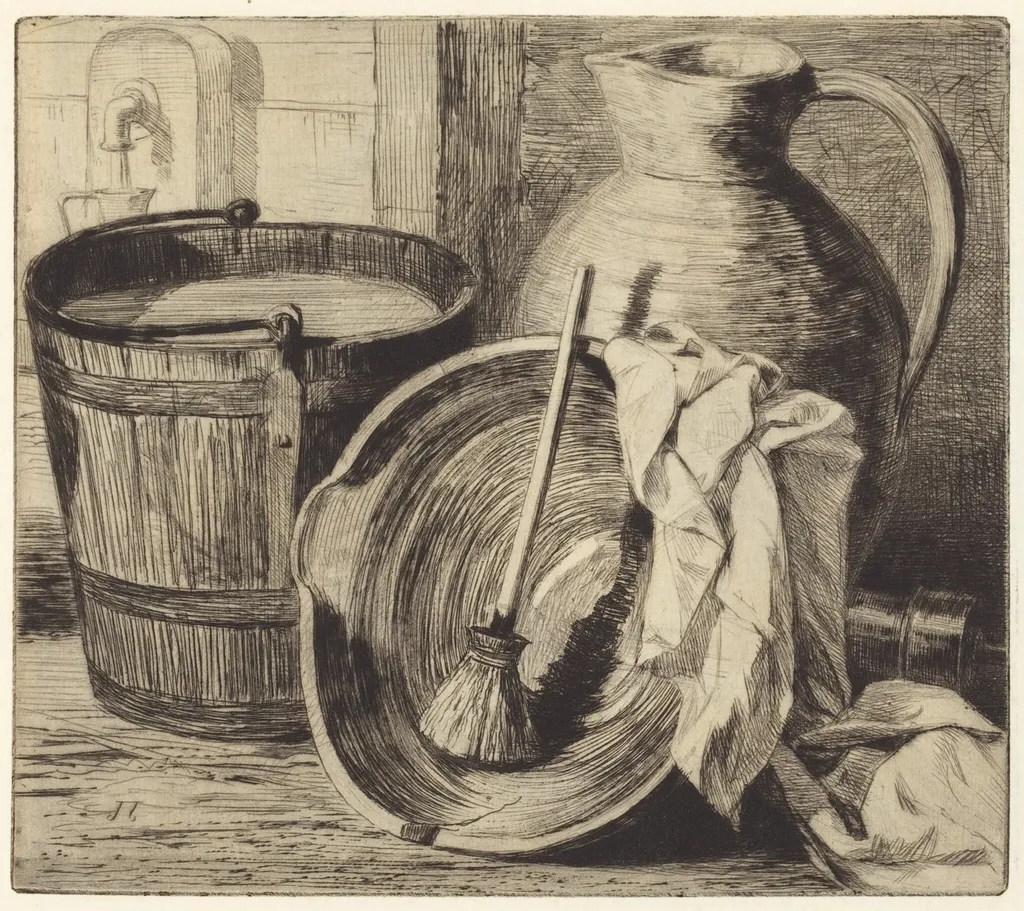
L'eau (Water) is an ink print by the Impressionist artist Jules-Ferdinand Jacquemart. It dates from 1863 and is held in the collection of the National Gallery of Art.
About this work
Overview
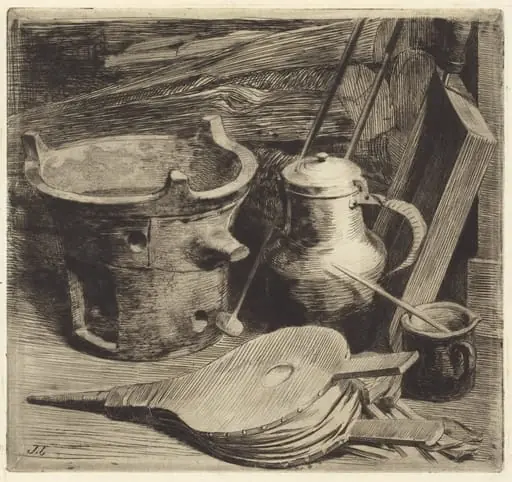
Jules-Ferdinand Jacquemart’s print L’eau, executed in 1863, presents a domestic still‑life rendered through etching and drypoint on cream‑laid paper. The composition arranges a large pitcher, a bucket, and a bowl containing a broom and cloth, set against a wall of vertical wooden planks and a window with a latch in the background.
Subject & Meaning
The work captures ordinary household objects, emphasizing the materiality of everyday life. By gathering utilitarian items—pitcher, bucket, cleaning tools—Jacquemart invites contemplation of the quiet routines that structure domestic spaces, while the inclusion of a window suggests an interplay between interior and exterior realms.
Technique & Style
Jacquemart combines traditional etching with drypoint, allowing for both fine line work and richer, velvety strokes. A tonal range from light to deep gray creates depth, while bold, expressive lines impart a sense of movement. The drypoint burr adds subtle texture, enhancing the tactile quality of the depicted objects.
History & Provenance
Created in the mid‑nineteenth century, L’eau reflects the period’s interest in detailed printmaking. The piece has circulated among collectors of French graphic art, though specific ownership records remain limited, indicating it has primarily been held in private collections and occasional museum exhibitions.
Context
The print emerges from a French artistic climate that valued realism and the study of everyday subjects. Jacquemart’s choice of household items aligns with contemporary genre scenes, while his technical proficiency demonstrates the era’s advancements in print processes, particularly the integration of etching and drypoint.
Legacy
L’eau exemplifies the capacity of print media to render domestic interiors with both precision and expressive vigor. It continues to be referenced in studies of nineteenth‑century French etching, illustrating how ordinary objects can be elevated through skilled handling of line and tone.
Artist & collection