Artwork
The Mysteries of the Passion
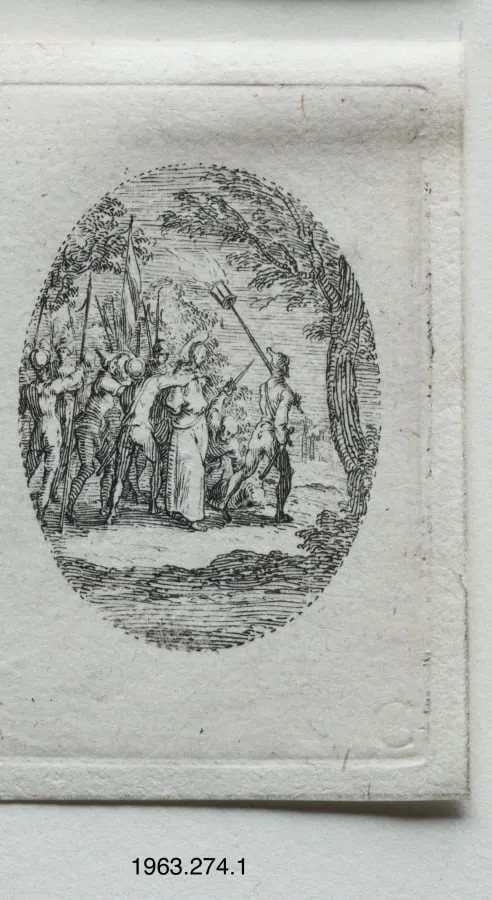
The Mysteries of the Passion is a print by the Baroque artist Jacques Callot. It dates from 1631 and is held in the collection of the Cleveland Museum of Art.
About this work
Overview
Executed in a single tone of ink, the work is an oval-shaped print held in the collection of The Cleveland Museum of Art.
Created in 1631 by Jacques Callot, this black-and-white etching depicts a scene from the Passion of Christ. Executed in a single tone of ink, the work is an oval-shaped print held in the collection of The Cleveland Museum of Art. Its composition emphasizes movement and emotional gravity through stark contrasts and precise linework, characteristic of early 17th-century Northern European printmaking traditions.
Subject & Meaning
The scene portrays a moment from the Passion narrative, likely the carrying of the cross or a related ritual. Figures in varied postures—some holding staffs or banners, others with hands raised or clasped—suggest communal witness to a sacred event. The central figure bearing a cross-like object anchors the composition, reinforcing the religious significance. The setting, a wooded riverside, evokes biblical landscapes without literal detail, inviting contemplation rather than narrative clarity.
Technique & Style
Callot employed fine, incised lines to build form and depth, using chiaroscuro to heighten emotional tension. The absence of color focuses attention on contrast between dense shadows and illuminated areas, a hallmark of his etching technique. The tight, controlled strokes define figures and terrain with precision, while the oval format concentrates the viewer’s gaze, enhancing the scene’s intensity and inward focus.
History & Provenance
The print was produced during Callot’s mature period, when he was renowned for his narrative prints and religious subjects. It entered the Cleveland Museum of Art’s collection through documented acquisitions in the 20th century, likely from a private European collection. Its survival in good condition reflects careful preservation, typical of prints valued for their artistic rather than monetary worth during the early modern era.
Context
Made during the Thirty Years’ War, the print reflects a cultural moment in which religious imagery served both spiritual and moral functions. Callot’s work responded to Counter-Reformation demands for emotionally resonant devotional art. His prints circulated widely among educated patrons, offering accessible meditations on sacred themes amid widespread social upheaval and religious conflict in Europe.
Legacy
Callot’s use of chiaroscuro and narrative compression in this print influenced later generations of printmakers, particularly in France and the Netherlands. Though not widely exhibited today, it remains a key example of how etching could convey complex theological ideas through minimal means. Its restrained palette and emotional gravity continue to inform studies of early modern visual piety.
Artist & collection

Artist
Jacques Callot was a baroque printmaker and draftsman from the Duchy of Lorraine.

 Holy Family at supper
 Restoration of the Aqueduct at Pisa
 Restoration of the Aqueduct at Pisa
 Square in Paris with Many Figures
 Square in Paris with Many Figures
 Horsemen Attacked by Robbers
 HOW WILL A COVERED PART BE CORRECTED?HOW WIKA A COVERED HEART DEED CORRECTED?
![Christ Walking on the Water [second plate], by Jacques Callot](https://artifactworldgallery.com/img/jacques-callot--christ-walking-on-the-water-second-plate--2069f3bfe4cb2126-w320.webp) Christ Walking on the Water [second plate]
Christ Walking on the Water [second plate]
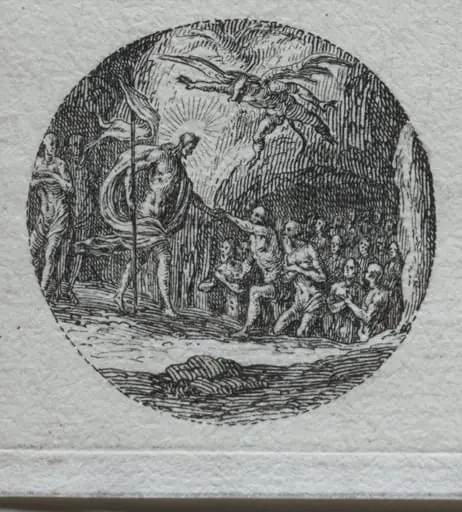 The Mysteries of the Passion: The Descent into Limbo
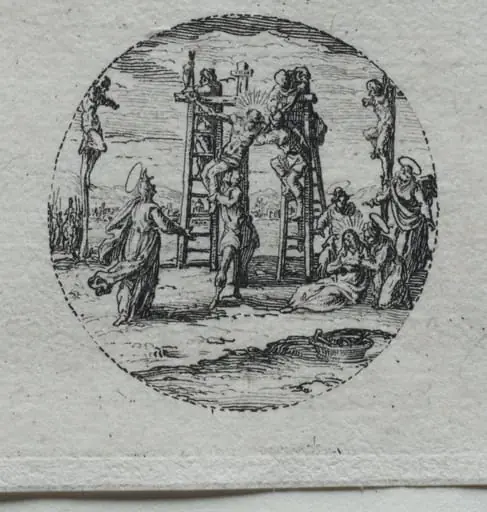 The Mysteries of the Passion: The Crucifixion
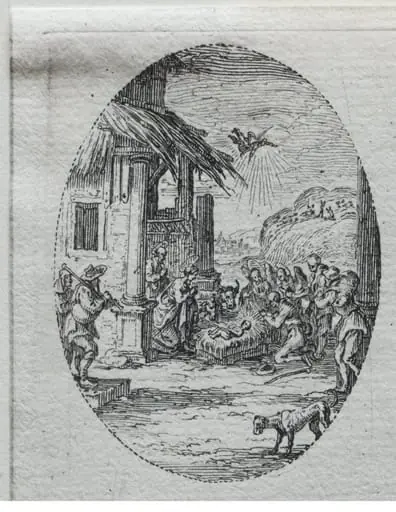 The Mysteries of the Passion: The Adoration of the Shepherds
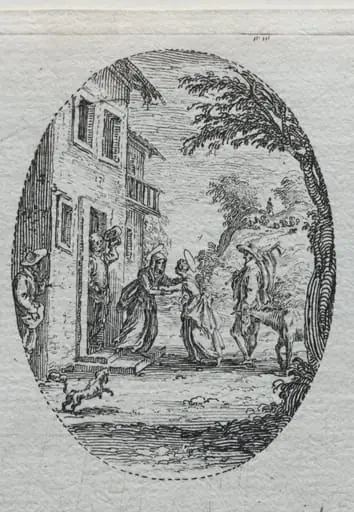 The Mysteries of the Passion: The Visitation
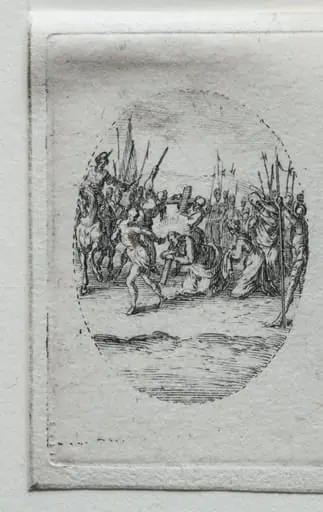 The Mysteries of the Passion: The Carrying of the Cross
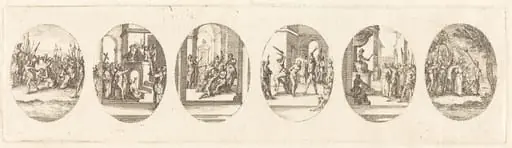 Mysteries of the Passion
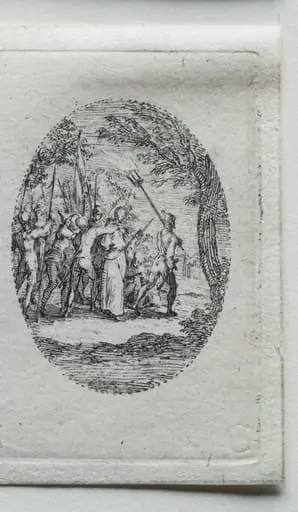 The Mysteries of the Passion: Christ Taken Captive
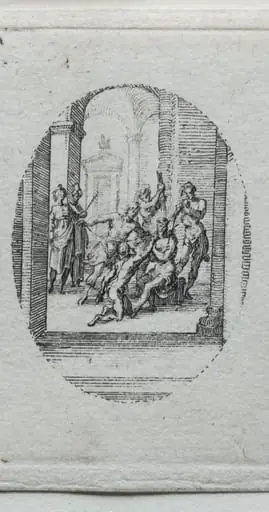 The Mysteries of the Passion: Christ Crowned with Thorns
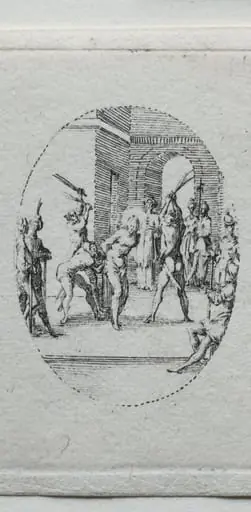 The Mysteries of the Passion: The Flagellation
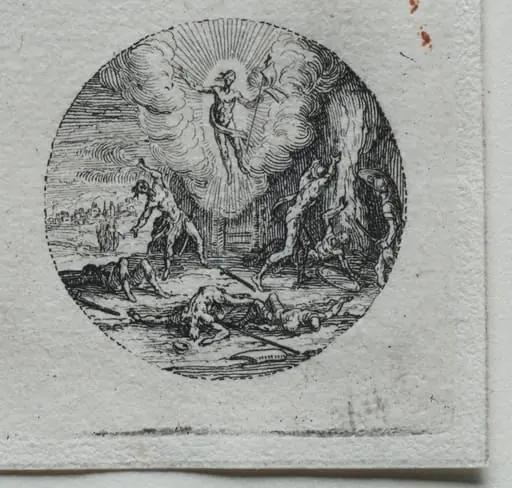 The Mysteries of the Passion: The Transfiguration
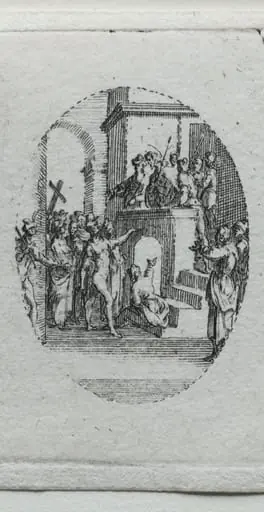 The Mysteries of the Passion: Christ Presented to the People
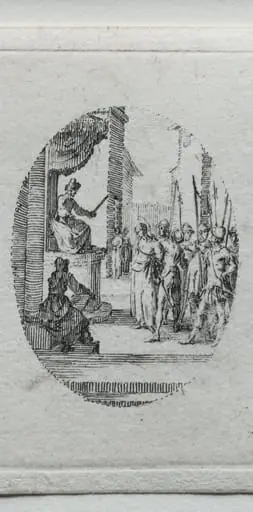 The Mysteries of the Passion: Christ before Pilate