Artwork
Găină
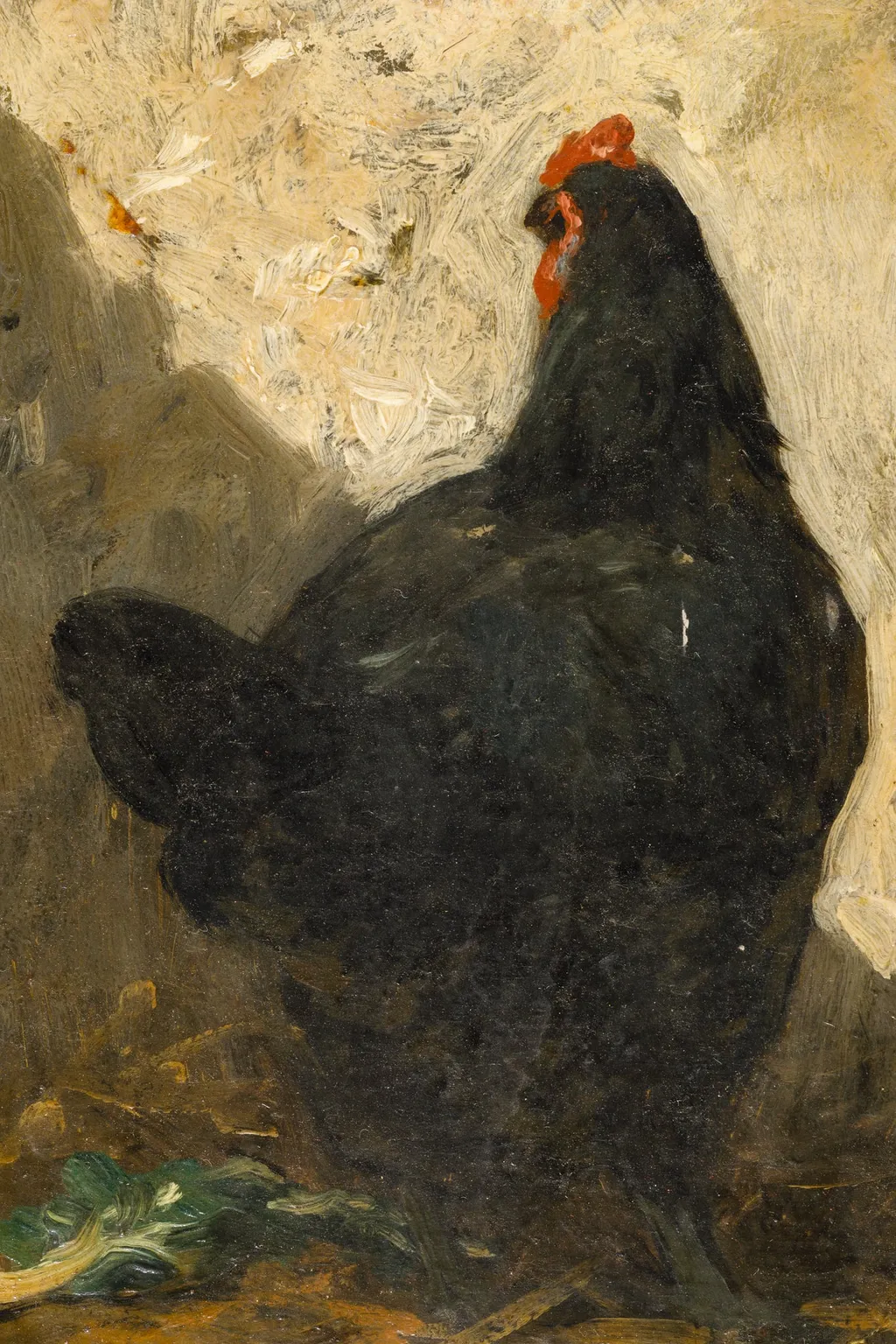
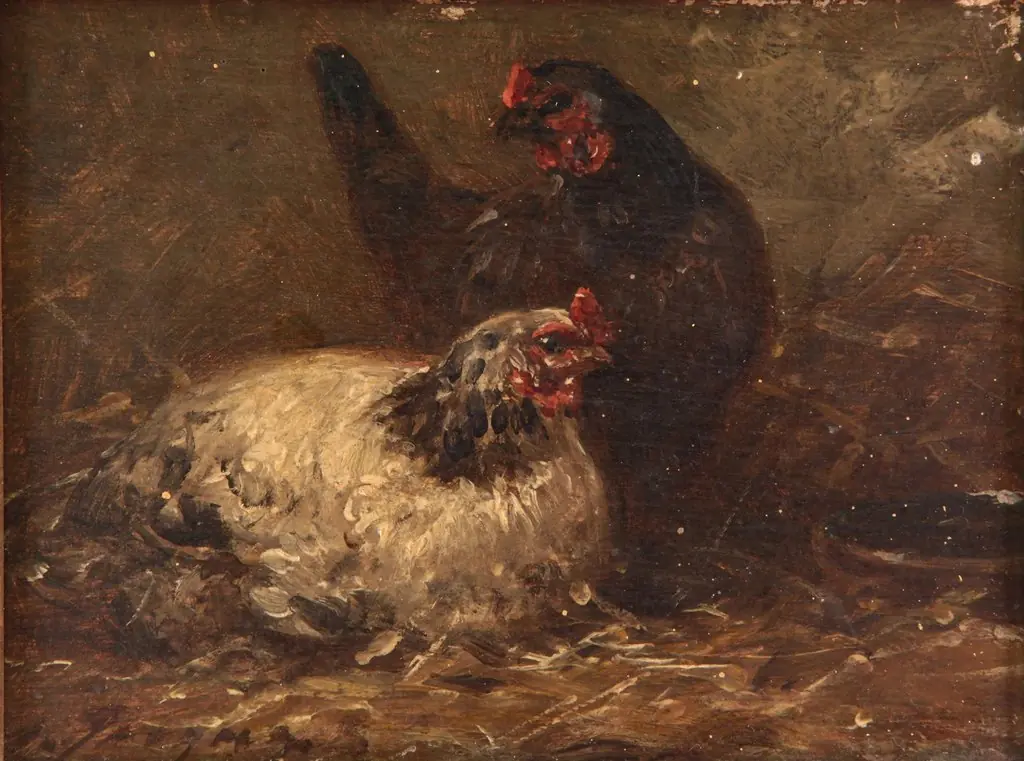
Găină is an unspecified painting by Charles Jacques. It dates from 1850 and is held in the collection of the National Museum of Art of Romania.
About this work
Overview
The work’s modest dimensions and focus on a single animal reflect a genre tradition of everyday subjects common in mid‑nineteenth‑century European painting.
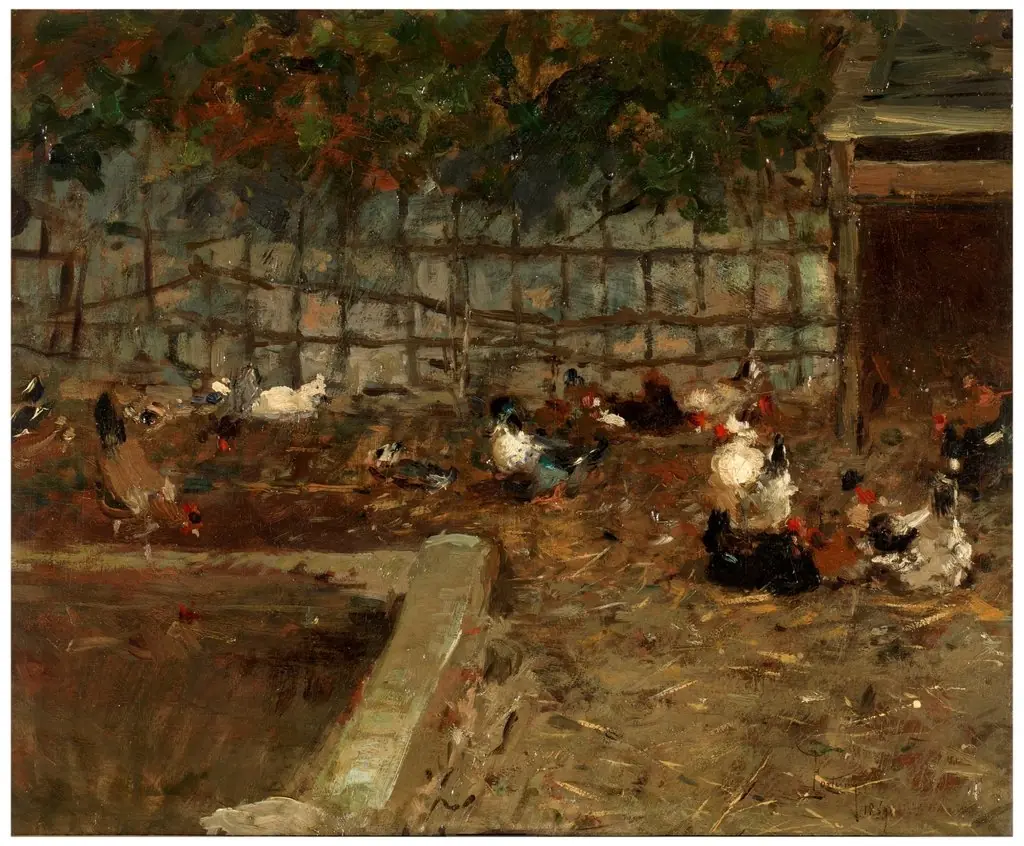
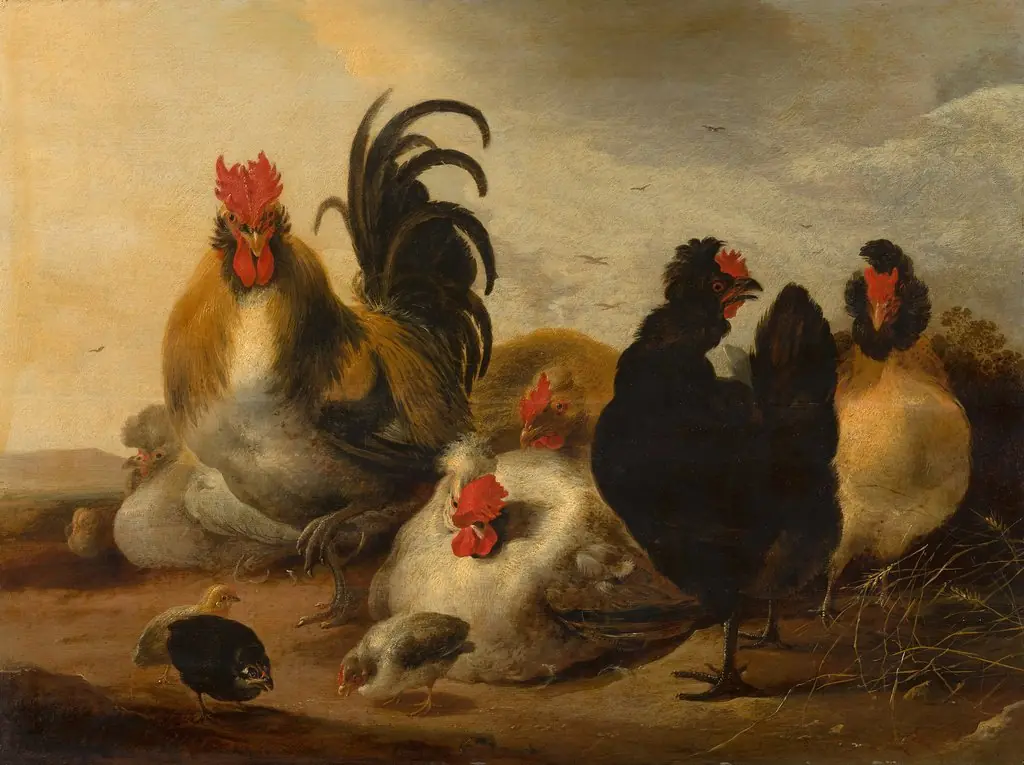
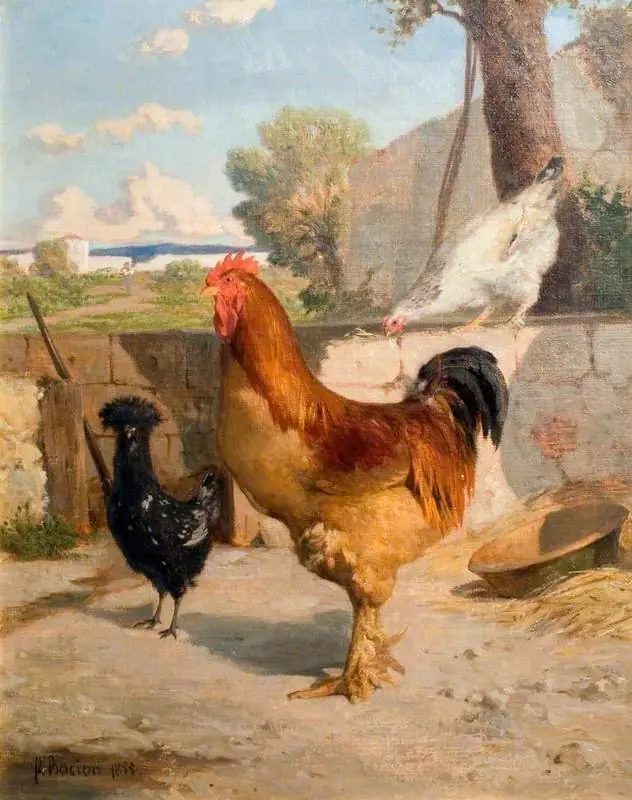
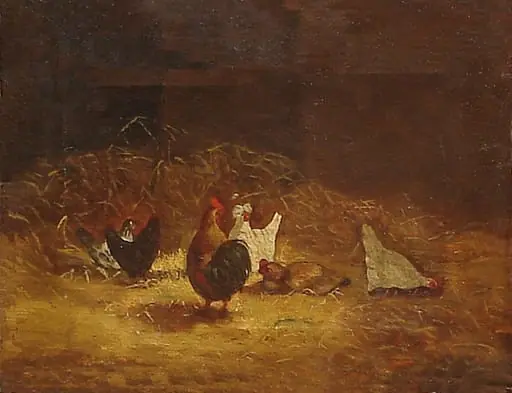
Găină, executed around 1850 by Charles Jacques, presents a solitary black chicken rendered in oil on canvas. The composition isolates the bird against an indistinct backdrop, allowing its vivid red comb and wattles to dominate the visual field. The work’s modest dimensions and focus on a single animal reflect a genre tradition of everyday subjects common in mid‑nineteenth‑century European painting.
Subject & Meaning
The painting depicts a domestic fowl, its dark plumage contrasted by the bright scarlet of its head ornaments. While no explicit narrative accompanies the image, the emphasis on texture and form suggests an interest in the materiality of the animal, perhaps alluding to the humble yet essential role of poultry in rural life.
Technique & Style
Jacques employs a heavily impastoed surface, applying thick, irregular brushstrokes especially across the bird’s feathers and the surrounding ground. Short, choppy strokes generate a tactile quality that gives the chicken a near‑sculptural presence. The palette is restrained, dominated by earthy tones with occasional yellow‑green accents near the lower edge, while the background remains loosely rendered to keep the subject in sharp relief.
History & Provenance
Created circa 1850, Găină is attributed to Charles Jacques, a lesser‑known painter active in the mid‑nineteenth century. The work’s provenance prior to its recent documentation is not recorded, and no exhibition history is available, indicating it may have remained in private hands or regional collections for much of its existence.
Own this work as a print
Artist & collection
Artist
Charles Jacques painted 19th-century life in the countryside, often focusing on animals and rural scenes.