Artwork
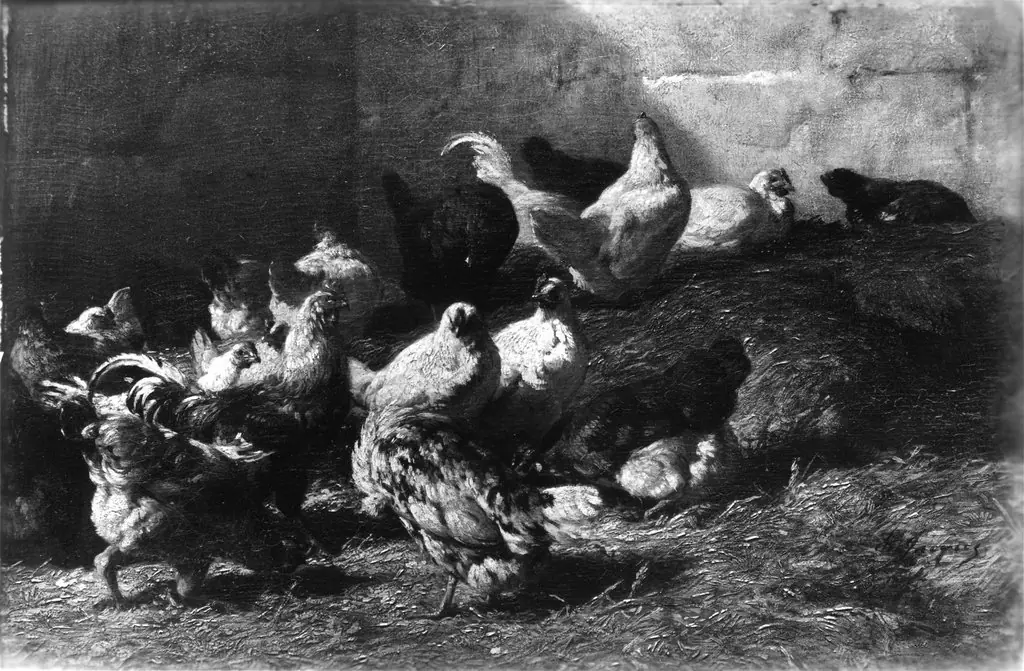
The henhouse
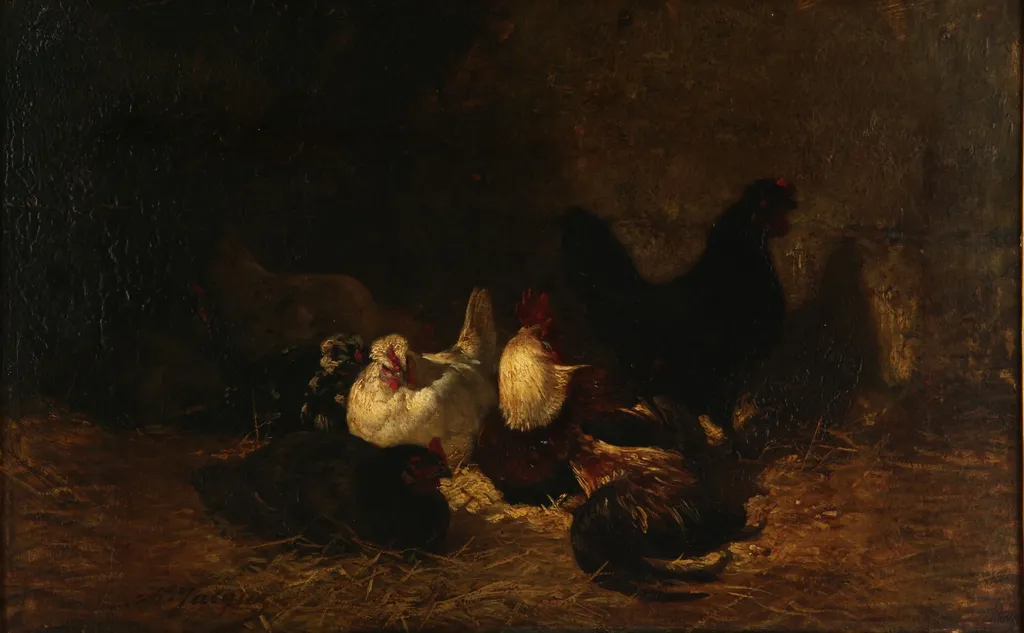
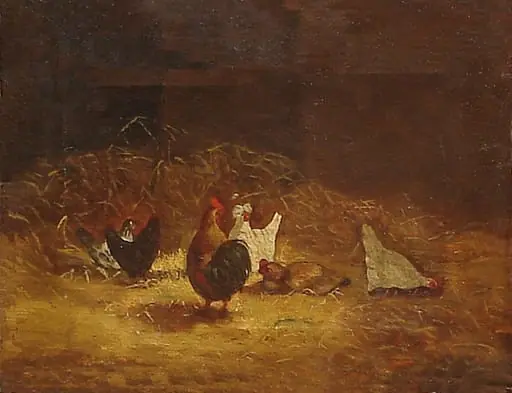
The henhouse is an unspecified painting by the Barbizon school artist Charles Jacque. It dates from 1850 and is held in the collection of the National Museum of Fine Arts, Argentina.
About this work
Overview
Though trained as an engraver during his military service, Jacque turned to painting to capture the quiet rhythms of farmsteads.
Charles-Émile Jacque painted *The Henhouse* circa 1850, aligning with the Barbizon School’s emphasis on unidealized rural life. Though trained as an engraver during his military service, Jacque turned to painting to capture the quiet rhythms of farmsteads. This work exemplifies his shift toward intimate depictions of domestic animals, rendered without theatricality or sentimentality, focusing instead on the ordinary textures of rural existence.
Subject & Meaning
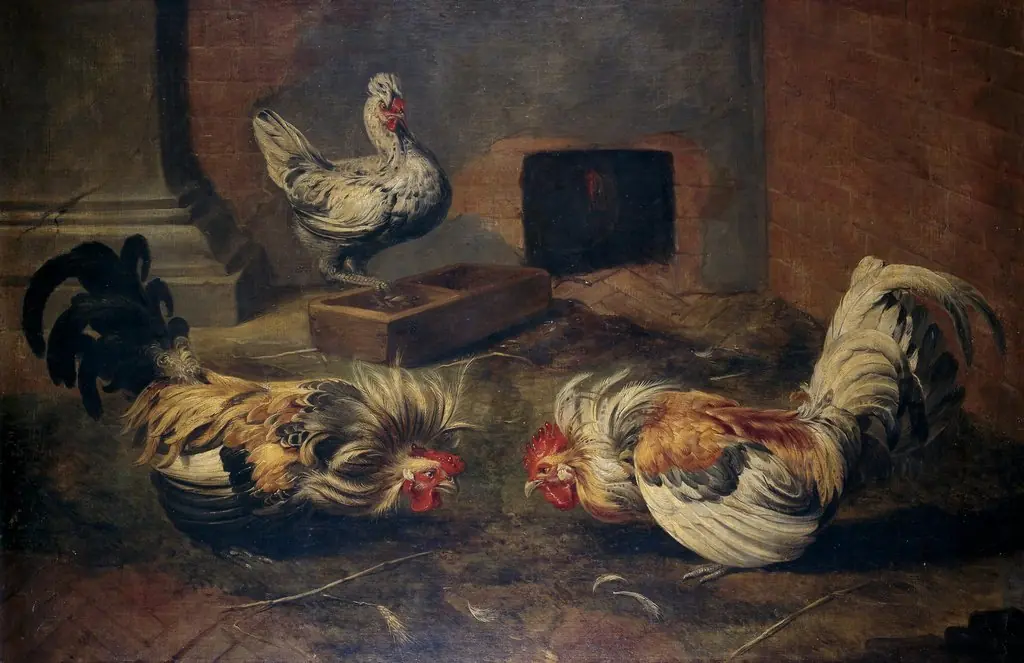
The painting presents a group of chickens in a dim interior, their postures varied—some alert, others resting—suggesting the unremarkable rhythm of daily life. There is no human presence; the animals themselves are the sole subjects, elevated through quiet observation. The scene conveys dignity in the mundane, reflecting the Barbizon ethos of finding significance in the overlooked details of agricultural existence.
Technique & Style
Jacque employed muted earth tones and soft contrasts to evoke the dim, enclosed space of the henhouse. Brushwork is restrained, emphasizing the texture of feathers and weathered wood without overt detail. The background dissolves into shadow, directing focus to the foreground flock. This tonal restraint and emphasis on atmosphere reflect the Barbizon preference for natural light and unembellished realism over academic polish.
History & Provenance
Created in the early 1850s, the painting entered the collection of the National Museum of Fine Arts in Buenos Aires, where it remains today. Its journey from France to Argentina reflects broader 19th-century patterns of art acquisition and cultural exchange. While Jacque’s engravings were widely circulated, his paintings like this one were less commonly reproduced, making its preservation in South America notable.
Context
In mid-19th-century France, artists increasingly turned from historical and mythological subjects to the lives of peasants and animals. Jacque, alongside Millet and others, helped redefine painting as a medium for observing rural labor and animal husbandry. *The Henhouse* fits within this movement, offering a quiet counterpoint to urbanizing modernity through its focus on the enduring rhythms of farm life.
Legacy
Though less celebrated than his contemporaries, Jacque’s focus on domestic animals influenced later realist and naturalist painters. *The Henhouse* stands as a quiet testament to his ability to find stillness and presence in ordinary scenes. Its presence in Buenos Aires underscores the international reach of Barbizon aesthetics, even as it remains a modest, unassuming work within his broader oeuvre.
Own this work as a print
Artist & collection
Artist
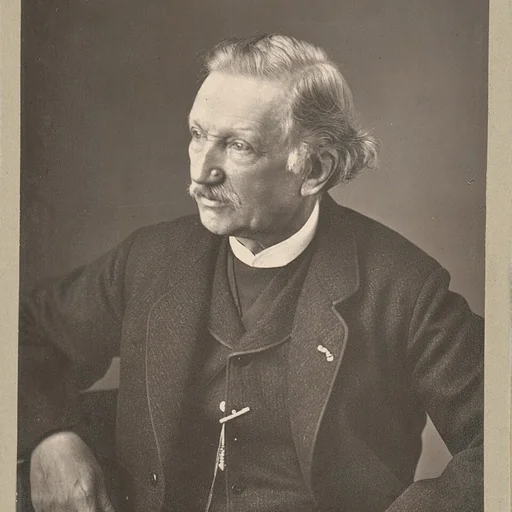
Charles-Émile Jacque (23 May 1813 – 7 May 1894) was a French painter of Pastoralism and engraver who was, with Jean-François Millet, part of the Barbizon School. He first learned to engrave maps when he spent seven years in the French Army.

Museum
National Museum of Fine Arts, Argentina
Continue through works from the same source collection.