Artwork
Găini
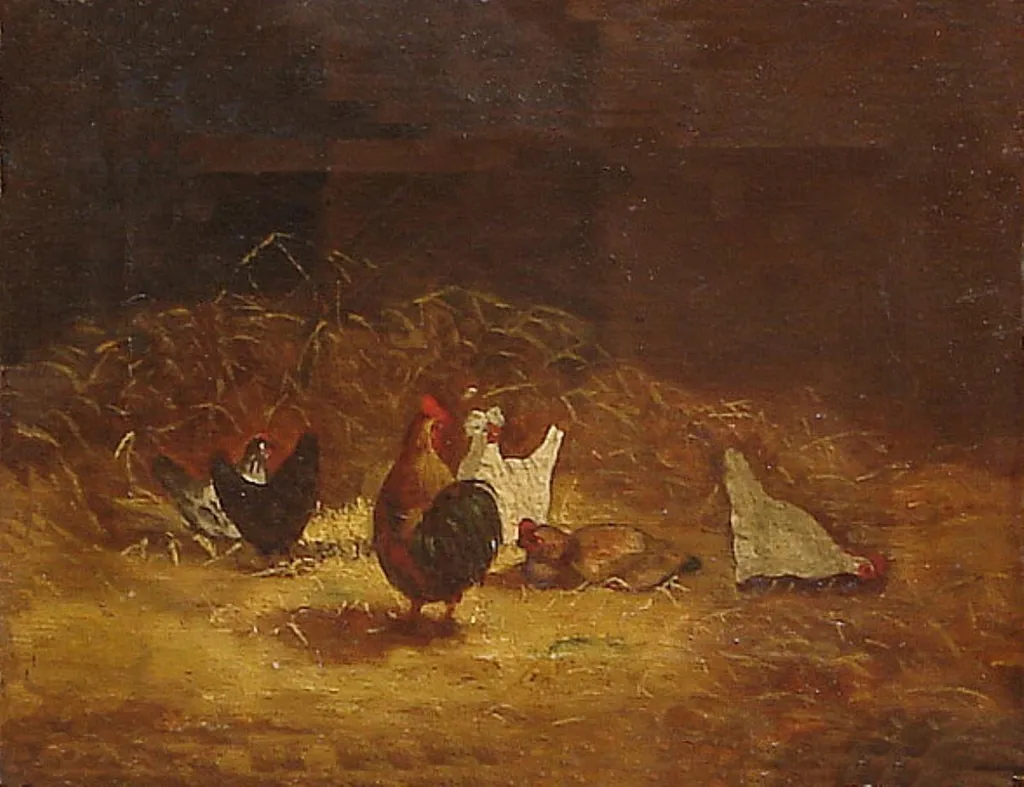
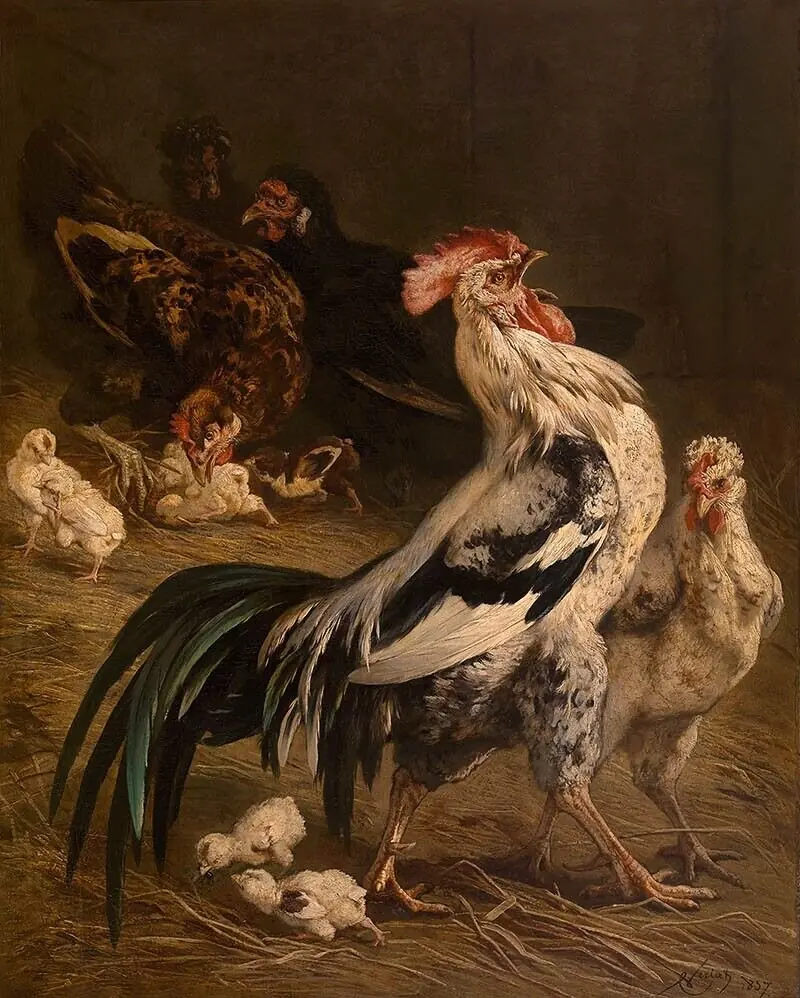
Găini is an unspecified painting by Gheorghe Tattarescu. It dates from 1850 and is held in the collection of the Bucharest Municipality Museum.
About this work
Overview
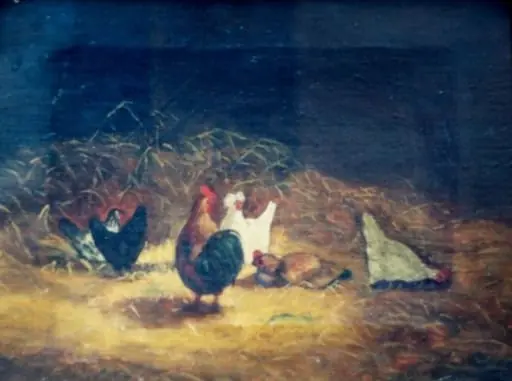
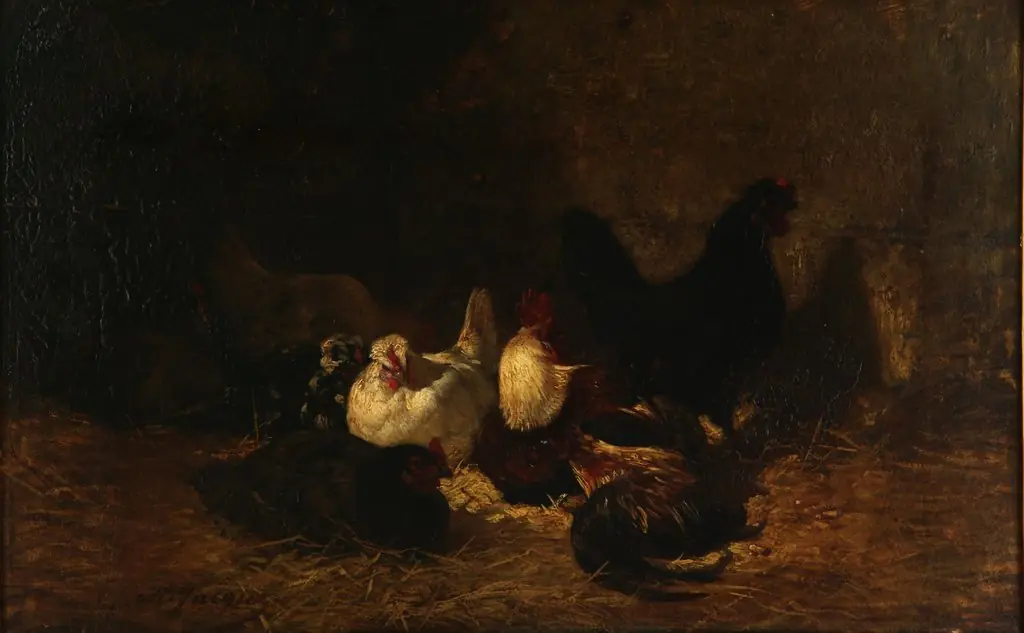
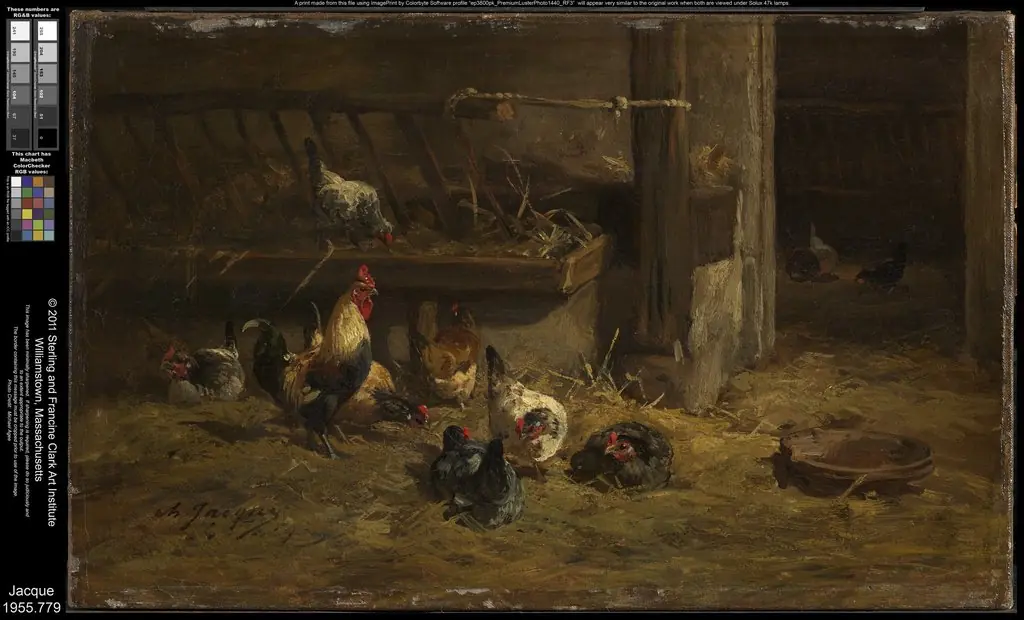
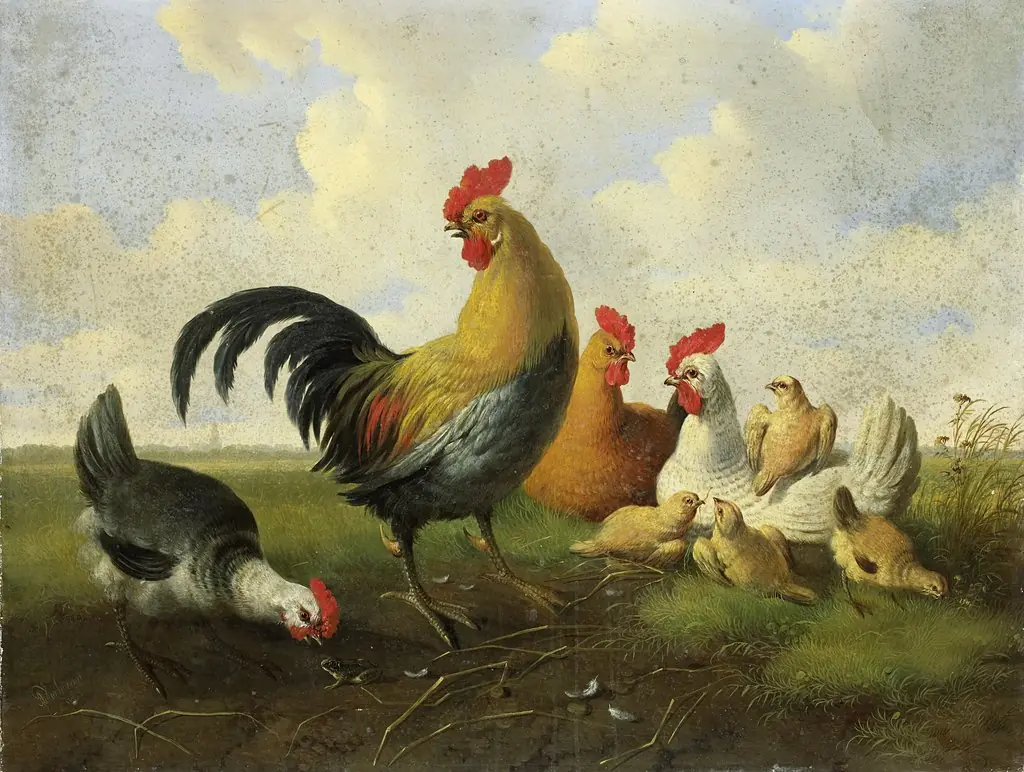
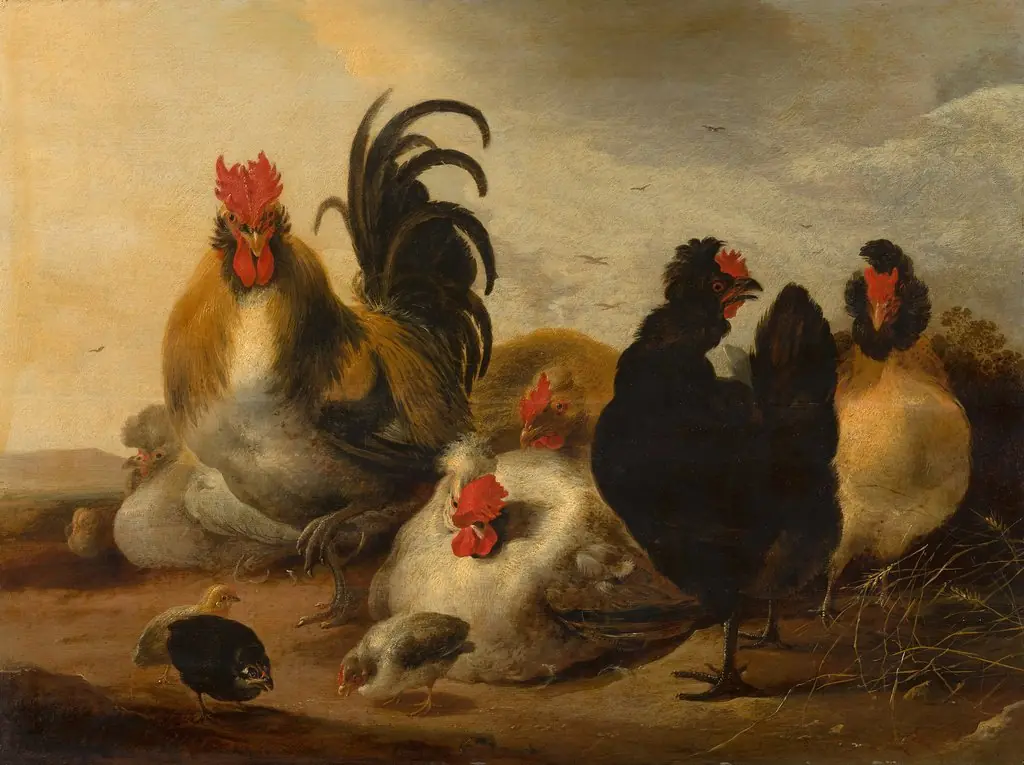
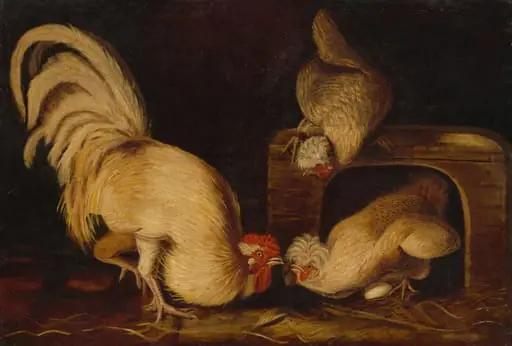
Găini, painted around 1850 by Gheorghe Tattarescu, is a quiet study of domestic life in rural Romania. The work depicts a group of chickens within a modest wooden coop, rendered with attention to naturalistic detail. It resides in the Museum of Ethnography, where it serves as an example of 19th-century Romanian realism, capturing everyday scenes without idealization.
Subject & Meaning
The painting presents chickens in a state of quiet routine—pecking, resting, standing alert—offering no narrative or symbolism beyond the immediacy of their presence. The scene reflects the ordinary rhythms of peasant life, where animals were integral to survival. Tattarescu’s focus on the mundane suggests an appreciation for the dignity of humble existence.
Technique & Style
Tattarescu employs subtle chiaroscuro to model the forms of the birds and the coop’s wooden surfaces. Warm, directional light filters through unseen openings, creating soft contrasts that define texture and depth. Feathers and straw are rendered with careful brushwork, emphasizing tactile realism over dramatic effect, aligning the work with emerging naturalist tendencies in Romanian art.
History & Provenance
Created in the mid-19th century, Găini entered the collection of the Museum of Ethnography shortly after its completion. Its preservation there reflects its value as a document of rural material culture. Unlike Tattarescu’s larger historical or religious works, this piece remained in regional circulation, likely appreciated for its authenticity rather than its scale.
Context
In the 1850s, Romanian artists began turning from academic traditions toward local subjects, influenced by European realism and national identity movements. Găini fits within this shift, portraying rural life with observational precision. It stands apart from idealized landscapes or mythological scenes common in official art, offering instead an unembellished glimpse into domestic space.
Legacy
Though not widely exhibited beyond ethnographic circles, Găini influenced later Romanian painters interested in everyday subjects. Its quiet realism helped legitimize domestic and agricultural scenes as worthy of artistic attention. The work remains a quiet reference point in discussions of 19th-century Romanian visual culture, valued for its restraint and sincerity.
Artist & collection
Artist