Artwork
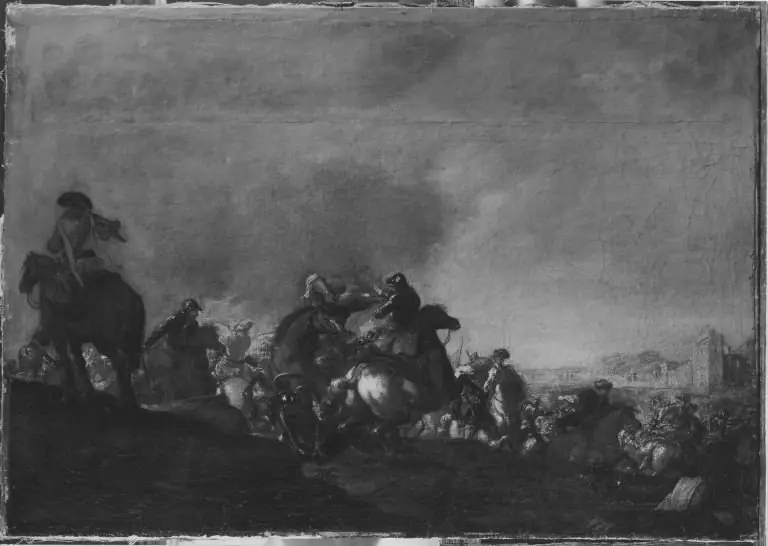
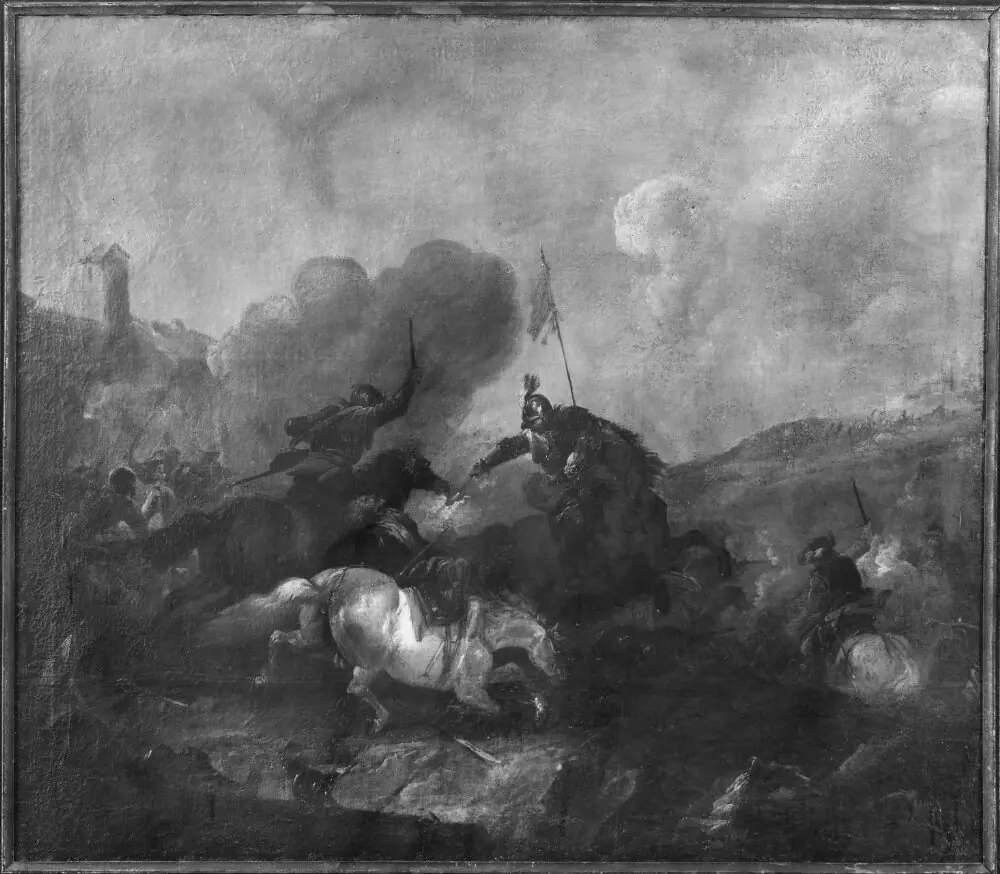
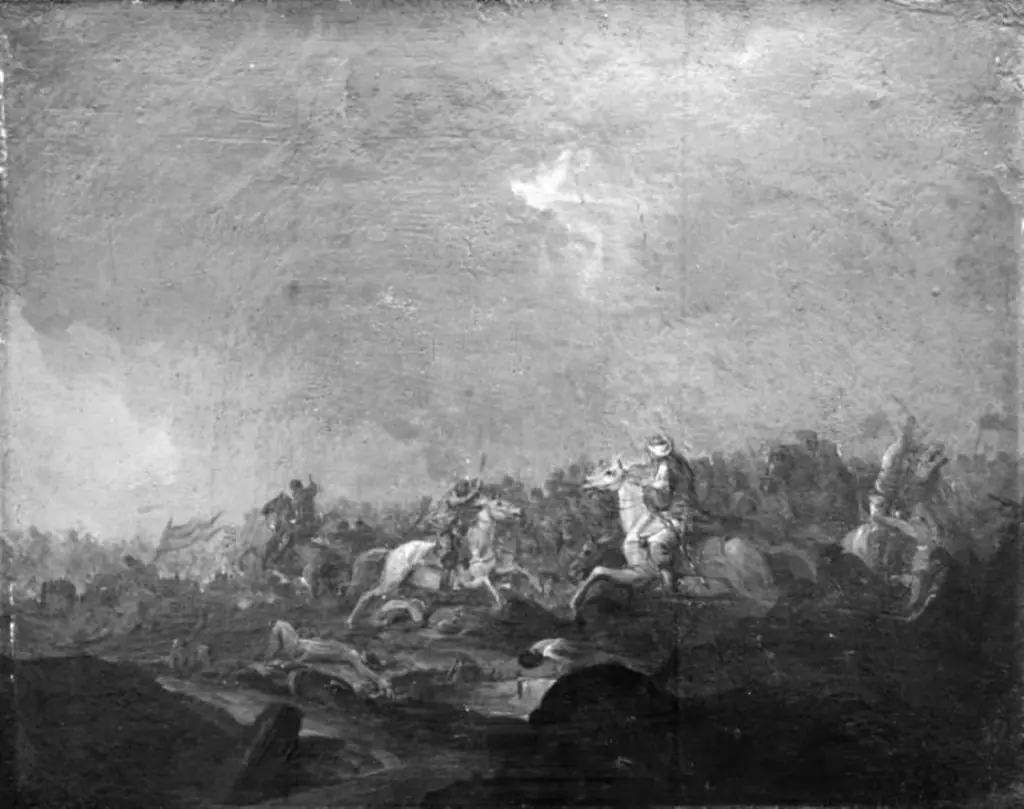
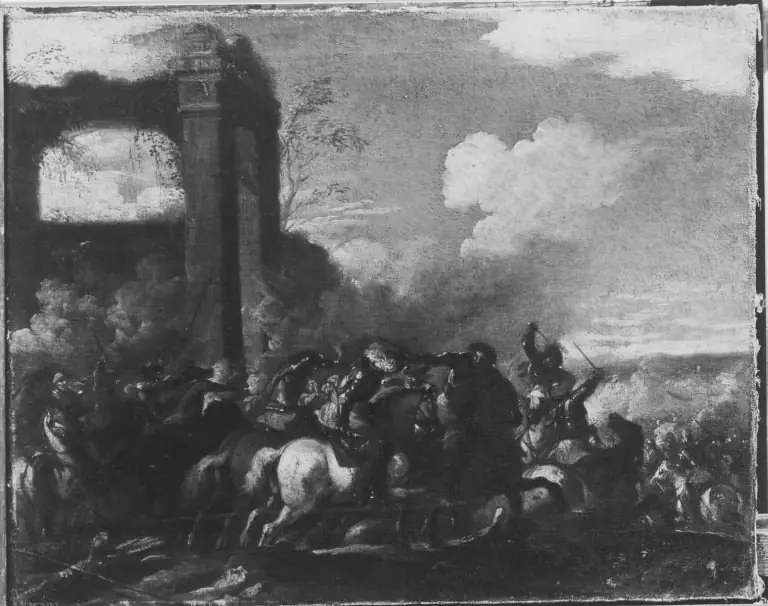
Reitergefecht
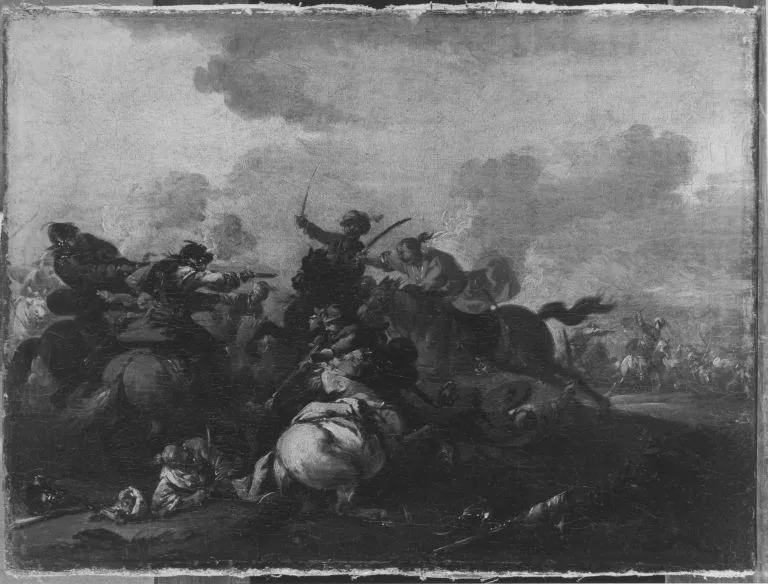
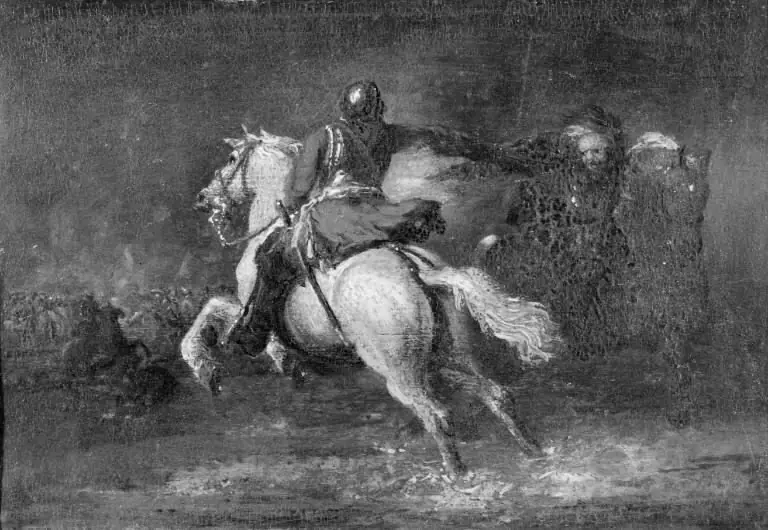
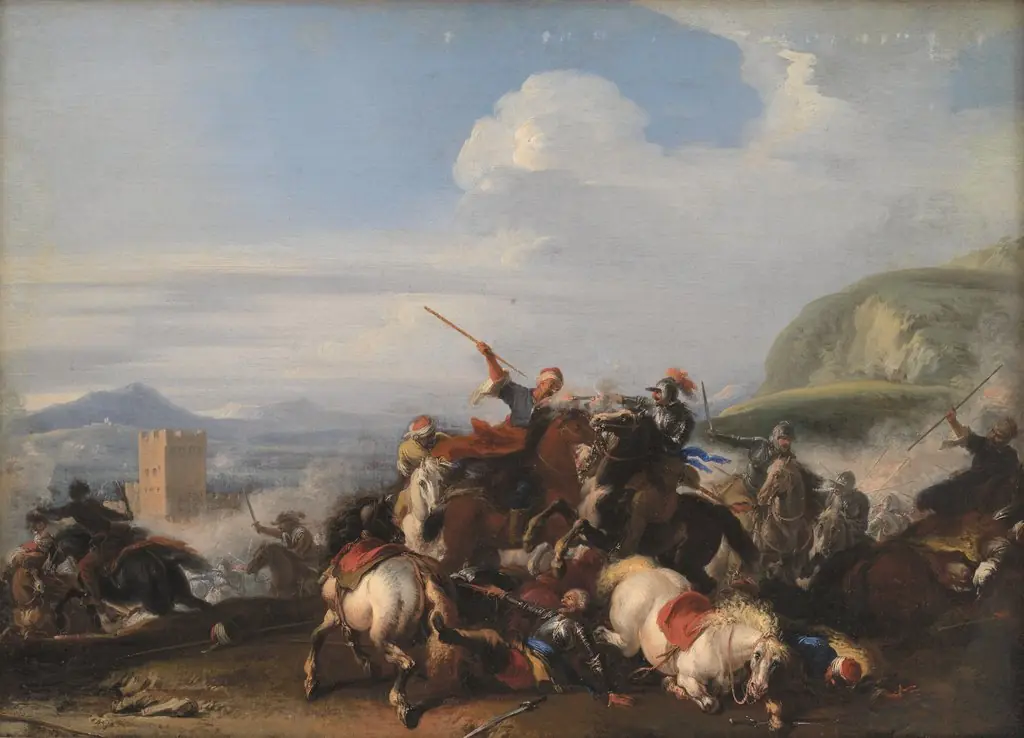
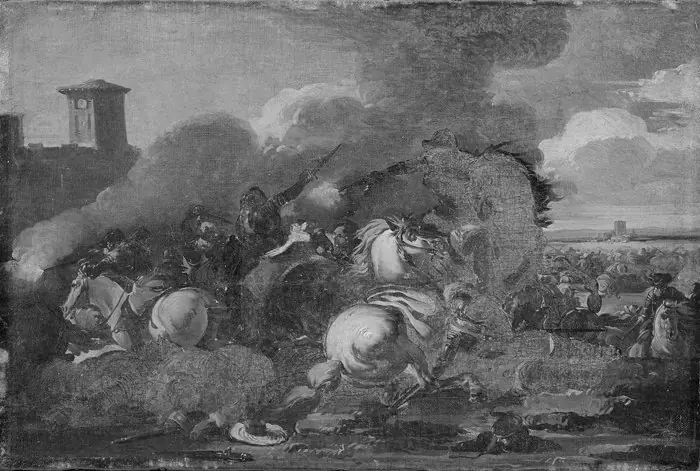
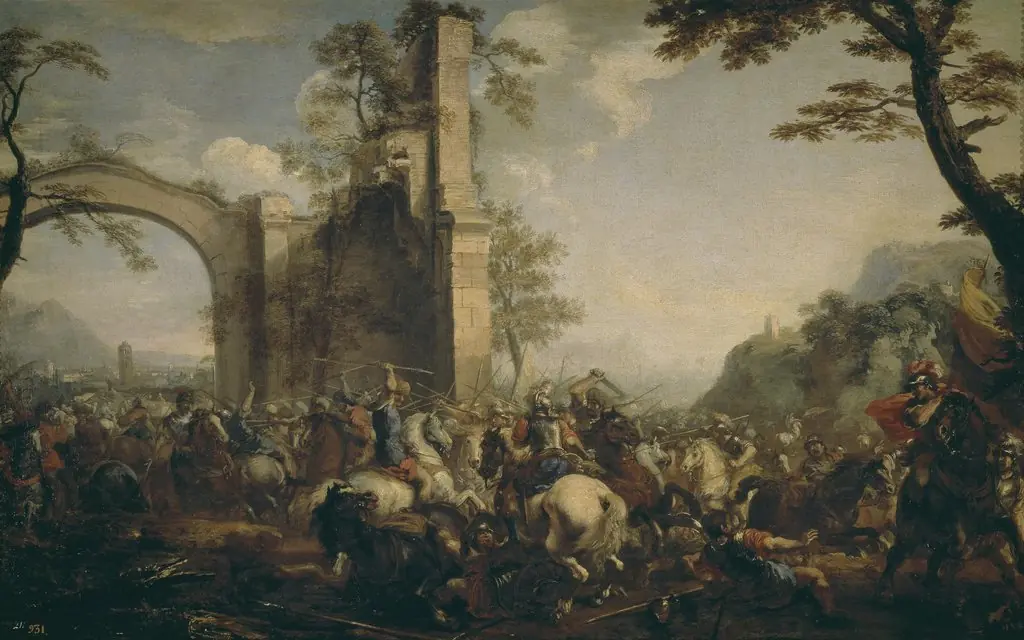
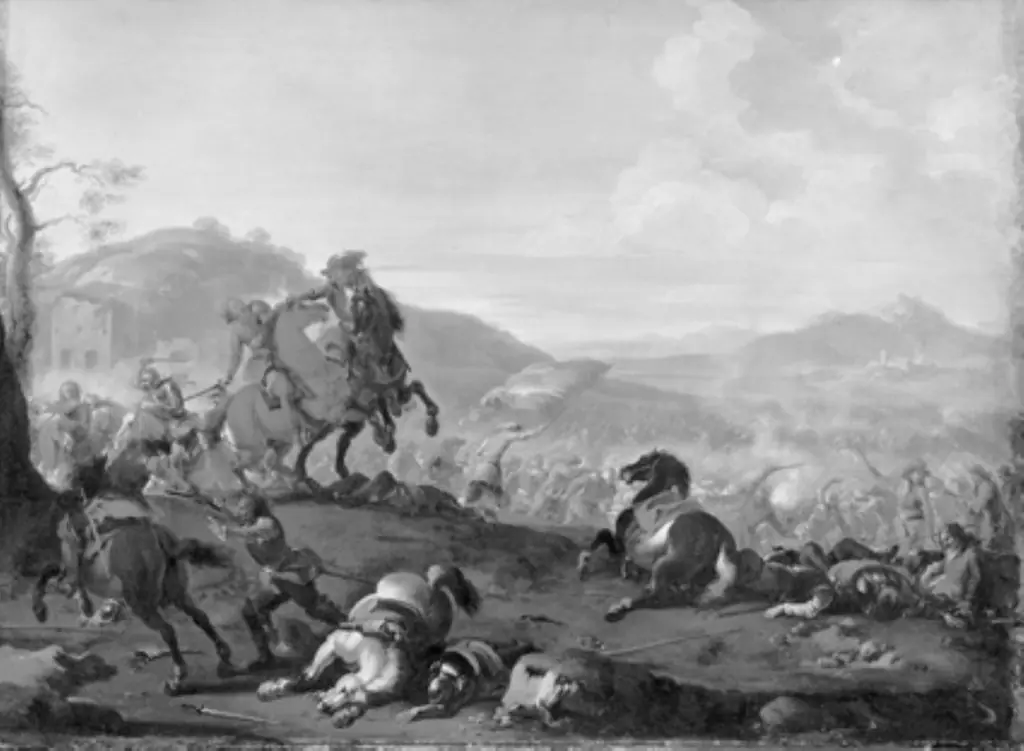
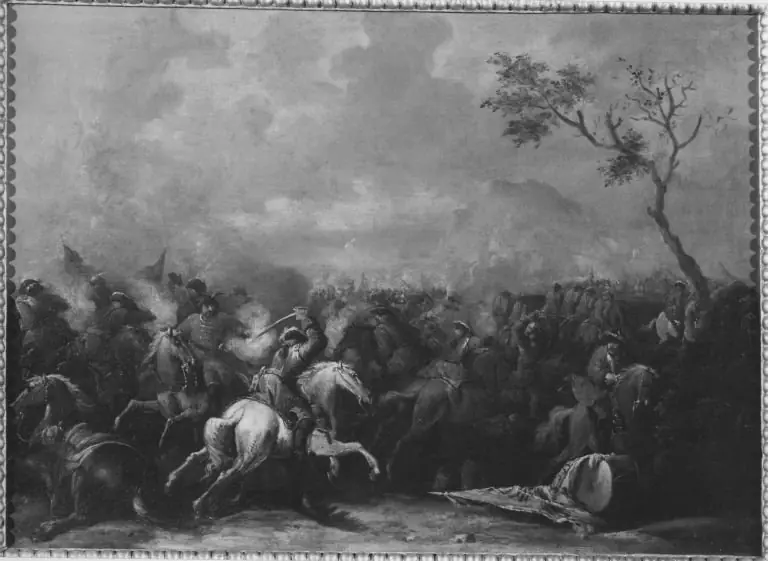
Reitergefecht is an unspecified painting by the French Classical Baroque artist Jacques Courtois. It dates from 1648 and is held in the collection of the Bavarian State Painting Collections.
About this work
Overview
It resides today in the Alte Pinakothek in Munich, part of a broader body of work that includes religious and portrait subjects.
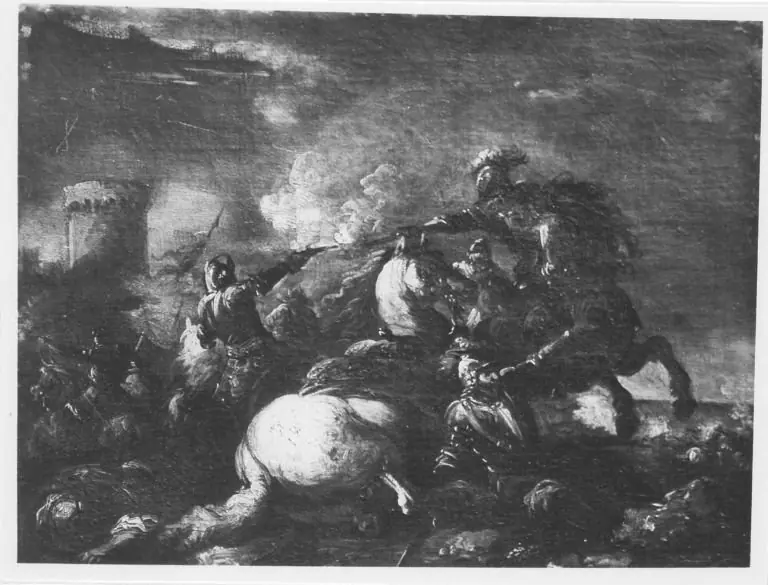
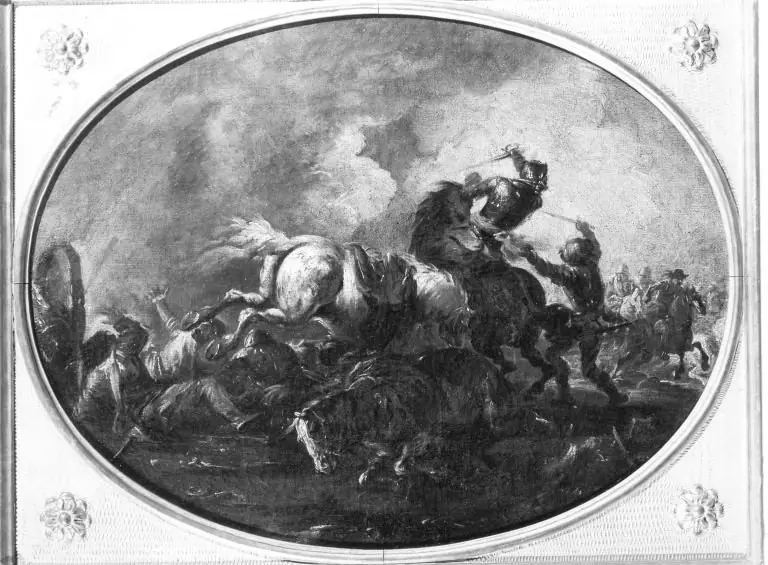
Painted in 1648 by Jacques Courtois, known as il Borgognone, Reitergefecht is a dynamic depiction of a cavalry engagement. Courtois, born in Franche-Comté and active in Italy, gained recognition for his detailed battle scenes. This work exemplifies his mastery in capturing movement and chaos on horseback. It resides today in the Alte Pinakothek in Munich, part of a broader body of work that includes religious and portrait subjects.
Subject & Meaning
The painting portrays a moment of violent conflict between mounted soldiers, likely drawn from contemporary European warfare. Rather than glorifying victory, it emphasizes the disarray and intensity of combat. The lack of clear allegory or heroism suggests a focus on the raw experience of battle, reflecting a shift toward observational realism in 17th-century military imagery.
Technique & Style
Courtois employed a tightly composed, energetic brushwork to convey motion and spatial depth. Figures are rendered with precise anatomical detail, while the landscape recedes in muted tones to heighten the drama of the foreground skirmish. His style blends Italian Baroque dynamism with Northern European attention to texture and armor, creating a hybrid aesthetic characteristic of his Roman milieu.
History & Provenance
Reitergefecht was completed during Courtois’s mature period in Rome, where he received commissions from aristocratic patrons. The painting entered the Bavarian royal collection in the 18th century and was later transferred to the Alte Pinakothek. Its preservation reflects its status as a significant example of Baroque battle painting, though it was never widely reproduced or publicly exhibited until the 19th century.
Context
Painted during the final years of the Thirty Years’ War, the work responds to a European appetite for images of military conflict. While many contemporaries idealized war, Courtois focused on its visceral reality. His role as a Jesuit lay brother, beginning in the 1650s, underscores the tension between his secular subject matter and personal spiritual commitments.
Legacy
Courtois influenced later battle painters through his emphasis on naturalistic detail and compositional rhythm. Though overshadowed by grander historical narratives, his work remains a key reference for understanding how 17th-century artists translated battlefield chaos into visual form. His dual identity as artist and religious figure adds complexity to interpretations of his oeuvre.
Artist & collection
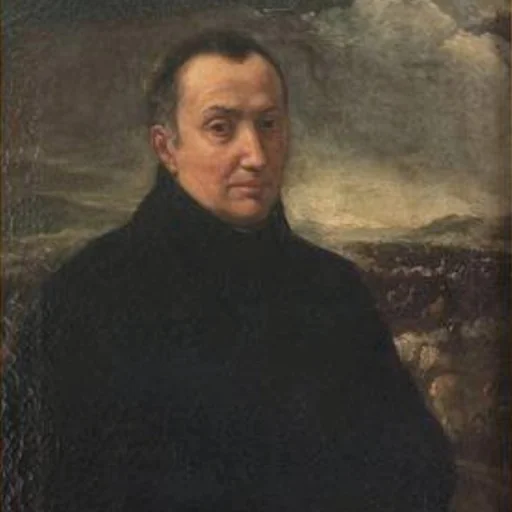
Artist
Jacques Courtois (French pronunciation: ) or Giacomo Cortese, called il Borgognone or le Bourguignon (12 ?December 1621 – 14 November 1676) was a Franche-Comtois–Italian painter, draughtsman, and etcher.