Artwork
Suite of Vases: Plate 19
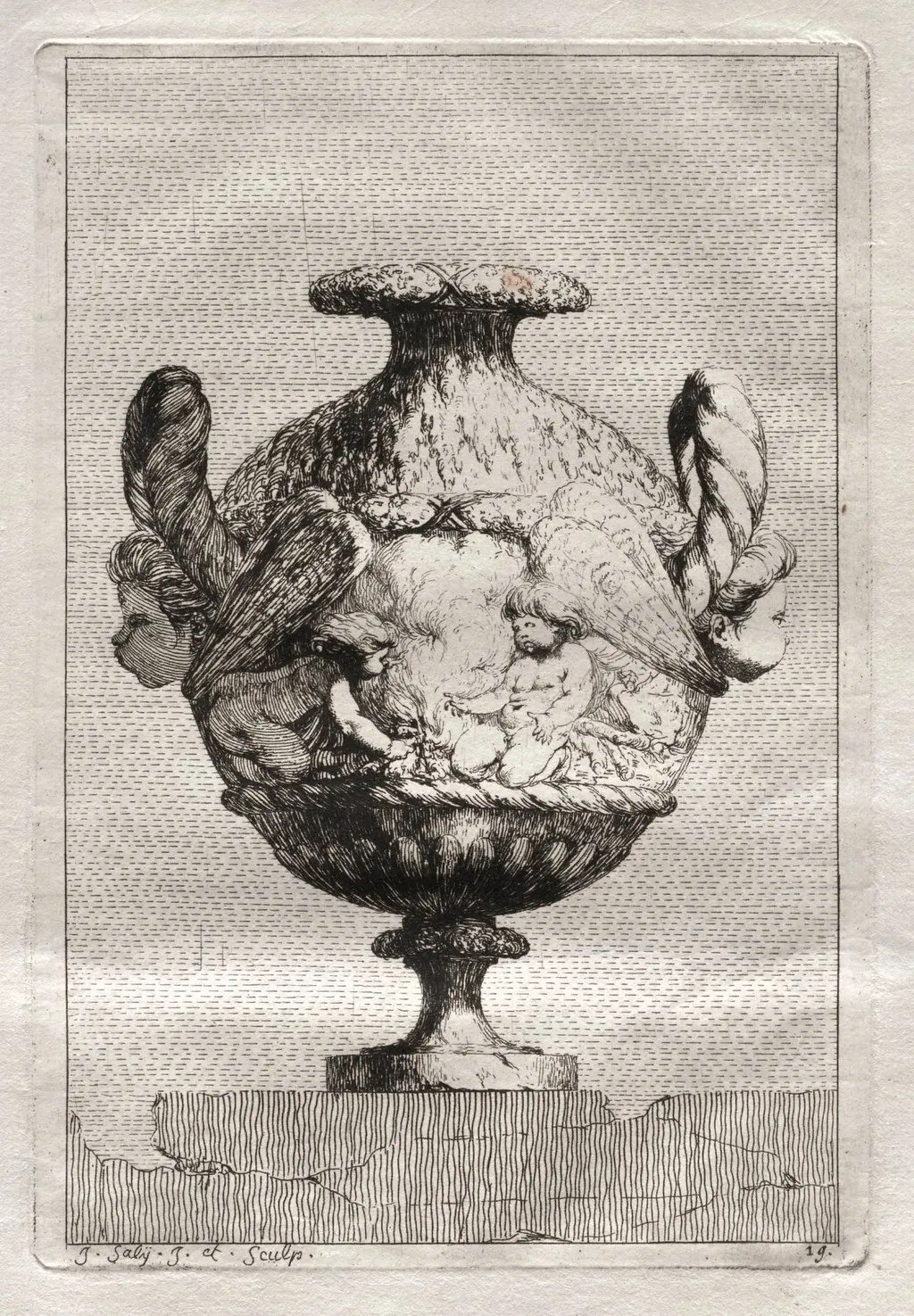
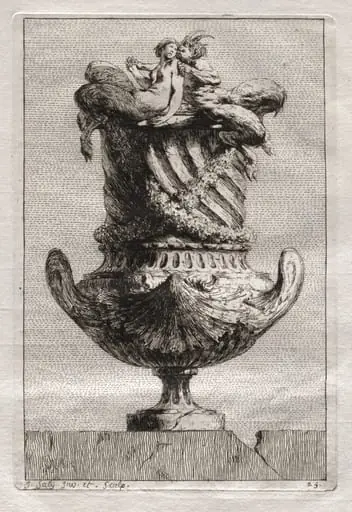
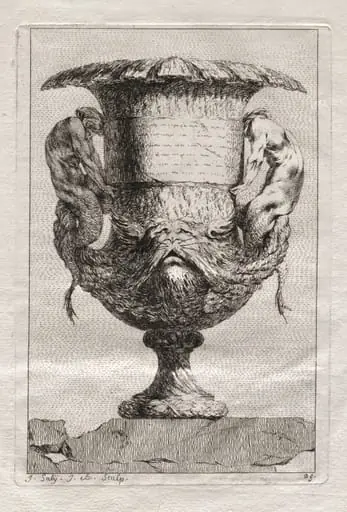
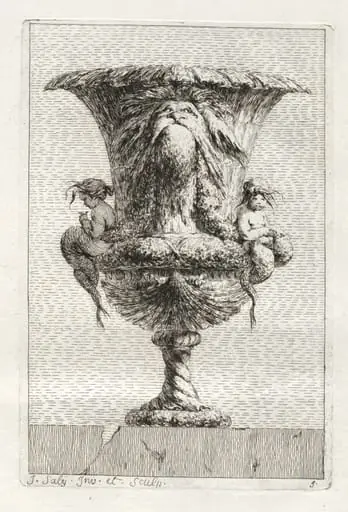
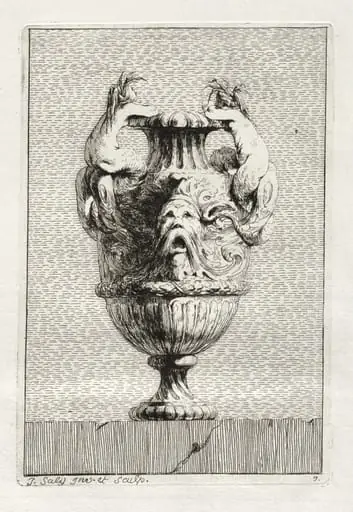
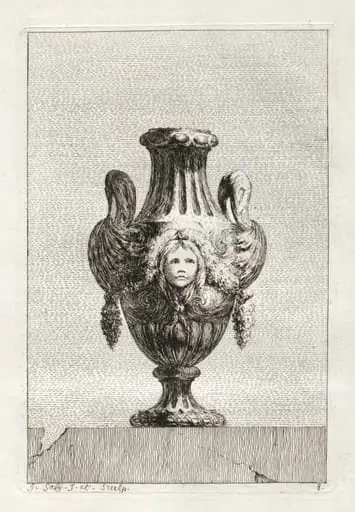
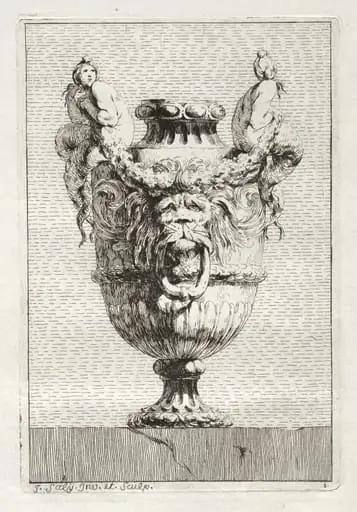
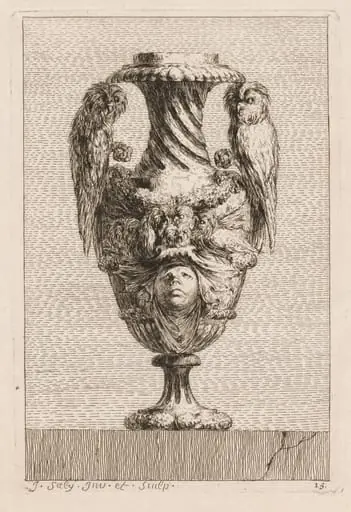
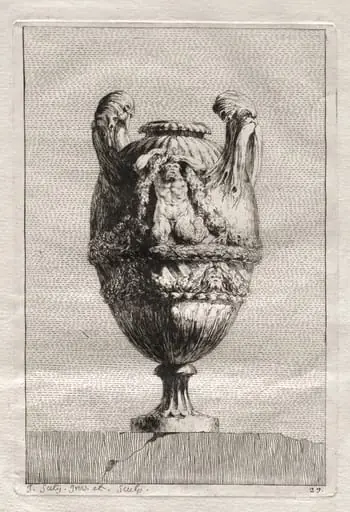
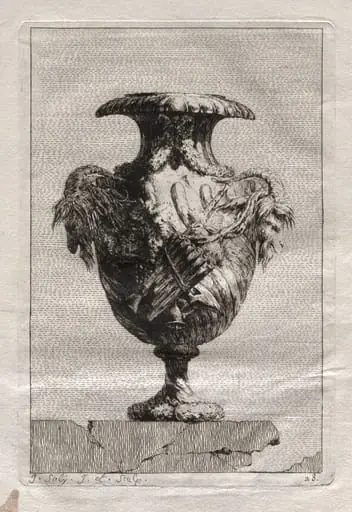
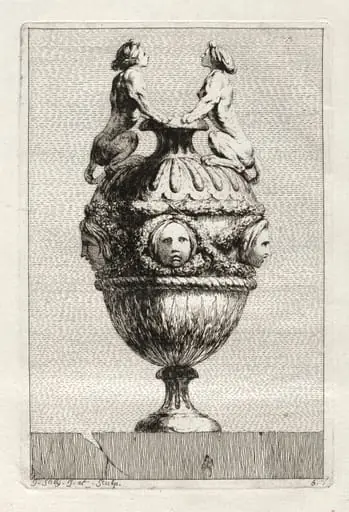
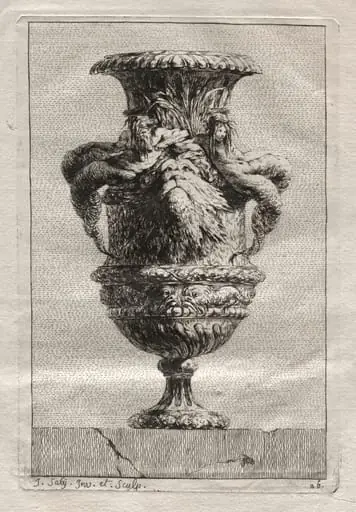
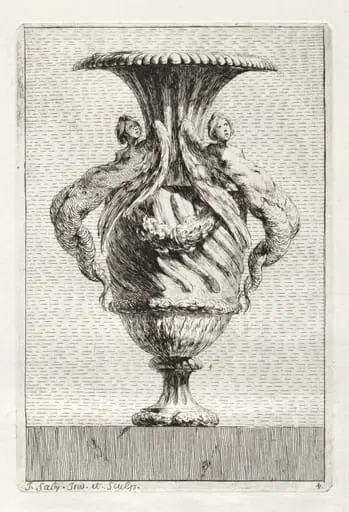
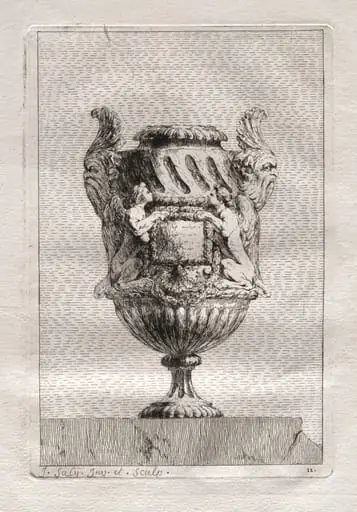
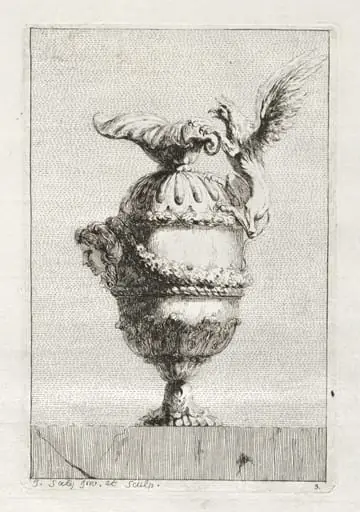
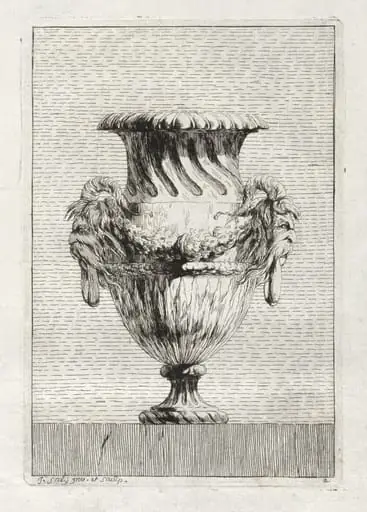
Suite of Vases: Plate 19 is a print by the Baroque artist Jacques François Saly. It dates from 1746 and is held in the collection of the Cleveland Museum of Art.
About this work
Here’s your rewrite: Saly’s engraving shows a fanciful vase covered in twisting vines and odd creatures.
Here’s your rewrite:
Saly’s engraving shows a fanciful vase covered in twisting vines and odd creatures. You’ll spot a snake coiled around the base and a bird perched on the rim.
This isn’t a real vase—it’s a design Saly dreamed up during his time in Rome. Artists back then loved mixing ancient shapes with wild new details.
Want to see more like this? Look up Jacques François Saly (French, 1717–1776).
Overview
Jacques François Saly produced a series of thirty etchings in the 1740s, each depicting imaginary vases that blend classical forms with inventive ornamentation. Plate 19 is one of these designs, created during his studies at the French Academy in Rome. Though rooted in antiquity, the imagery departs from historical accuracy, reflecting a period fascination with reimagining ancient motifs through fantasy.
Subject & Meaning
The vase in Plate 19 is adorned with serpentine vines, a coiled snake at its base, and a bird resting on the rim. These elements are not drawn from documented ancient prototypes but emerge from Saly’s creative interpretation. The creatures suggest mythic or allegorical themes, common in 18th-century decorative arts, where nature and fantasy merged to evoke wonder rather than historical fidelity.
Technique & Style
Saly employed fine-line etching to render intricate details with precision. The composition balances symmetry with organic irregularity, using delicate cross-hatching to suggest texture in foliage and scale. His sculptural training informs the three-dimensional rendering of forms, giving the flat print the illusion of carved relief, a hallmark of his approach to decorative design.
History & Provenance
Saly created the suite between 1740 and 1746 while residing in Rome as a pensioner of the French Academy. The etchings were published upon his return to France and circulated among artists and collectors interested in decorative arts. Though not commissioned for actual production, the plates influenced contemporary design manuals and studio practice in Parisian workshops.
Context
Mid-18th-century Europe saw a surge in interest in antiquity, but artists increasingly sought to reinterpret rather than replicate classical models. Saly’s vases reflect this shift—drawing on Roman and Greek shapes while introducing fantastical creatures inspired by Renaissance grotesques and naturalist curiosity. His work aligns with broader trends in Rococo ornamentation that prized invention over strict archaeology.
Legacy
Saly’s etchings contributed to the dissemination of ornamental vocabulary beyond sculpture into print culture. Though little known today, his suite was referenced in design publications of the late 1700s and influenced decorative arts in France and beyond. The plates remain valuable as records of how artists negotiated tradition and imagination during a period of evolving aesthetic ideals.
Artist & collection
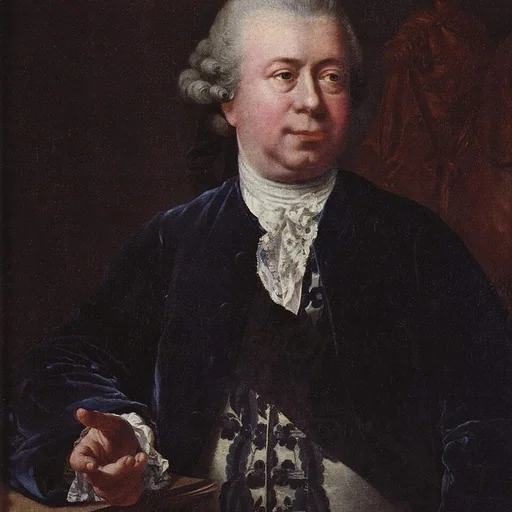
Artist
Jacques François Joseph Saly, also known as Jacques Saly (20 June 1717 – 4 May 1776), French-born sculptor who worked in France, Italy and Malta.