Artwork
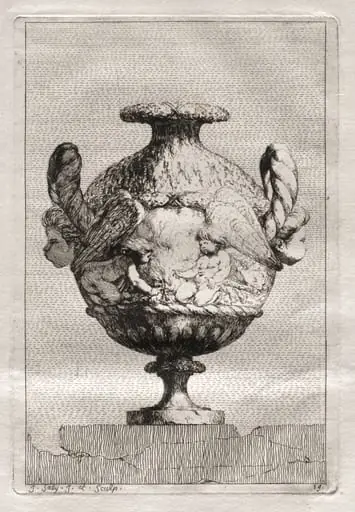
Suite of Vases: Plate 17
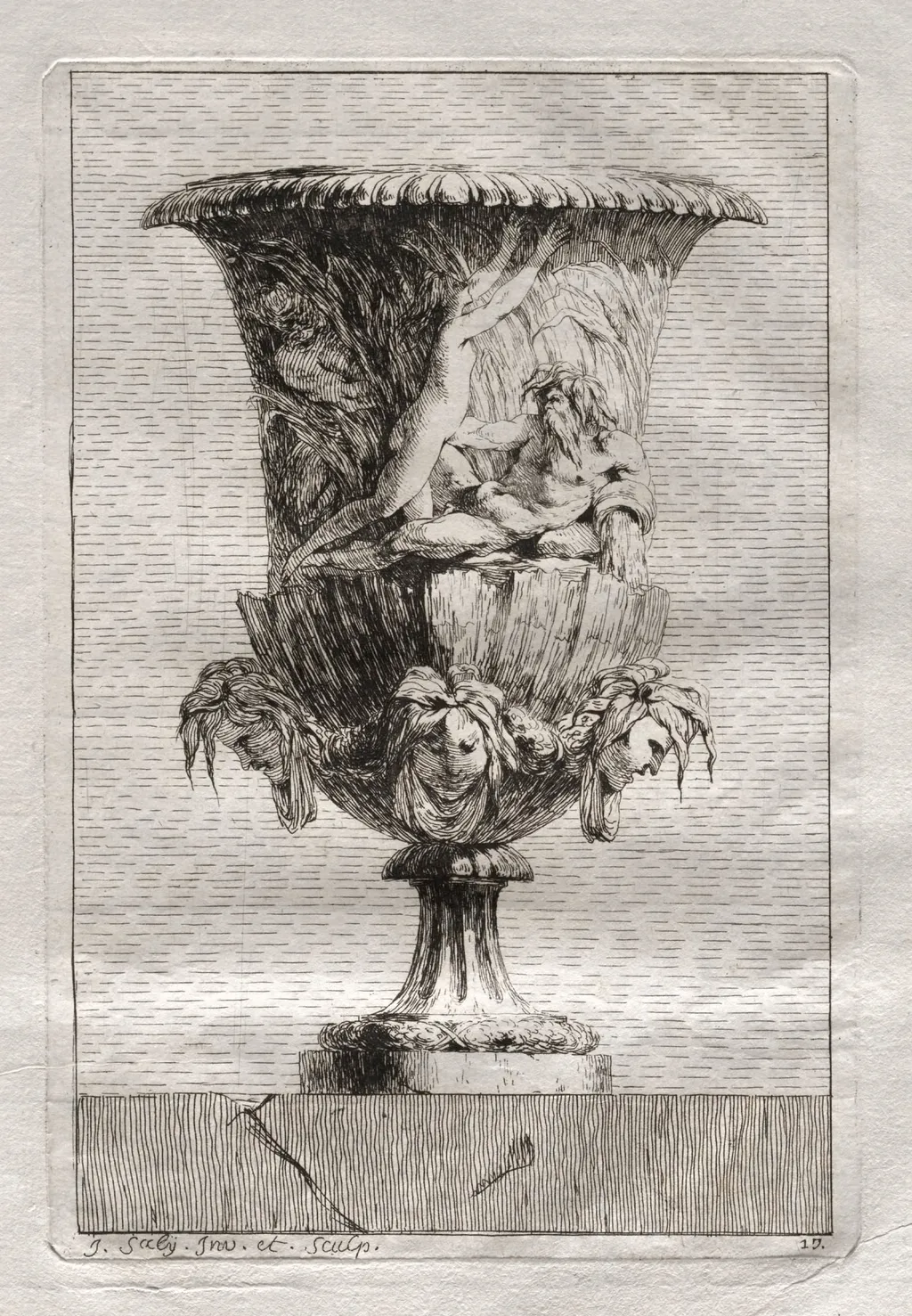
Suite of Vases: Plate 17 is a print by the Baroque artist Jacques François Saly. It dates from 1746 and is held in the collection of the Cleveland Museum of Art. Plate 17 belongs to a series of thirty etchings produced in 1746 by the French sculptor Jean-Baptiste Pigalle Saly.
About this work
He was trained as a sculptor and studied in Rome, where he mixed old vase shapes with wild, made-up details.
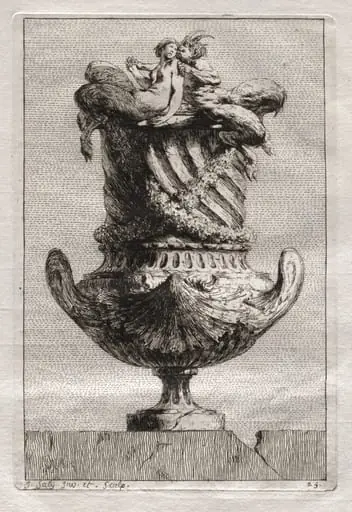
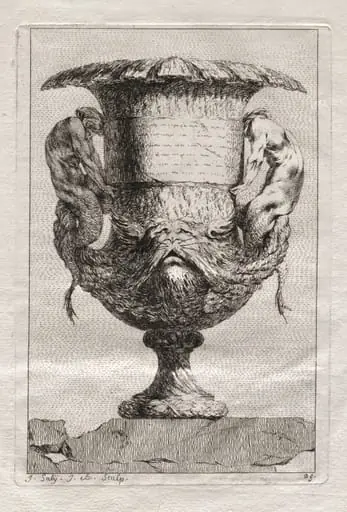
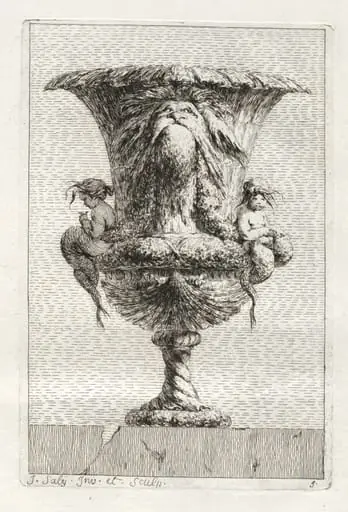
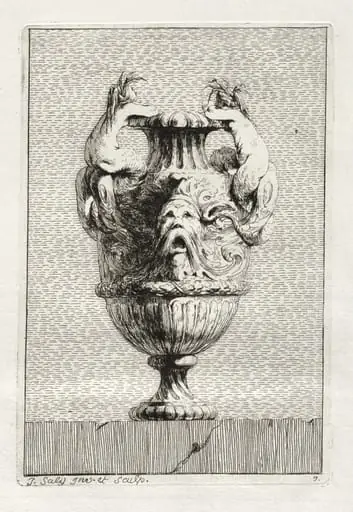
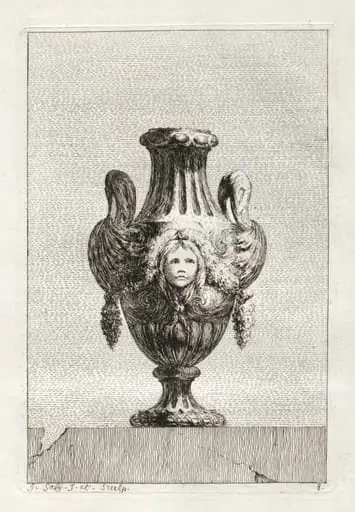
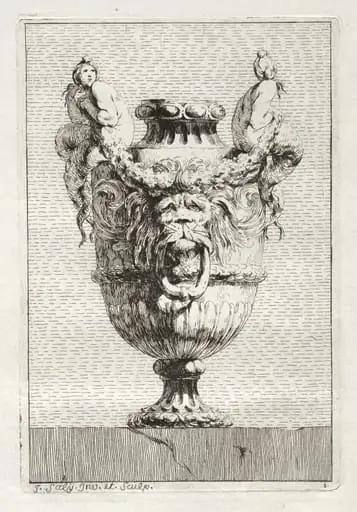
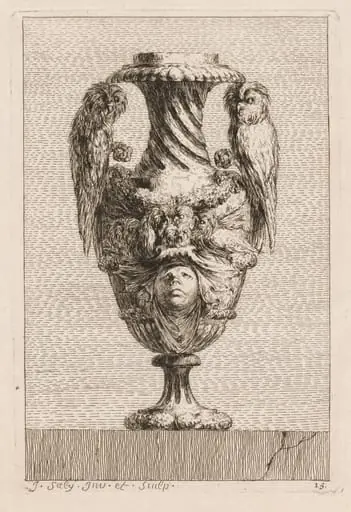
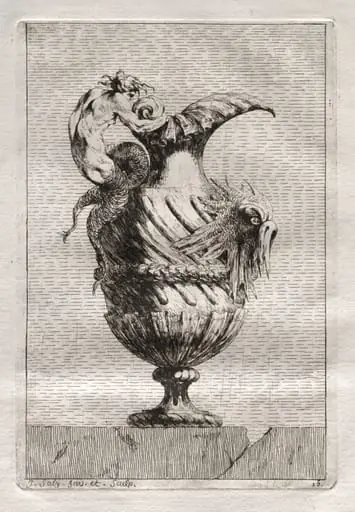
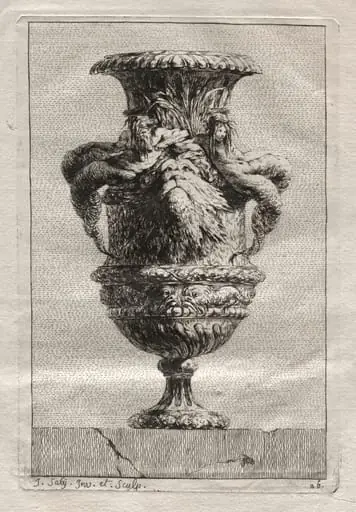
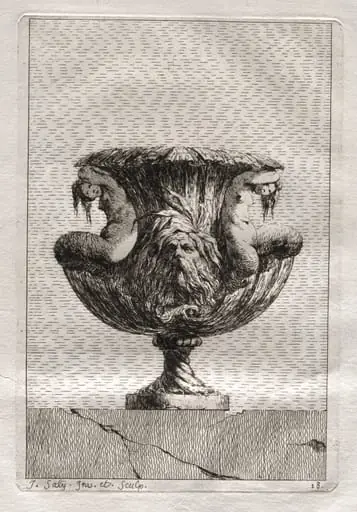
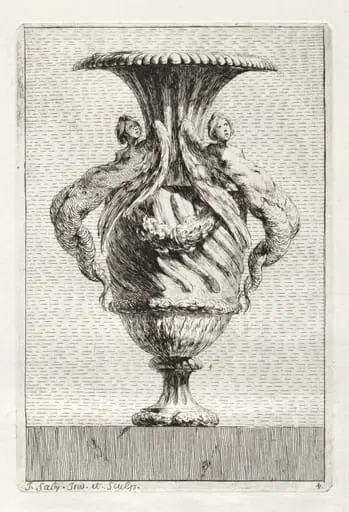
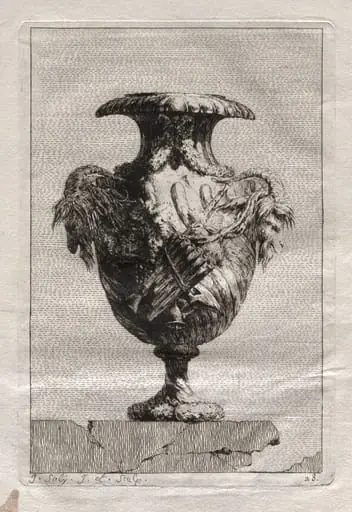
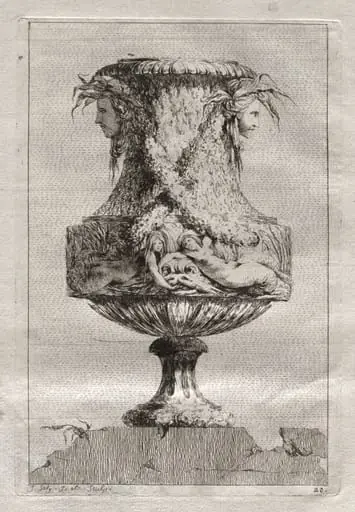
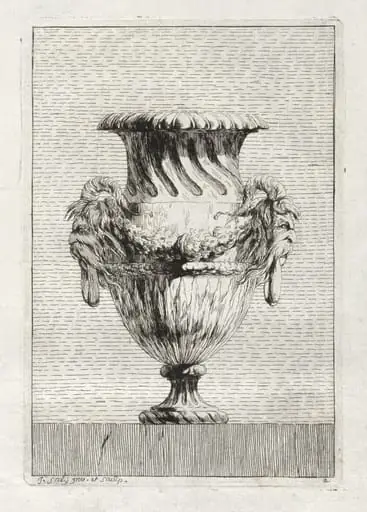
You see a line of tall, fancy vases drawn in black ink on white paper. They twist and curl with strange animal heads, wings, and curls of leaves.
This is Plate 17 from a set of 30 etchings Saly made in 1746. He was trained as a sculptor and studied in Rome, where he mixed old vase shapes with wild, made-up details. The vases don’t follow strict ancient rules — instead, they let fantasy lead. Some have sea monsters, others bird claws or grinning faces, all finely carved into the design.
These drawings show how artists played with form and myth. For more on French 18th-century design, look up subject: france, 18th century.
(108 words)
Overview
Plate 17 belongs to a series of thirty etchings produced in 1746 by the French sculptor Jean-Baptiste Pigalle Saly. The prints depict a succession of elongated, ornamental vases rendered in black ink on white paper. Each vase is embellished with imaginative motifs such as animal heads, winged forms, and stylised foliage, illustrating a departure from strict classical models toward fanciful decoration.
Subject & Meaning
The vases combine traditional antique silhouettes with invented ornamentation, featuring creatures ranging from sea‑monsters to bird talons and grotesque faces. This synthesis reflects an 18th‑century fascination with the exotic and the mythic, allowing the artist to explore the limits of decorative imagination beyond the constraints of ancient precedent.
Technique & Style
Executed as line etchings, the images rely on fine, continuous strokes that convey both the structural elegance of the vessels and the intricate details of their embellishments. The contrast of deep black ink against a plain background emphasizes the sculptural quality of the designs, echoing Saly’s training in three‑dimensional form.
History & Provenance
Saly created the full set while studying at the French Academy in Rome between 1740 and 1746. The series was published upon his return to France, serving as a reference for designers and craftsmen interested in ornamental motifs for porcelain, metalwork, and interior decoration.
Context
During the mid‑18th century, French decorative arts embraced a blend of classical references and inventive fantasy. Artists like Saly responded to market demand for novel patterns, influencing the aesthetic of luxury objects such as porcelain vases and gilt bronze mounts.
Artist & collection
Artist
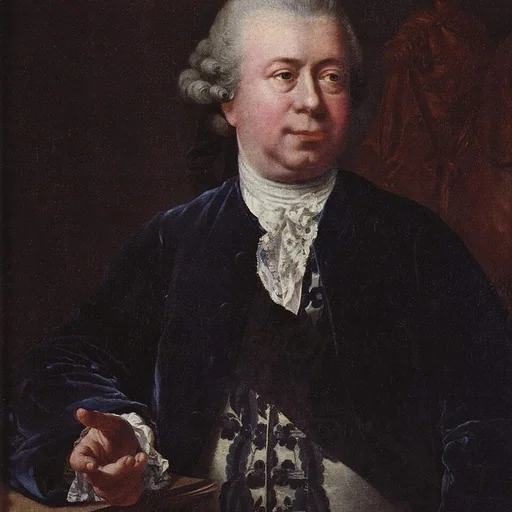
Jacques François Joseph Saly, also known as Jacques Saly (20 June 1717 – 4 May 1776), French-born sculptor who worked in France, Italy and Malta.