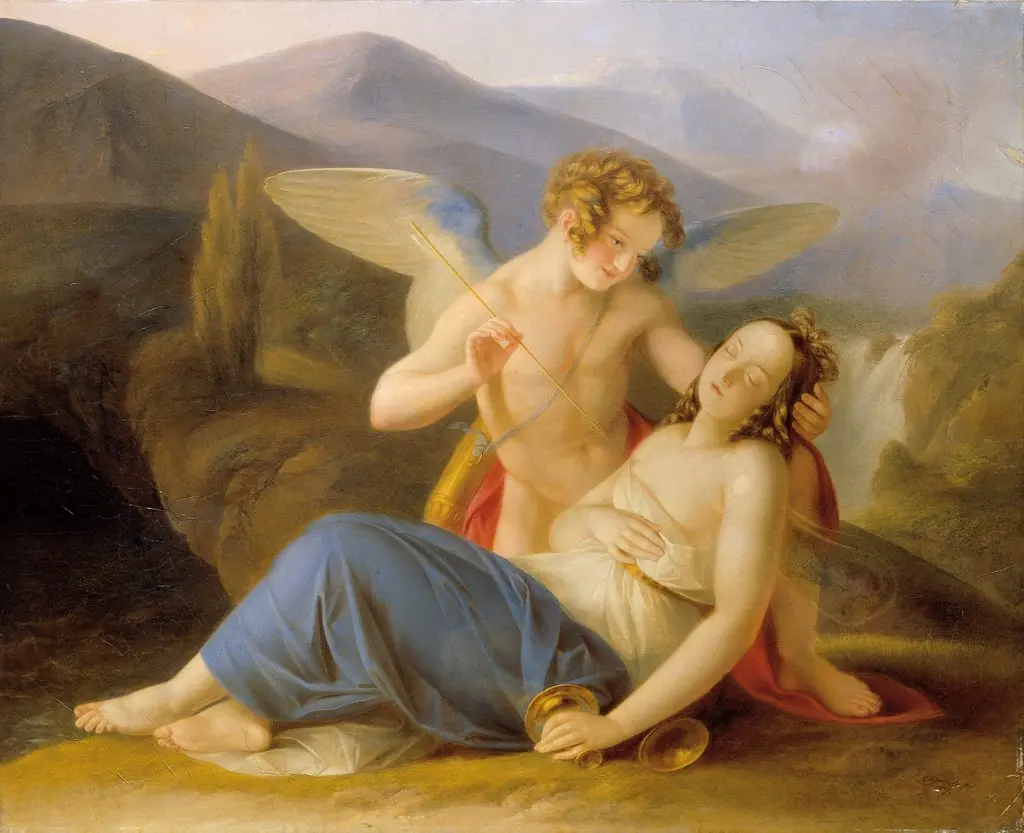
Artwork
Cupid and Psyche
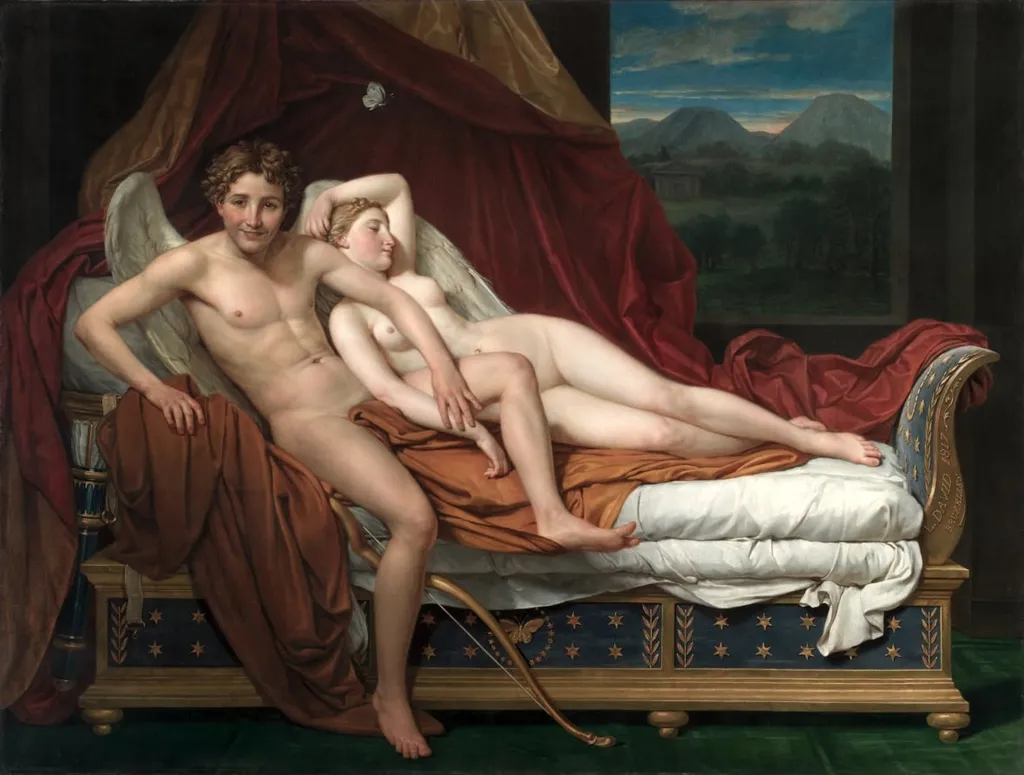
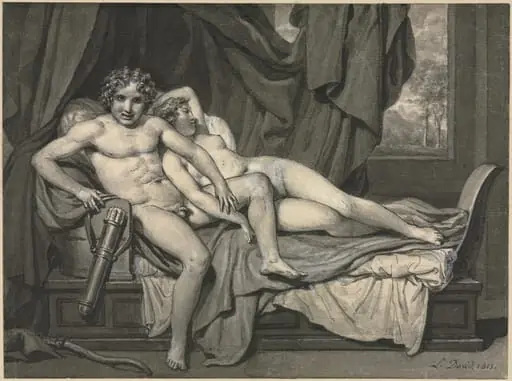
Cupid and Psyche is an unspecified painting by the Neoclassicist artist Jacques-Louis David. It dates from 1817 and is held in the collection of the Cleveland Museum of Art.
About this work
Overview
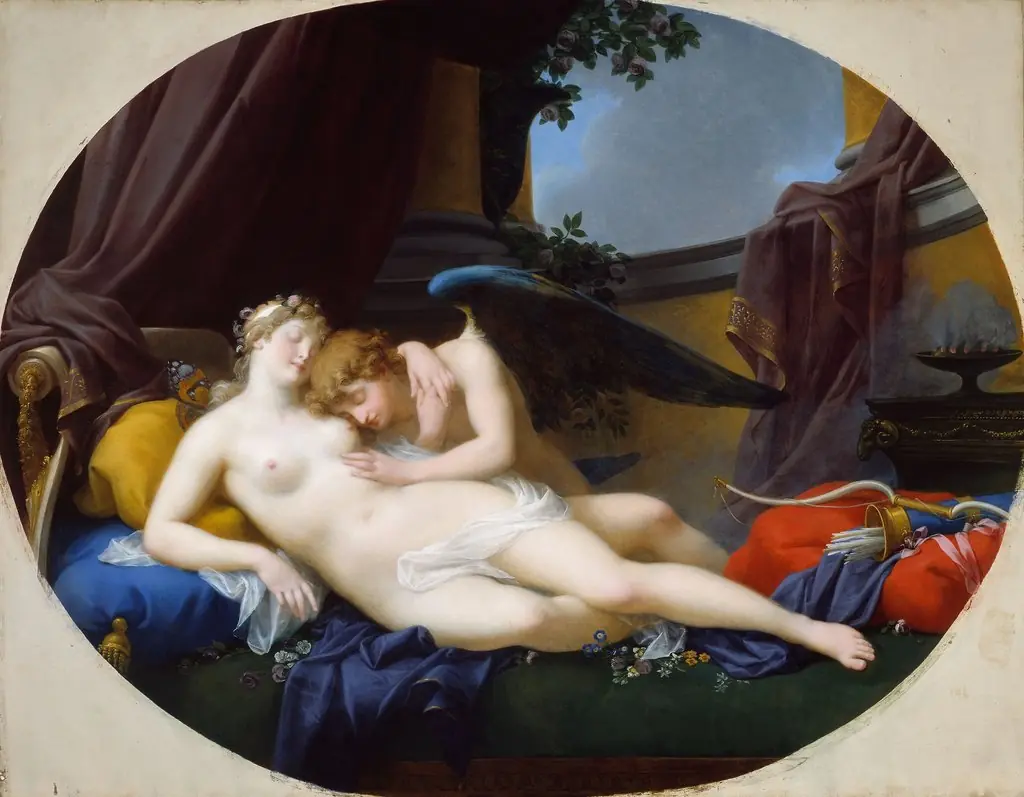
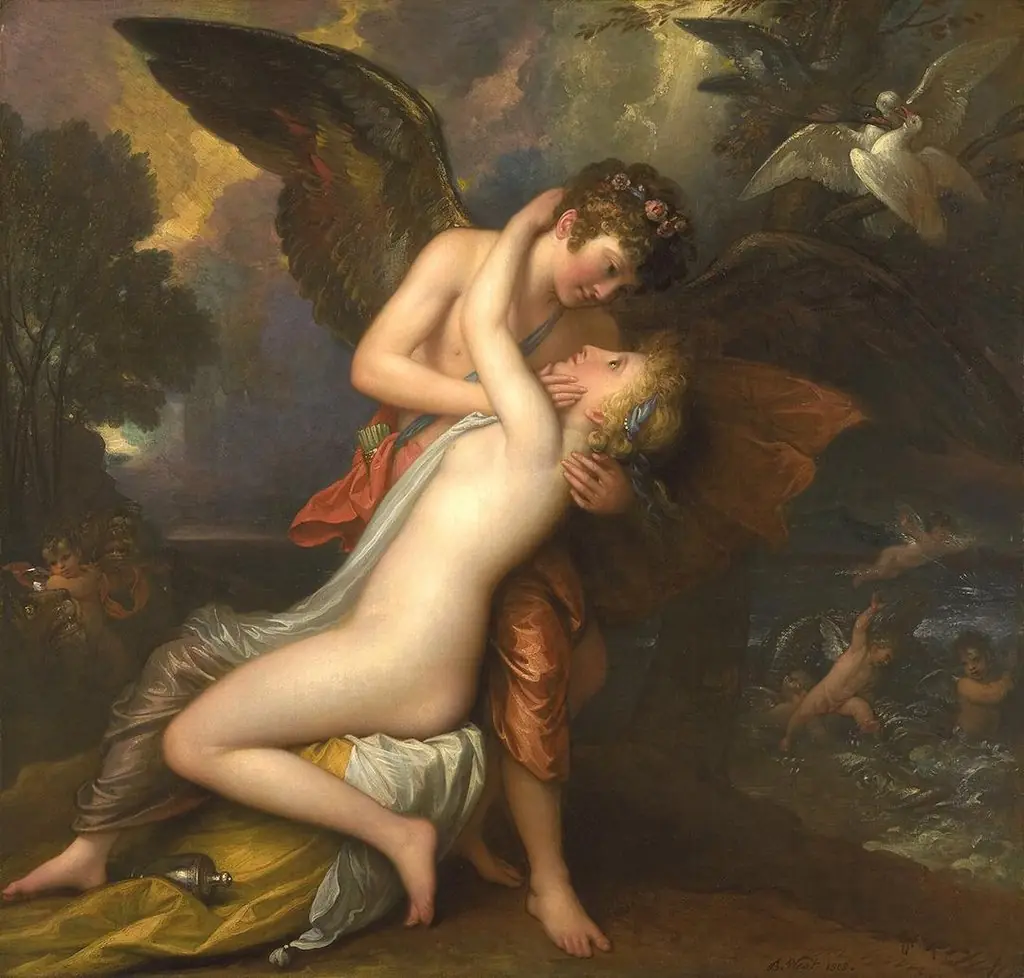
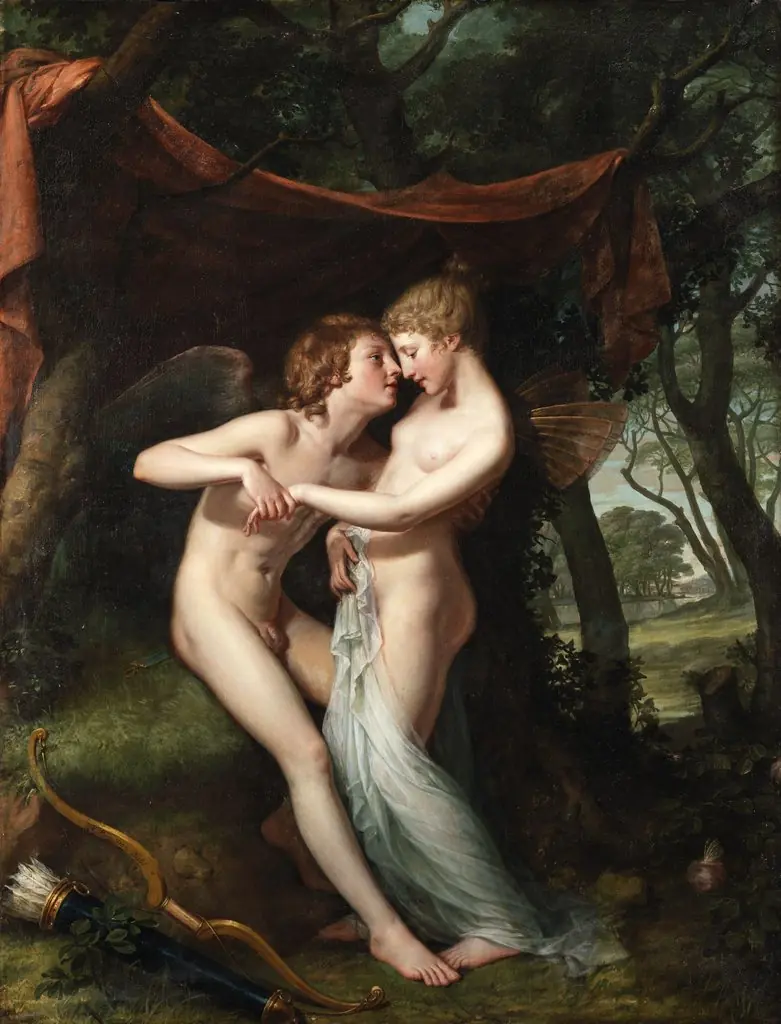
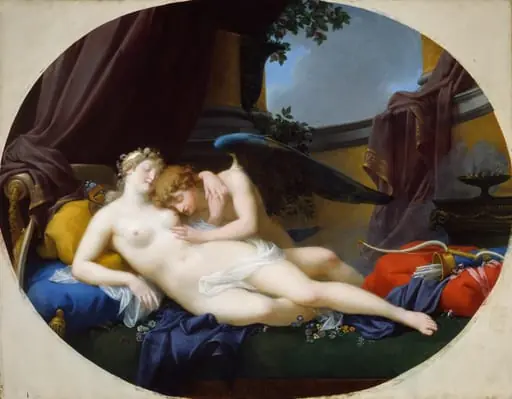
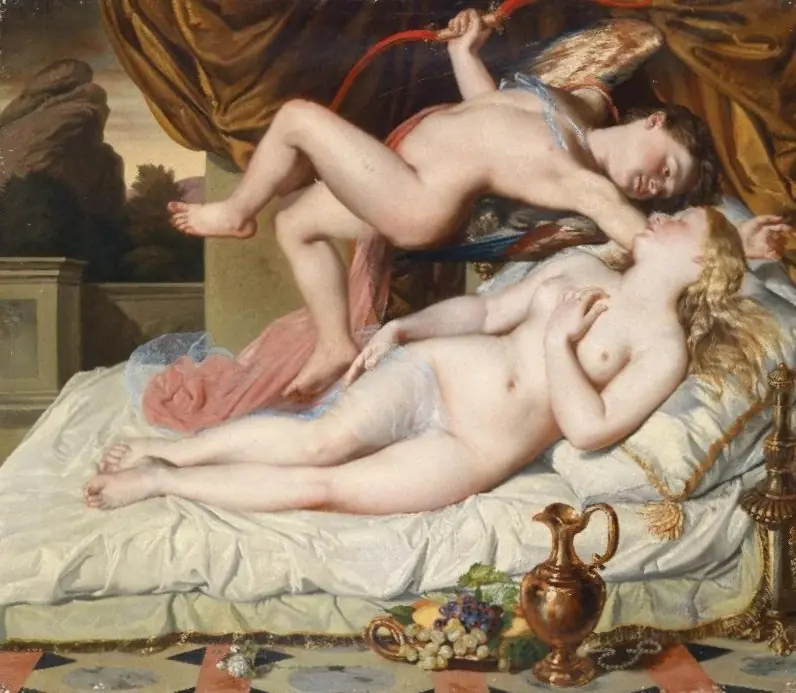
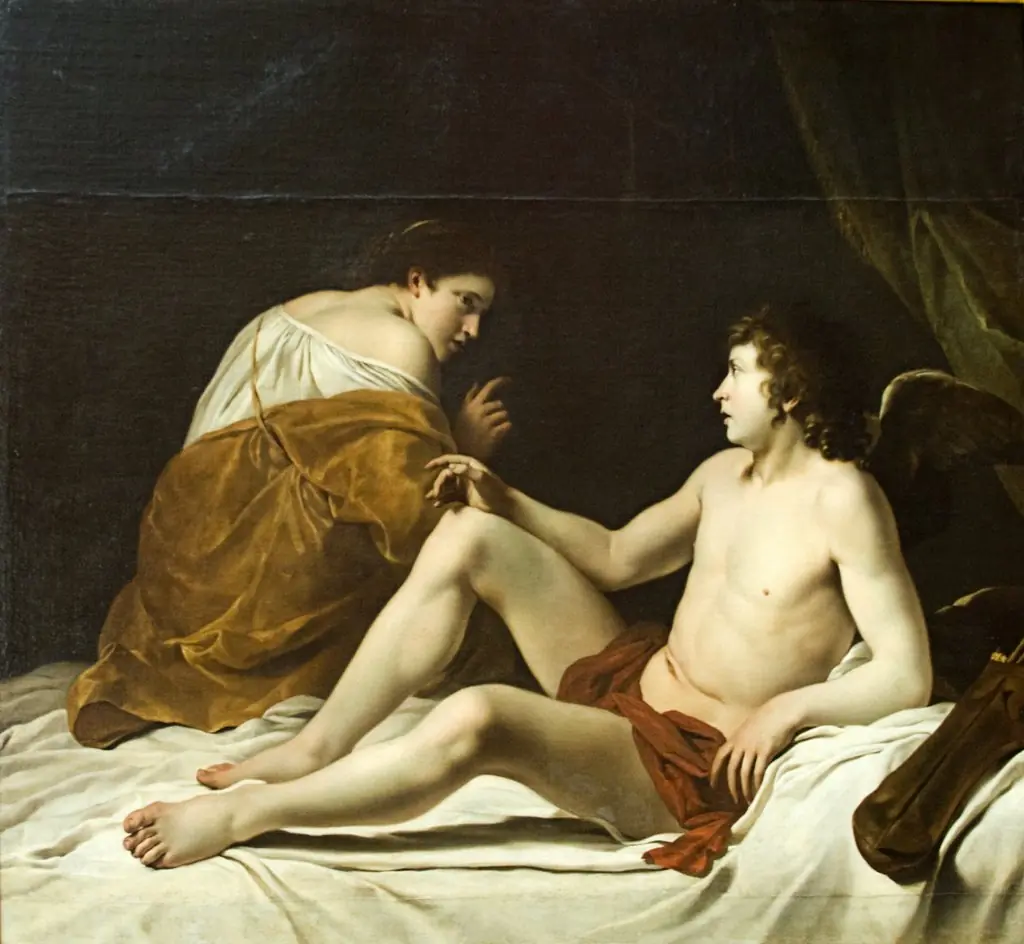
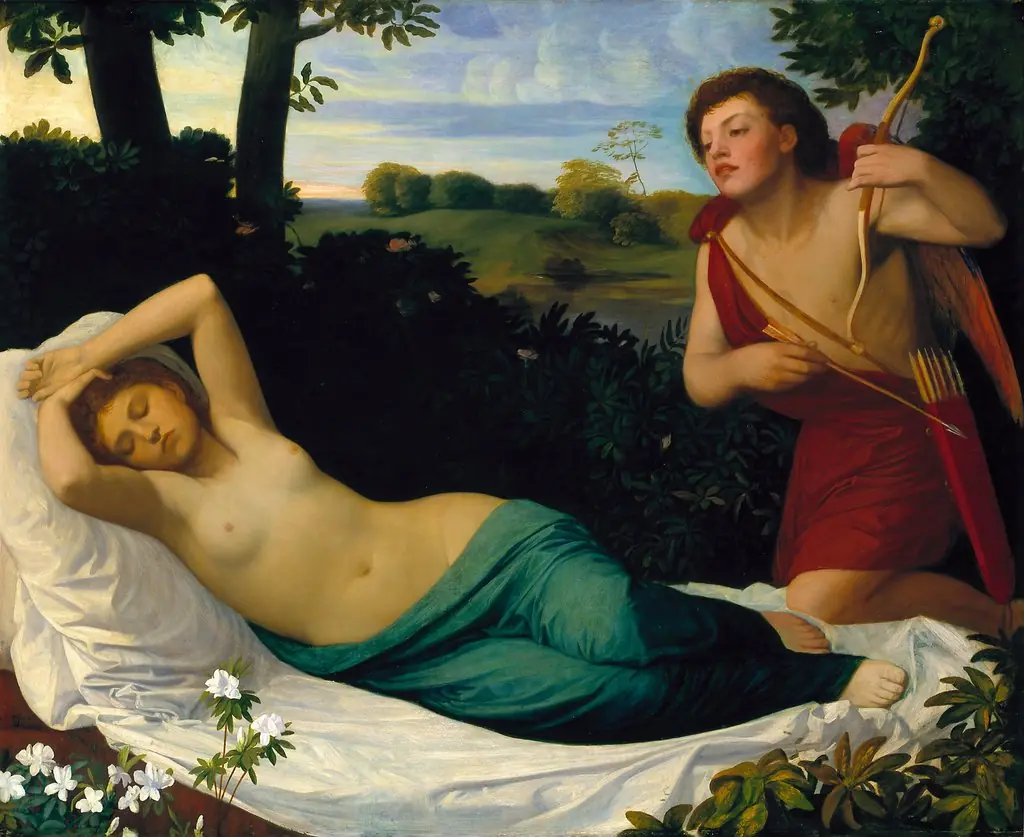
The canvas depicts the mythic encounter between Cupid and Psyche within a dim interior. A lanky, adolescent Cupid hovers above a sleeping Psyche, his arrow loosely held, while her body is rendered with a naturalistic twist rather than an idealized form. The painting emphasizes the tension between romantic ideal and corporeal reality.
Subject & Meaning
Through this scene, the artist interrogates the paradox of love’s lofty aspirations against its tangible, sometimes clumsy expression. Cupid is shown not as a flawless youth but as a self‑satisfied, almost mischievous teen, suggesting a critique of the notion that love is purely ethereal. Psyche’s vulnerable posture reinforces the theme of human frailty within the myth.
Technique & Style
Rendered in muted tones, the work employs chiaroscuro to heighten the intimacy of the enclosed space. The figures are painted with loose brushwork that captures the irregularity of flesh, especially in Cupid’s elongated limbs and Psyche’s twisted torso. This approach departs from the polished classicism typical of earlier neoclassical pieces.
History & Provenance
Created by the French painter David, the piece draws on a recently discovered Greek poem by Moschus that portrays Cupid as a petty, flamboyant youth. The painting entered the Cleveland Museum of Art’s collection in the early twentieth century, where it remains on display alongside David’s more conventional works.
Context
The work stands in contrast to David’s celebrated historical compositions such as *The Oath of the Horatii*, which embody stoic virtue. By choosing a less dignified representation of a mythological lover, the artist aligns with a broader Enlightenment interest in revisiting classical sources with a critical, sometimes satirical eye.
Artist & collection
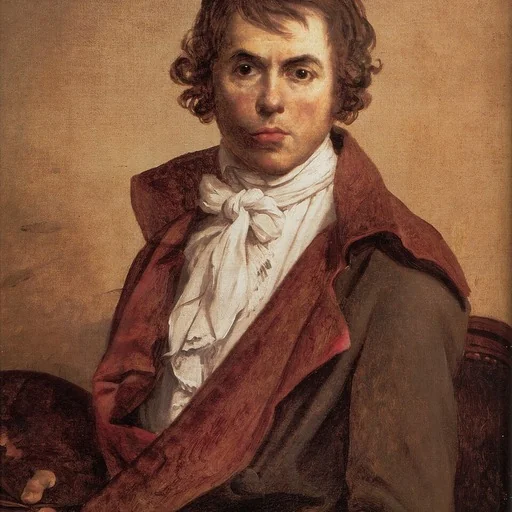
Artist
Jacques-Louis David was born in Paris on 30 August 1748 into a bourgeois family; his father died in a duel when the boy was nine, and a maternal uncle guided his education.

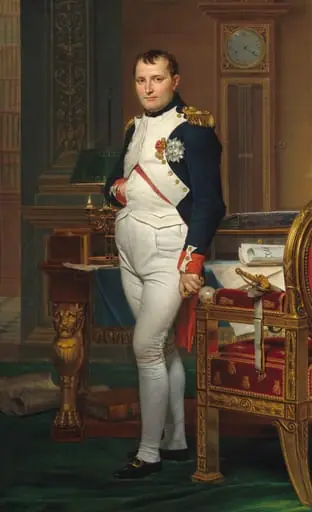 The Emperor Napoleon in His Study at the Tuileries
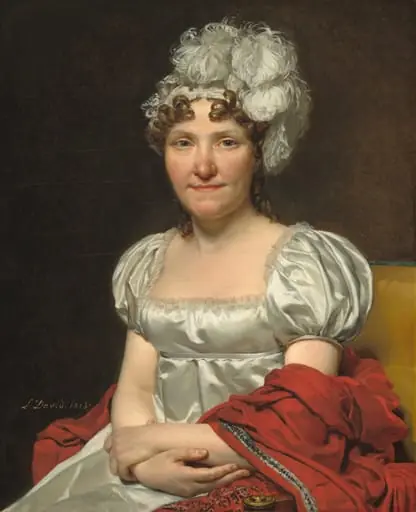 Madame David
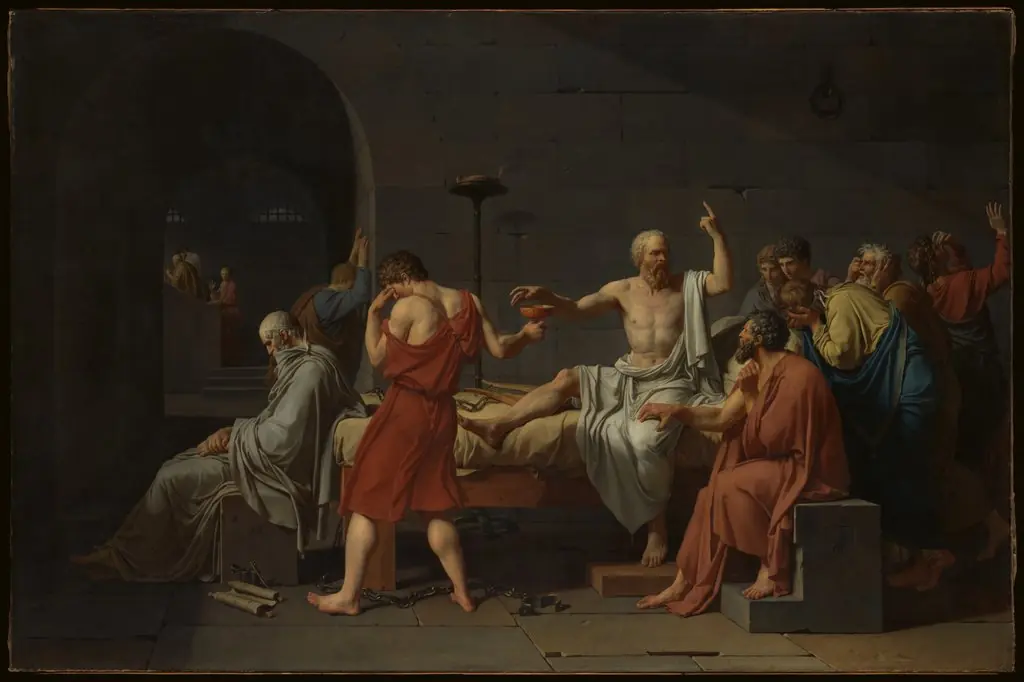 The Death of Socrates
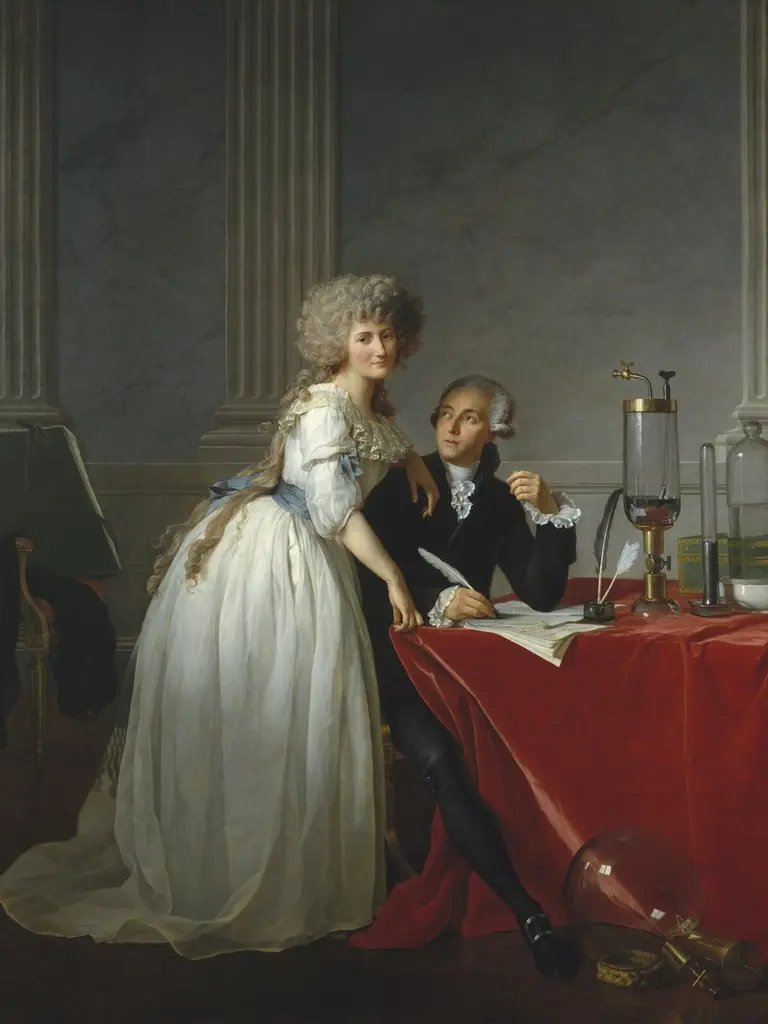 Portrait of Antoine-Laurent Lavoisier and his wife
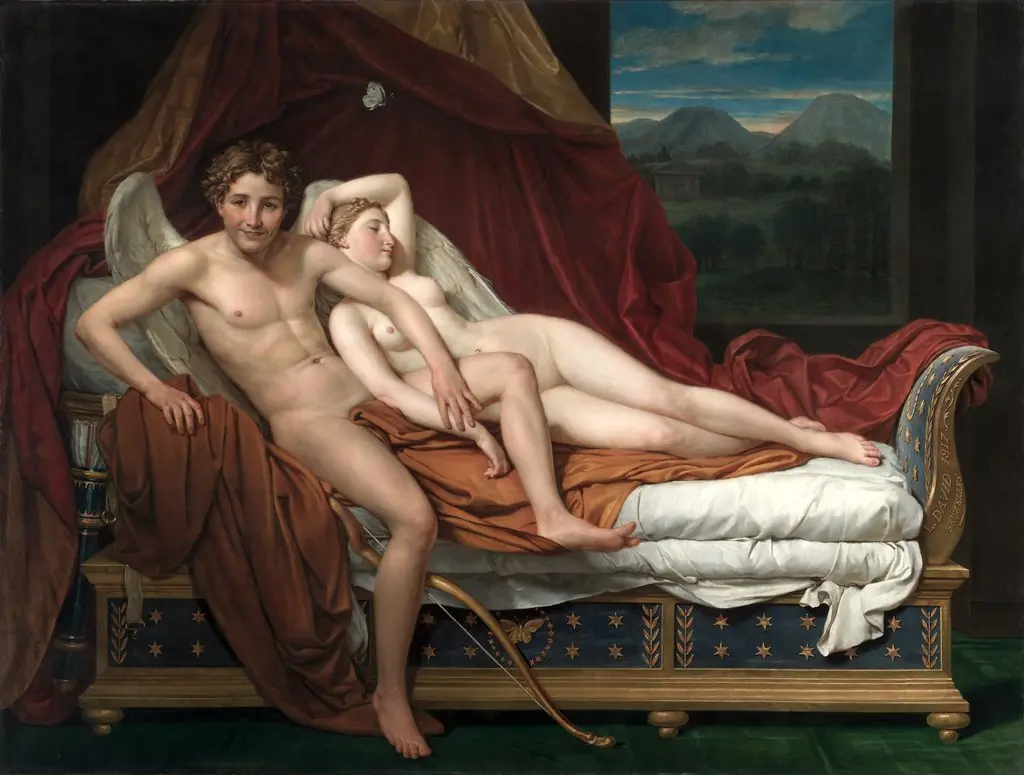 Cupid and Psyche
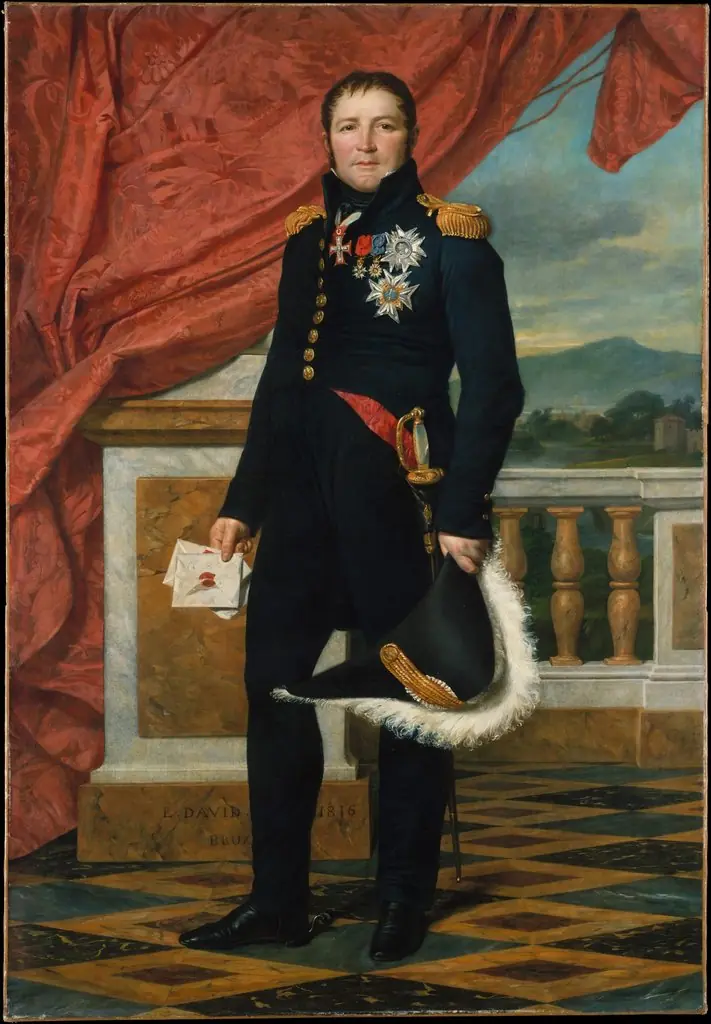 General Étienne-Maurice Gérard (1773–1852), Marshal of France
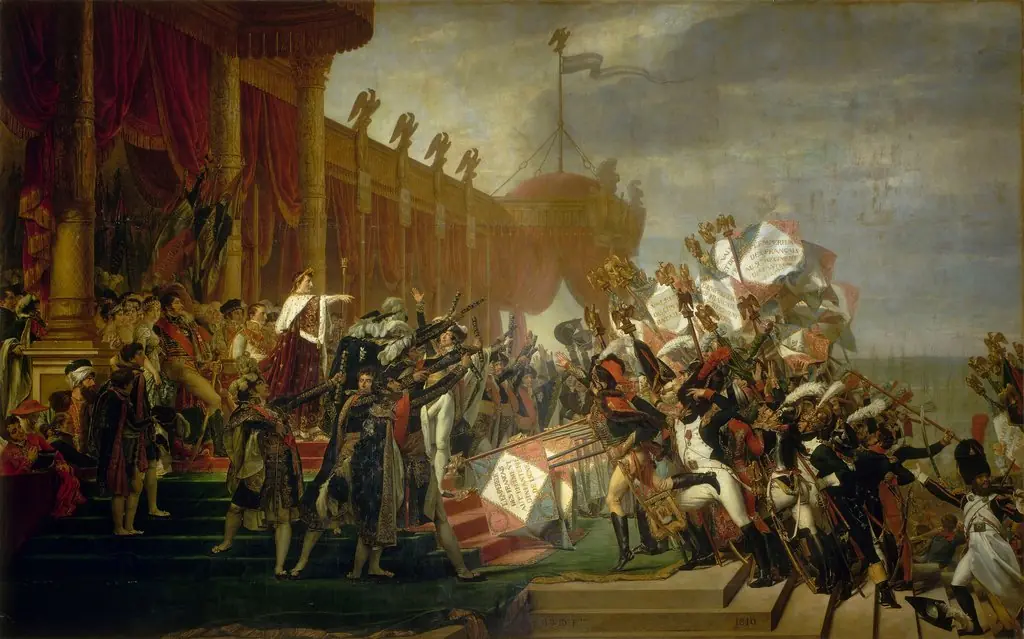 The Distribution of the Eagle Standards
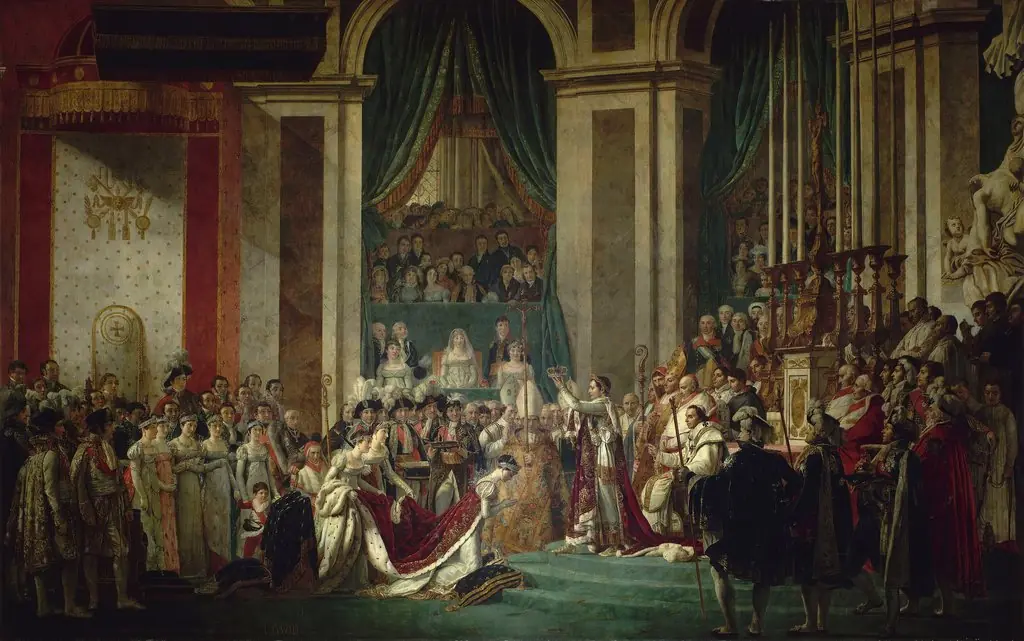 Coronation of Emperor Napoleon I and Coronation of the Empress Josephine