Artwork
Chateau Saint Ouen from the Court
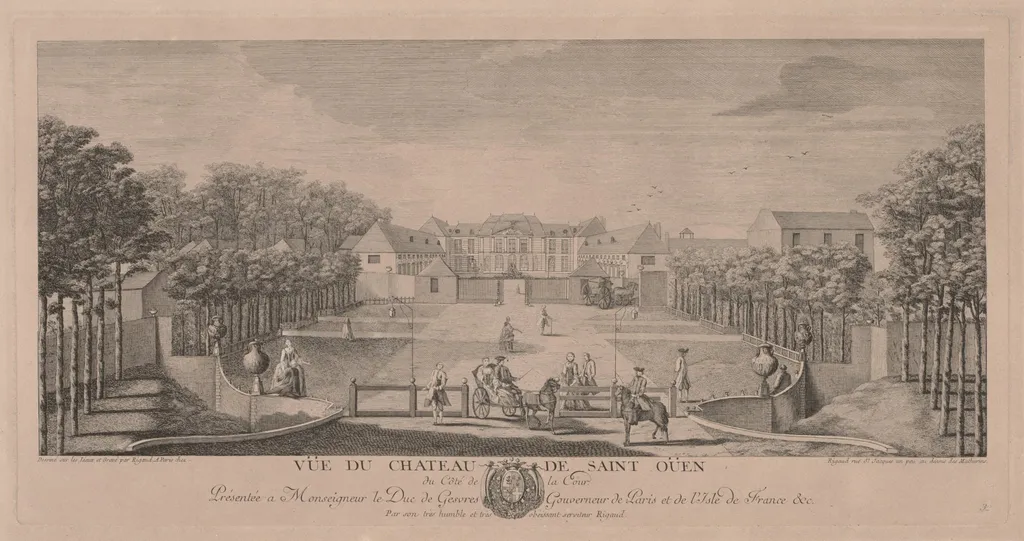
Chateau Saint Ouen from the Court is a print by the Baroque artist Jacques Rigaud. It dates from 1727 and is held in the collection of the Cleveland Museum of Art.
About this work
Overview
It was produced as a presentation piece, likely commissioned to honor a noble patron, and is now held in the collection of The Cleveland Museum of Art.
Created in 1727 by French artist Jacques Rigaud, this ink and wash drawing depicts the Château Saint-Ouen as seen from its inner courtyard. Rendered with precise linear detail and soft tonal gradations, the work functions as a topographical record rather than a narrative scene. It was produced as a presentation piece, likely commissioned to honor a noble patron, and is now held in the collection of The Cleveland Museum of Art.
Subject & Meaning
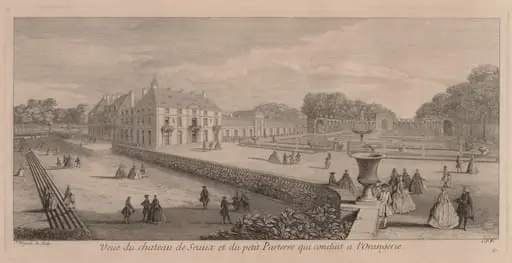
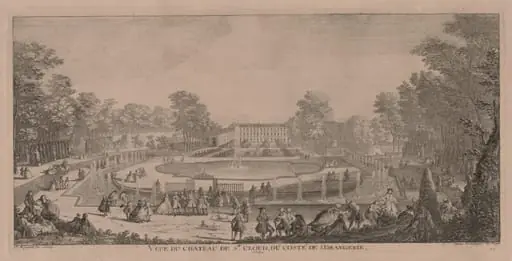
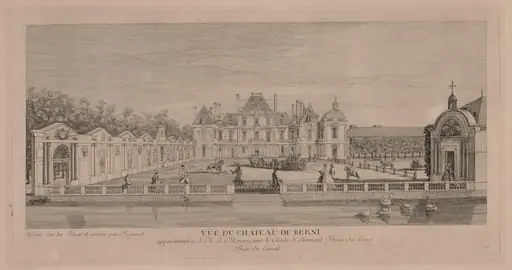
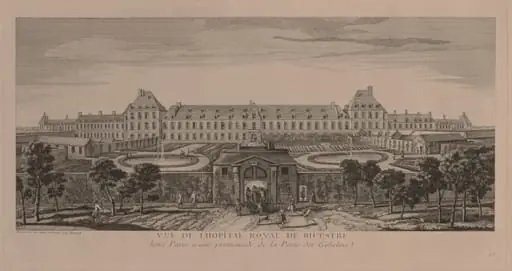
The drawing portrays the château’s formal grounds with orderly avenues, trimmed hedges, and a central pond framed by a modest bridge. Figures in 18th-century attire—walking, riding, or resting—suggest aristocratic leisure. The inclusion of the Duke of Gesvres as the intended recipient implies the image served as a token of status, reinforcing the family’s prestige through the depiction of their ancestral estate and its cultivated landscape.
Technique & Style
Rigaud employed fine pen lines and subtle washes to capture architectural detail and atmospheric light. The composition emphasizes symmetry and spatial clarity, reflecting the Baroque tradition’s emphasis on order and grandeur. Though lacking overt drama, the work’s meticulous rendering of textures—stone, foliage, fabric—demonstrates the period’s preference for controlled precision and refined observation over emotional intensity.
History & Provenance
The drawing was likely commissioned to commemorate the Duke of Gesvres, a French nobleman with ties to the château. Rigaud’s signature, discreetly placed in the corner, aligns with the practice of artists signing modestly on presentation drawings. It remained in private hands until entering the Cleveland Museum of Art’s collection, where it is preserved as an example of French aristocratic visual culture in the early 1700s.
Context
In early 18th-century France, such drawings were common among the elite as records of property and symbols of lineage. The Château Saint-Ouen, associated with the House of Gesvres, was a seat of political and social influence. Rigaud’s depiction aligns with a broader trend of topographical art that merged documentary function with aesthetic refinement, serving both personal and public displays of power.
Legacy
Though not widely exhibited, the drawing remains a representative example of French aristocratic topography in the Baroque era. Its preservation offers insight into how land, architecture, and social hierarchy were visually codified. Rigaud’s work contributes to a lesser-known but significant branch of art history: the quiet, detailed documentation of noble estates that shaped perceptions of power beyond grand historical narratives.
Artist & collection


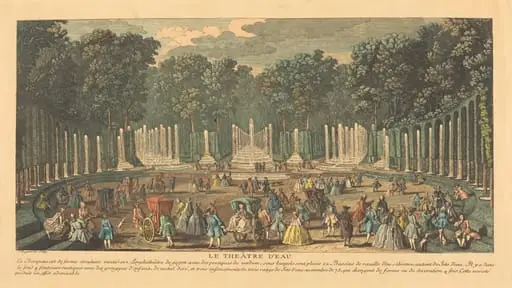 The Theatre of Water (Le Théâtre d'Eau)
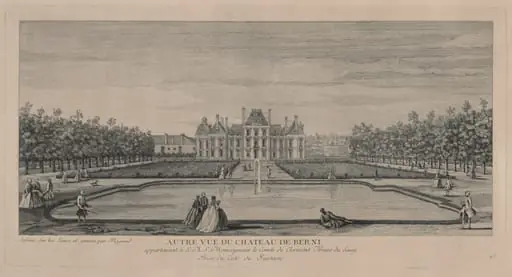 Chateau of Berny from the Gardens
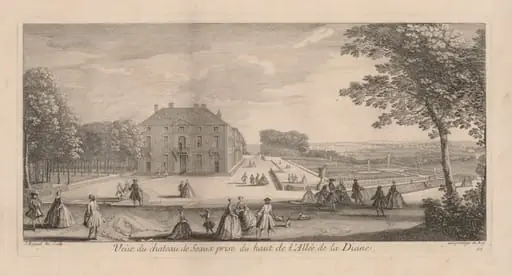 View of the Chateau de Seaux from Diana's Promenade
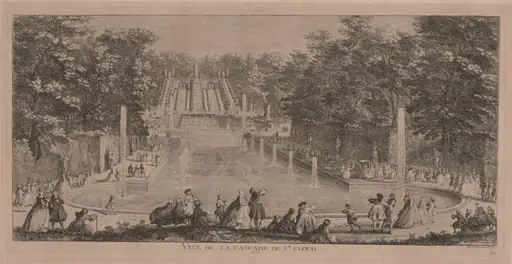 The Cascades of St. Cloud
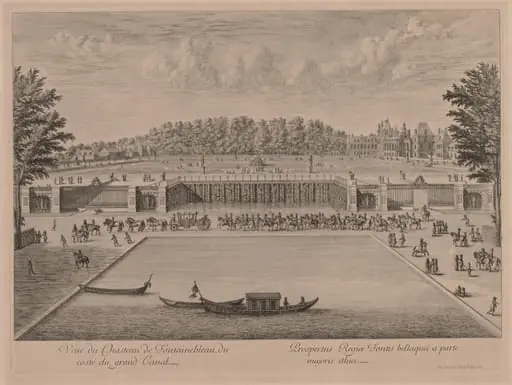 Chateau Fontainebleau from the Grand Canal
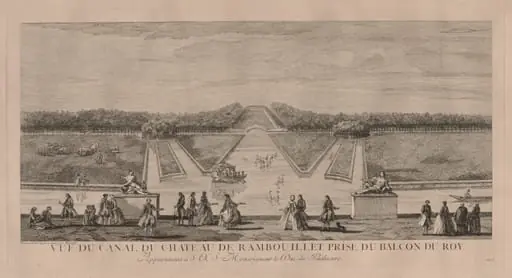 The Chateau from the Canal at Rambouillet
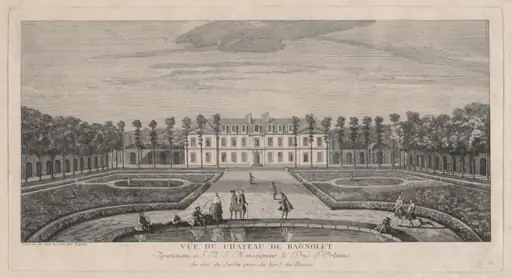 Chateau of Bagnolet
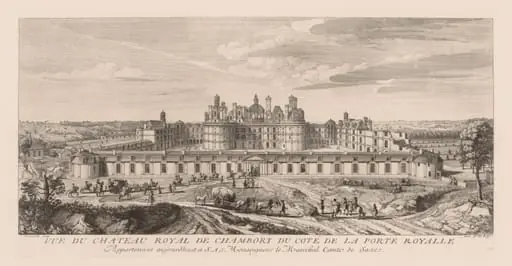 Vue du Château royal de Chambord, du côte de la Porte royale