Artwork
The Cascade at Marli
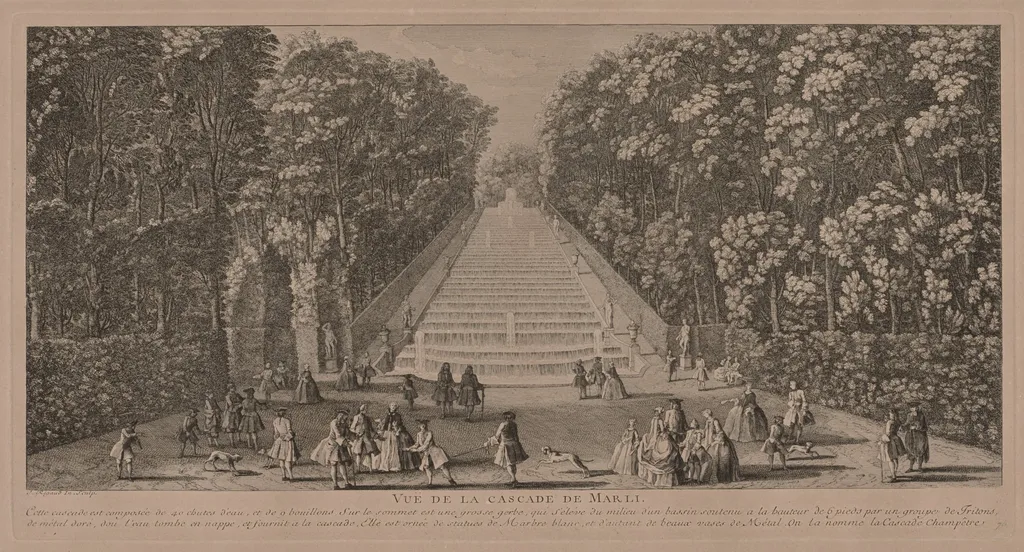
The Cascade at Marli is a print by the Baroque artist Jacques Rigaud. It dates from 1727 and is held in the collection of the Cleveland Museum of Art.
About this work
Overview
Created in 1727 by Jacques Rigaud, this print depicts the cascade at Marli, a landscaped garden feature near Versailles.
Created in 1727 by Jacques Rigaud, this print depicts the cascade at Marli, a landscaped garden feature near Versailles. Rendered in fine detail, the scene captures a formal outdoor space where architecture and nature intersect. The composition emphasizes symmetry and leisure, with figures moving through the space in a calm, orderly manner, reflecting the cultivated elegance of early 18th-century French elite culture.
Subject & Meaning
The print portrays a fashionable gathering at a royal garden cascade, where visitors stroll, converse, and rest along terraced steps. The presence of ornate clothing and relaxed postures suggests a space of social display and private repose. The water feature at the summit, descending in steps, symbolizes control over nature — a hallmark of formal garden design — while the blooming trees imply seasonal abundance and harmony.
Technique & Style
Rigaud employed precise line work and subtle tonal gradations to render architectural detail and natural elements. The trees, rendered in delicate bloom, soften the rigid geometry of the staircase, balancing structure with organic form. The figures are rendered with minimal detail but clear postures, guiding the viewer’s eye through the scene without overwhelming it. The style reflects the refined draftsmanship typical of French topographical prints of the period.
History & Provenance
The print originates from the garden complex at Marly, built for Louis XIV as a private retreat. Rigaud, known for documenting royal estates, produced this work shortly after the site’s peak use. It entered the Cleveland Museum of Art’s collection through established 20th-century acquisitions of European prints, preserving a visual record of a site later diminished by neglect and revolution.
Context
Marly’s cascade was part of a broader trend in French landscape design that merged hydraulic engineering with aesthetic pleasure. Unlike public parks, it was an exclusive space for courtiers, reflecting the social hierarchy of the Ancien Régime. Such prints served both as souvenirs and as documents of royal patronage, circulating among the aristocracy to affirm cultural prestige.
Legacy
Rigaud’s print endures as a record of a once-grand but now largely vanished landscape. It offers insight into how elite leisure was visually codified in the early Enlightenment, bridging architecture, nature, and social ritual. Though Marly’s structures are now ruins, this image preserves the spatial logic and atmosphere of a world where nature was meticulously shaped to reflect power and refinement.
Artist & collection


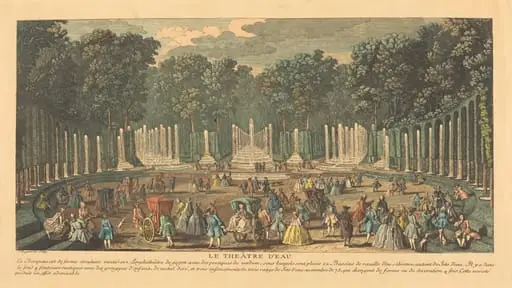 The Theatre of Water (Le Théâtre d'Eau)
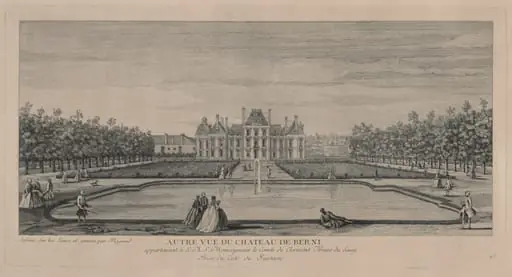 Chateau of Berny from the Gardens
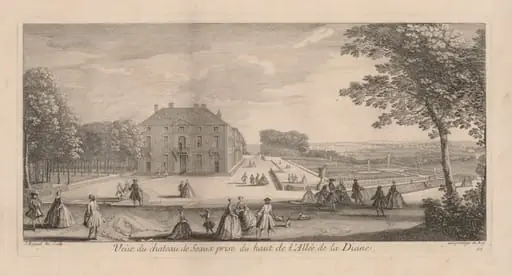 View of the Chateau de Seaux from Diana's Promenade
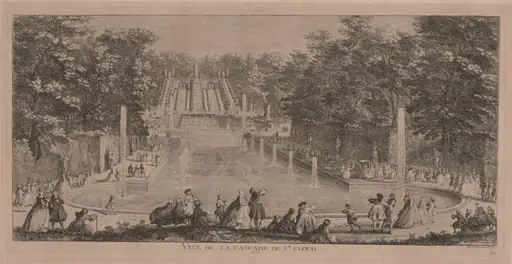 The Cascades of St. Cloud
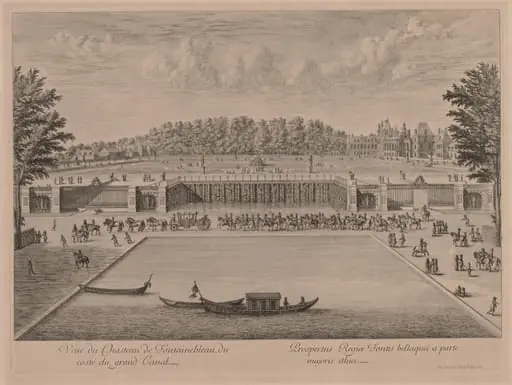 Chateau Fontainebleau from the Grand Canal
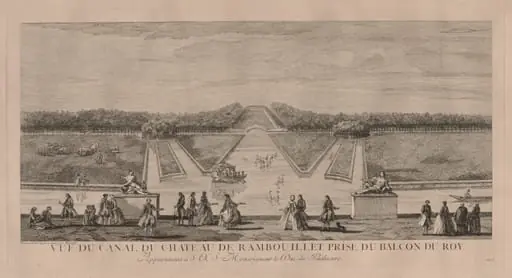 The Chateau from the Canal at Rambouillet
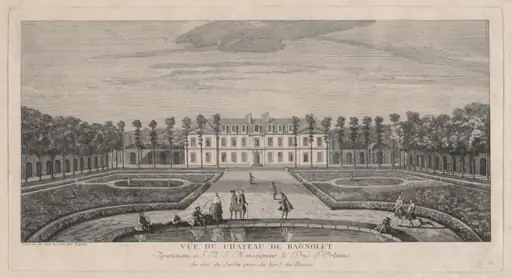 Chateau of Bagnolet
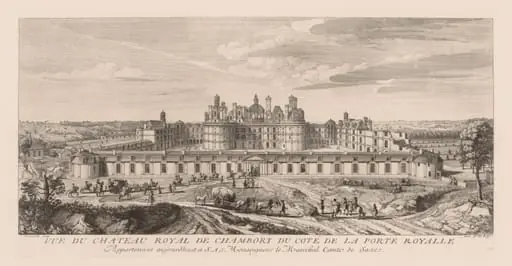 Vue du Château royal de Chambord, du côte de la Porte royale