Artwork
Veue des petittes Cascades de Vaux
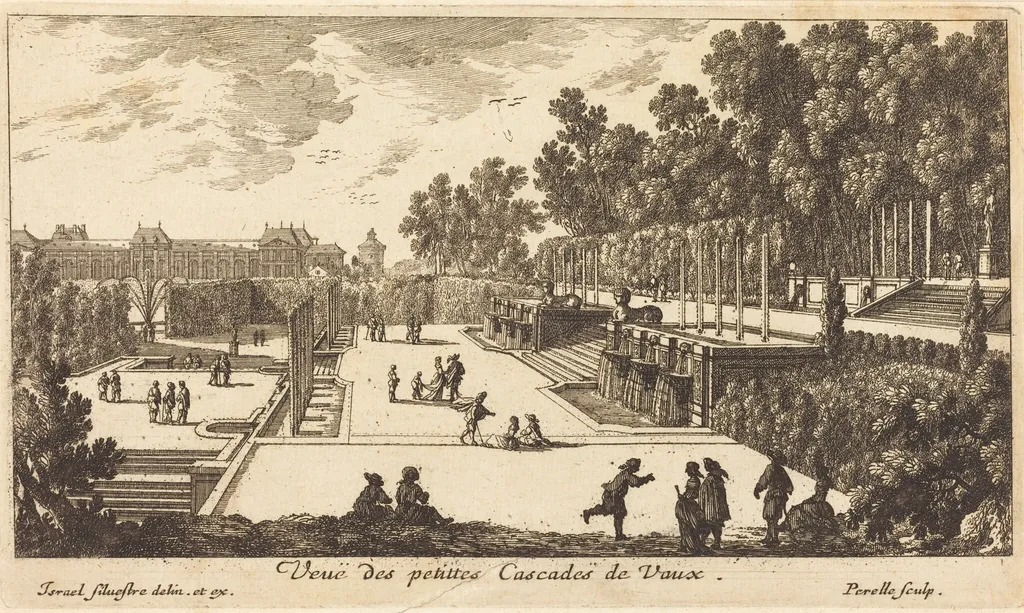
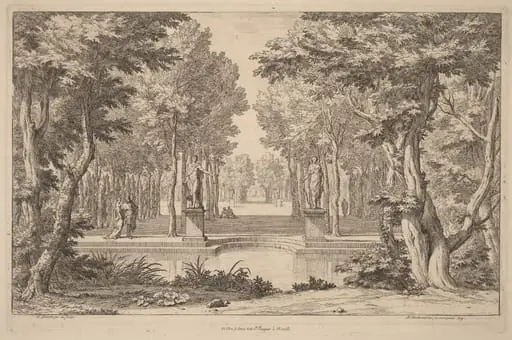
Veue des petittes Cascades de Vaux is an ink print by the Baroque artist Israël Silvestre. It dates from 1656 and is held in the collection of the National Gallery of Art.
About this work
Overview
Created in 1656, *Veue des petittes Cascades de Vaux* is an etching by French artist Israel Silvestre, capturing a landscaped garden feature at the Vaux estate.
Created in 1656, *Veue des petittes Cascades de Vaux* is an etching by French artist Israel Silvestre, capturing a landscaped garden feature at the Vaux estate. As a topographical draftsman, Silvestre translated his on-site sketches into precise printed views, emphasizing architectural and natural elements with careful line work. This piece belongs to a series documenting French gardens and water features, reflecting the era’s interest in ordered, cultivated nature.
Subject & Meaning
The scene portrays a modest cascade within a formal garden, surrounded by trees and figures engaged in quiet leisure. The presence of pedestrians suggests a space designed for contemplation and social strolling, typical of aristocratic estates. Silvestre’s focus on the cascade as a central motif underscores its role as both a hydraulic feature and a symbol of refined taste, aligning with contemporary ideals of harmony between nature and human design.
Technique & Style
Silvestre employed fine, controlled etching lines to render texture in foliage, stone, and water, creating a sense of depth without heavy shading. The composition is structured with receding planes—foreground figures, midground water, and distant architecture—guided by linear perspective. His palette, limited to ink tones, relies on variation in line density to suggest light and volume, characteristic of 17th-century topographical printmaking.
History & Provenance
Orphaned in childhood, Silvestre was raised by his uncle, a Parisian print-seller linked to Jacques Callot, and trained in the craft of etching. He traveled widely across Europe, sketching landscapes and monuments, which later informed his published views. *Veue des petittes Cascades de Vaux* was likely produced from drawings made during his visits to French estates, and circulated among collectors interested in documented scenery rather than imaginative landscapes.
Context
In mid-17th century France, detailed topographical prints served both documentary and decorative functions, especially among the nobility. Silvestre’s work emerged alongside the expansion of royal gardens under Louis XIV, where water features like cascades were engineered as symbols of control over nature. His prints contributed to a growing market for visual records of estates, bridging art, surveying, and aristocratic identity.
Legacy
Silvestre’s etchings, including this view, became reference points for later garden designers and topographers. His methodical approach influenced the documentation of French landscapes in the decades before the rise of romanticized naturalism. Though not widely celebrated in his lifetime, his corpus remains a valuable archive of pre-modern French estate design, preserved in institutional collections across Europe.
Artist & collection
Artist
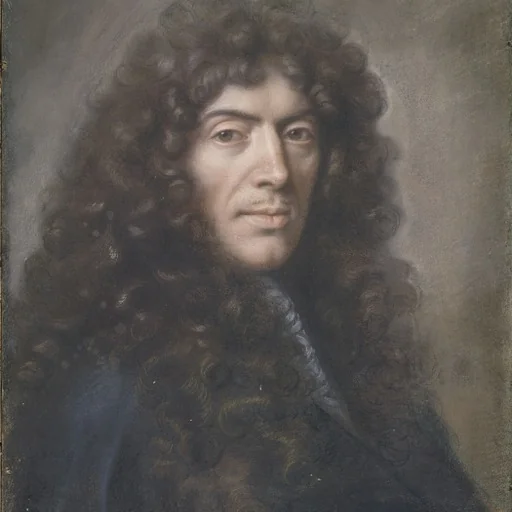
Israel Silvestre (13 August 1621 in Nancy – 11 October 1691 in Paris), called the Younger to distinguish him from his father, was a prolific French draftsman, etcher and print dealer who specialized in topographical views and perspectives…

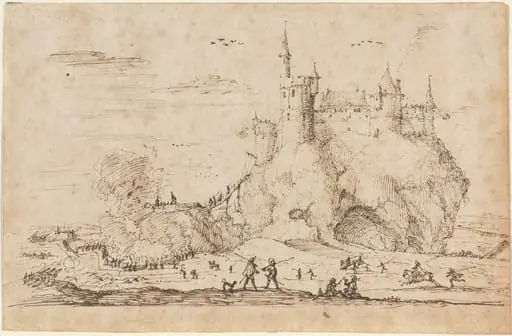 Castle under Siege
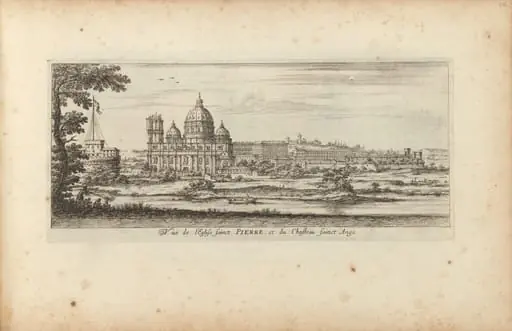 Vuë de l'Eglise sainct Pierre, et du Chasteau Sainct Ange
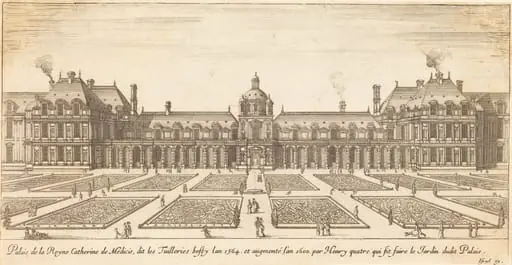 Palais de la Reyne Catherine de Medicis
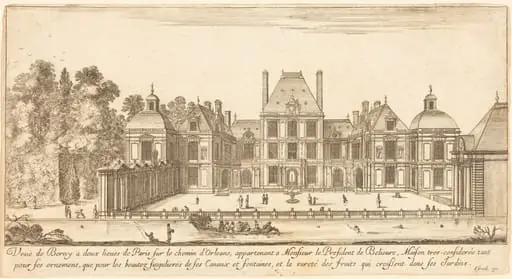 Veue de Berny a deux lieues de Paris sur le chemin d'Orléans
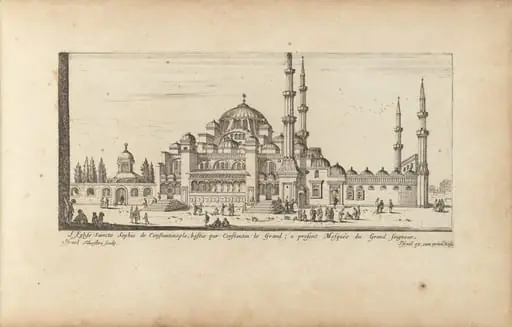 L'Eglise Saincte Sophie de Constantinople, bastie par Constantin le Grand; a present Mosquée du Grand seigneur
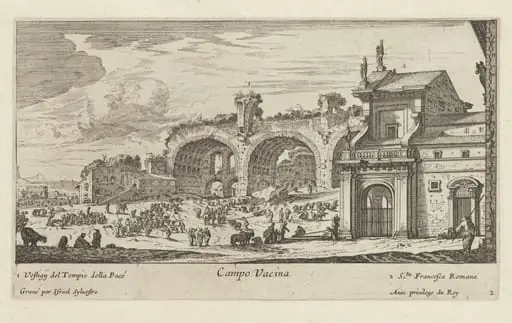 Campo Vacina
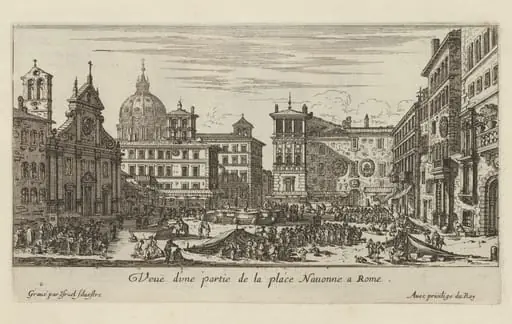 Veuë d'une partie de la place Navonne a Rome
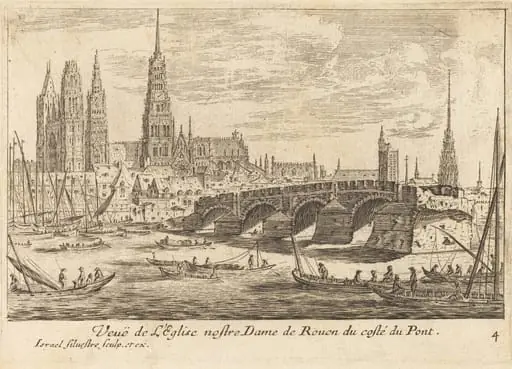 Veue de l'Eglise nostre Dame de Rouen
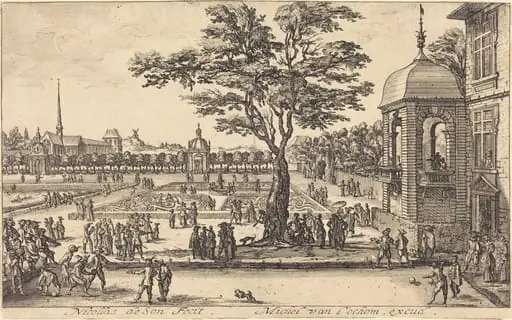 View of a Garden
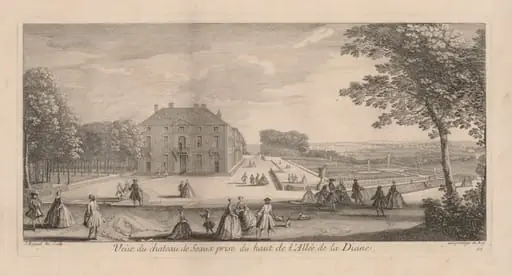 View of the Chateau de Seaux from Diana's Promenade
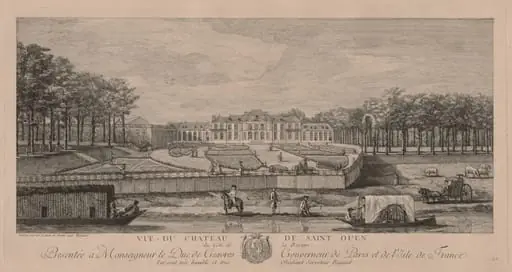 The Chateau of Saint Ouen
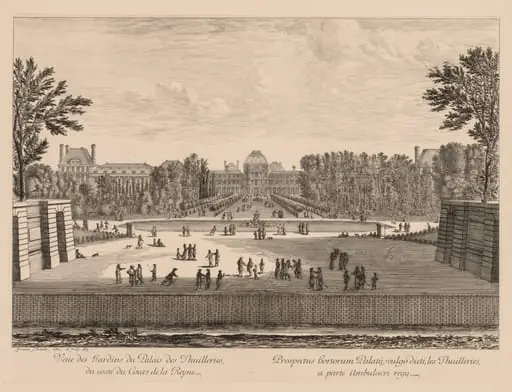 Vue du palais et des jardins des Tuileries, du côté du cours la Reine
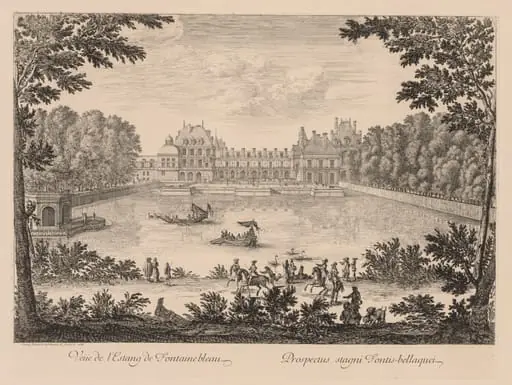 Vue de l'Etang de Fontainebleau
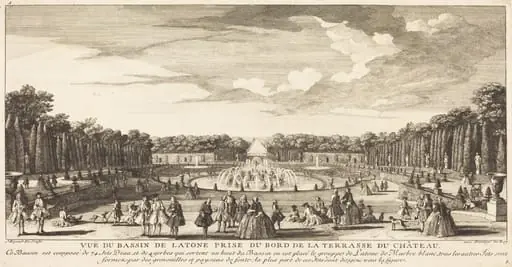 Vue du Bassin de Latone Prise du Bord de la Terrasse du Chateau
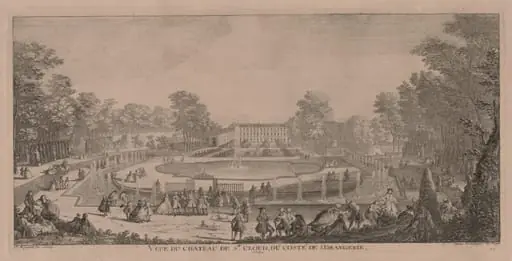 Chateau St. Cloud
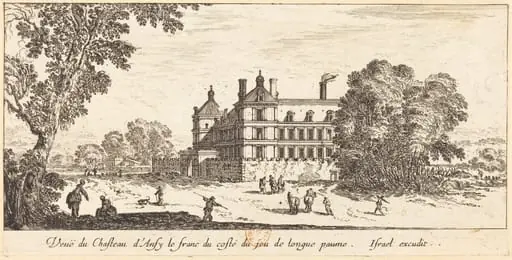 Veue du Chasteau d'Ansy le franc du coste du jeu de longue paume
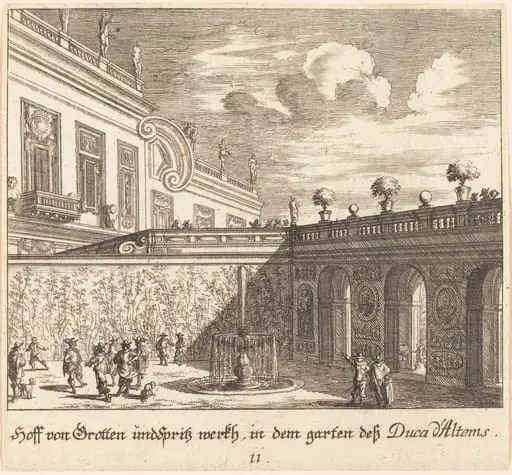 Garden, Duke d'Altems
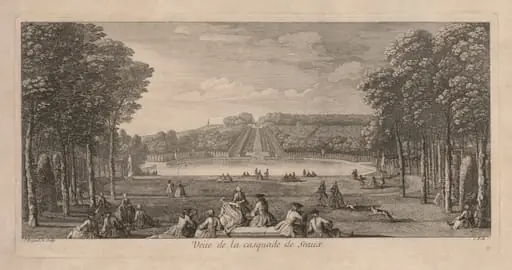 View of the Cascade de Seaux
 The Two Statues