Artwork
The Chateau of Saint Ouen
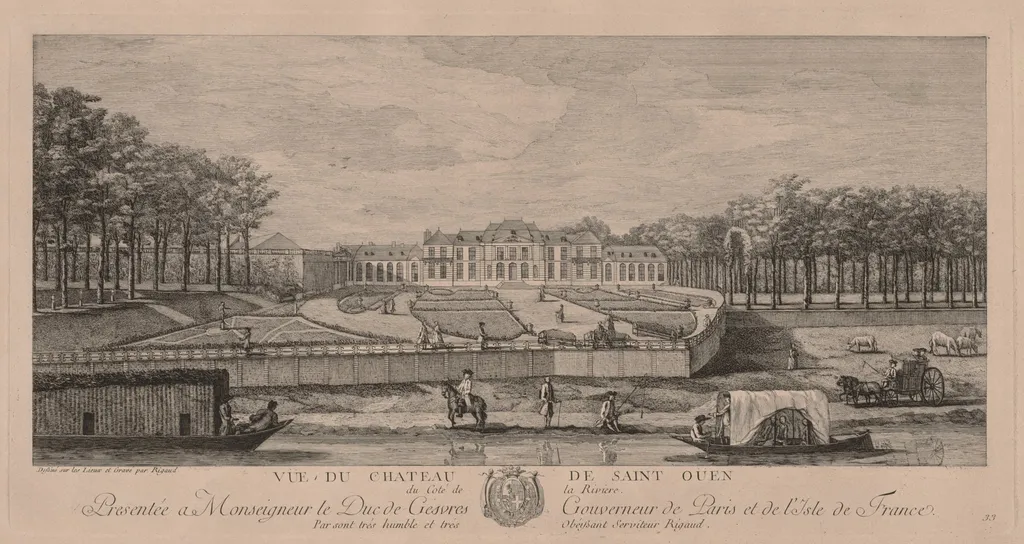
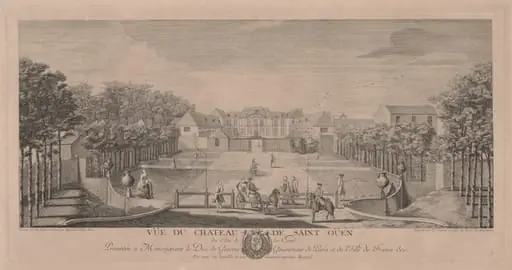
The Chateau of Saint Ouen is a print by the Baroque artist Jacques Rigaud. It dates from 1727 and is held in the collection of the Cleveland Museum of Art.
About this work
Overview
Created in 1727 by French artist Jacques Rigaud, this print depicts the Château de Saint-Ouen, a rural estate near Paris.
Created in 1727 by French artist Jacques Rigaud, this print depicts the Château de Saint-Ouen, a rural estate near Paris. Rendered in a precise, observational style, the work captures the architecture and surrounding landscape with careful attention to spatial depth and natural elements. Though classified as a religious painting in some records, the scene contains no overt religious figures or symbols, suggesting the label may be misleading or misattributed.
Subject & Meaning
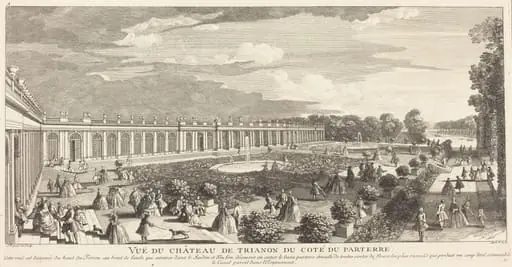
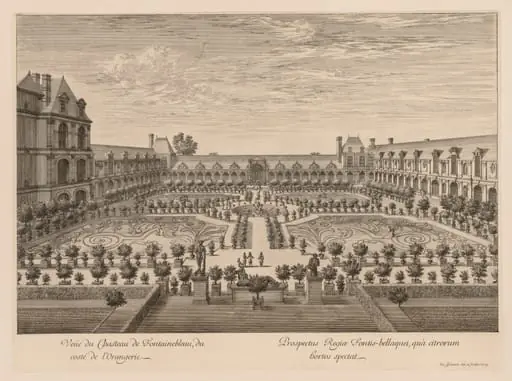
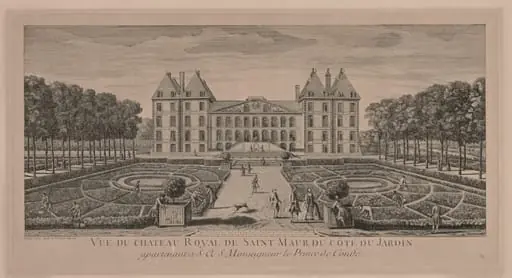
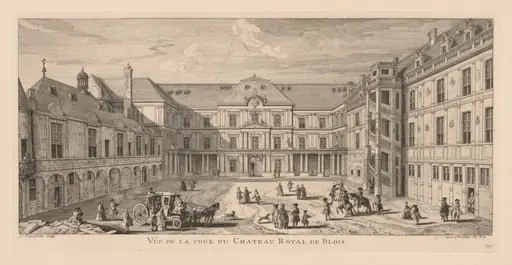
The composition centers on the château’s symmetrical façade, framed by dense trees and a perimeter wall. In the foreground, figures engage in daily rural activities—riding, walking, tending animals—while livestock graze beyond. The scene evokes quiet domestic life rather than sacred narrative. The absence of religious iconography implies the work may function as a topographical record or a celebration of aristocratic landholding, not devotional imagery.
Technique & Style
Rigaud employed fine linear detail and muted tonal gradations to render textures of stone, foliage, and fabric. The perspective is carefully constructed to guide the eye from the foreground figures toward the building’s central axis. The style reflects Baroque-era precision in architectural depiction, with an emphasis on clarity and order rather than dramatic lighting or emotional intensity, aligning with French topographical traditions of the period.
History & Provenance
The print entered the collection of The Cleveland Museum of Art in the 20th century, though its earlier ownership history is not fully documented. It was likely produced as part of a series of estate views commissioned by French aristocracy or used as a decorative record of property. Rigaud, known for architectural drawings, may have created this as a preparatory study or independent print for private circulation.
Context
In early 18th-century France, detailed depictions of country estates were popular among the nobility as symbols of status and landownership. Rigaud’s work aligns with a broader trend of topographical art that documented architecture and rural life without idealization. Such images served both as personal mementos and as records of property, reflecting the cultural value placed on territorial identity during the ancien régime.
Legacy
Though not widely exhibited outside specialized collections, Rigaud’s print remains a representative example of French architectural drawing from the early Baroque period. Its preservation in a major American museum underscores its value as a historical document. The work contributes to scholarly understanding of how land, labor, and architecture were visually codified in pre-revolutionary France.
Artist & collection


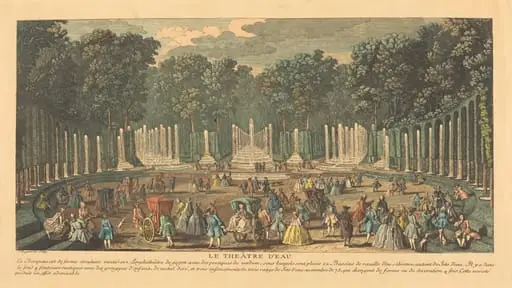 The Theatre of Water (Le Théâtre d'Eau)
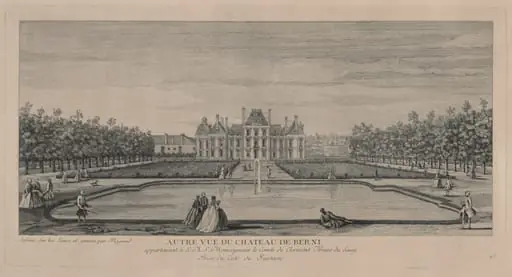 Chateau of Berny from the Gardens
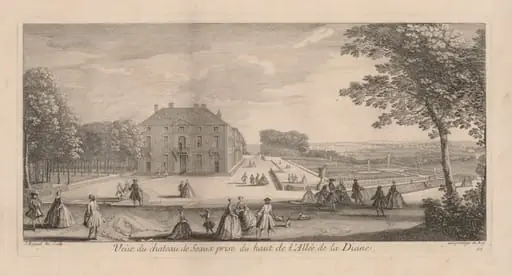 View of the Chateau de Seaux from Diana's Promenade
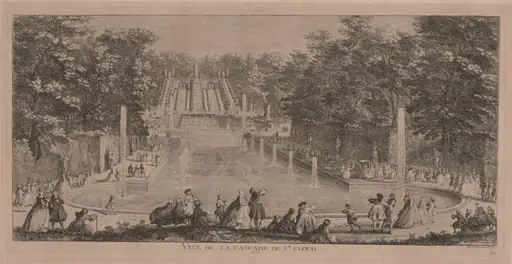 The Cascades of St. Cloud
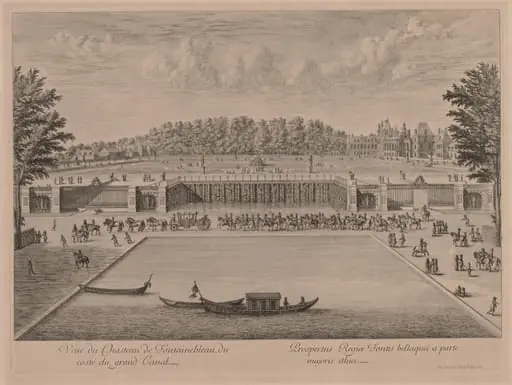 Chateau Fontainebleau from the Grand Canal
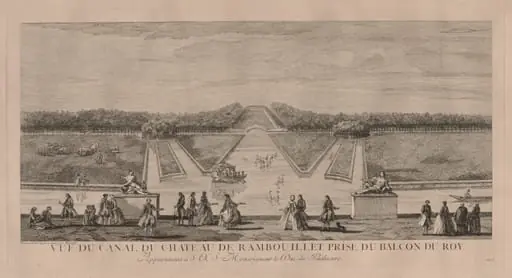 The Chateau from the Canal at Rambouillet
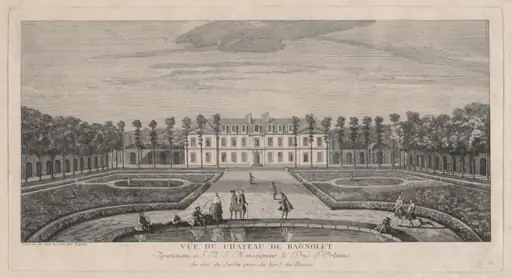 Chateau of Bagnolet
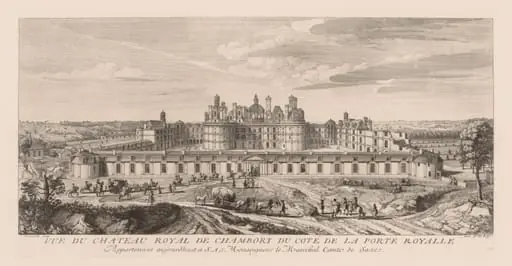 Vue du Château royal de Chambord, du côte de la Porte royale