Artwork
The Martyrdom of St Stephen
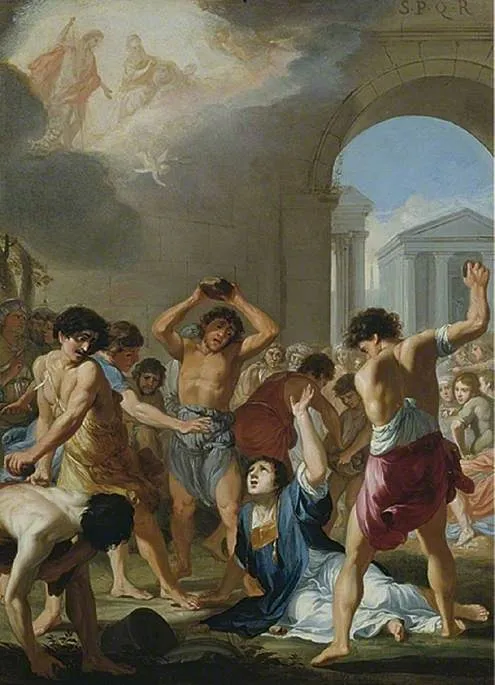
The Martyrdom of St Stephen is an oil painting by Jacques Stella. It dates from 1623 and is held in the collection of the Fitzwilliam Museum.
About this work
Overview
Jacques Stella’s *The Martyrdom of St Stephen* (1623) is an oil painting executed on copper. The composition centers on the biblical figure of Stephen at the moment of his execution by stoning, surrounded by an agitated crowd. Dark, clouded skies and a looming stone arch frame the scene, contributing to a tense atmosphere that emphasizes the drama of the event.
Subject & Meaning
The work portrays the early Christian martyr’s final moments, emphasizing his calm resignation amid violent assault. Stephen’s raised arms and blue robe contrast with the aggressive gestures of the stone‑throwers, suggesting a spiritual steadfastness confronting earthly hostility. The painting thus reflects themes of faith, sacrifice, and the triumph of belief over persecution.
Technique & Style
Stella employed the smooth, luminous surface of copper to achieve fine detail and a controlled palette. The restrained coloration and clear delineation of forms align with the Atticist tendency toward clarity and classical balance. Light falls sharply on the central figure, while the surrounding crowd recedes into softer tones, creating depth and movement within a compact format.
History & Provenance
Created in 1623, the painting entered the collection of the Fitzwilliam Museum, where it remains on display. Stella, a French artist active in Paris, was a prominent exponent of the neoclassical Atticism movement, which sought to revive the compositional order of classical antiquity in early‑17th‑century French painting.
Artist & collection
Artist
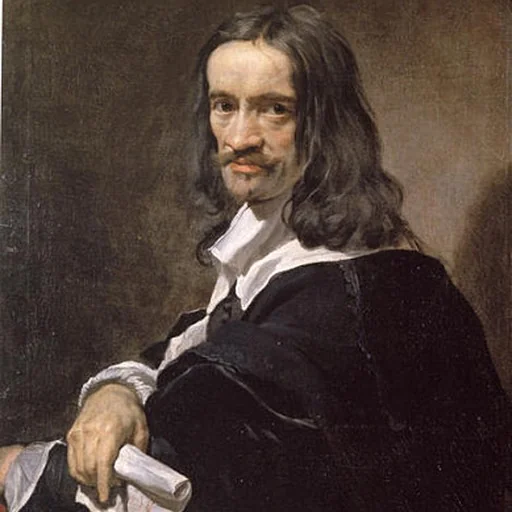
Jacques Stella (1596 – 29 April 1657) was a French painter, a leading exponent of the neoclassical style of Parisian Atticism.

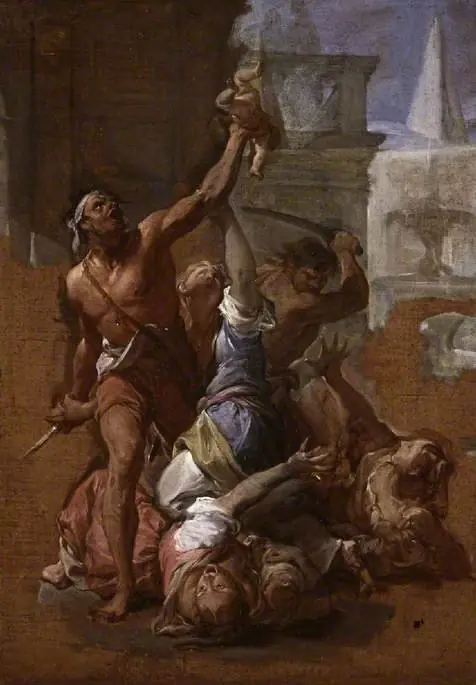 Study for 'The Massacre of the Innocents'
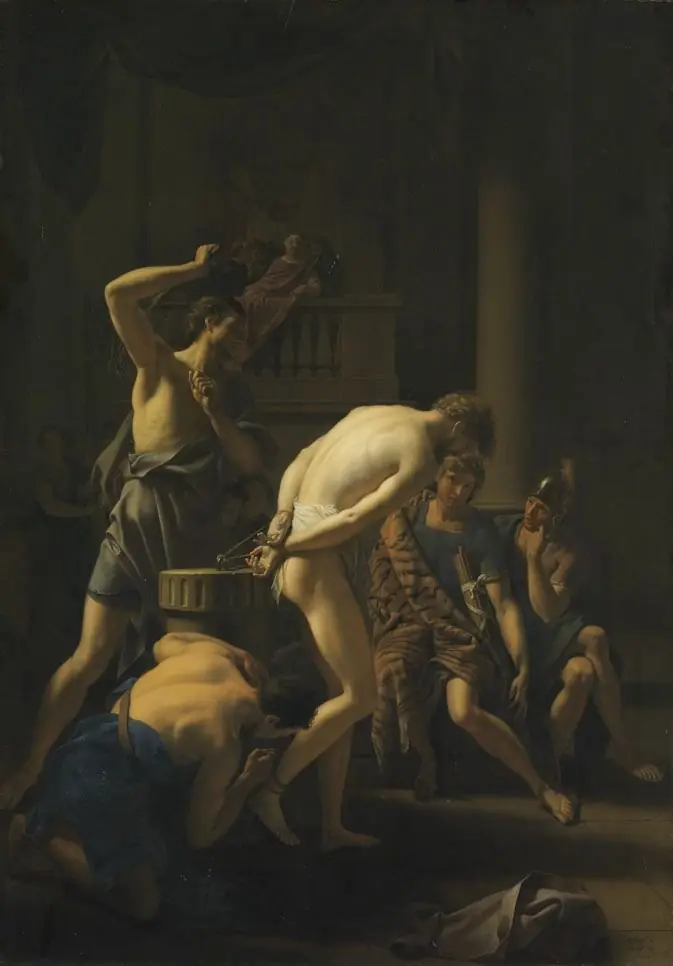 Flagellation of Christ
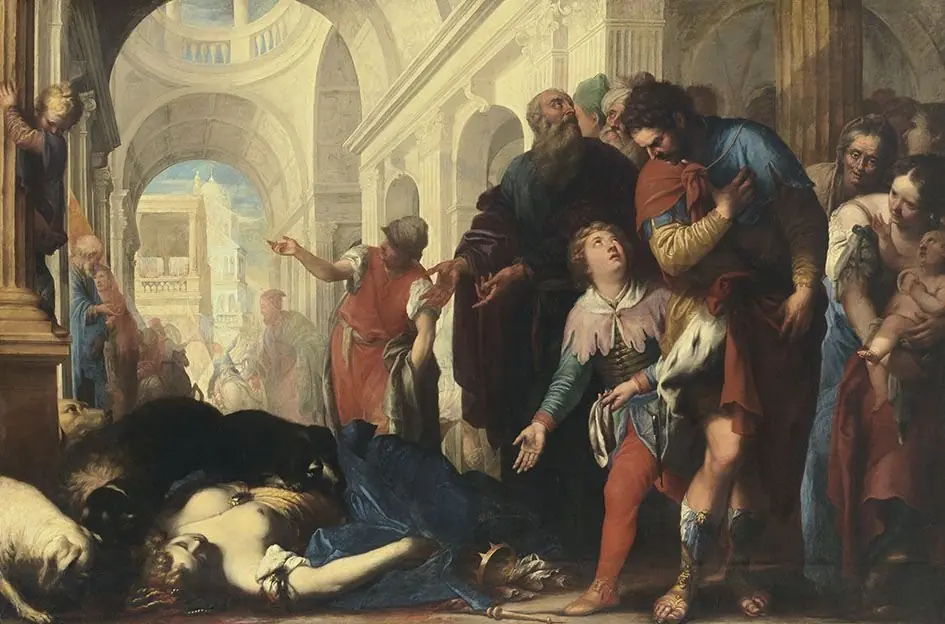 Königin Jezabel wird den Hunden vorgeworfen
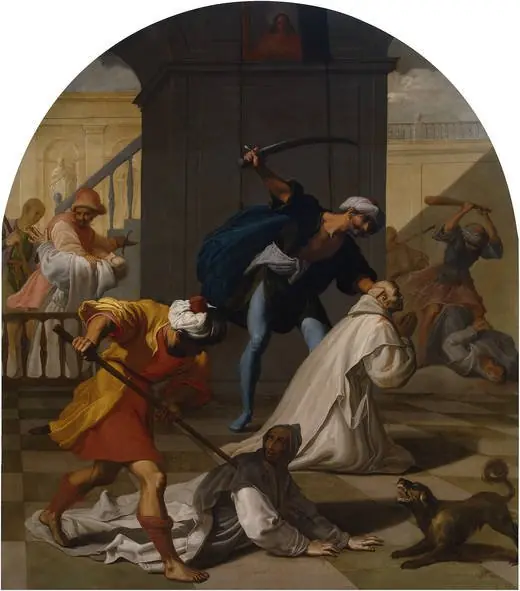 The Martyrdom of the Mauerbach Carthusians
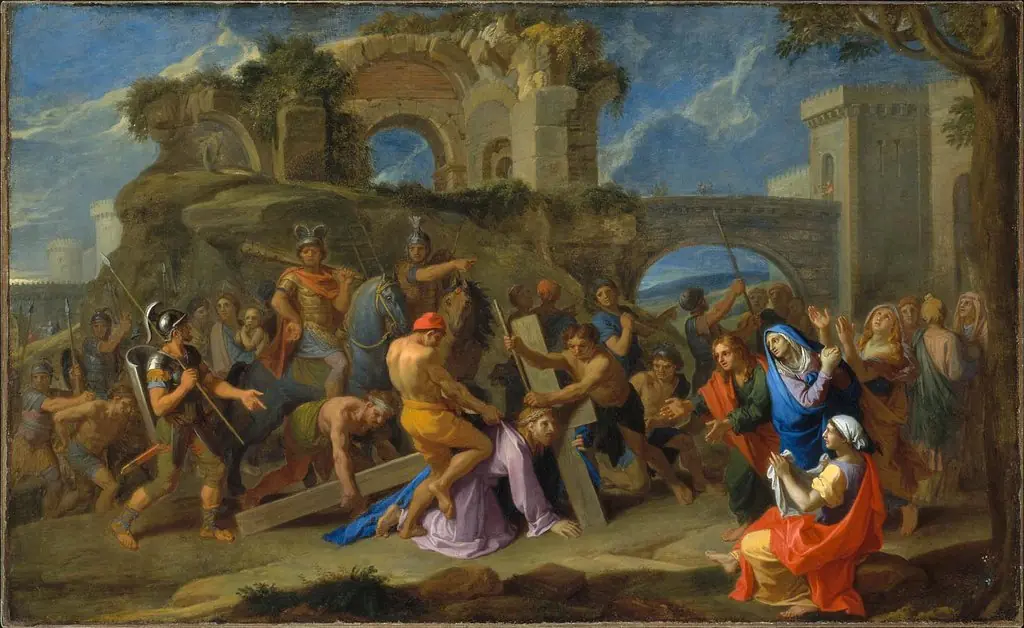 Christ Carrying the Cross
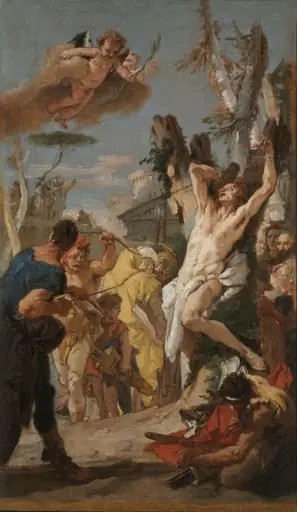 Study for "The Martyrdom of Saint Sebastian" (for the Augustinian monastery at Diessen, Germany)
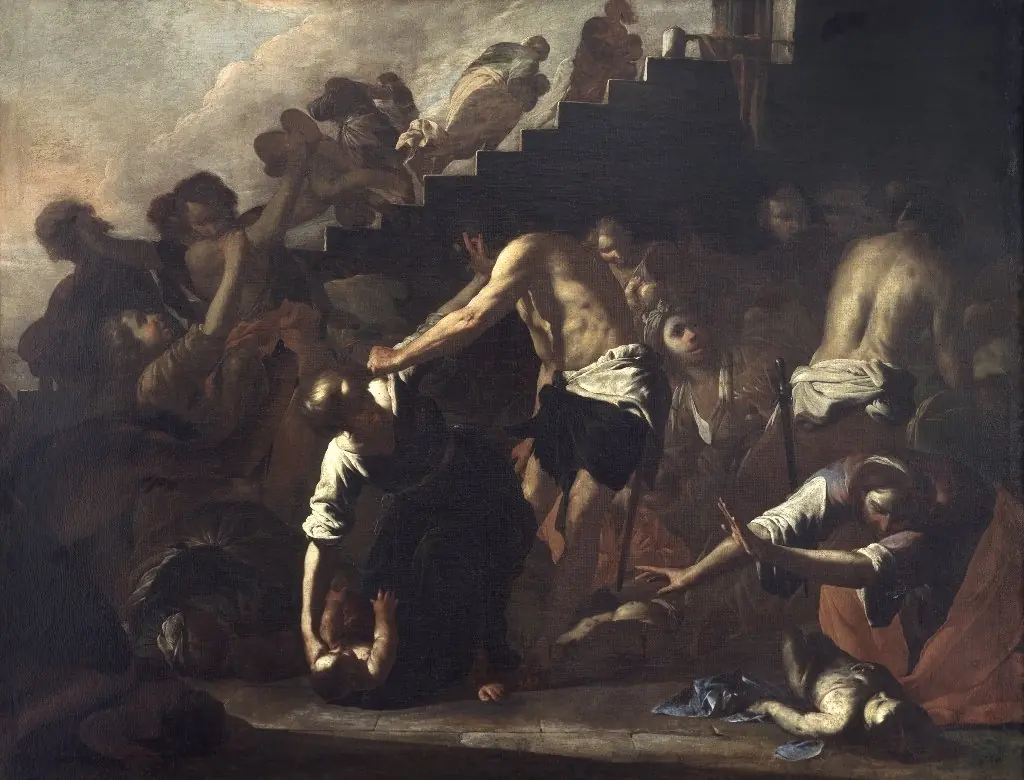 Massacre of the Innocents
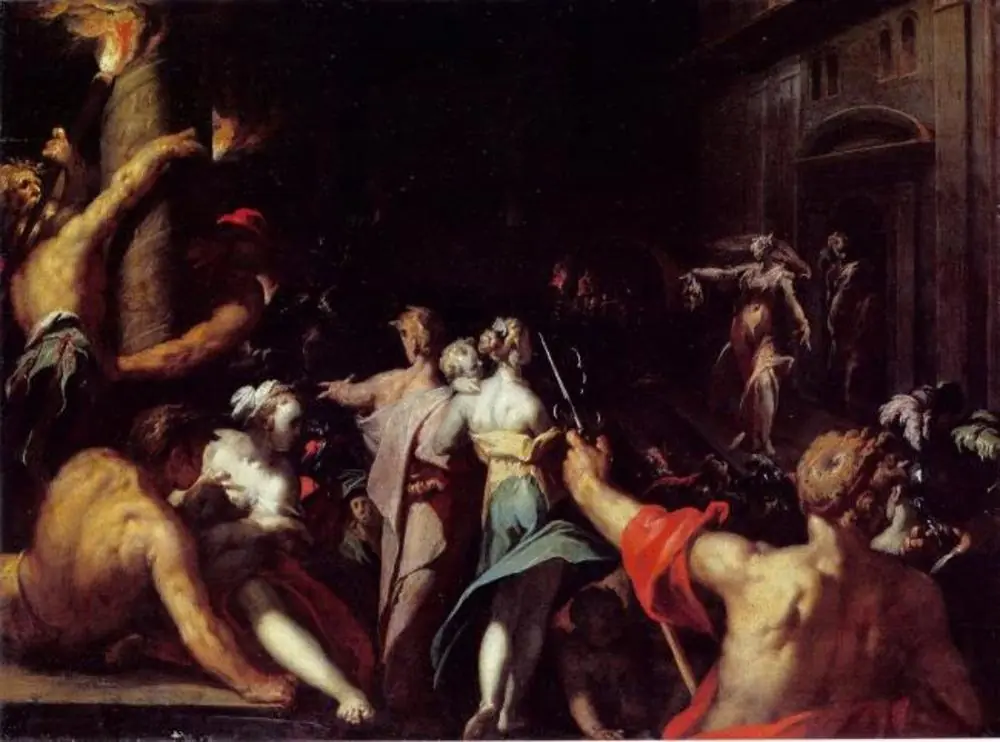 Judith Displays the Head of Holofernes
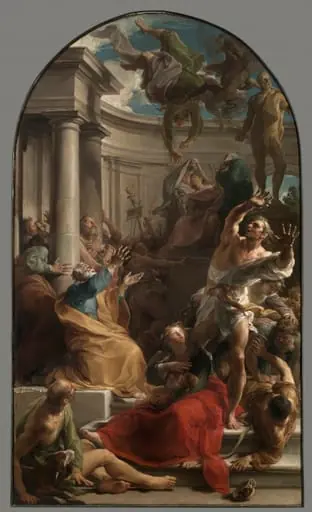 The Fall of Simon Magus
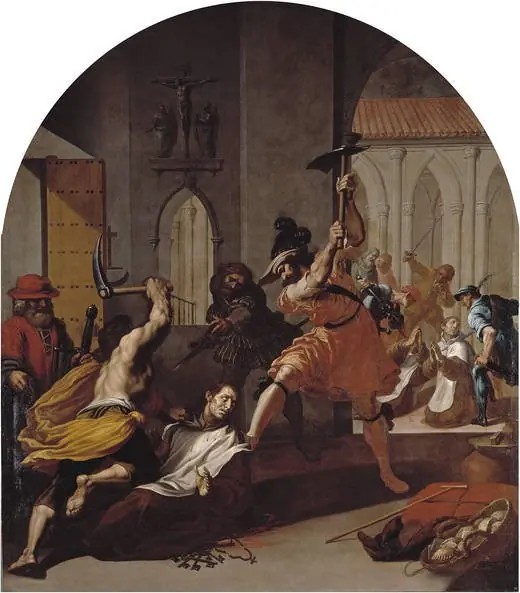 The Martyrdom of the Roermond Carthusians
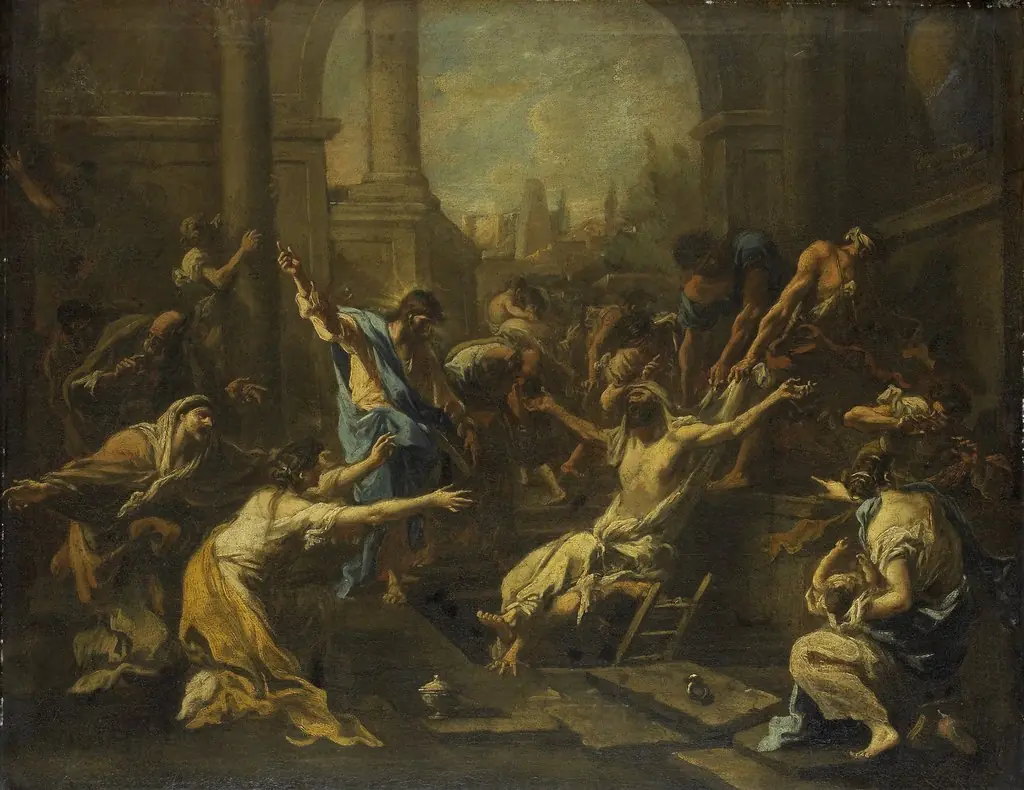 The Raising of Lazarus
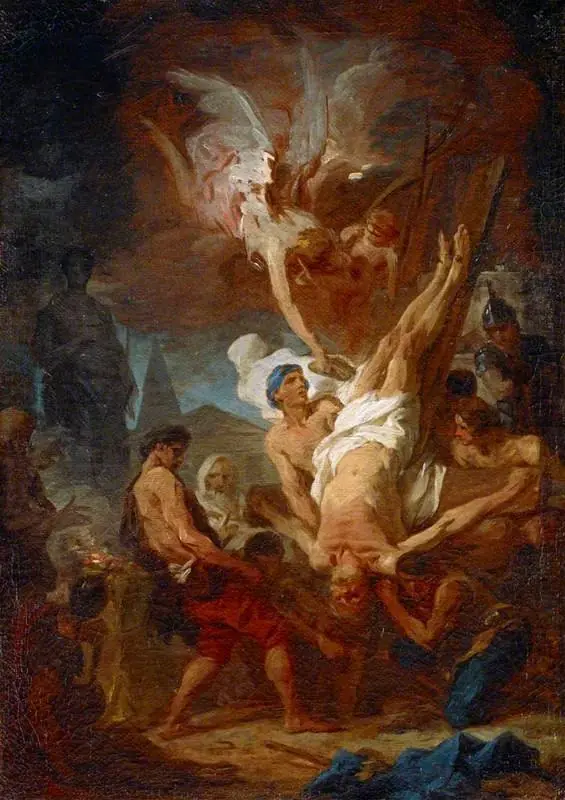 The Crucifixion of Saint Peter