Artwork
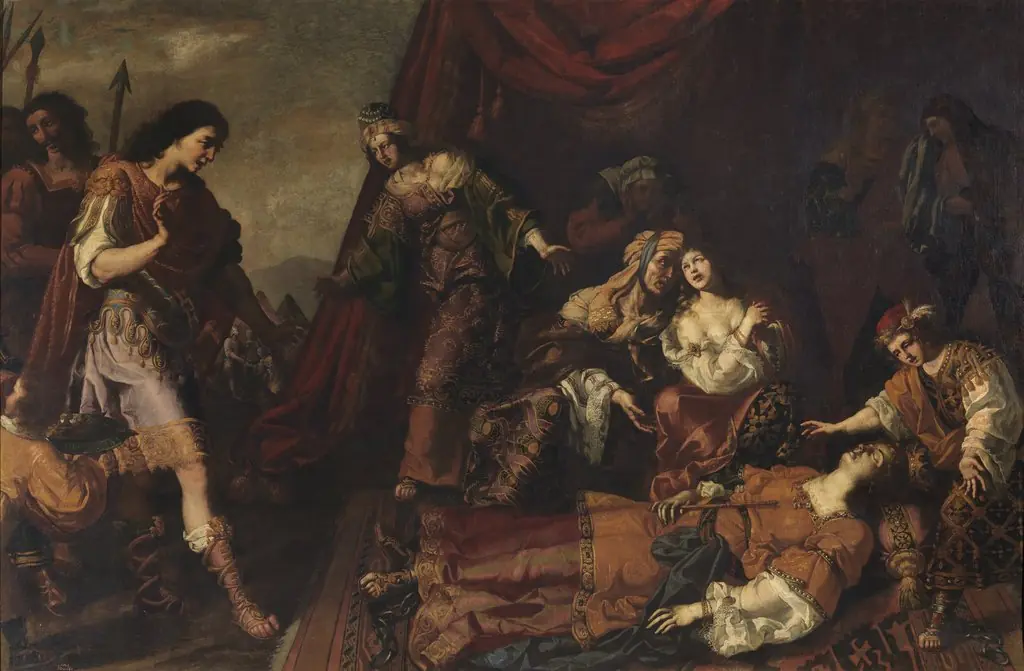
Königin Jezabel wird den Hunden vorgeworfen
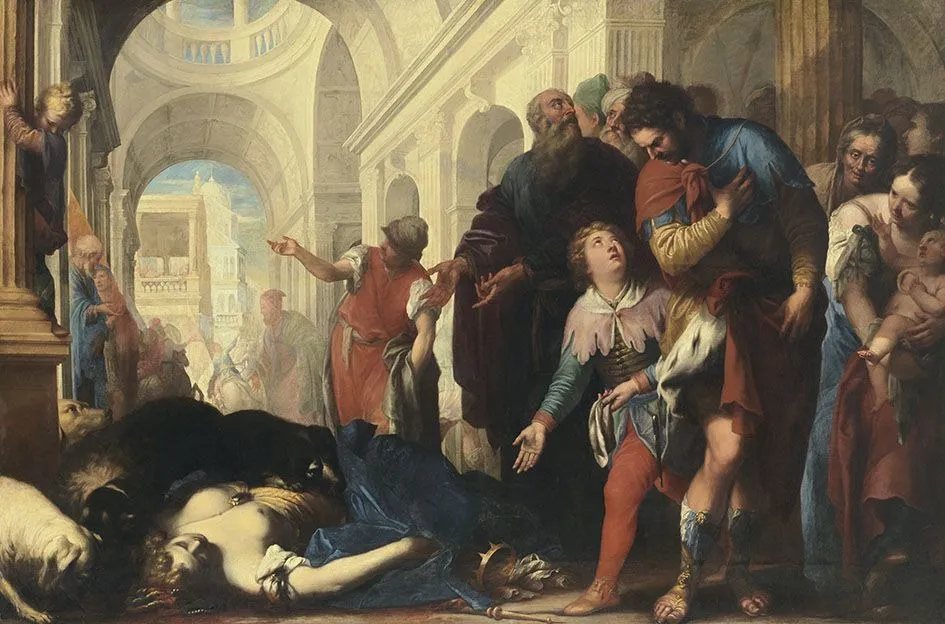
Königin Jezabel wird den Hunden vorgeworfen is an unspecified painting by the Early Baroque Italian artist Claudio Ridolfi. It is held in the collection of the Bavarian State Painting Collections.
About this work
Overview
Claudio Ridolfi’s mid‑17th‑century canvas, dated around 1650, presents a biblical episode centered on the figure of Jezebel. Executed in the Baroque period, the work is part of the Alte Pinakothek’s collection in Munich and is classified as a religious painting.
Subject & Meaning
The composition dramatizes the downfall of the infamous queen Jezebel, whose name has become synonymous with moral corruption. By placing her prone on the floor, the artist emphasizes her vulnerability and the consequences of her actions, inviting viewers to reflect on themes of justice and divine retribution.
Technique & Style
The use of rich, saturated colors—particularly the vivid red of the standing man’s trousers—draws the eye to the focal point of the narrative.
Ridolfi employs a strong chiaroscuro contrast, illuminating the central figures while casting the surrounding hall in shadow. The use of rich, saturated colors—particularly the vivid red of the standing man’s trousers—draws the eye to the focal point of the narrative. Architectural arches and distant structures frame the scene, adding depth and a sense of grandeur typical of Baroque interior settings.
History & Provenance
Created circa 1650, the painting entered the Alte Pinakothek’s holdings at an unspecified later date, where it remains on display. Its attribution to Ridolfi aligns with his known output of religious subjects during his Italian career, though the work’s exact commission remains undocumented.
Context
The depiction of Jezebel aligns with Counter‑Reformation interests in moral exempla, using dramatic storytelling to reinforce ecclesiastical teachings. Ridolfi’s choice of a crowded interior and expressive gestures reflects contemporary trends in Italian Baroque art, which sought to engage viewers emotionally through theatricality.
Artist & collection

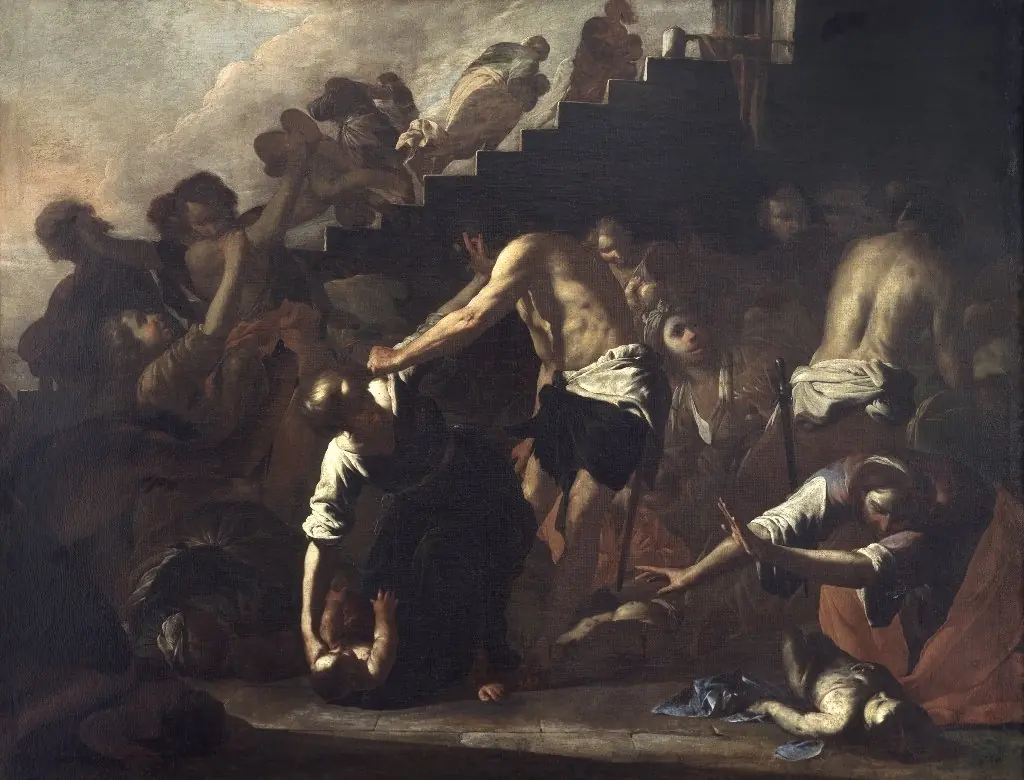 Massacre of the Innocents
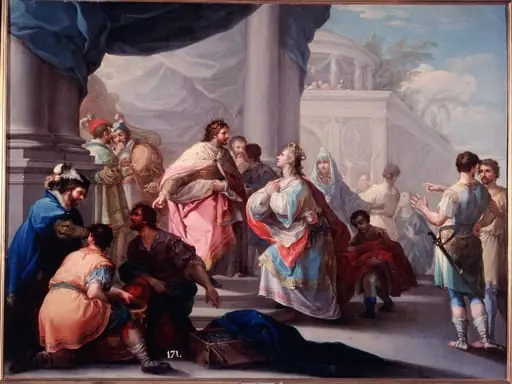 The Empress Marta de Constantinople before Alfonso X. Ramón Bayeu and Subías
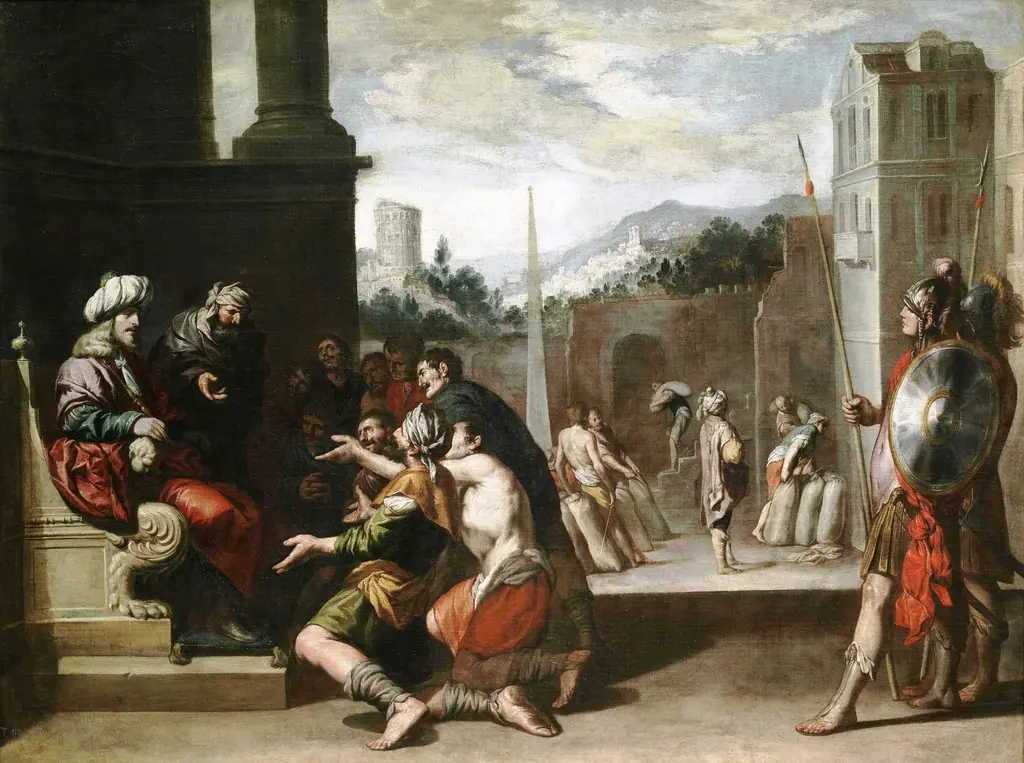 Joseph orders Simeon’s Imprisonment
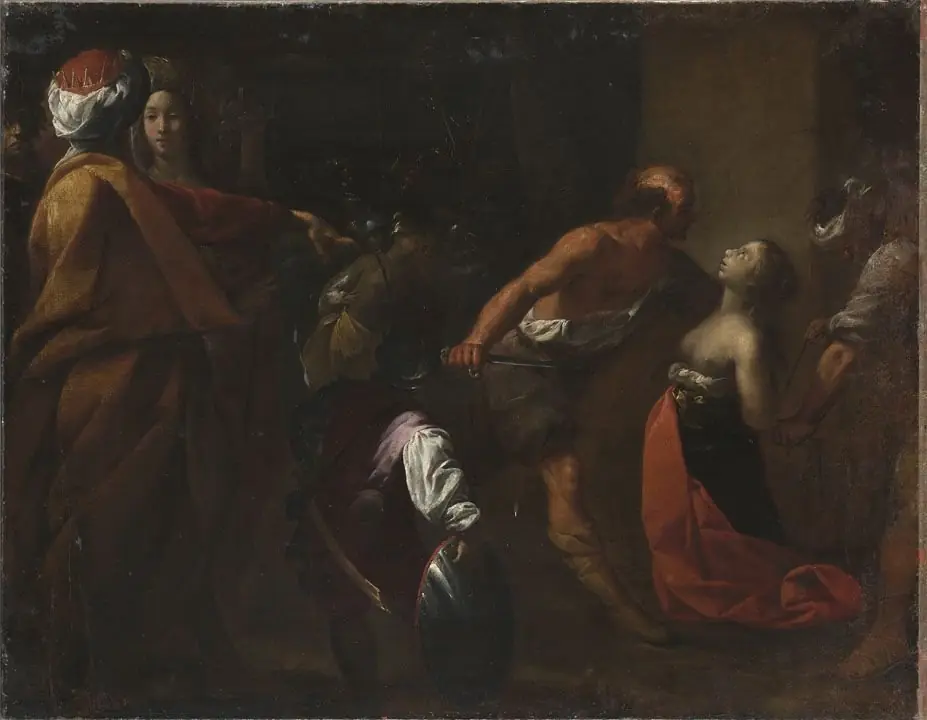 Martyrium der hl. Justina
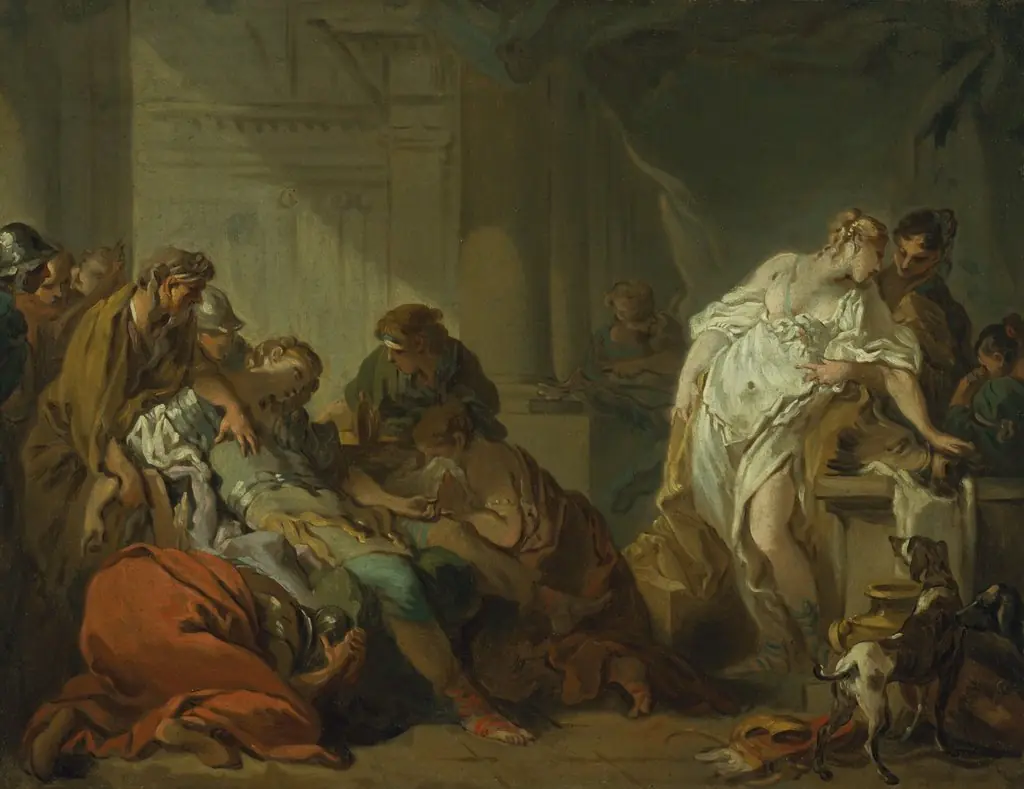 Death of Meleager
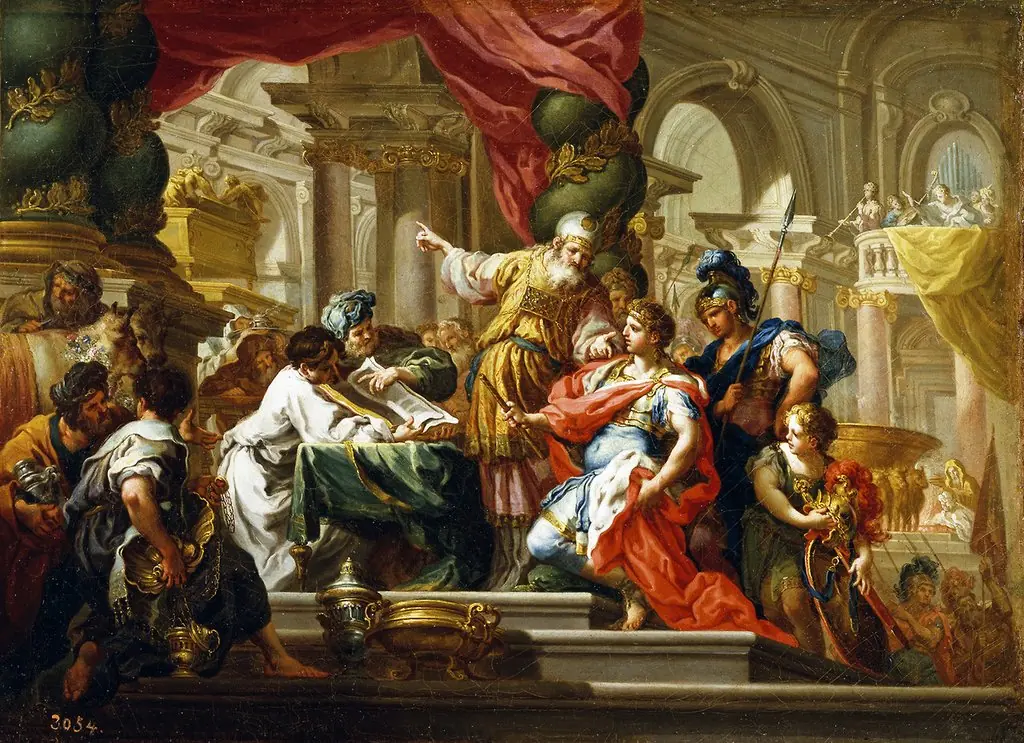 Alexander the Great in the Temple of Jerusalem
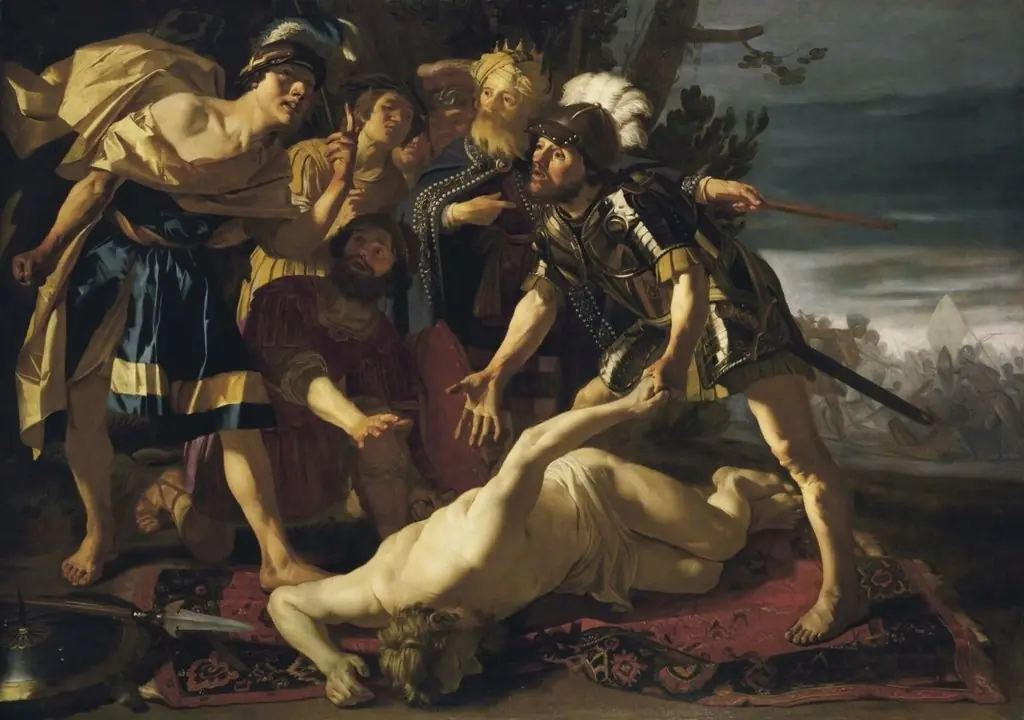 Achilles preparing to avenge the death of Patroclus
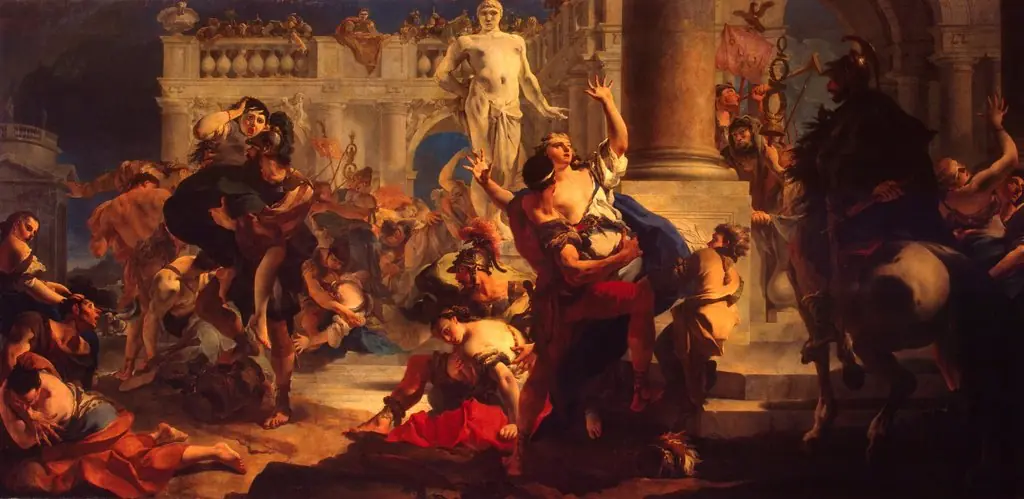 Rape of the Sabine Women
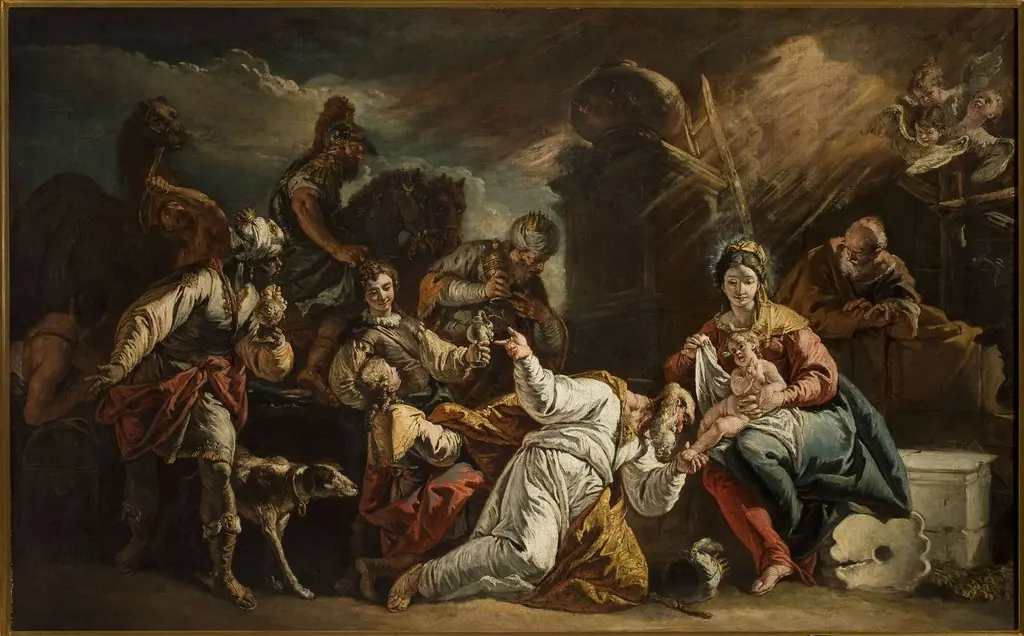 Adoration of the Magi
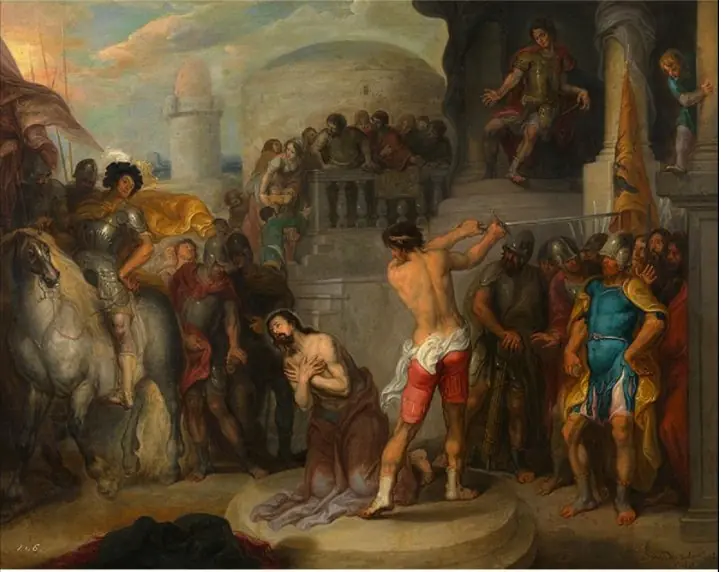 The Beheading of Saint Paul
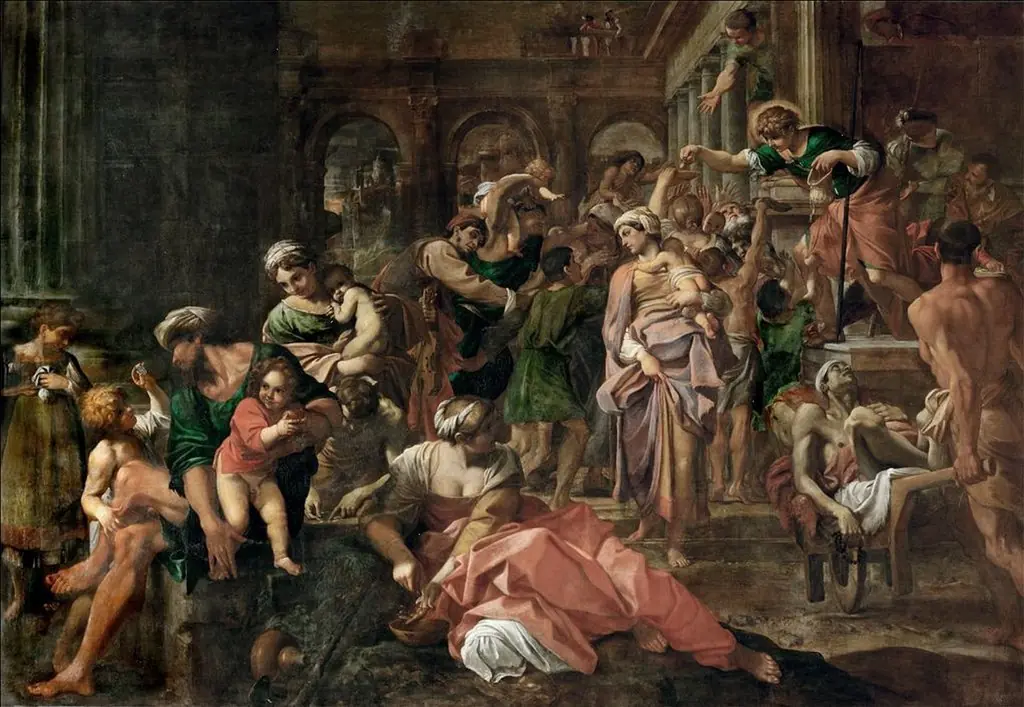 Saint Roch Distributing Alms
 Masinissa Mourning Over the Death of Sophonisba (?)