Artwork
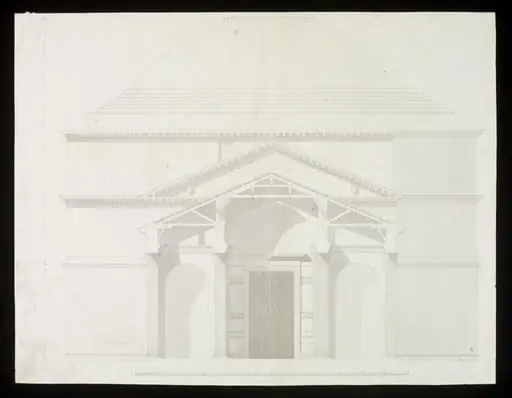
Elevation of Center of the Guard House and North Screen, Buckingham Palace
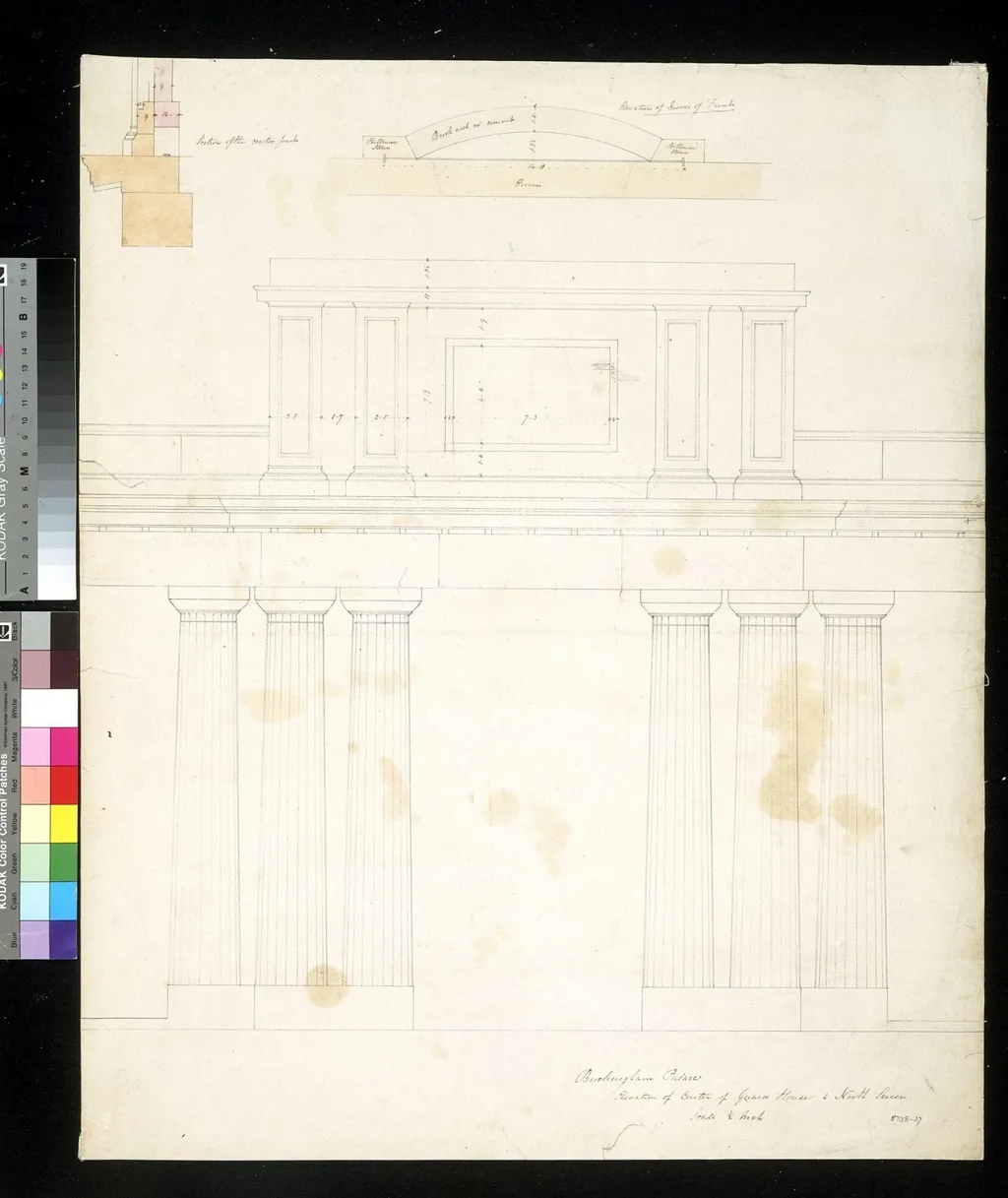
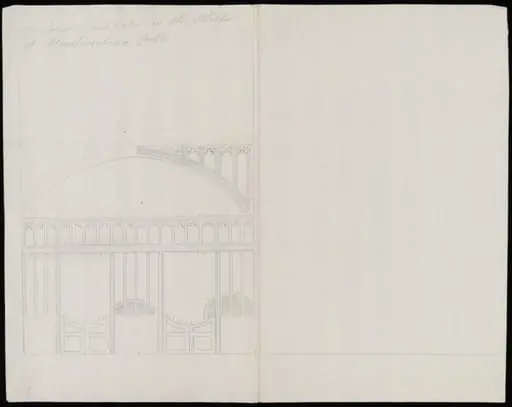
Elevation of Center of the Guard House and North Screen, Buckingham Palace is a drawing by the Romanticist artist John Nash. It dates from 1826 and is held in the collection of the Victoria and Albert Museum.
About this work
Overview
Detailed annotations and color washes indicate material specifications, reflecting its function as a construction guide rather than a decorative piece.
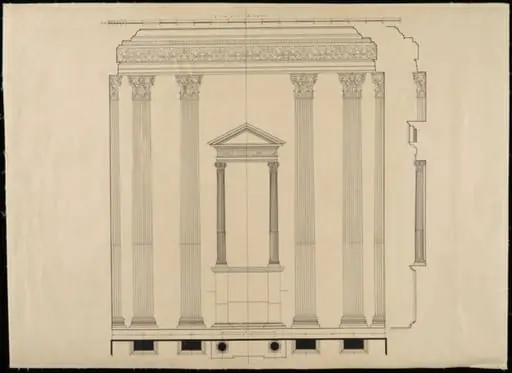
This 1826 architectural drawing by John Nash documents a proposed elevation for the guard house and north screen at Buckingham Palace. Executed in pen and ink with pencil underdrawing, it presents a precise vertical view of a central entranceway framed by six Ionic columns. Detailed annotations and color washes indicate material specifications, reflecting its function as a construction guide rather than a decorative piece.
Subject & Meaning
The drawing focuses on the ceremonial entrance to the palace grounds, emphasizing symmetry and classical order. The central opening, flanked by three columns on each side, signals a formal threshold. The inclusion of a frieze and cornice above suggests an intention to harmonize the structure with royal architecture’s established language, reinforcing authority through restrained classical motifs.
Technique & Style
Nash employed fine pen lines for structural definition, layered with pencil for initial layout and subtle color washes to distinguish stone, metal, and plaster. Measurements and labels are meticulously inscribed, underscoring the drawing’s utilitarian purpose. The precision of the rendering reflects the professional standards of Regency-era architectural practice, prioritizing clarity over expressive flourish.
History & Provenance
Created during Nash’s tenure as royal architect, the drawing was part of a broader renovation program commissioned by George IV. It was likely used by builders and craftsmen to execute the palace’s northern facade. The work remained within royal archives, later transferred to the Royal Collection, where it endures as a record of early 19th-century palace expansion.
Context
Nash’s design emerged amid a wave of classical revival in British royal architecture, influenced by Palladian and Greek Revival ideals. The use of Ionic columns and ornamental cornices aligned with contemporary tastes for dignified, monumental forms. This elevation was one of many proposals intended to transform Buckingham House into a fitting royal residence, reflecting the monarchy’s desire for architectural legitimacy.
Legacy
The drawing stands as a testament to the meticulous planning behind Victorian-era royal buildings. Though later alterations modified the final structure, Nash’s original vision preserved in this sheet informs scholarly understanding of Regency architectural practice. It remains a key reference in studies of palace evolution and the role of architectural drawings in state construction projects.
Artist & collection
Artist
John Nash worked in ink and pencil, drawing real buildings with sharp lines and careful details.

![The Erectheum, West Elevation [left half], by John Russell Pope](https://artifactworldgallery.com/img/john-russell-pope--the-erectheum-west-elevation-left-half--10b9b48e87f30a0f-w320.webp)