Artwork
Säbisch, Adam von
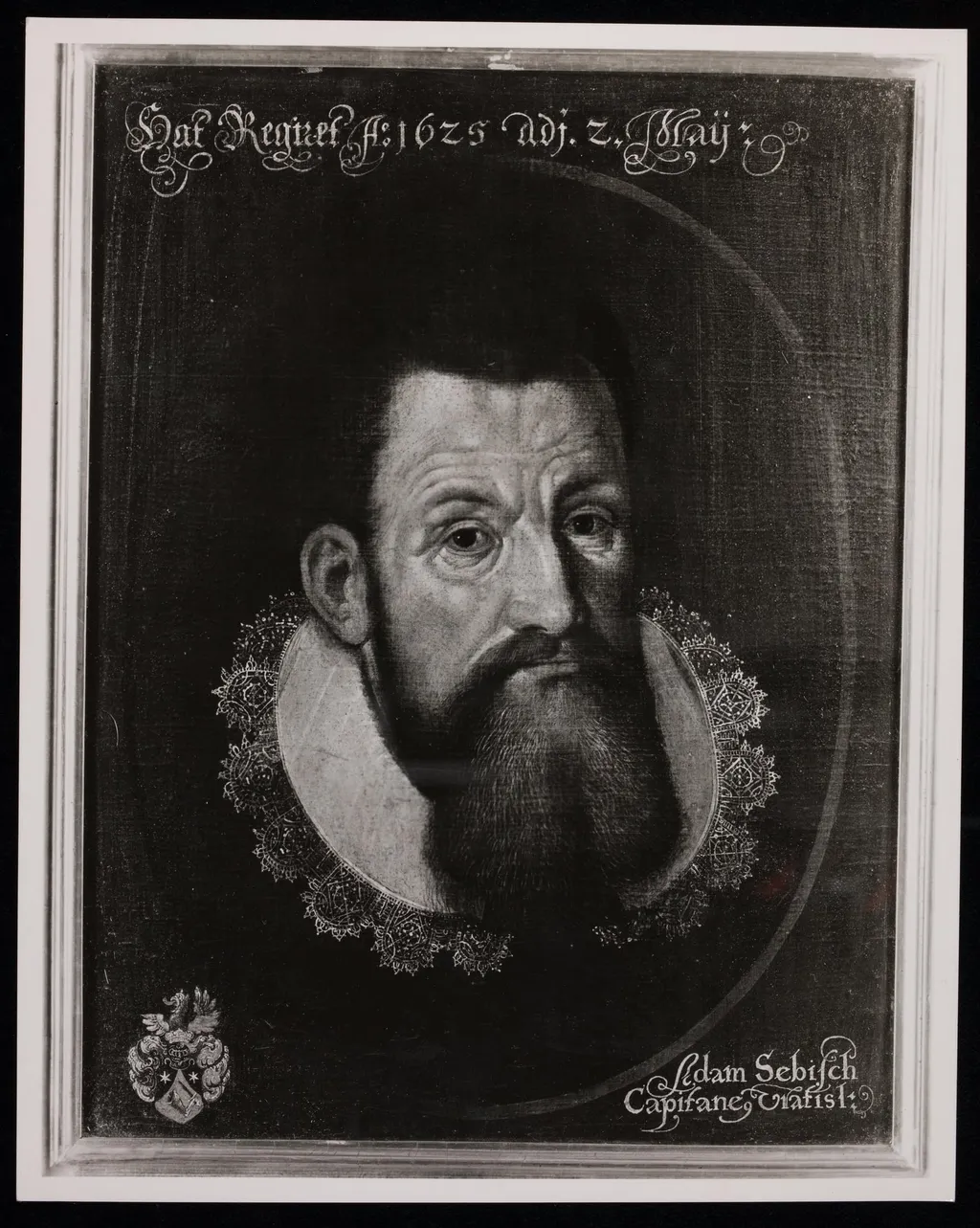
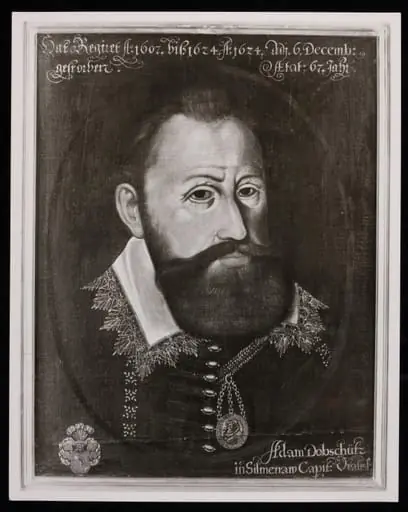
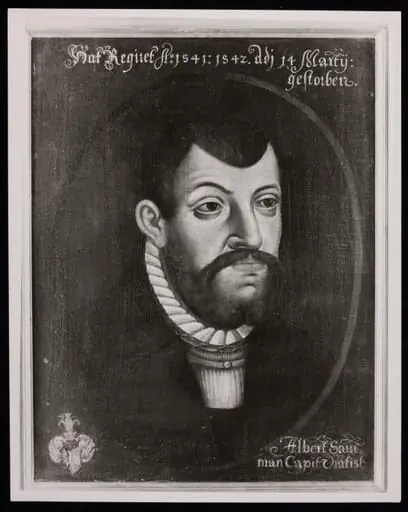
Säbisch, Adam von is an unspecified painting by Rudolf (czynny we Wrocławiu 1933-1947), fot. Jagusch. It dates from 1945 and is held in the collection of the Library of the Wroclaw University.
About this work
Overview
The composition isolates the subject against a dark field, emphasizing facial features and attire through controlled lighting.
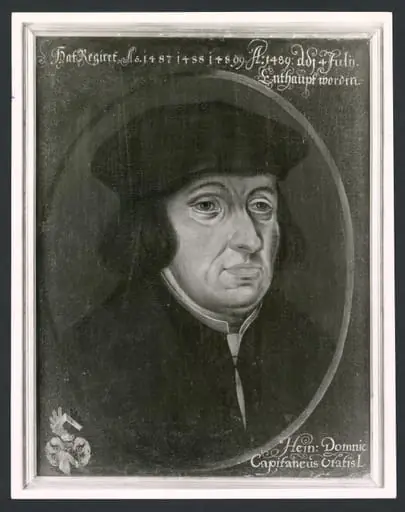
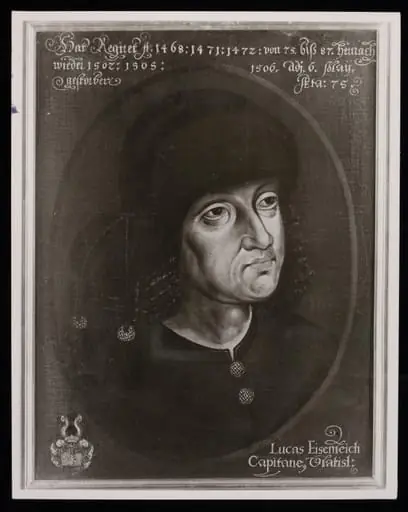
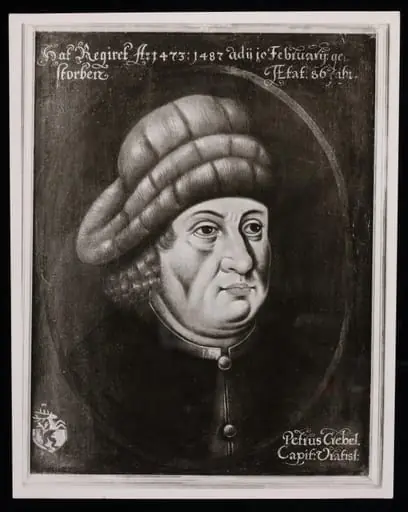
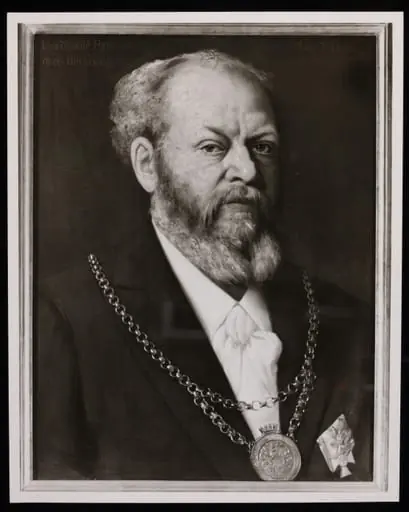
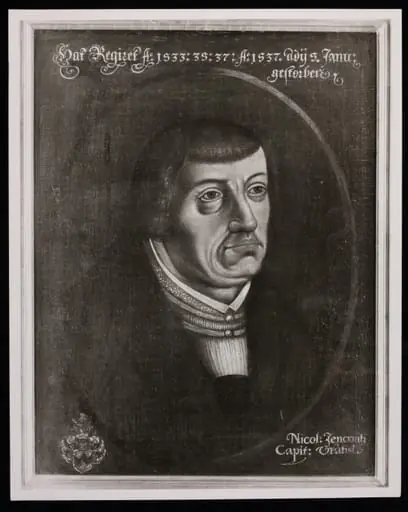
This black-and-white photographic portrait, created in 1945 by Rudolf Jagusch, depicts Adam von Säbisch, a historical figure identified by an inscription at the base. The image is held in the collection of the Museum of Ethnography. The composition isolates the subject against a dark field, emphasizing facial features and attire through controlled lighting. A simple border frames the image, reinforcing its archival character.
Subject & Meaning
Adam von Säbisch, identified as 'Capitan Grafist,' appears as a figure of administrative or military rank, likely from the early modern period. His thick beard, lace collar, and formal posture suggest status and dignity. The inclusion of a coat of arms and his full title implies a documented identity tied to institutional authority. The direct gaze conveys presence and accountability, typical of portraiture meant to assert social position.
Technique & Style
The photograph employs chiaroscuro to model the face with strong contrasts between light and shadow, enhancing the three-dimensionality of the subject. The white lace collar catches the light, creating a focal point against the deep background. The image’s sharp focus and minimal detail in the surroundings reflect a documentary approach, prioritizing clarity and identification over artistic embellishment.
History & Provenance
Though created in 1945, the portrait reproduces an earlier likeness of Adam von Säbisch, likely drawn from historical records or surviving engravings. The inscription and heraldic emblem suggest the original image dates from the 16th or 17th century. Rudolf Jagusch’s photograph serves as a preservation effort, transferring the subject’s likeness into a modern archival format for institutional study.
Context
The portrait reflects a tradition of civic and military portraiture common in Central Europe during the early modern era, where individuals in administrative roles were depicted with symbols of office. The 1945 reproduction aligns with postwar efforts to catalog and preserve regional heritage. Its placement in an ethnographic museum indicates its value as a cultural artifact rather than a fine art object.
Legacy
As a reproduced historical portrait, this image contributes to the documentation of lesser-known figures in regional governance. Its preservation in an ethnographic collection underscores its role in understanding social hierarchies and visual culture of past centuries. The photograph itself is not an original work of art but a deliberate act of historical recovery, maintaining the subject’s visibility in scholarly discourse.
Artist & collection
Artist
Rudolf (czynny we Wrocławiu 1933-1947), fot. Jagusch
Rudolf Jagusch worked in Wrocław between 1933 and 1947. He made photographs of city scenes and portraits during those years. His surviving prints show shopfronts, street corners, and local figures in black-and-white.…