Artwork
John Doucher, French Divine
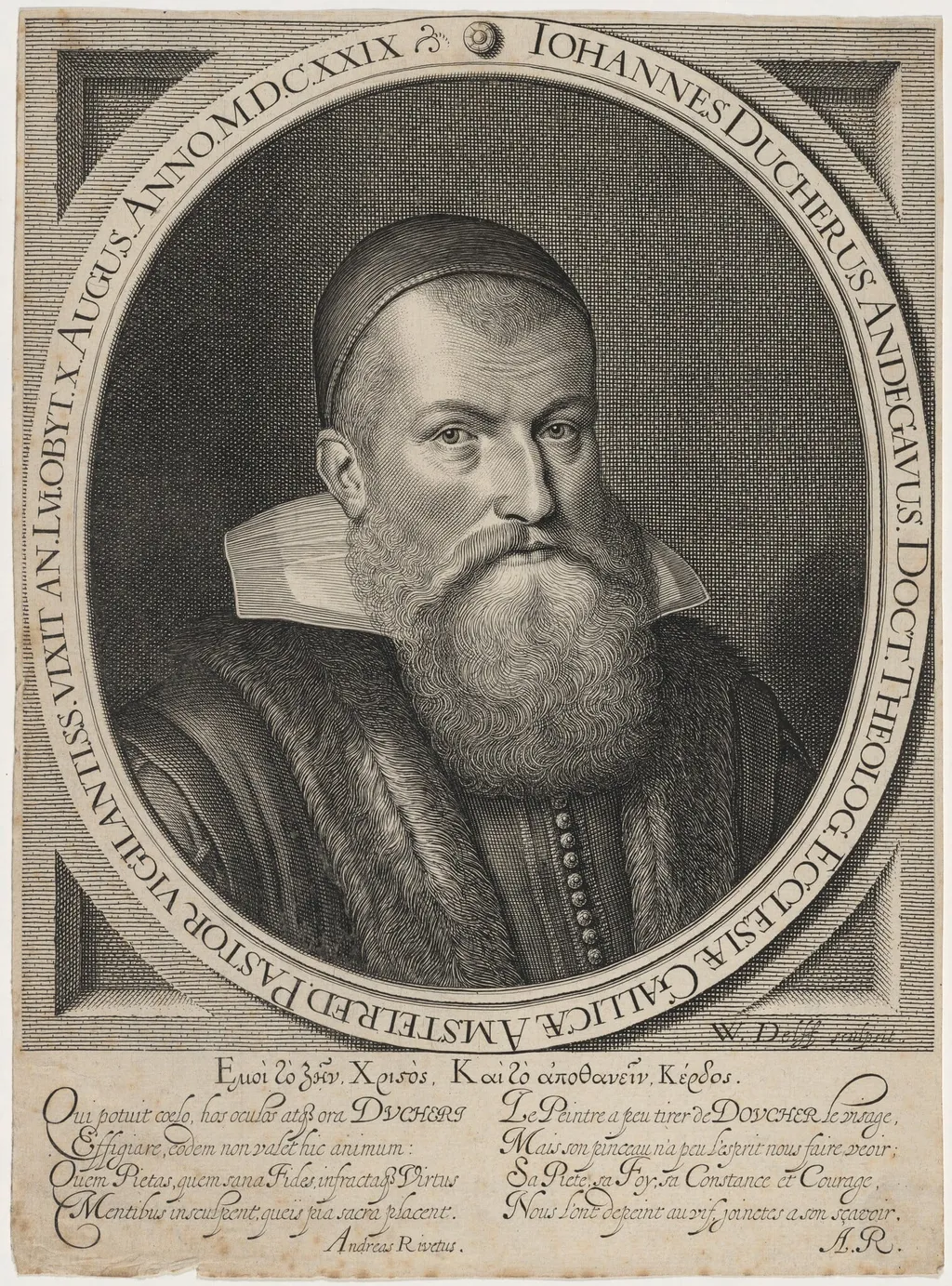
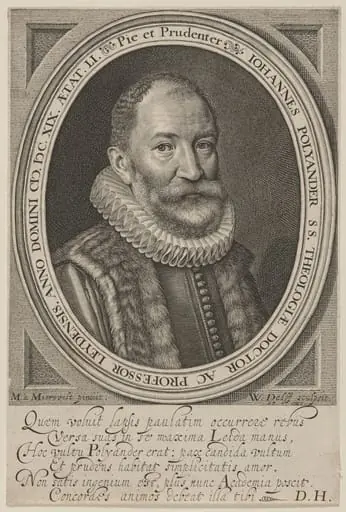
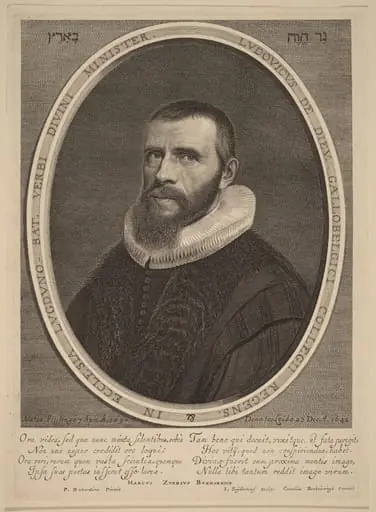
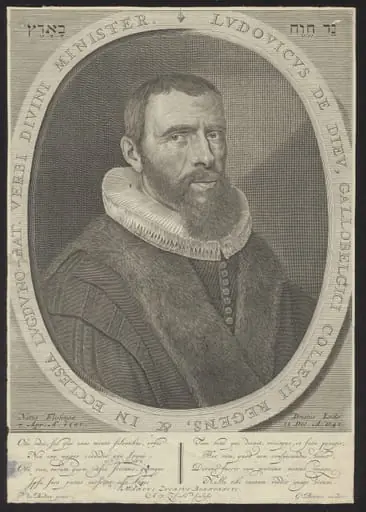
John Doucher, French Divine is an ink print by the Renaissance artist Willem Jacobsz Delff. It dates from 1609 and is held in the collection of the National Gallery of Art.
About this work
Overview
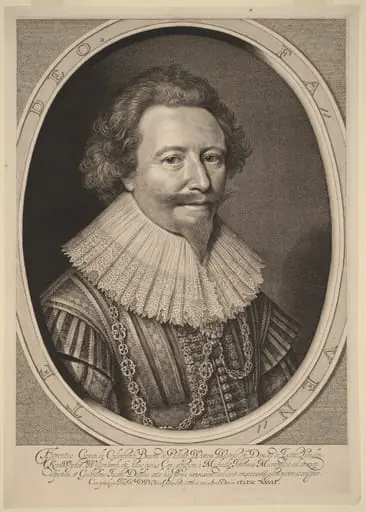
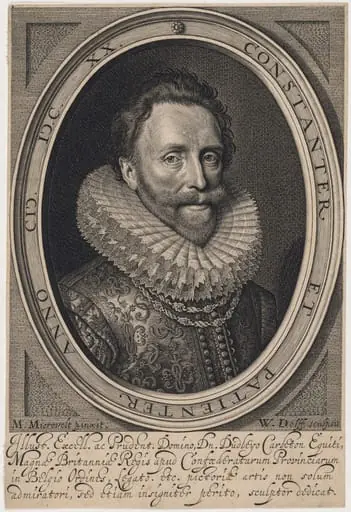
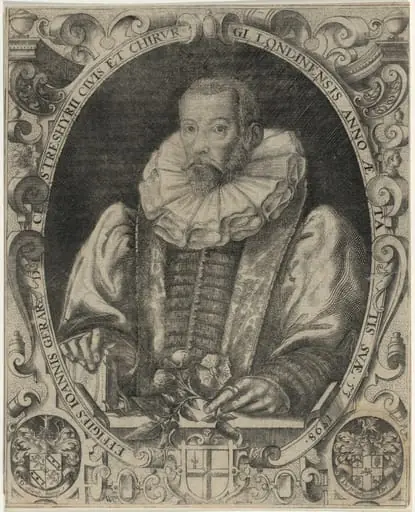
Willem Jacobsz Delff’s 1609 engraving presents a French cleric rendered in stark black‑and‑white. The portrait shows a solemn figure with a full beard, cropped hair, and a dark‑collared garment accented by a chain. A plain backdrop isolates the sitter, while a circular frame encloses the image and carries bilingual Latin‑French inscriptions that identify and comment on his character.
Subject & Meaning
The sitter is identified as a French divine, a learned member of the clergy, whose dignified expression and modest attire convey intellectual authority and piety. The surrounding text, rendered in both Latin and French, likely outlines his virtues or achievements, reinforcing his status within the religious and scholarly communities of the early seventeenth century.
Technique & Style
Delff employs fine, intersecting lines to model the face and clothing, creating subtle gradations of tone without the use of ink washes. This line work, characteristic of early modern engravings, allows for precise detailing of texture—such as the beard’s hair and the chain’s links—while maintaining a clear, crisp silhouette against the unadorned background.
History & Provenance
Created in 1609, the print reflects the Dutch tradition of portrait engraving that circulated among European intellectual circles. Though specific ownership records are scarce, the work likely served as a commemorative image for the subject’s contemporaries, possibly distributed as a printed tribute within ecclesiastical or academic networks.
Context
The early seventeenth century saw a rise in printed portraiture as a means of documenting notable figures across borders. Delff’s engraving aligns with this trend, offering a portable, reproducible likeness that could be shared among scholars and patrons, thereby extending the subject’s reputation beyond his immediate locale.
Artist & collection