Artwork
Nieder-oesterreich, Klosterneuberg
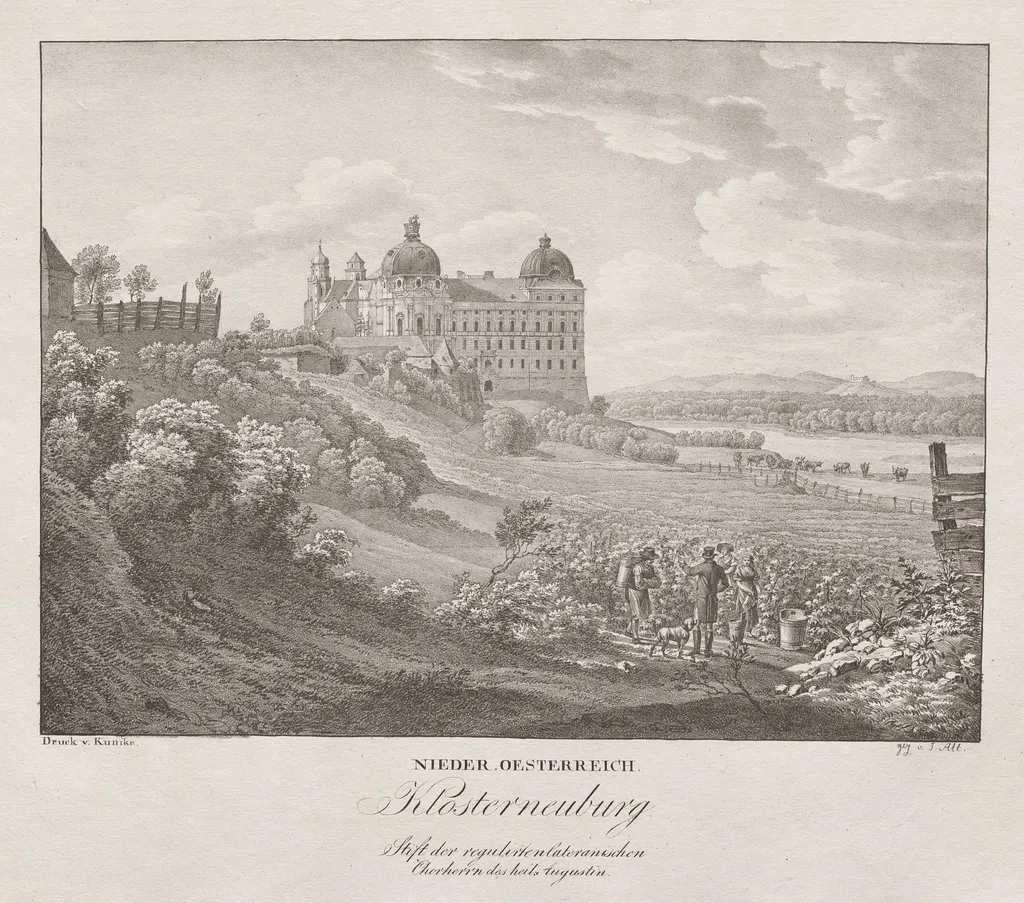
Nieder-oesterreich, Klosterneuberg is a print by Jakob Alt. It dates from 1839 and is held in the collection of the Cleveland Museum of Art.
About this work
In the foreground, a group of people are engaged in various activities, such as walking or standing, while a dog is present among them.
The painting features a serene landscape with a large building in the background, possibly a monastery or castle. The structure boasts multiple domes and towers, surrounded by lush greenery and rolling hills. In the foreground, a group of people are engaged in various activities, such as walking or standing, while a dog is present among them. The scene is depicted in a range of earthy tones, with the sky above featuring clouds.
A notable detail in the painting is the presence of a fence or wall in the background, which adds depth and texture to the composition. The artist's use of light and shadow creates a sense of atmosphere, drawing the viewer's eye to the central building.
To learn more about the artist behind this work, explore the portfolio of Jakob Alt (Austrian, 1789–1872).
Overview
Jakob Alt’s print titled *Nieder‑Oesterreich, Klosterneuberg* dates from around 1839 and is part of the Cleveland Museum of Art’s collection. The work presents a tranquil view of the Lower Austrian town of Klosterneuberg, focusing on an imposing multi‑domed structure that dominates the horizon. The composition balances architectural grandeur with a gently rolling countryside, rendered in a muted, earthy palette.
Subject & Meaning
The central edifice, likely a monastery or castle, anchors the scene and conveys a sense of regional identity. Figures in the foreground—walkers, standing individuals, and a dog—populate the landscape, suggesting everyday life unfolding beneath the historic building. The inclusion of ordinary people alongside the monumental architecture underscores a relationship between community and heritage.
Technique & Style
Alt employs fine line work and tonal shading typical of early 19th‑century printmaking, creating depth through contrasts of light and shadow. A subtle fence or low wall recedes into the background, adding texture and reinforcing spatial perspective. The atmospheric sky, dotted with clouds, is rendered with delicate gradations that enhance the overall sense of calm.
History & Provenance
Created circa 1839, the print entered the Cleveland Museum of Art’s holdings through acquisition (specific details of purchase are not recorded in the source). Its presence in the museum’s collection reflects the institution’s broader interest in European landscape prints of the Biedermeier period.
Context
Klosterneuberg, situated near Vienna, was a frequent subject for artists documenting Austrian scenery during the early nineteenth century. Alt’s depiction aligns with contemporary trends that emphasized picturesque rural vistas and the romanticization of historic architecture, catering to a growing market for travel‑related imagery among European audiences.
Artist & collection


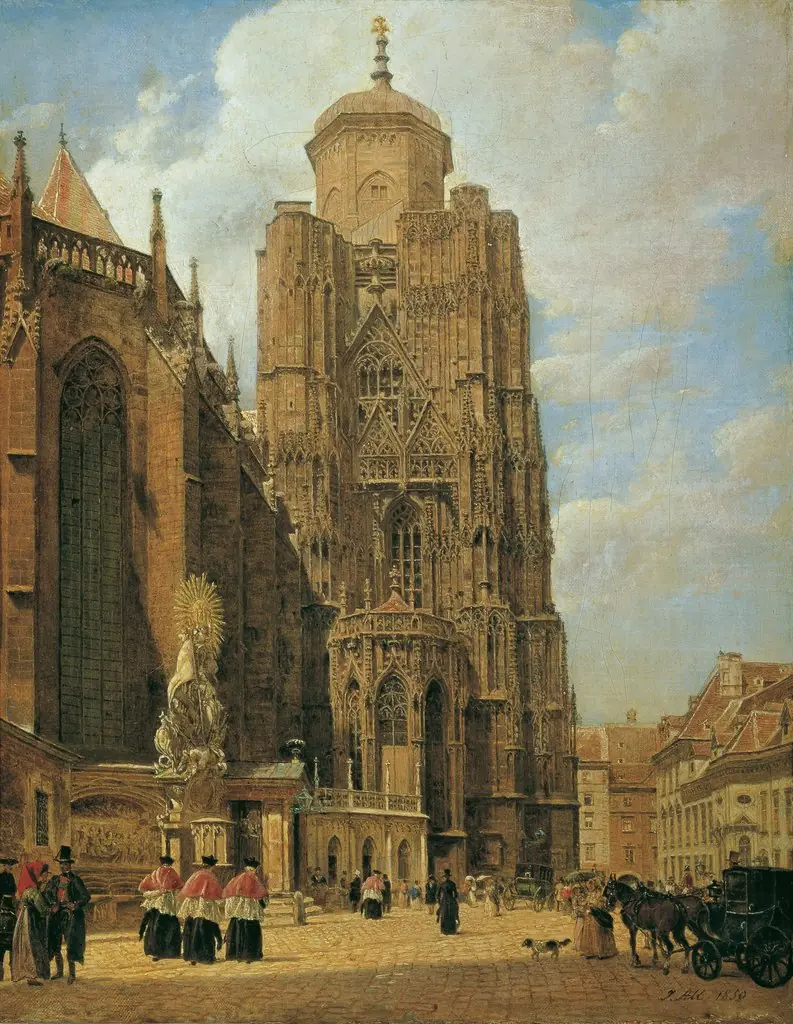 St. Stephen's Cathedral in Vienna
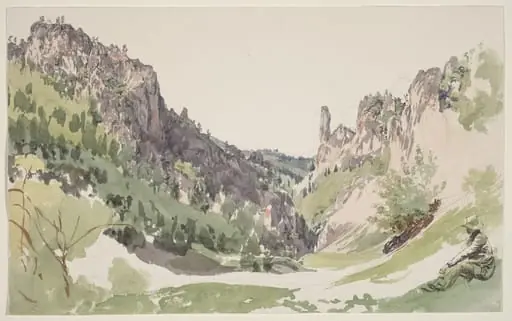 A Seated Man Contemplating a Sunlit Mountain Valley
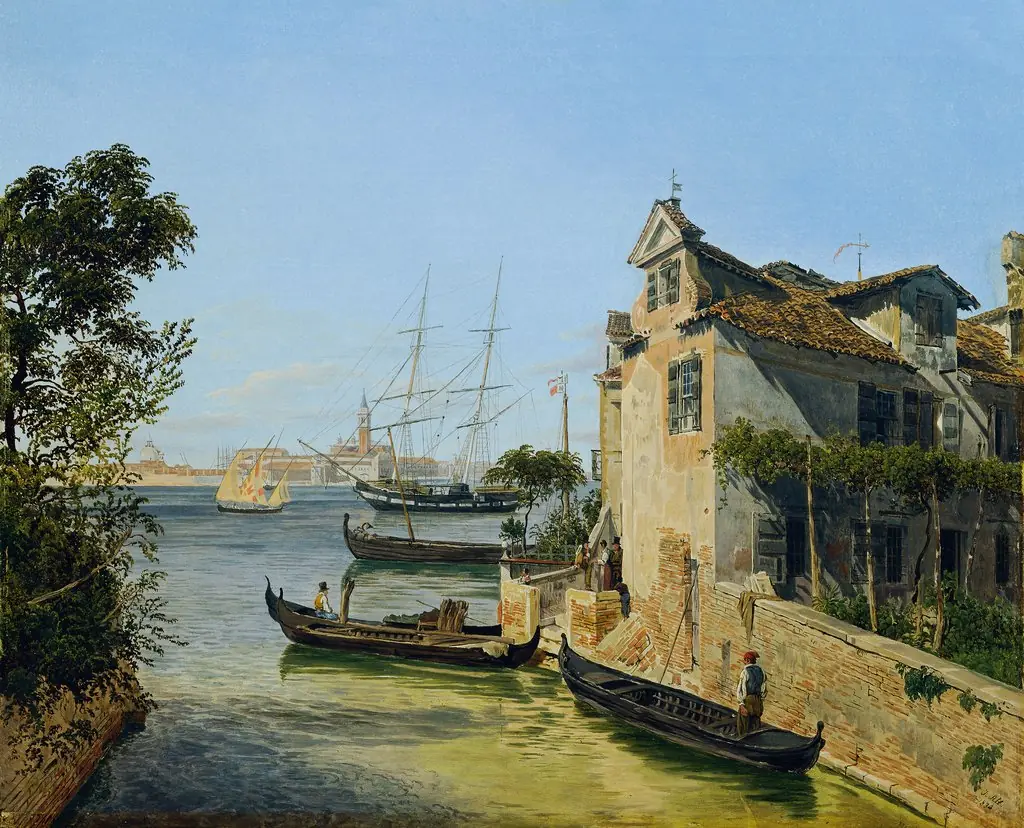 View of San Giorgio Maggiore in Venice
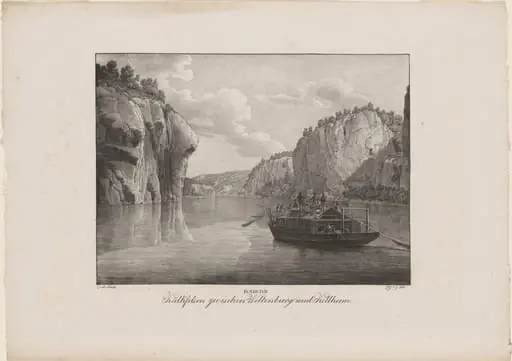 Baiern, Kalkfelsen zwischen Weltenburg und Kellheim (Bavaria, Chalk Cliffs between Weltenburg and Kellheim)
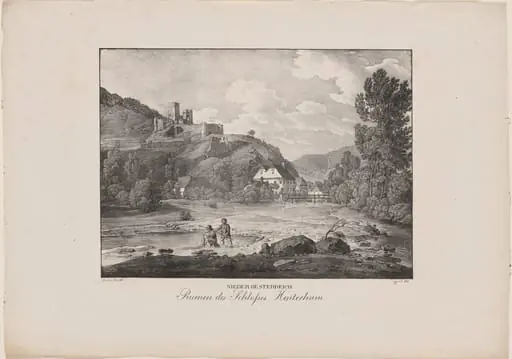 Nieder-Oesterreich, Ruinen des Schlosses Hinterhaus (Lower Austria, Ruins of Hinterhaus Castle)
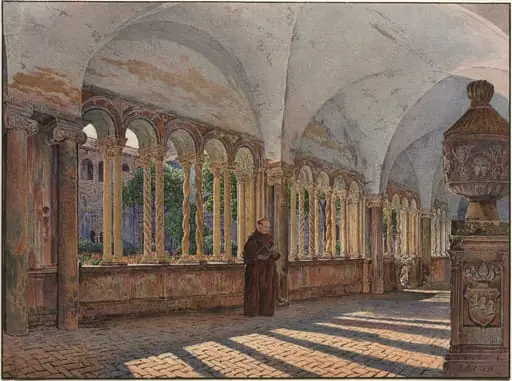 View of the Cloister of San Giovanni in Laterano, Rome
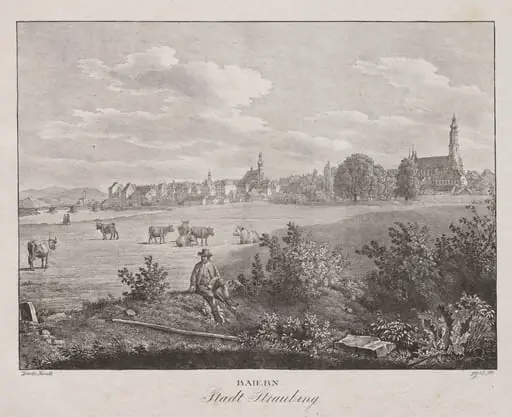 Baiern, Stadt Straubing
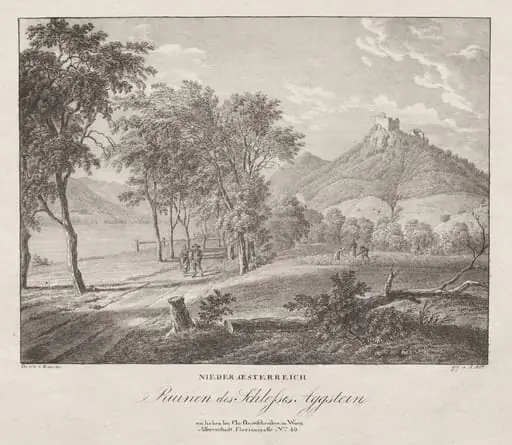 Nieder-oesterreich, Ruinen des Schlosses Aggenstein
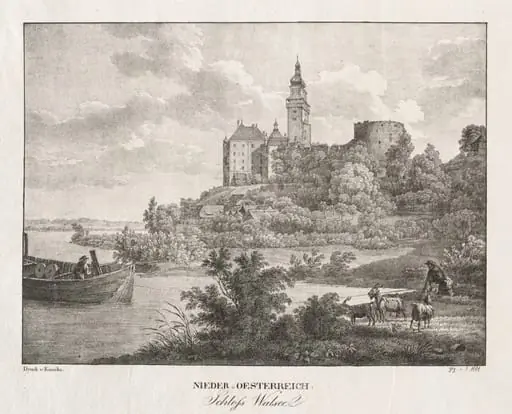 Nieder-oesterreich, Schloss Walseel
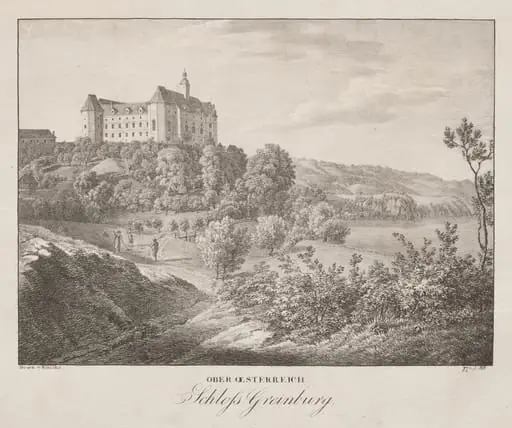 Ober-oesterreich, Schloss Greinburg
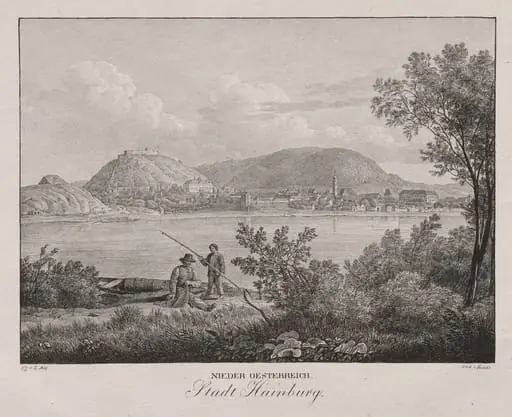 Nieder-oesterreich, Stadt Hainburg
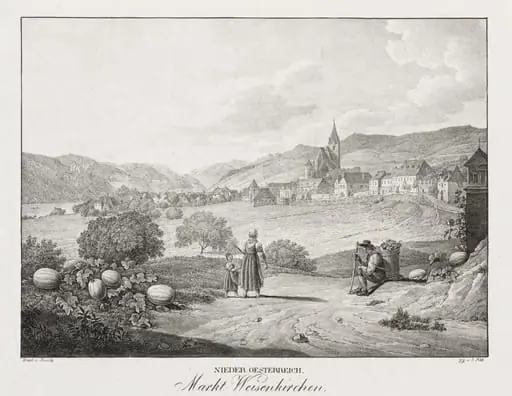 Nieder-oesterreich, Markt Weisenkirchen
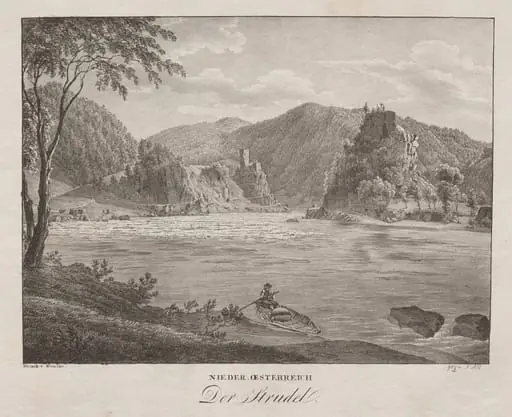 Nieder-oesterreich, Der Strudel
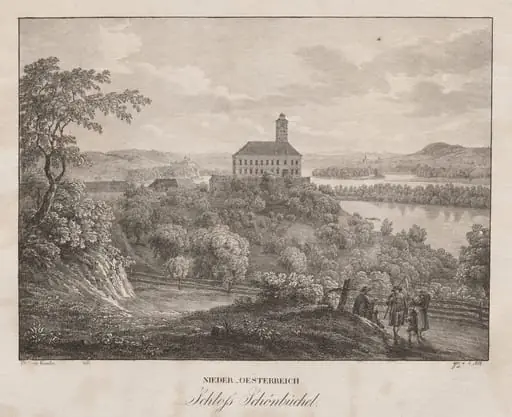 Nieder-oesterreich, Schloss Schöbüchel
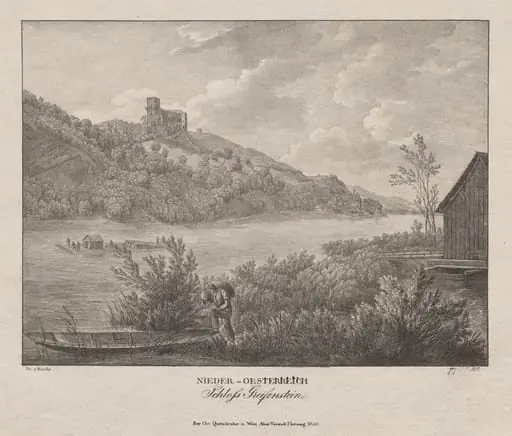 Nieder-oesterreich, Schloss Greifenstein
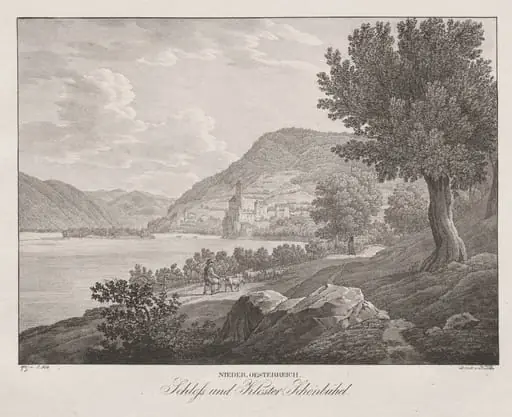 Nieder-oesterreich, Schloss und Kloster Schönbühel
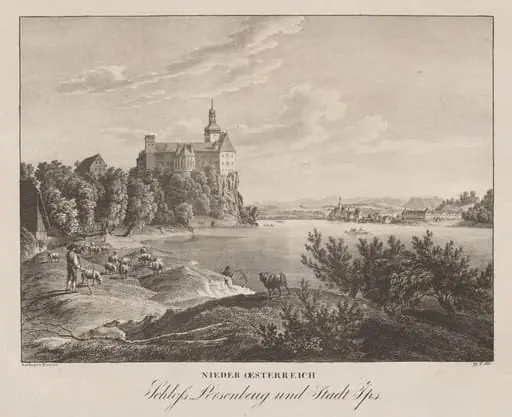 Nieder-oesterreich, Schloss Persenbeug und Stadt Ips
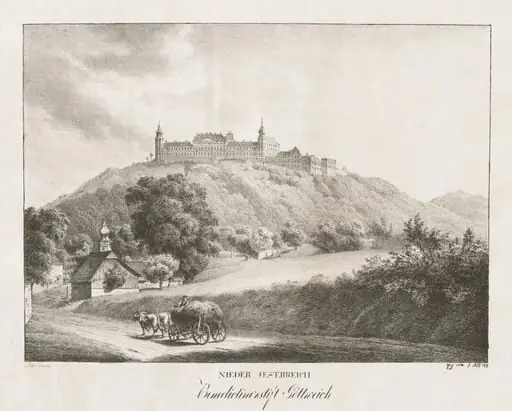 Nieder-oesterreich, Benedictinerstift Gottereich
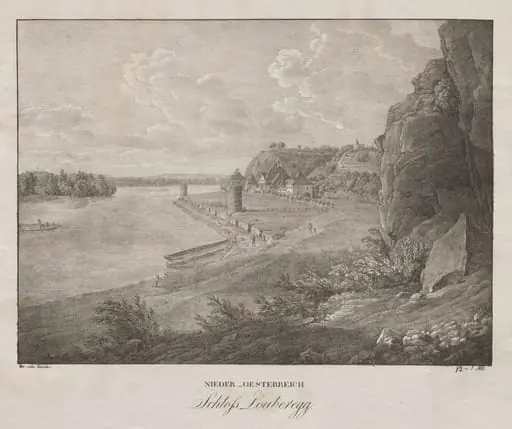 Nieder-oesterreich, Schloss Louberegg