Artwork
Nieder-oesterreich, Markt Weisenkirchen
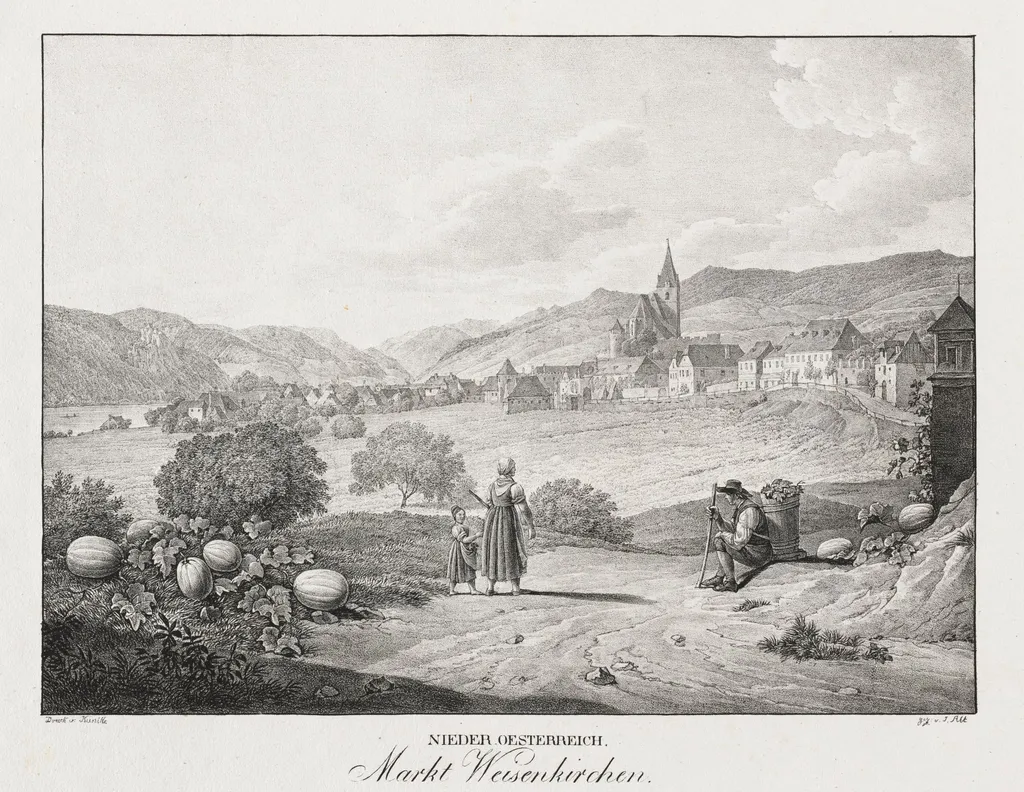
Nieder-oesterreich, Markt Weisenkirchen is a print by Jakob Alt. It dates from 1839 and is held in the collection of the Cleveland Museum of Art.
About this work
Overview
Created around 1839 by Jakob Alt, this print depicts the Austrian village of Markt Weisenkirchen in Lower Austria. Rendered in fine detail, the scene captures a tranquil rural setting with modest architecture and quiet human activity. The work is part of a broader series documenting provincial life in the Habsburg territories and is held in the collection of The Cleveland Museum of Art.
Subject & Meaning
The scene portrays ordinary village life without idealization: two women stroll along a path bordered by seasonal crops, while a man sketches nearby. The central church steeple anchors the composition, signaling the community’s spiritual and social core. Alt’s focus on unremarkable moments reflects a shift toward documenting everyday reality rather than grand historical or mythological themes.
Technique & Style
Alt employed precise linear draftsmanship and subtle tonal gradations to convey texture and depth. The composition balances naturalistic elements—rolling hills, foliage, and architectural forms—with careful attention to spatial recession. His use of fine lines and restrained shading suggests influence from topographical drawing traditions, prioritizing accuracy over dramatic effect.
History & Provenance
The print was produced during Alt’s extensive travels through Austrian countryside regions, commissioned or collected as part of a regional survey. It entered The Cleveland Museum of Art’s collection through established acquisition channels in the 20th century, likely as part of a larger group of 19th-century Austrian topographical works.
Context
In the early 1830s, Austrian artists increasingly turned to local landscapes and villages as subjects, responding to rising interest in regional identity and ethnographic documentation. Alt’s work aligns with this trend, offering visual records that complement administrative and cartographic efforts of the Habsburg state during a period of social consolidation.
Legacy
Jakob Alt’s prints of Austrian villages contributed to a visual archive of pre-industrial rural life. While not widely celebrated in his time, his detailed observations have since become valuable references for historians studying 19th-century Central European communities and the evolution of documentary art.
Artist & collection


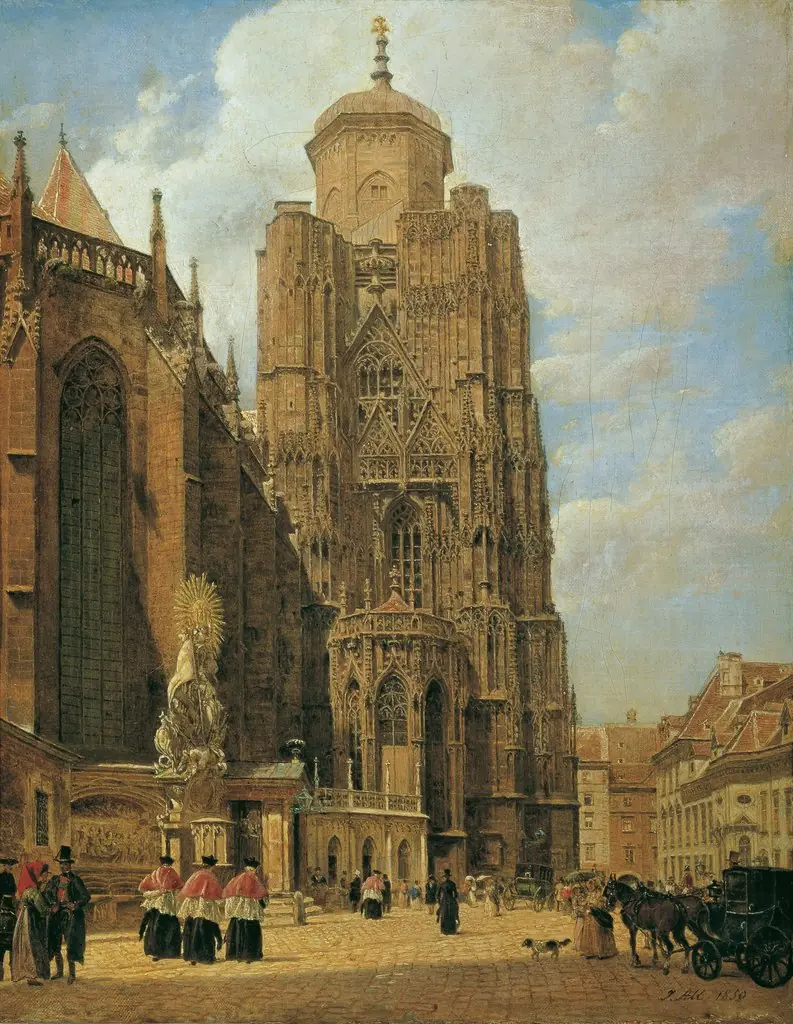 St. Stephen's Cathedral in Vienna
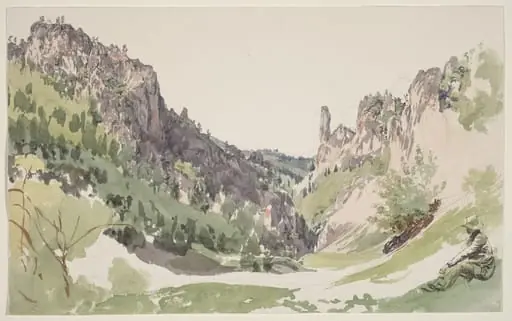 A Seated Man Contemplating a Sunlit Mountain Valley
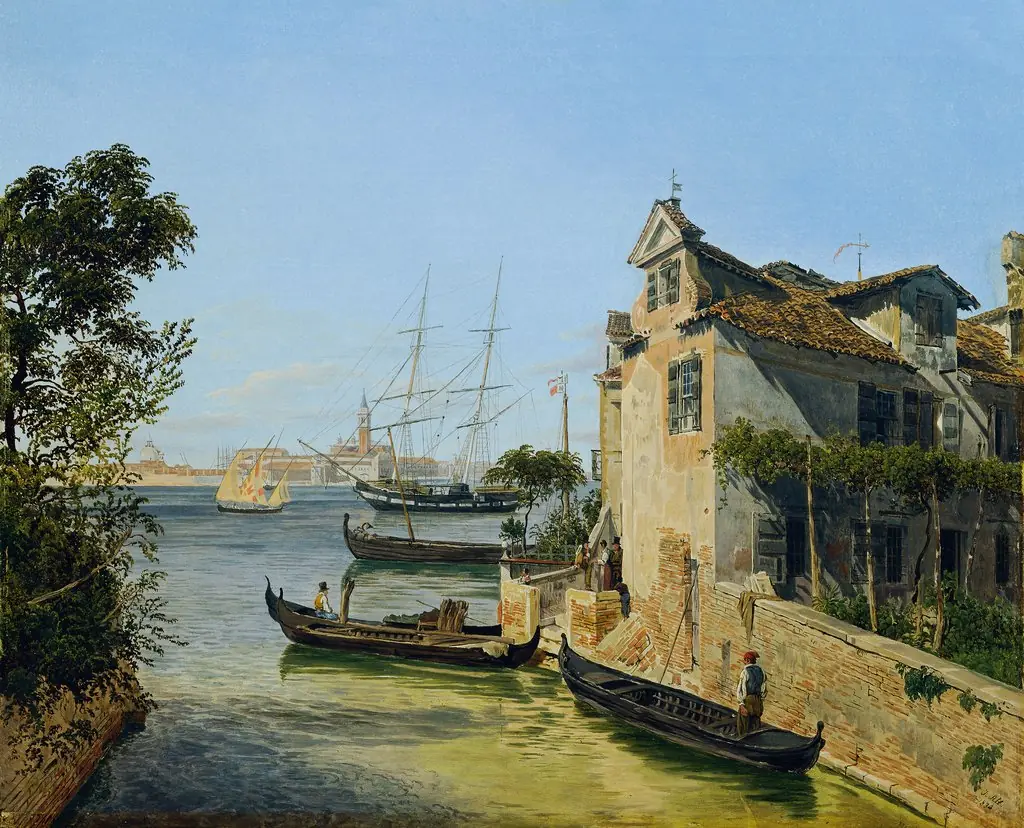 View of San Giorgio Maggiore in Venice
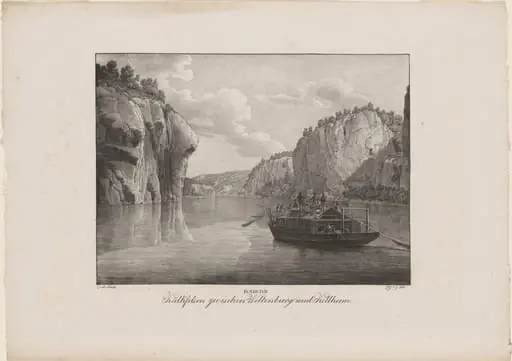 Baiern, Kalkfelsen zwischen Weltenburg und Kellheim (Bavaria, Chalk Cliffs between Weltenburg and Kellheim)
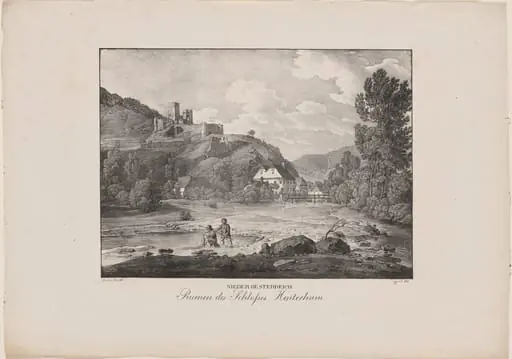 Nieder-Oesterreich, Ruinen des Schlosses Hinterhaus (Lower Austria, Ruins of Hinterhaus Castle)
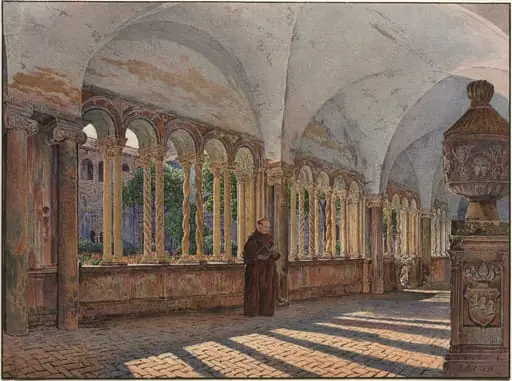 View of the Cloister of San Giovanni in Laterano, Rome
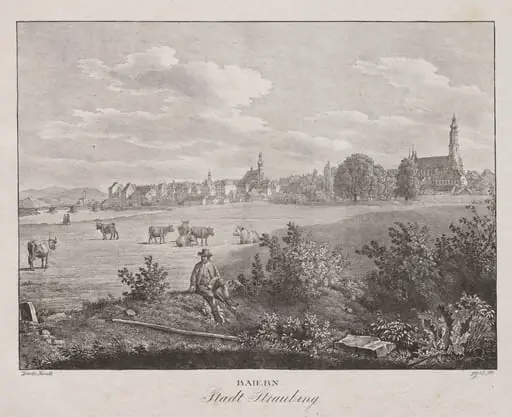 Baiern, Stadt Straubing
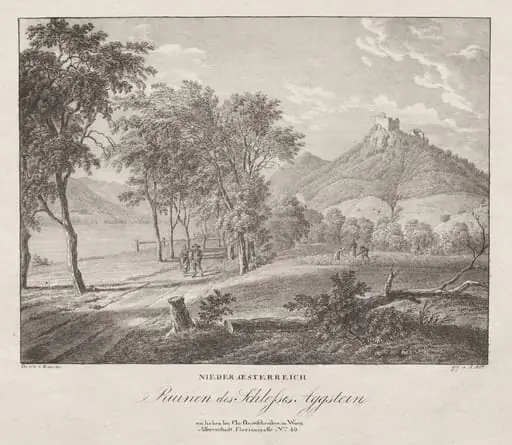 Nieder-oesterreich, Ruinen des Schlosses Aggenstein
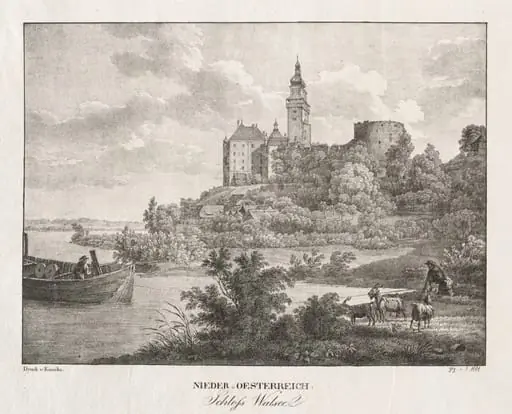 Nieder-oesterreich, Schloss Walseel
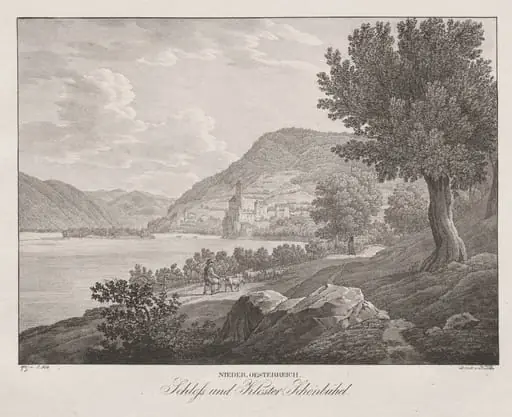 Nieder-oesterreich, Schloss und Kloster Schönbühel
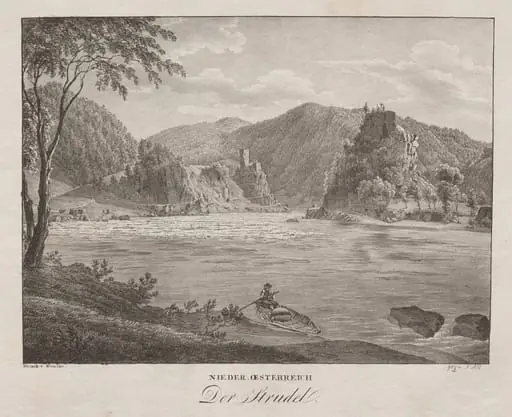 Nieder-oesterreich, Der Strudel
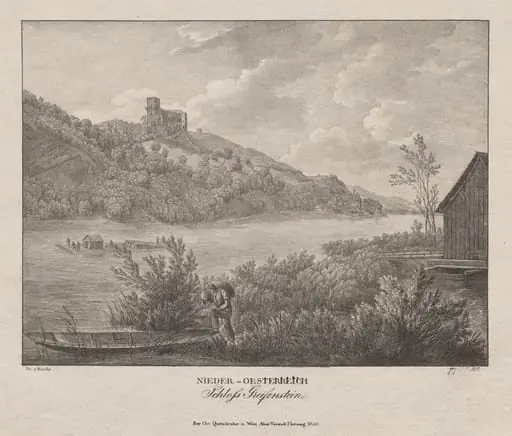 Nieder-oesterreich, Schloss Greifenstein
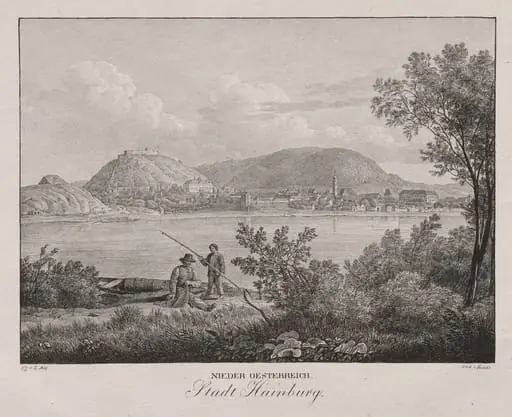 Nieder-oesterreich, Stadt Hainburg
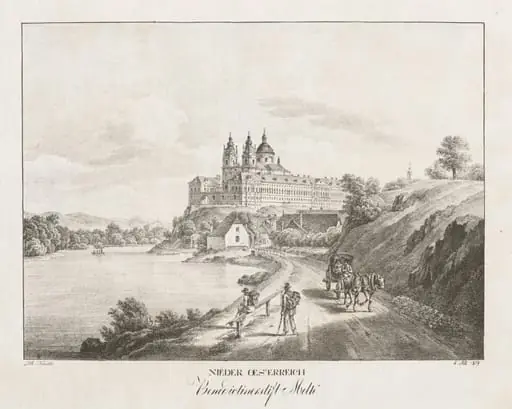 Nieder-oesterreich, Benedictinerstift Melk
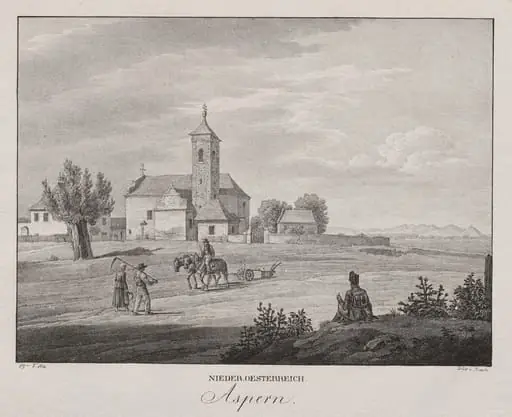 Nieder-oesterreich, Aspern
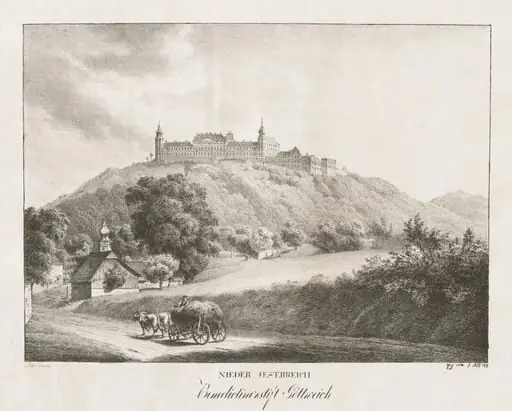 Nieder-oesterreich, Benedictinerstift Gottereich
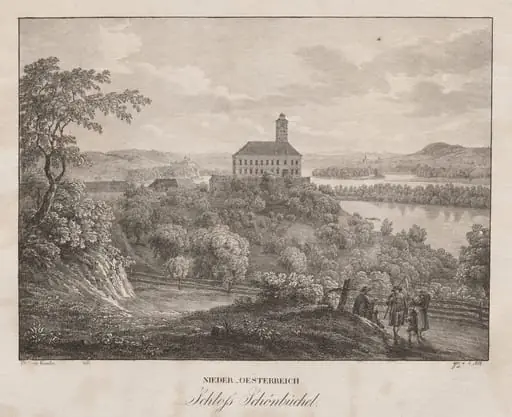 Nieder-oesterreich, Schloss Schöbüchel
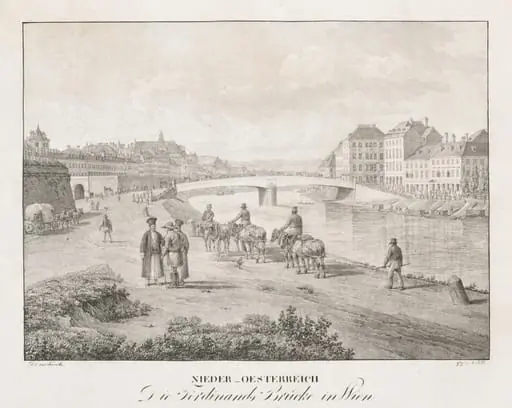 Nieder-oesterreich, Die Ferdinand Brucke in Wien
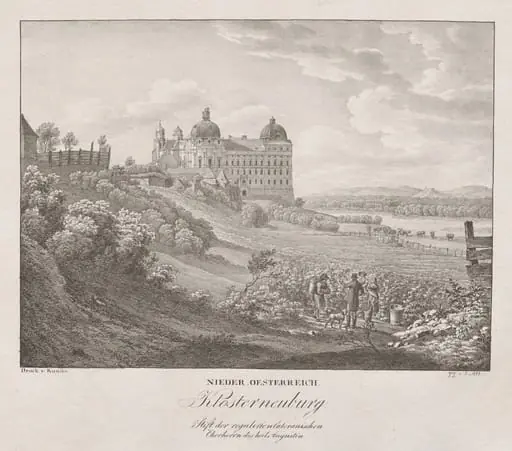 Nieder-oesterreich, Klosterneuberg