Artwork
Nieder-oesterreich, Stadt und Ruinen des Schlosses
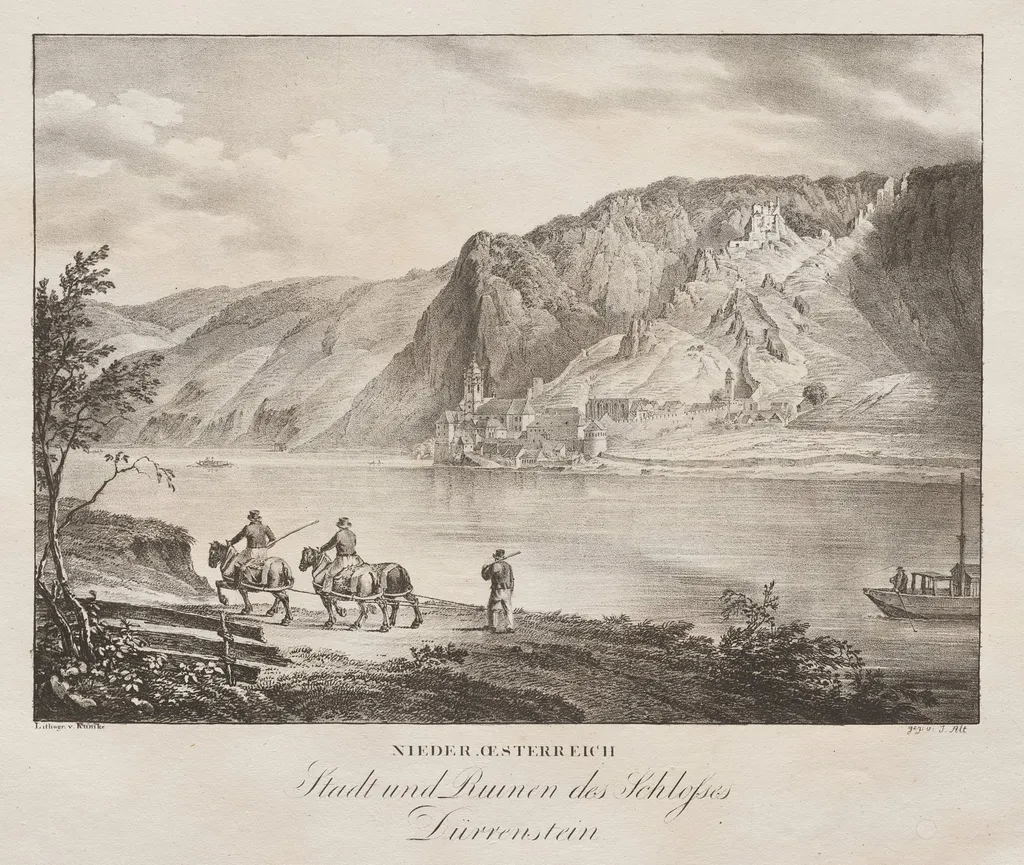
Nieder-oesterreich, Stadt und Ruinen des Schlosses is a print by Jakob Alt. It dates from 1839 and is held in the collection of the Cleveland Museum of Art.
About this work
The artist focused on everyday moments against a dramatic landscape, blending human activity with nature.
This print shows a quiet riverside scene with a small town nestled at the base of a steep cliff. A castle’s ruins cling to the rocky hillside, while below, people go about daily life: two men ride a horse-drawn cart, another walks with a fishing rod, and a boat floats on the water. Trees and bushes line the shore, and the sky is soft with light clouds.
The title at the bottom names the place as Dürnstein, a town in Austria. The artist focused on everyday moments against a dramatic landscape, blending human activity with nature.
Next, look up Jakob Alt (Austrian, 1789–1872) to see more of his work.
Overview
Created around 1839 by Austrian artist Jakob Alt, this print depicts the Austrian town of Dürnstein and the ruins of its castle perched on a steep hillside. The composition balances a tranquil riverside setting with the presence of everyday figures, offering a glimpse into 19th‑century rural life.
Subject & Meaning
The scene combines a modest settlement at the foot of a cliff with the skeletal remains of a fortress, suggesting the passage of time and the coexistence of human activity with historic decay. Figures—riders, a fisherman, and a solitary boat—emphasize routine labor against a dramatic natural backdrop.
Technique & Style
Alt employed the print medium to render delicate atmospheric effects, using soft shading to convey the sky’s light clouds and the gentle ripples of the river. The linear treatment of the ruins and the town’s architecture contrasts with the more fluid rendering of foliage and water, creating a balanced visual rhythm.
History & Provenance
The work entered the collection of the Cleveland Museum of Art, where it remains on view. Its creation in the late 1830s places it within Alt’s broader output of topographical prints that documented Austrian landscapes and urban scenes during a period of growing interest in regional identity.
Artist & collection


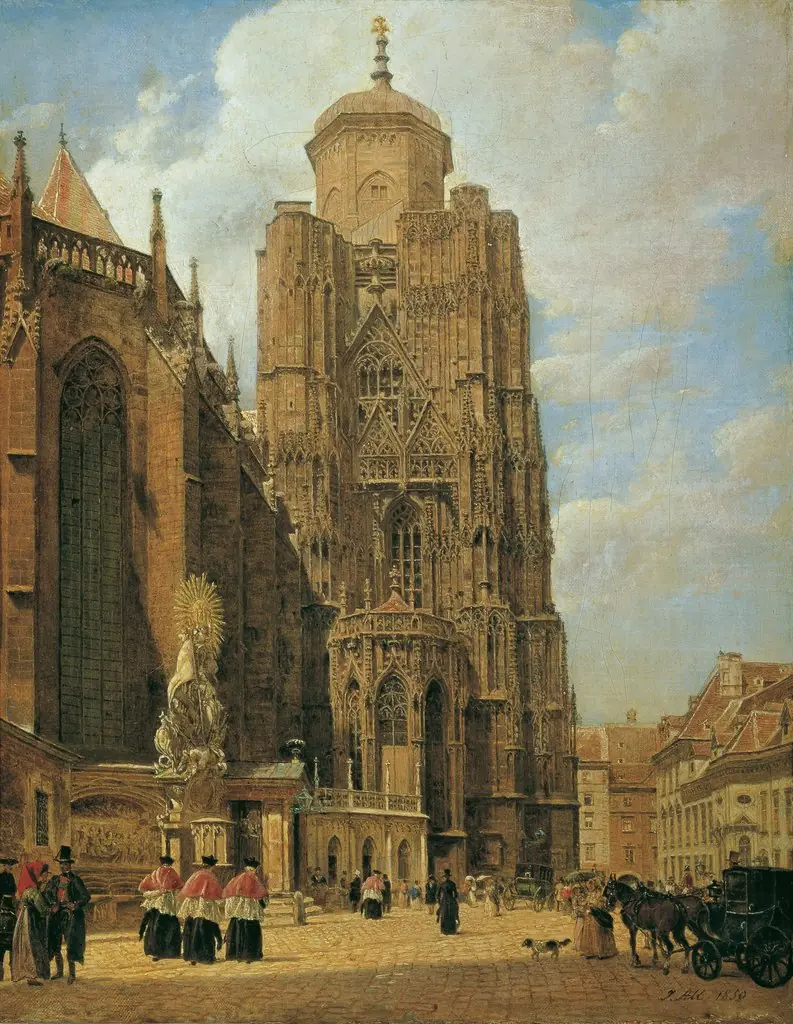 St. Stephen's Cathedral in Vienna
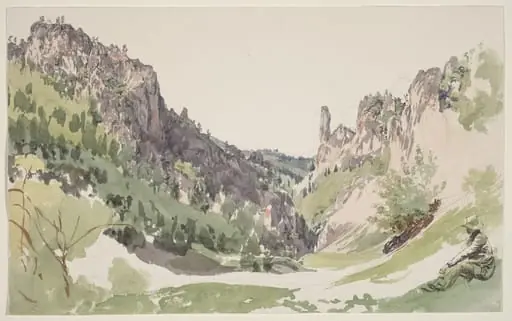 A Seated Man Contemplating a Sunlit Mountain Valley
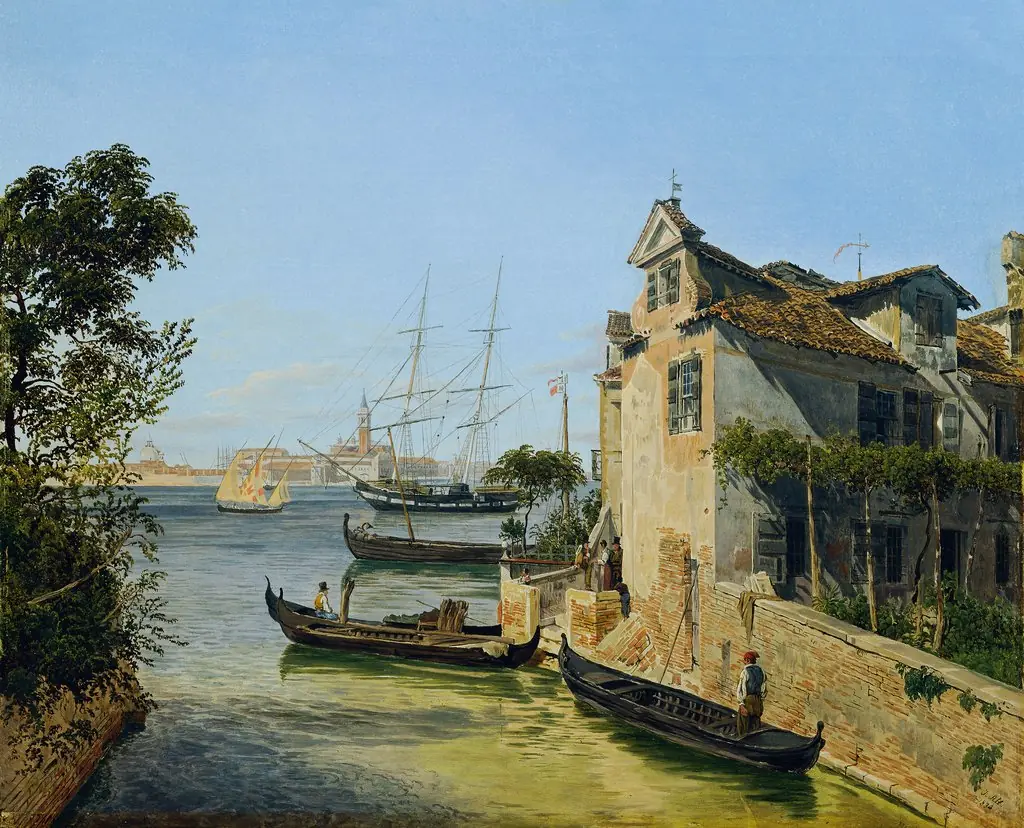 View of San Giorgio Maggiore in Venice
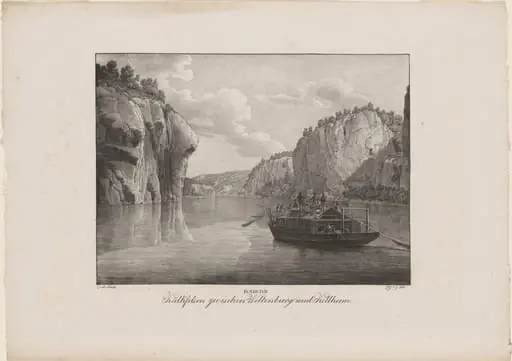 Baiern, Kalkfelsen zwischen Weltenburg und Kellheim (Bavaria, Chalk Cliffs between Weltenburg and Kellheim)
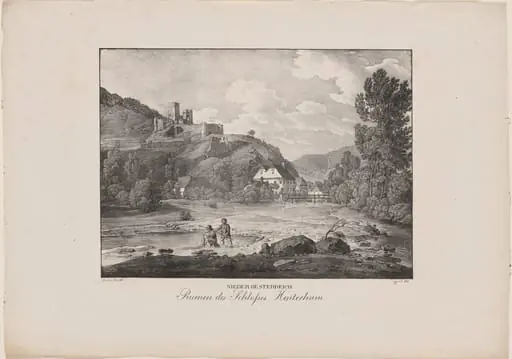 Nieder-Oesterreich, Ruinen des Schlosses Hinterhaus (Lower Austria, Ruins of Hinterhaus Castle)
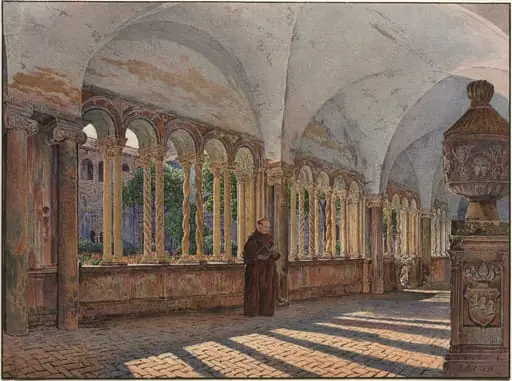 View of the Cloister of San Giovanni in Laterano, Rome
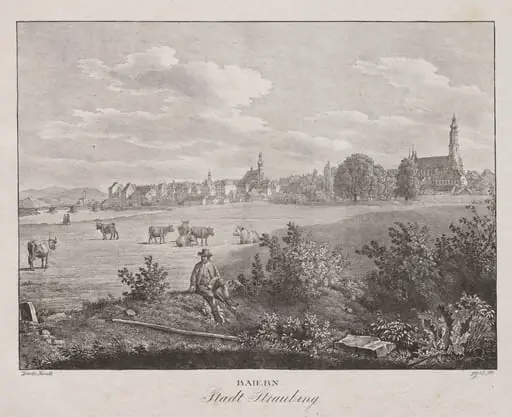 Baiern, Stadt Straubing
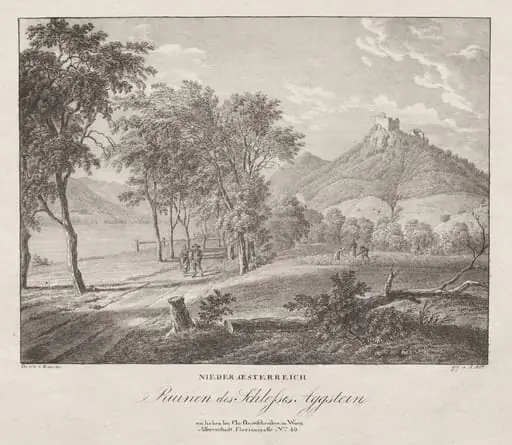 Nieder-oesterreich, Ruinen des Schlosses Aggenstein
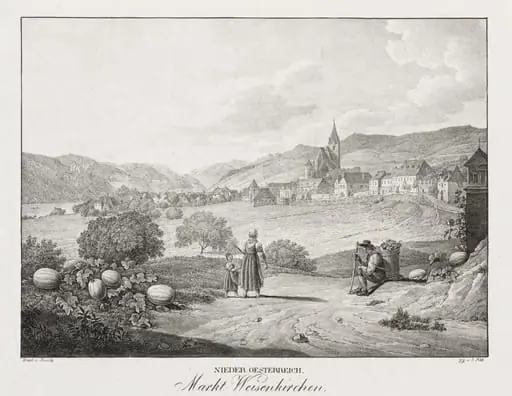 Nieder-oesterreich, Markt Weisenkirchen
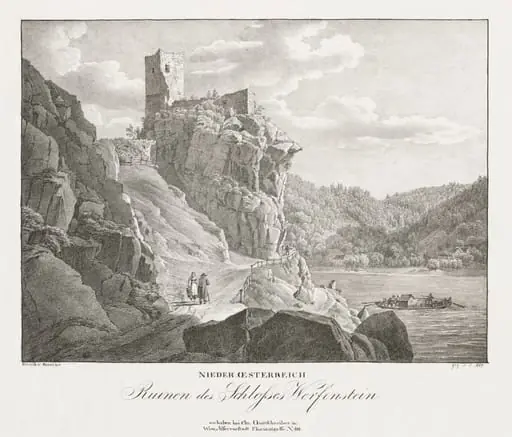 Nieder-oesterreich, Ruinen des Schlosses Werfenstein
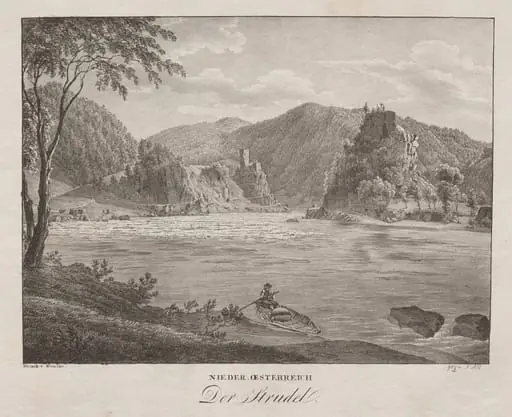 Nieder-oesterreich, Der Strudel
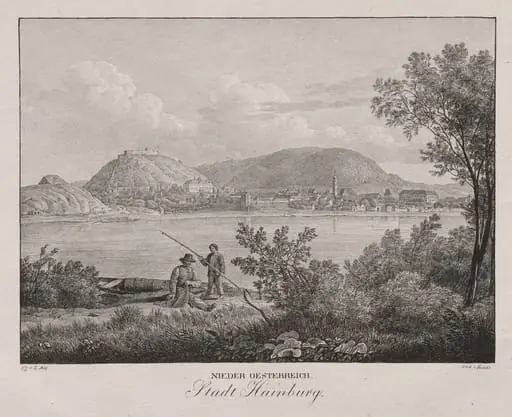 Nieder-oesterreich, Stadt Hainburg
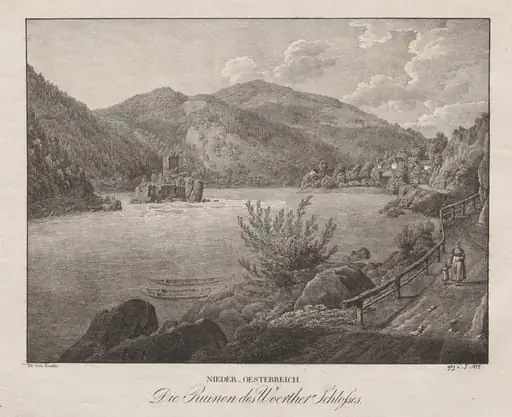 Nieder-oesterreich, Die Ruinen des Woerther Schlosses
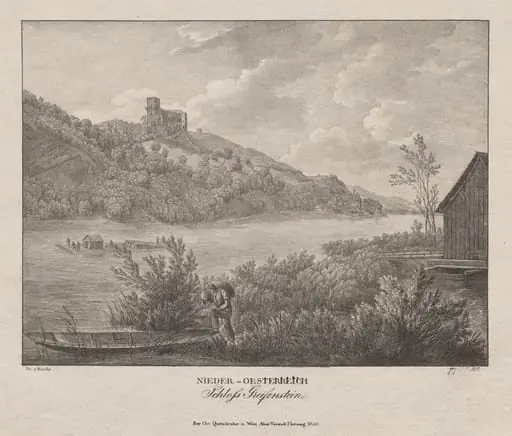 Nieder-oesterreich, Schloss Greifenstein
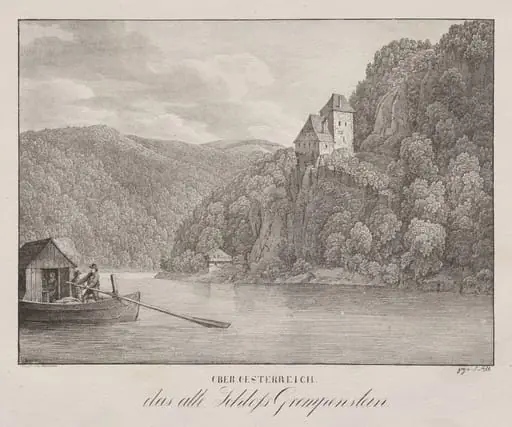 Nieder-oesterreich, Das Alte Schloss Grempenstein
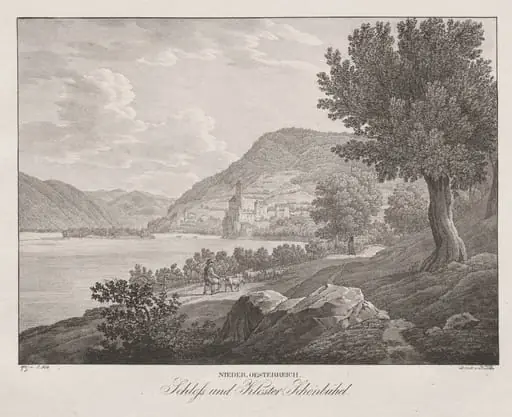 Nieder-oesterreich, Schloss und Kloster Schönbühel
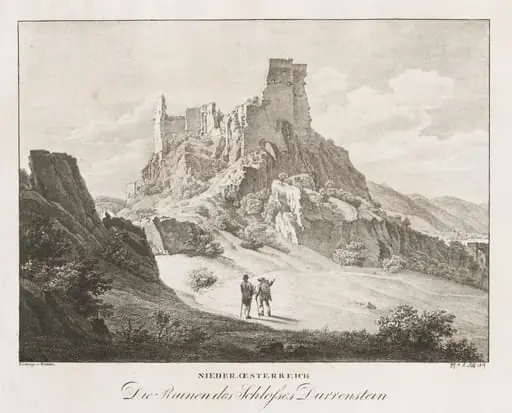 Nieder-oesterreich, Die Ruinen des Schlosses
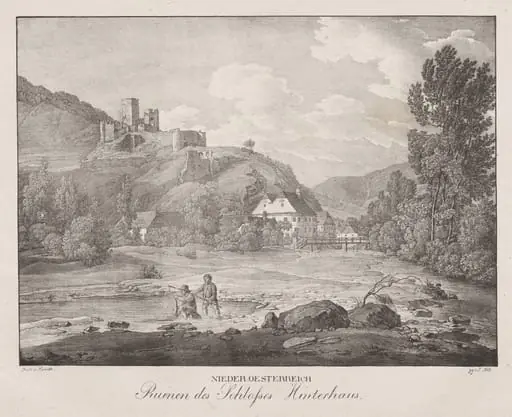 Nieder-oesterreich, Ruinen des Schlosses Hinterhaus