Artwork
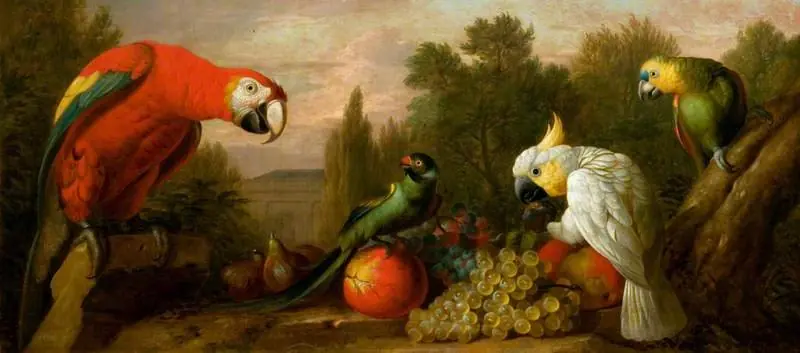
Still-life with Fruits, Parrots and White Cockatoo
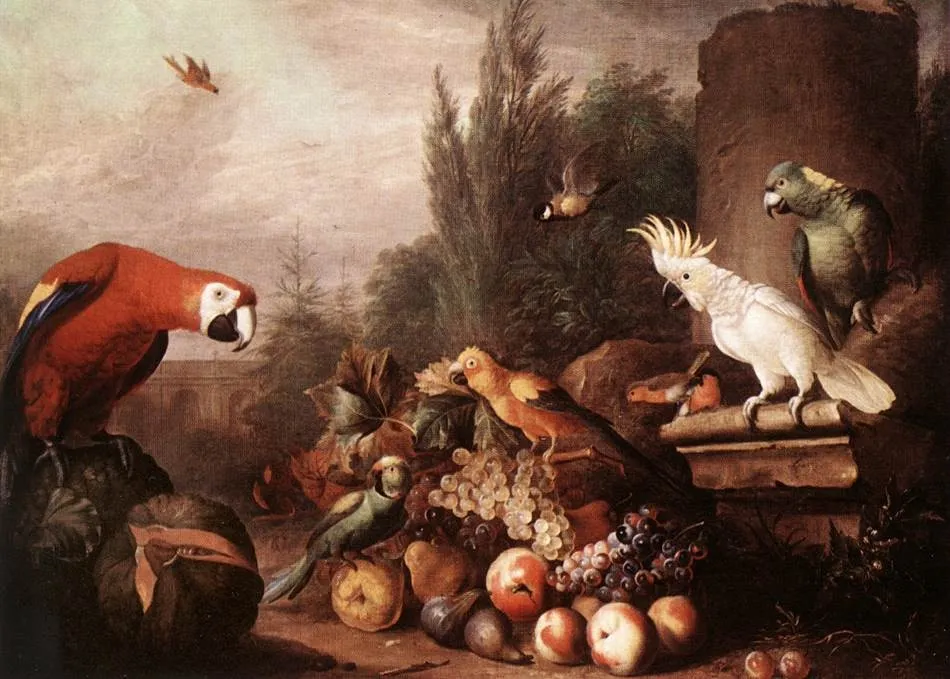
Still-life with Fruits, Parrots and White Cockatoo is an oil painting by the Rococo painting artist Jakob Bogdani. It dates from 1710 and is held in the collection of the Hungarian National Gallery.
About this work
Overview
Painted in 1710 by Jakob Bogdani, this oil-on-canvas still life combines fruit and exotic birds in a carefully composed arrangement.
Painted in 1710 by Jakob Bogdani, this oil-on-canvas still life combines fruit and exotic birds in a carefully composed arrangement. Bogdani, originally from Hungary and active in Britain, specialized in naturalistic depictions of animals and produce. The work reflects his interest in the visual richness of the natural world, rendered with attention to texture and light. It is now part of the Hungarian National Gallery’s collection.
Subject & Meaning
The painting presents a lush assembly of ripe fruits—grapes, apples, and pears—tumbled together, surrounded by parrots and a prominent white cockatoo. The birds, perched on fruit and a stone ledge, appear alert, their presence suggesting themes of abundance and the exotic. The white cockatoo, isolated in color and posture, may symbolize rarity or the reach of global trade, common concerns among European collectors of the era.
Technique & Style
Bogdani employed oil paint with deliberate brushwork to capture the sheen of fruit skin, the softness of feathers, and the roughness of stone. Chiaroscuro is used to model forms and deepen spatial recession, particularly around the cockatoo, which emerges from a shadowed background. The textures of feathers and fruit are rendered with precision, reflecting a scientific interest in natural detail rather than idealized ornamentation.
History & Provenance
Created during Bogdani’s time in Britain, the painting traveled to Hungary, where it entered the collection of the Hungarian National Gallery. Its journey reflects the movement of art and collectors across Europe in the early 18th century. While little is documented about its early ownership, its preservation in Hungary underscores the country’s interest in Central European artists working abroad.
Context
In the early 1700s, European courts and wealthy patrons collected exotic birds and tropical fruits as symbols of global exploration and wealth. Still lifes featuring such elements were popular, blending natural observation with status display. Bogdani’s work aligns with this trend, capturing the fascination with the natural world brought into domestic spaces through trade and colonial expansion.
Legacy
Bogdani’s paintings contributed to the development of naturalistic still life in Central Europe, influencing later artists interested in ornithological accuracy. Though not widely known today, his work remains a documented example of how 18th-century painters translated scientific curiosity into visual form. The painting continues to serve as a reference for the depiction of avian species in art of the period.
Artist & collection
Artist
Jakob Bogdani (6 May 1658 - 11 November 1724), whose names are sometimes spelt Jacob and Bogdány, was a Hungarian and British artist well known for his still life and exotic bird paintings.

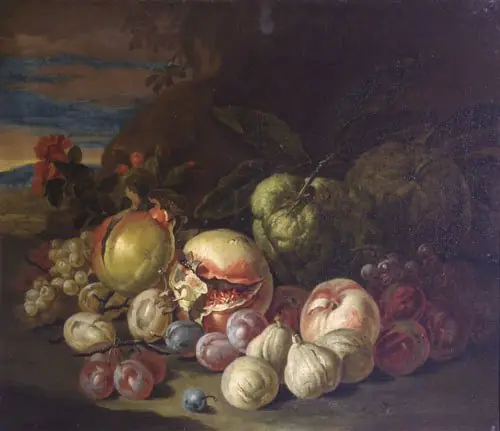 Still life of fruits with pomegranates and figs
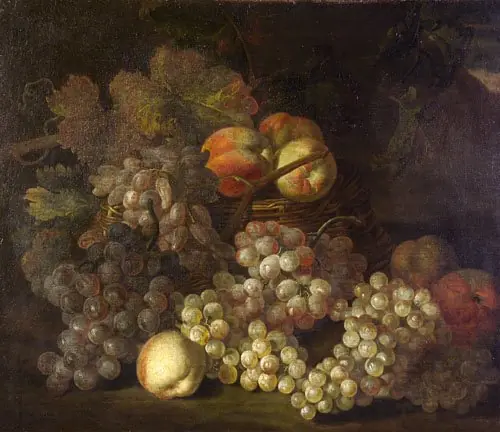 Fruit in a Wicker Basket: Grapes and Peaches
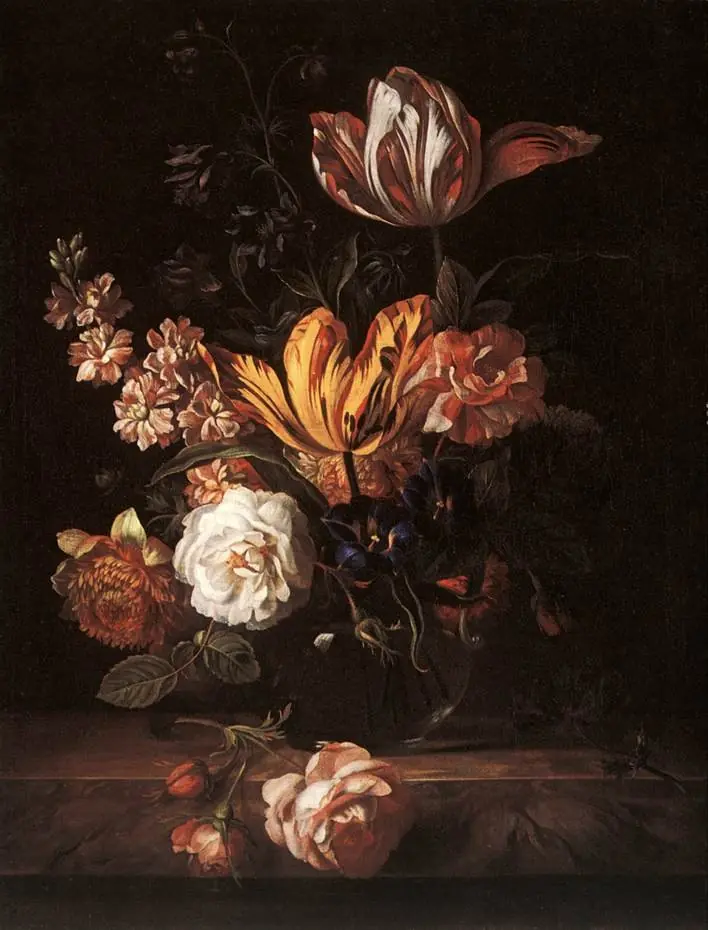 Flowers in a glass vase
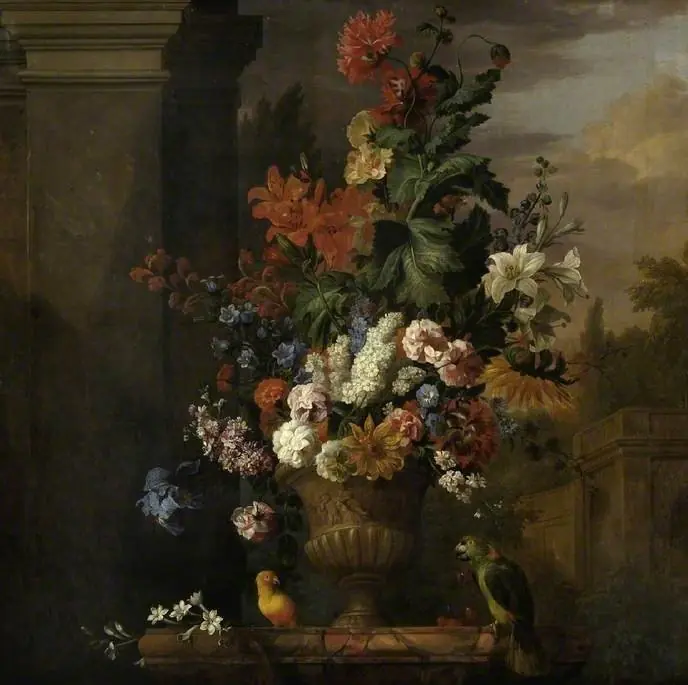 A stone vase of flowers
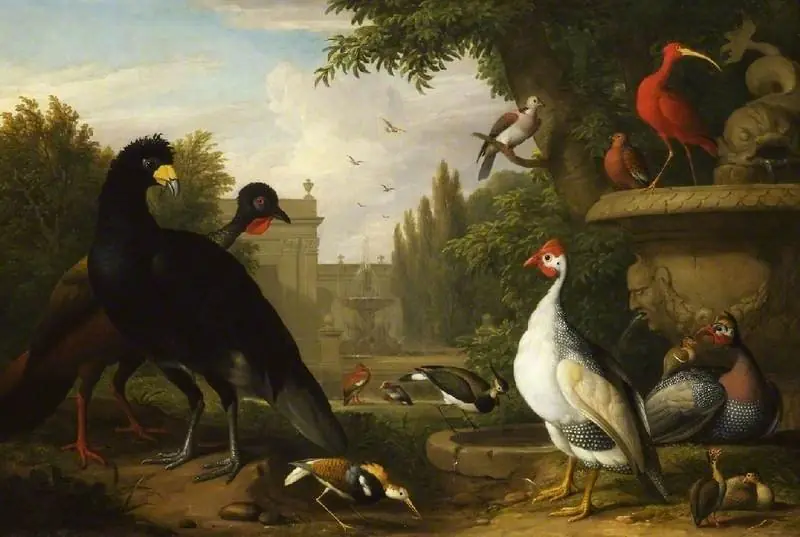 Exotic fowl in an ornamental garden beside a stone vase, a fountain beyond
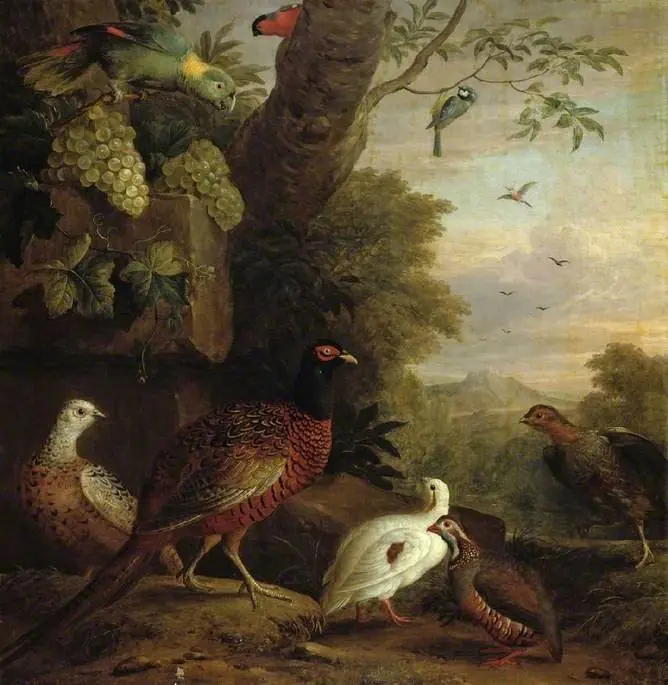 Birds in a landscape
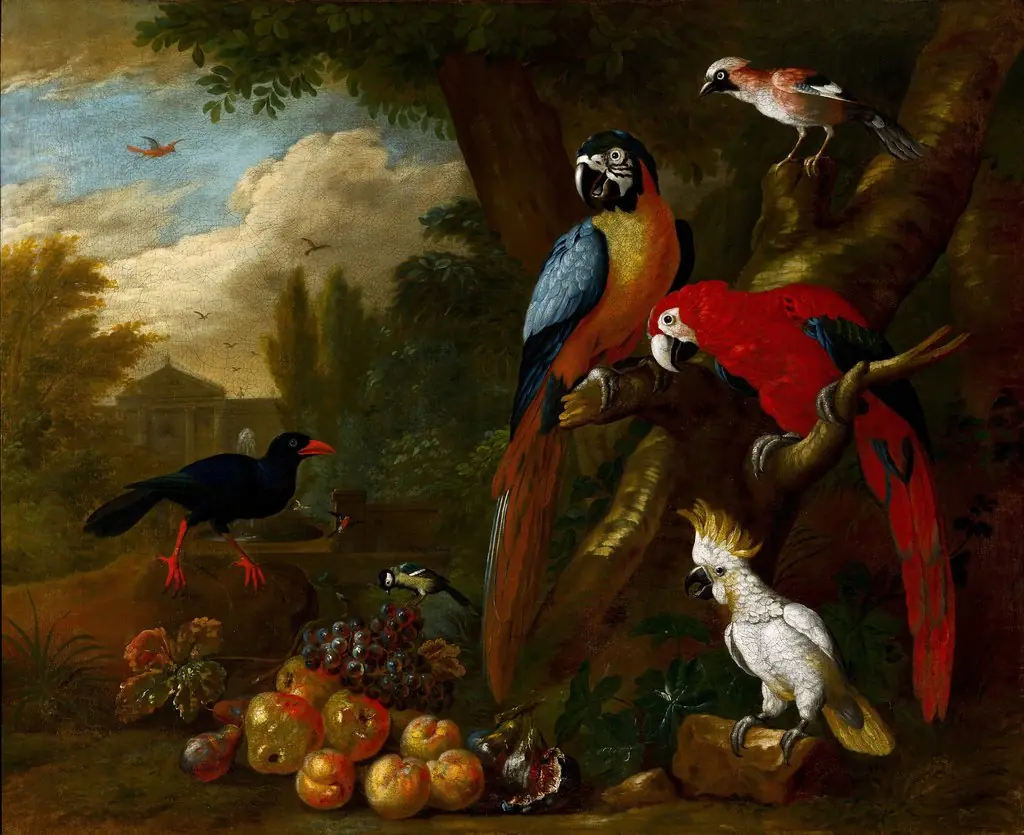 Two Macaws, a Cockatoo and a Jay, with Fruit
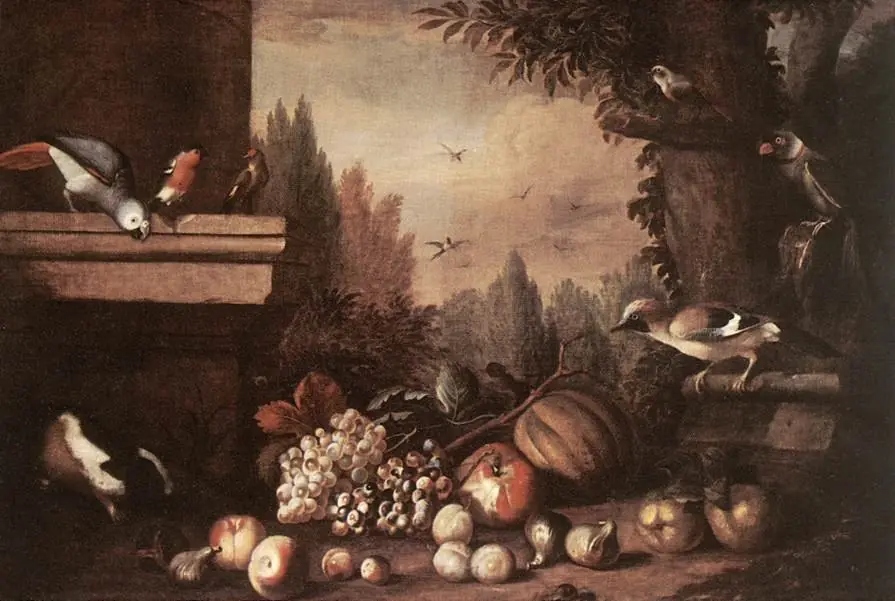 Fruit with Birds and Guinea-pig