Artwork
Two Macaws, a Cockatoo and a Jay, with Fruit
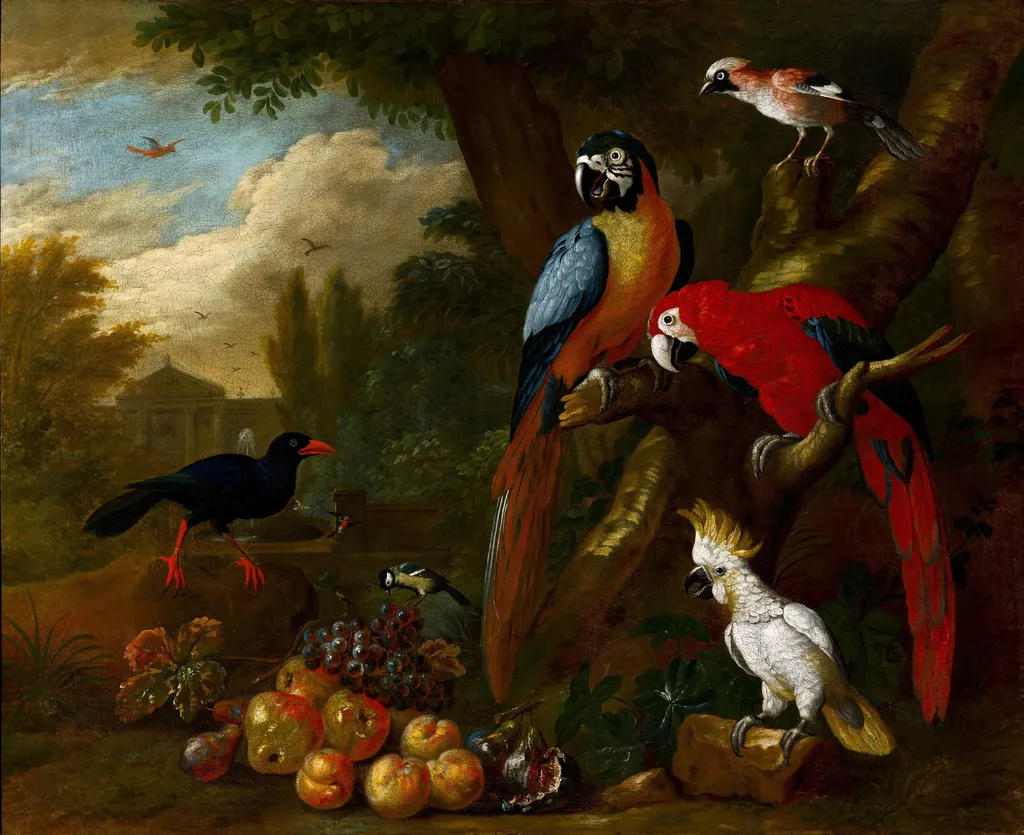
Two Macaws, a Cockatoo and a Jay, with Fruit is an oil painting by Jakob Bogdani. It dates from 1710 and is held in the collection of the Hungarian National Gallery.
About this work
The artist used oil paint to create this work, which is now held at the Hungarian National Gallery, and it features a parrot as one of its subjects.
This painting is called Two Macaws, a Cockatoo and a Jay, with Fruit.
It was made by Jakob Bogdani in 1710.
The artist used oil paint to create this work, which is now held at the Hungarian National Gallery, and it features a parrot as one of its subjects.
The painting includes different types of birds and fruit, which suggests the artist was interested in depicting a variety of natural elements.
You can learn more about the artist's style by looking up Jakob Bogdani.
Overview
Jakob Bogdani’s 1710 oil painting, *Two Macaws, a Cockatoo and a Jay, with Fruit*, presents a vivid assembly of exotic birds perched amid a display of assorted fruit. Executed in the early eighteenth century, the work now belongs to the Hungarian National Gallery and exemplifies the artist’s meticulous approach to color and detail.
Subject & Meaning
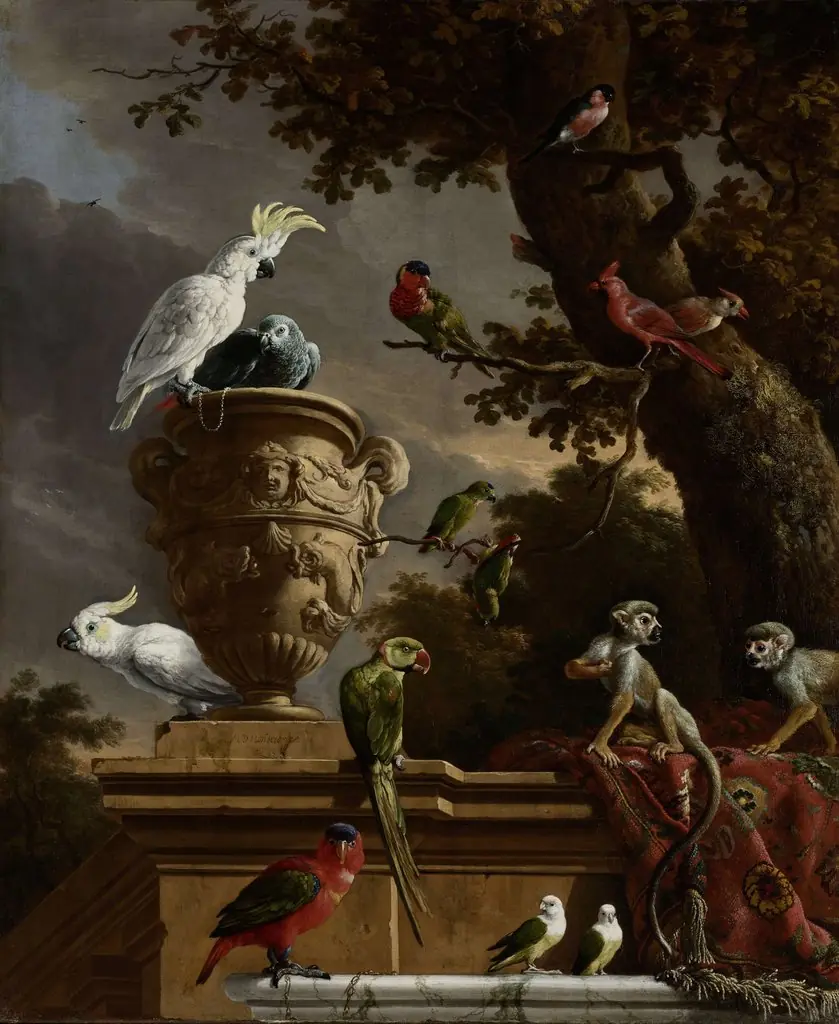
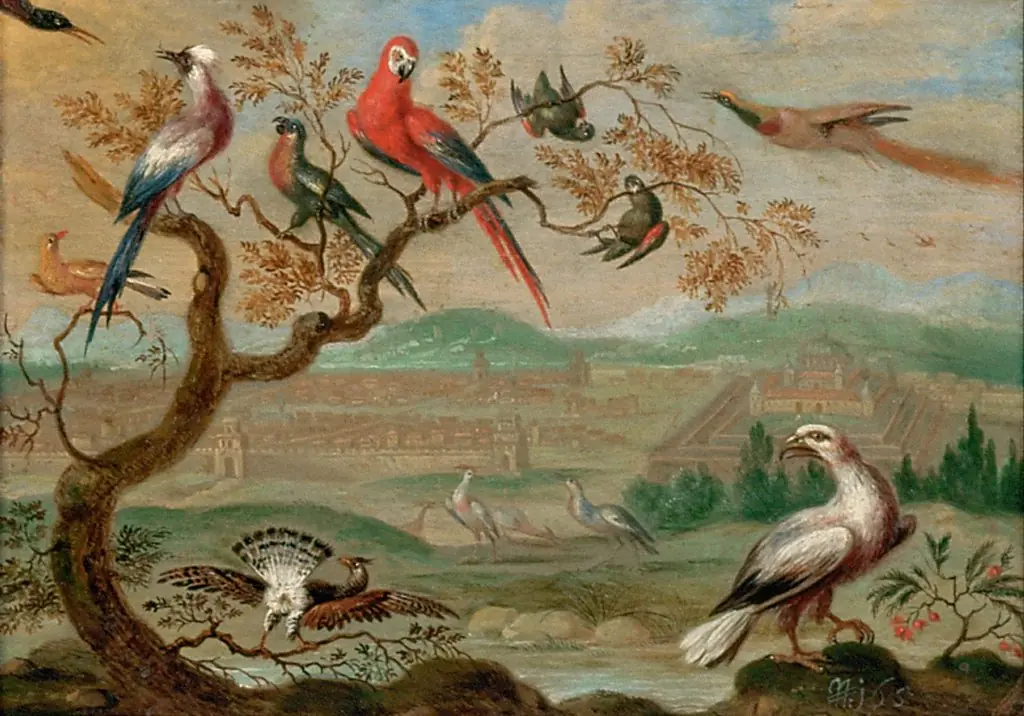
The canvas features two vividly colored macaws, a white‑feathered cockatoo and a blue‑toned jay, each rendered with careful observation. Their placement beside ripe fruit creates a study of biodiversity, reflecting contemporary curiosity about far‑off lands and the natural world’s abundance.
Technique & Style
Bogdani employed oil on canvas to achieve a luminous surface, allowing subtle gradations of light on plumage and the glossy skins of the fruit. His brushwork combines fine, precise strokes for feather texture with broader washes for background depth, characteristic of his elaborate still‑life compositions.
History & Provenance
Originally painted in Britain after Bogdani’s relocation from Hungary, the piece entered the Hungarian National Gallery’s collection in the twentieth century. Its acquisition underscores the gallery’s commitment to representing the artist’s role in early modern European naturalistic painting.
Context
During the late 1600s and early 1700s, European patrons showed a keen interest in exotic specimens brought from colonial voyages. Bogdani’s work aligns with this trend, offering a decorative yet scientific portrayal of birds that were then considered rare curiosities.
Own this work as a print
Artist & collection
Artist
Jakob Bogdani (6 May 1658 - 11 November 1724), whose names are sometimes spelt Jacob and Bogdány, was a Hungarian and British artist well known for his still life and exotic bird paintings.

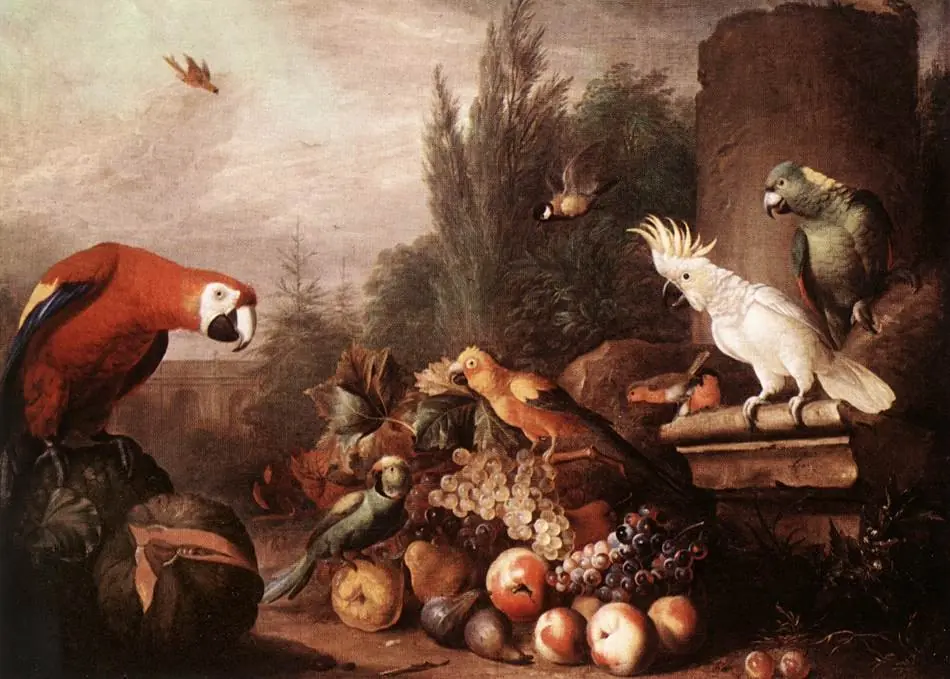 Still-life with Fruits, Parrots and White Cockatoo
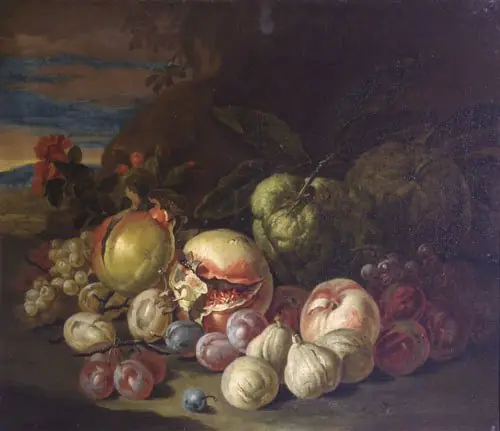 Still life of fruits with pomegranates and figs
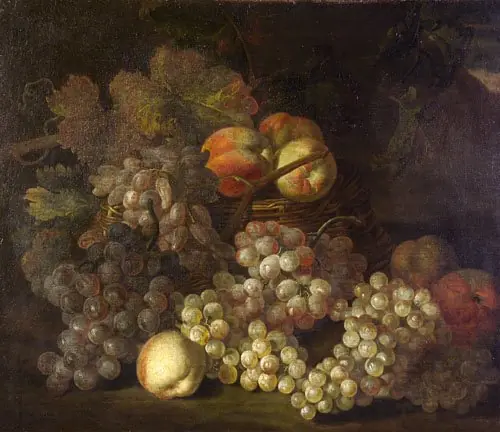 Fruit in a Wicker Basket: Grapes and Peaches
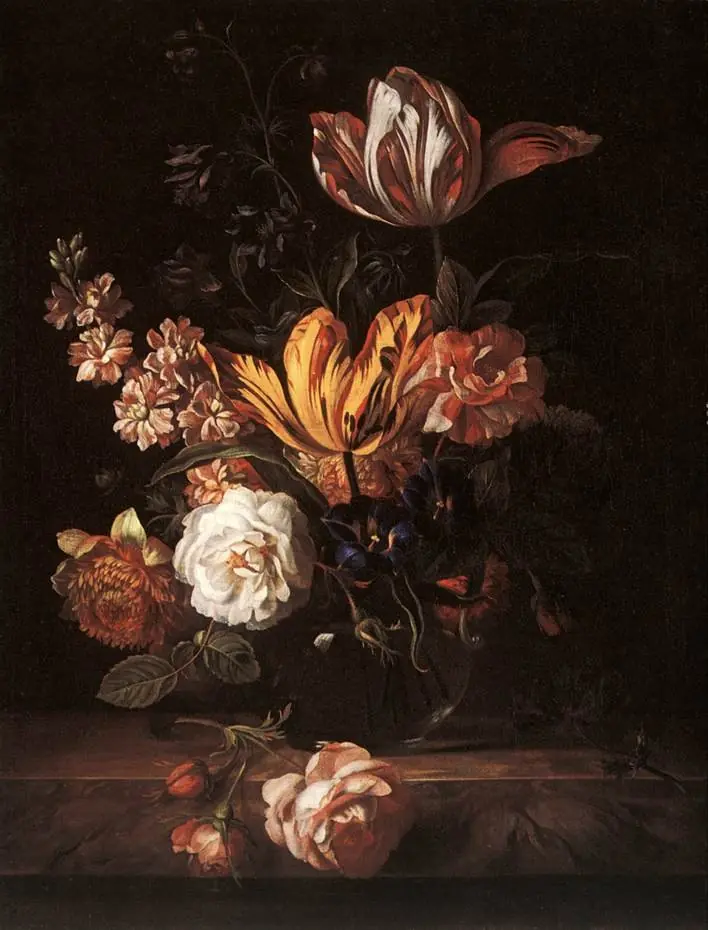 Flowers in a glass vase
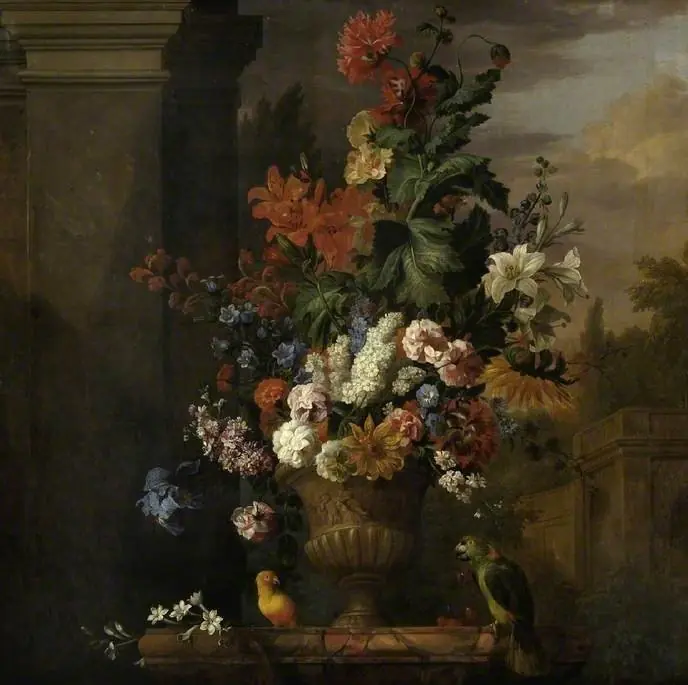 A stone vase of flowers
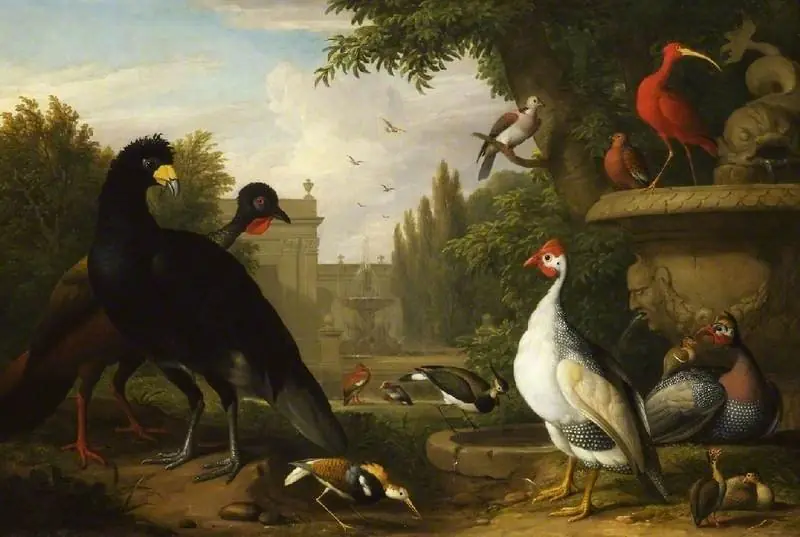 Exotic fowl in an ornamental garden beside a stone vase, a fountain beyond
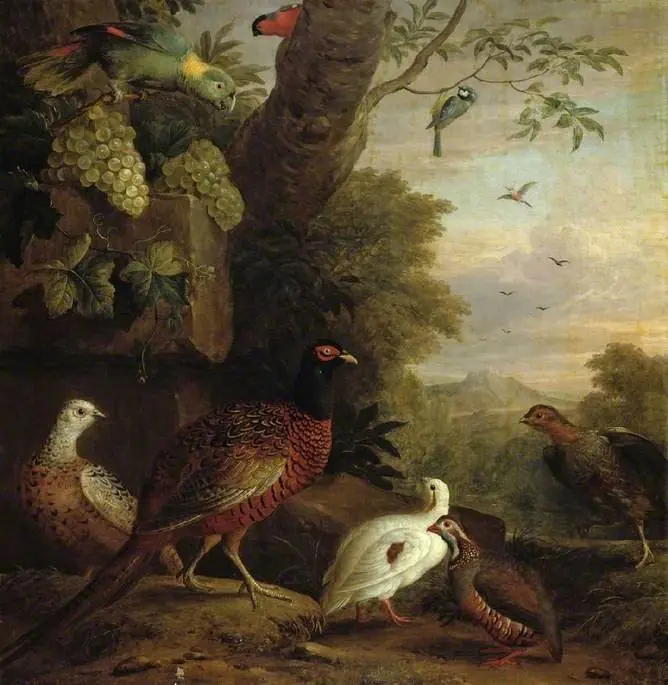 Birds in a landscape
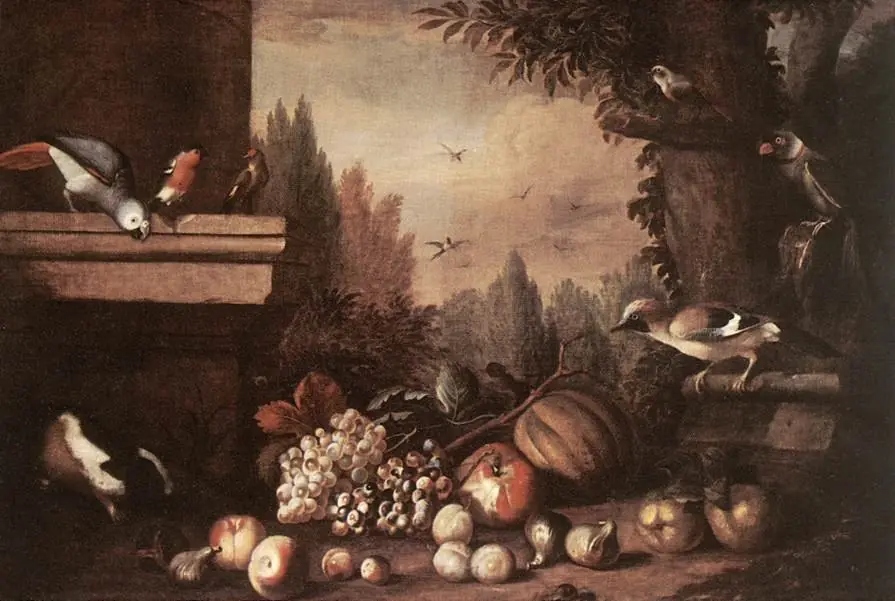 Fruit with Birds and Guinea-pig